RWA is bringing more possibilities to the crypto world. At the same time, artificial intelligence and RWA are also being organically combined. Propy uses artificial intelligence technology and has become a typical case worthy of attention for the combination of the two technologies.RWA is bringing more possibilities to the crypto world. At the same time, artificial intelligence and RWA are also being organically combined. Propy uses artificial intelligence technology and has become a typical case worthy of attention for the combination of the two technologies.

When AI meets RWA, how can on-chain real estate Propy create an efficient disintermediation model under the trend of artificial intelligence?
2025/03/17 13:37

When AI meets RWA, how can on-chain real estate Propy create an efficient disintermediation model under the trend of artificial intelligence?

Author: Weilin, PANews

The tokenization of real-world assets (RWA) is one of the fastest growing sectors in this crypto cycle. According to rwa.xyz, as of March 10, the on-chain asset value of real-world assets reached $17.925 billion, a significant increase of 95.64% over the past year, compared to $9.162 billion in the same period last year.

RWA is bringing more possibilities to the crypto world, and at the same time, artificial intelligence and RWA are also being organically combined. For example, the blockchain-based real estate RWA project Propy has effectively increased its profit margin to 40% by adopting AI technology, realizing 7x24 hours of online property rights transactions, and bringing the high efficiency, transparency and security unique to the crypto world.

Propy: AI empowers real estate transactions and creates an efficient disintermediation model
When AI meets RWA, how can on-chain real estate Propy create an efficient disintermediation model under the trend of artificial intelligence?

RWA's leading real estate project Propy supports real estate asset chain, smart contracts and real estate tokenization, realizing the convenience and security of cross-border real estate transactions. Propy has three core products, namely Propy real estate trading platform , Propy property rights and custody services , and PropyKeys . Propy is committed to innovating the traditional real estate industry with blockchain technology to solve the pain points of too many intermediaries, slow processes, and possible fraud in transactions.

Among them, PropyKeys is based on Ethereum Layer 2 network Base to realize the tokenization of real estate. In March last year, PropyKeys was officially opened to the public. Users can mint and store on-chain addresses corresponding to physical properties and property certificates through the PropyKeys app. PropyKeys has now officially exceeded 300,000 minting addresses worldwide.

When AI meets RWA, how can on-chain real estate Propy create an efficient disintermediation model under the trend of artificial intelligence?

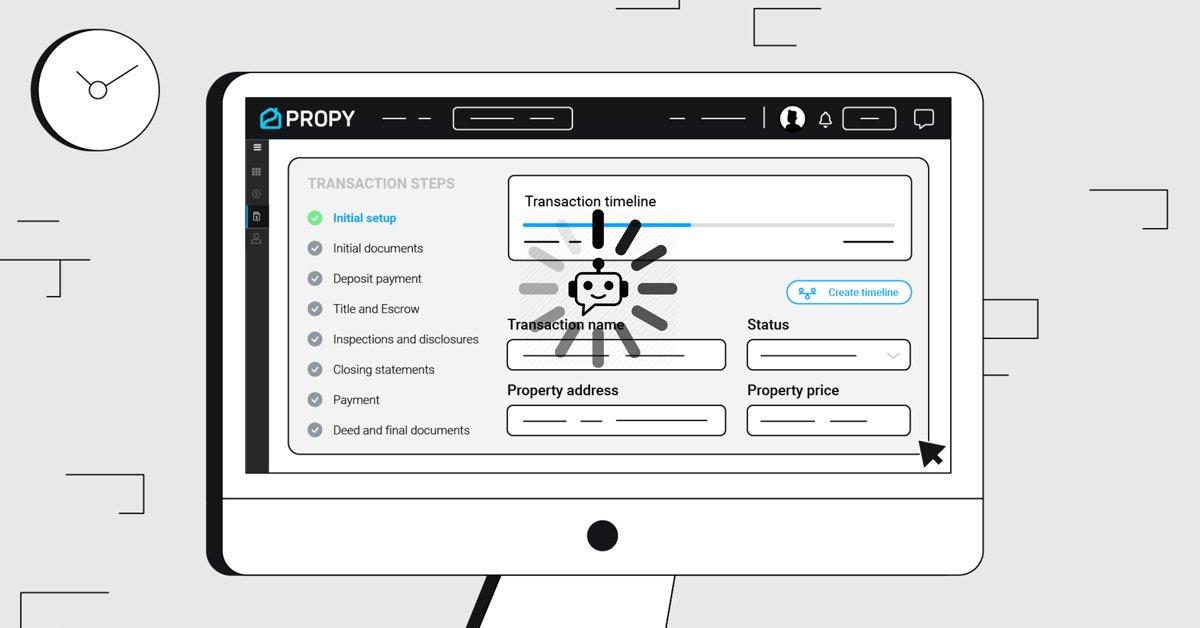
Propy uses artificial intelligence technology, becoming a noteworthy example of the combination of AI and blockchain. Real estate professionals can now say goodbye to time-consuming manual data entry and easily close deals, saving valuable time and energy.

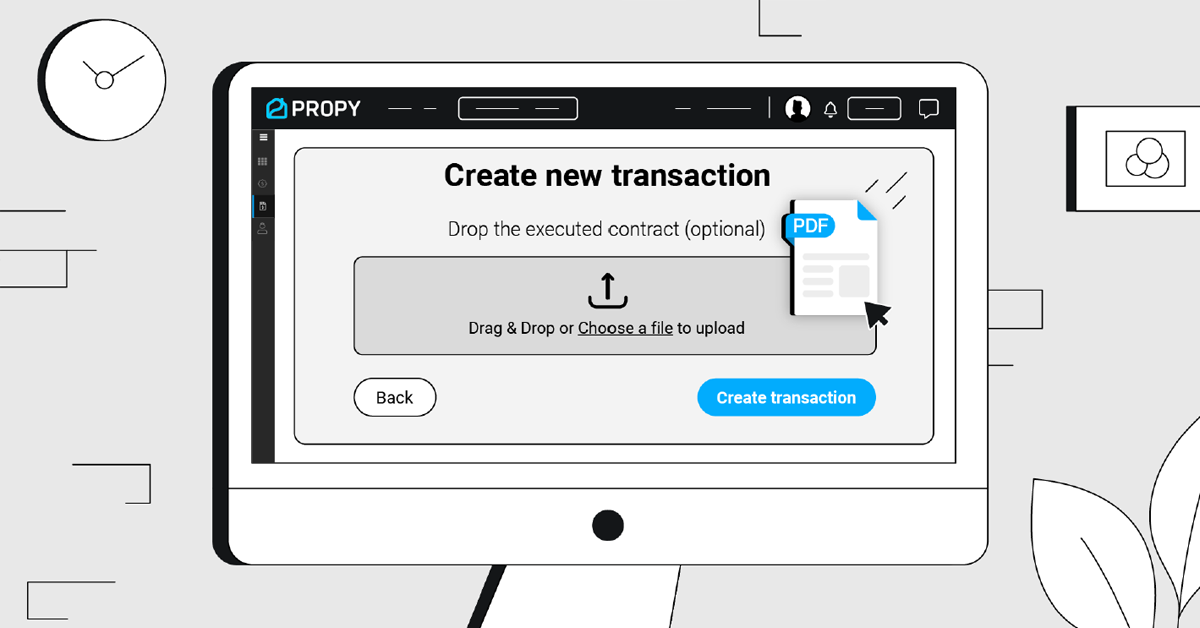
In order to provide the most advanced tools, the Propy platform has created a transaction timeline to help agents, sellers, and buyers clearly understand the timing of each transaction step. Managing the transaction timeline is a breeze with Propy AI, which automatically reads the home purchase agreement, generates a transaction tracker for the user, and initiates the settlement process.
When AI meets RWA, how can on-chain real estate Propy create an efficient disintermediation model under the trend of artificial intelligence?

It also intelligently adds deadlines to each stage of the transaction, guiding all parties involved to know when to pay the first and second deposits, when to complete loan approval, etc. - all in an instant. Say goodbye to cumbersome paperwork and endless information communication, now real estate transactions have become more efficient and convenient.

Recently, Propy also launched an online marketing campaign Own Your Tomorrow, where investors and users can win different numbers of PRO tokens by sharing promotional videos, registering and inviting friends, and recommending friends to use the crypto escrow service (Crypto Escrow). Users can learn more here .

When AI meets RWA, how can on-chain real estate Propy create an efficient disintermediation model under the trend of artificial intelligence?

As the leader in the real estate RWA track, Propy continues to promote the implementation of innovative ideas. In January of this year, Propy launched a new loan product that supports the mortgage of crypto assets to purchase Hawaiian apartments. The starting price of the apartment is 250,000 USDC. As an on-chain RWA asset, buyers can skip the traditional 30-day transaction process and achieve almost instant transactions by paying cryptocurrencies. On February 2, Propy announced the successful sale of this Hawaiian real estate asset-through multiple on-chain quotes, and finally completed the transaction through the first Bitcoin-backed loan. In October 2024, Propy also launched a cryptocurrency third-party custody service based on the Coinbase Prime platform and services. These latest developments further provide high-quality services for real estate assets to be put on the chain and for fast, efficient and secure transactions, becoming the latest adoption scenario for the combination of RWA and AI.

AI+RWA trend is rising, and real estate may become a key application field

From a broader perspective, the RWA track that Propy has been deeply involved in is gradually becoming a new engine for the crypto market, releasing a steady stream of growth momentum. The core concept of RWA is to digitize various assets in the traditional financial market (such as bonds, real estate, stocks, artworks, private equity, etc.) and convert them into tokenized assets that can be traded, mortgaged or borrowed on the chain through blockchain technology. This process not only enhances the liquidity of assets, but also reduces the friction costs in the traditional financial market, such as long transaction settlement time, high intermediary costs, and limited liquidity.

Now, a new RWA development trend is attracting more and more capital and market attention - the organic combination of artificial intelligence and RWA. It can involve the following aspects: AI-driven asset valuation, risk management and predictive analysis, the application of AI in smart contract automation, AI-driven liquidity optimization, AI-enabled security and fraud detection, improving investor experience through personalization, and the application of AI in compliance and regulatory monitoring, etc.

By observing the dynamics in the crypto market, we can find that recently, many RWA projects have integrated artificial intelligence technology on a larger scale, although the combination of the two is still in its early stages. According to the analysis of venture capital and digital asset fund Decasonic , while tokenization has long promised to improve liquidity and achieve decentralized access, the addition of AI further accelerates the real-time optimization, risk assessment and automation process, making RWA assets more dynamic and efficient.

AI+RWA track is dynamic, and the trend of industry-specific RWA tokenization is becoming more and more obvious

In recent years, the AI+RWA market has been moving towards enhancing liquidity and improving efficiency. For example, Ondo Finance received $95 million in BlackRock BUIDL asset allocation in 2024 and began to explore AI-driven yield optimization to improve the return on its tokenized treasury bonds.

AI is also leveraging large data sets, including market trends, weather patterns, regulatory dynamics, etc., to improve the valuation accuracy of RWA assets. For example, MakerDAO's expanding RWA asset exposure may be using AI for yield analysis, while AI-driven real-time valuation models are also constantly optimizing the accuracy of asset pricing.

In addition, the trend of industry-specific RWA tokenization is becoming more and more obvious, and the general tokenization model is gradually giving way to solutions for specific industries. For example, Agrotoken tokenizes agricultural products such as soybeans on Algorand. At the same time, AI is also optimizing the yield management of tokenized stablecoins, such as Superstate's $USDM, whose assets are backed by government bonds and provide a return rate of 5% APY.

Changes in the macro-regulatory environment are expected to promote the deep integration of AI integration and RWA, further accelerating this process. In the United States, the Trump administration supports digital assets and has issued executive orders on cryptocurrencies, including the lifting of the ban on crypto banking, the reform of SAB121 accounting rules, and even the establishment of a US strategic Bitcoin reserve, where BTC will be held as a reserve asset. At the same time, the Trump administration has invested $500 billion in AI research and infrastructure construction to promote the development of a new generation of AI+blockchain solutions.

In Asia, with the popularity of DeepSeek, artificial intelligence has once again ignited the enthusiasm of the technology market. The encryption industry is also expected to achieve further breakthroughs and growth with the help of cutting-edge technologies such as artificial intelligence.

With the rapid growth of asset value on the RWA chain and the deep integration of AI+RWA technology, the real estate sector is becoming an area worthy of attention. As a pioneer in this field, Propy uses AI to optimize transaction processes, improve efficiency, and attract user participation through innovative marketing activities. In the future, the combination of AI and blockchain may further accelerate the digital transformation of the real estate market and provide global investors with a more transparent, efficient and secure transaction experience.


Market Opportunity
RealLink Logo
RealLink Price(REAL)
$0.08059
$0.08059$0.08059
+0.37%
USD
RealLink (REAL) Live Price Chart
Disclaimer: The articles reposted on this site are sourced from public platforms and are provided for informational purposes only. They do not necessarily reflect the views of MEXC. All rights remain with the original authors. If you believe any content infringes on third-party rights, please contact service@support.mexc.com for removal. MEXC makes no guarantees regarding the accuracy, completeness, or timeliness of the content and is not responsible for any actions taken based on the information provided. The content does not constitute financial, legal, or other professional advice, nor should it be considered a recommendation or endorsement by MEXC.

You May Also Like

Is Hyperliquid the new frontier for innovation?

Is Hyperliquid the new frontier for innovation?

The post Is Hyperliquid the new frontier for innovation? appeared on BitcoinEthereumNews.com. This is a segment from the 0xResearch newsletter. To read full editions, subscribe. One of the key things I like to track in crypto is a subjective criterion I call “where are new interesting developments and proposals taking place.” There are plenty of dashboards and analytics sites for this, the most popular being the Electric Capital site. The issue is that it still shows Polkadot as having a lot of developers. (At Blockworks we solved the noise problem with active users; maybe we can try the same for active developers.) Because of this noise, I prefer to track two simple observations: What is the velocity of new products launching, and how much mindshare are these products capturing? Are many people getting nerdsniped into discussing the novelties and intricacies of the chain? A related point is the caliber of people being attracted to new ecosystems. For example, over the past few years, Solana (and Ethereum) attracted the majority of talent. Talent generally goes where: It can solve interesting problems or create interesting projects. It can make a lot of money. In a podcast I did with Icebergy about a year ago, we discussed how crypto still wasn’t attracting talent at the levels AI was, despite offering faster exits and more money. AI was (and probably still is) more interesting to most talent and seen as more prestigious. After FTX, crypto lost a lot of credibility and has only recently started recovering as larger institutional players re-entered. Apart from FTX, crypto has also been criticized for being full of low-effort forks and limited utility products. This dynamic isn’t unique to crypto though. Many AI companies are also just building wrappers around GPT, which is as uninteresting as some projects in crypto. Anyway, to the point: Historically, Solana has captured the majority of…
Share
BitcoinEthereumNews2025/09/18 08:13
Stronger capital, bigger loans: Africa’s banking outlook for 2026

Stronger capital, bigger loans: Africa’s banking outlook for 2026

African banks spent 2025 consolidating, shoring up capital, tightening risk controls, and investing in digital infrastructure, following years of macroeconomic
Share
Techcabal2026/01/14 23:06
Crucial US Stock Market Update: What Wednesday’s Mixed Close Reveals

Crucial US Stock Market Update: What Wednesday’s Mixed Close Reveals

BitcoinWorld Crucial US Stock Market Update: What Wednesday’s Mixed Close Reveals The financial world often keeps us on our toes, and Wednesday was no exception. Investors watched closely as the US stock market concluded the day with a mixed performance across its major indexes. This snapshot offers a crucial glimpse into current investor sentiment and economic undercurrents, prompting many to ask: what exactly happened? Understanding the Latest US Stock Market Movements On Wednesday, the closing bell brought a varied picture for the US stock market. While some indexes celebrated gains, others registered slight declines, creating a truly mixed bag for investors. The Dow Jones Industrial Average showed resilience, climbing by a notable 0.57%. This positive movement suggests strength in some of the larger, more established companies. Conversely, the S&P 500, a broader benchmark often seen as a barometer for the overall market, experienced a modest dip of 0.1%. The technology-heavy Nasdaq Composite also saw a slight retreat, sliding by 0.33%. This particular index often reflects investor sentiment towards growth stocks and the tech sector. These divergent outcomes highlight the complex dynamics currently at play within the American economy. It’s not simply a matter of “up” or “down” for the entire US stock market; rather, it’s a nuanced landscape where different sectors and company types are responding to unique pressures and opportunities. Why Did the US Stock Market See Mixed Results? When the US stock market delivers a mixed performance, it often points to a tug-of-war between various economic factors. Several elements could have contributed to Wednesday’s varied closings. For instance, positive corporate earnings reports from certain industries might have bolstered the Dow. At the same time, concerns over inflation, interest rate policies by the Federal Reserve, or even global economic uncertainties could have pressured growth stocks, affecting the S&P 500 and Nasdaq. Key considerations often include: Economic Data: Recent reports on employment, manufacturing, or consumer spending can sway market sentiment. Corporate Announcements: Strong or weak earnings forecasts from influential companies can significantly impact their respective sectors. Interest Rate Expectations: The prospect of higher or lower interest rates directly influences borrowing costs for businesses and consumer spending, affecting future profitability. Geopolitical Events: Global tensions or trade policies can introduce uncertainty, causing investors to become more cautious. Understanding these underlying drivers is crucial for anyone trying to make sense of daily market fluctuations in the US stock market. Navigating Volatility in the US Stock Market A mixed close, while not a dramatic downturn, serves as a reminder that market volatility is a constant companion for investors. For those involved in the US stock market, particularly individuals managing their portfolios, these days underscore the importance of a well-thought-out strategy. It’s important not to react impulsively to daily movements. Instead, consider these actionable insights: Diversification: Spreading investments across different sectors and asset classes can help mitigate risk when one area underperforms. Long-Term Perspective: Focusing on long-term financial goals rather than short-term gains can help weather daily market swings. Stay Informed: Keeping abreast of economic news and company fundamentals provides context for market behavior. Consult Experts: Financial advisors can offer personalized guidance based on individual risk tolerance and objectives. Even small movements in major indexes can signal shifts that require attention, guiding future investment decisions within the dynamic US stock market. What’s Next for the US Stock Market? Looking ahead, investors will be keenly watching for further economic indicators and corporate announcements to gauge the direction of the US stock market. Upcoming inflation data, statements from the Federal Reserve, and quarterly earnings reports will likely provide more clarity. The interplay of these factors will continue to shape investor confidence and, consequently, the performance of the Dow, S&P 500, and Nasdaq. Remaining informed and adaptive will be key to understanding the market’s trajectory. Conclusion: Wednesday’s mixed close in the US stock market highlights the intricate balance of forces influencing financial markets. While the Dow showed strength, the S&P 500 and Nasdaq experienced slight declines, reflecting a nuanced economic landscape. This reminds us that understanding the ‘why’ behind these movements is as important as the movements themselves. As always, a thoughtful, informed approach remains the best strategy for navigating the complexities of the market. Frequently Asked Questions (FAQs) Q1: What does a “mixed close” mean for the US stock market? A1: A mixed close indicates that while some major stock indexes advanced, others declined. It suggests that different sectors or types of companies within the US stock market are experiencing varying influences, rather than a uniform market movement. Q2: Which major indexes were affected on Wednesday? A2: On Wednesday, the Dow Jones Industrial Average gained 0.57%, while the S&P 500 edged down 0.1%, and the Nasdaq Composite slid 0.33%, illustrating the mixed performance across the US stock market. Q3: What factors contribute to a mixed stock market performance? A3: Mixed performances in the US stock market can be influenced by various factors, including specific corporate earnings, economic data releases, shifts in interest rate expectations, and broader geopolitical events that affect different market segments uniquely. Q4: How should investors react to mixed market signals? A4: Investors are generally advised to maintain a long-term perspective, diversify their portfolios, stay informed about economic news, and avoid impulsive decisions. Consulting a financial advisor can also provide personalized guidance for navigating the US stock market. Q5: What indicators should investors watch for future US stock market trends? A5: Key indicators to watch include upcoming inflation reports, statements from the Federal Reserve regarding monetary policy, and quarterly corporate earnings reports. These will offer insights into the future direction of the US stock market. Did you find this analysis of the US stock market helpful? Share this article with your network on social media to help others understand the nuances of current financial trends! To learn more about the latest stock market trends, explore our article on key developments shaping the US stock market‘s future performance. This post Crucial US Stock Market Update: What Wednesday’s Mixed Close Reveals first appeared on BitcoinWorld.
Share
Coinstats2025/09/18 05:30