The post Bitcoin Exchange Reserves Fall To Lowest Levels on Record: The Bullish Signal Most Traders Are Missing appeared on BitcoinEthereumNews.com. Bitcoin is holding above $90,000 as the market heads into a highly anticipated FOMC meeting, a moment that could define the next direction for risk assets. But while price action keeps traders on edge, on-chain indicators are painting a surprisingly different picture beneath the surface. According to a new CryptoQuant report by XWIN Research Japan, Bitcoin’s exchange reserves have continued to fall sharply throughout 2025, even as price corrected toward the $90K range. The data shows that the total amount of BTC held on centralized exchanges has dropped to 2.76 million BTC, reaching one of the lowest levels ever recorded. What makes this trend even more striking is its timing: during the steep November–December sell-off, exchange balances did not rise—they fell faster. The report highlights this behavior in the red-marked zone of the chart, showing accelerating outflows while the price was dropping. This pattern signals something unusual: investors are not sending coins to exchanges to sell into weakness. Instead, they continue withdrawing BTC into long-term custody, suggesting confidence rather than capitulation. As volatility builds ahead of the FOMC decision, the contrast between short-term price fear and long-term accumulation is becoming one of the most important dynamics in the current Bitcoin market. Shrinking Exchange Reserves Signal Structural Strength The report emphasizes that Bitcoin’s rapidly shrinking exchange reserves carry important structural implications for the market. When fewer coins sit on centralized exchanges, it means less Bitcoin is available for immediate sale, effectively tightening the liquid supply. According to the data, this decline is not being driven by short-term speculators but by long-term holders and institutional entities steadily moving BTC into self-custody or cold storage. What makes this trend remarkable is its timing. Historically, sharp price declines trigger a wave of inflows to exchanges as investors prepare to sell or panic-exit their positions.… The post Bitcoin Exchange Reserves Fall To Lowest Levels on Record: The Bullish Signal Most Traders Are Missing appeared on BitcoinEthereumNews.com. Bitcoin is holding above $90,000 as the market heads into a highly anticipated FOMC meeting, a moment that could define the next direction for risk assets. But while price action keeps traders on edge, on-chain indicators are painting a surprisingly different picture beneath the surface. According to a new CryptoQuant report by XWIN Research Japan, Bitcoin’s exchange reserves have continued to fall sharply throughout 2025, even as price corrected toward the $90K range. The data shows that the total amount of BTC held on centralized exchanges has dropped to 2.76 million BTC, reaching one of the lowest levels ever recorded. What makes this trend even more striking is its timing: during the steep November–December sell-off, exchange balances did not rise—they fell faster. The report highlights this behavior in the red-marked zone of the chart, showing accelerating outflows while the price was dropping. This pattern signals something unusual: investors are not sending coins to exchanges to sell into weakness. Instead, they continue withdrawing BTC into long-term custody, suggesting confidence rather than capitulation. As volatility builds ahead of the FOMC decision, the contrast between short-term price fear and long-term accumulation is becoming one of the most important dynamics in the current Bitcoin market. Shrinking Exchange Reserves Signal Structural Strength The report emphasizes that Bitcoin’s rapidly shrinking exchange reserves carry important structural implications for the market. When fewer coins sit on centralized exchanges, it means less Bitcoin is available for immediate sale, effectively tightening the liquid supply. According to the data, this decline is not being driven by short-term speculators but by long-term holders and institutional entities steadily moving BTC into self-custody or cold storage. What makes this trend remarkable is its timing. Historically, sharp price declines trigger a wave of inflows to exchanges as investors prepare to sell or panic-exit their positions.…

Bitcoin Exchange Reserves Fall To Lowest Levels on Record: The Bullish Signal Most Traders Are Missing

For feedback or concerns regarding this content, please contact us at crypto.news@mexc.com

Bitcoin is holding above $90,000 as the market heads into a highly anticipated FOMC meeting, a moment that could define the next direction for risk assets. But while price action keeps traders on edge, on-chain indicators are painting a surprisingly different picture beneath the surface. According to a new CryptoQuant report by XWIN Research Japan, Bitcoin’s exchange reserves have continued to fall sharply throughout 2025, even as price corrected toward the $90K range.

The data shows that the total amount of BTC held on centralized exchanges has dropped to 2.76 million BTC, reaching one of the lowest levels ever recorded. What makes this trend even more striking is its timing: during the steep November–December sell-off, exchange balances did not rise—they fell faster. The report highlights this behavior in the red-marked zone of the chart, showing accelerating outflows while the price was dropping.

This pattern signals something unusual: investors are not sending coins to exchanges to sell into weakness. Instead, they continue withdrawing BTC into long-term custody, suggesting confidence rather than capitulation. As volatility builds ahead of the FOMC decision, the contrast between short-term price fear and long-term accumulation is becoming one of the most important dynamics in the current Bitcoin market.

Shrinking Exchange Reserves Signal Structural Strength

The report emphasizes that Bitcoin’s rapidly shrinking exchange reserves carry important structural implications for the market. When fewer coins sit on centralized exchanges, it means less Bitcoin is available for immediate sale, effectively tightening the liquid supply. According to the data, this decline is not being driven by short-term speculators but by long-term holders and institutional entities steadily moving BTC into self-custody or cold storage.

What makes this trend remarkable is its timing. Historically, sharp price declines trigger a wave of inflows to exchanges as investors prepare to sell or panic-exit their positions. This cycle, however, tells a very different story. Even as Bitcoin corrected into the $90K region, exchange balances kept falling, suggesting that buyers with a long-term outlook are actively accumulating rather than retreating.

This divergence between price action and on-chain behavior signals underlying strength. While short-term volatility may continue—especially around macro catalysts like the FOMC meeting—the broader structure points toward a market quietly tightening its available supply. As reserves move toward historic lows, a future “supply shock” becomes increasingly plausible.

Despite the weak spot market performance, on-chain metrics are slowly turning bullish, hinting that the foundation for the next major trend may already be forming beneath the surface.

BTC Tests Critical Support as Market Awaits Direction

Bitcoin’s price action on the 3-day chart shows a market attempting to stabilize after a sharp corrective phase. BTC is currently trading around $90,437, hovering just above the 200-day moving average — a level that has historically acted as a major dynamic support during mid-cycle retracements. The recent bounce from the $87K–$88K region suggests that buyers are defending this zone, but the structure remains fragile as long as the price stays below the 50-day and 100-day moving averages, both of which are now sloping downward.

The chart reveals a clear shift in momentum. After months of steady higher lows, Bitcoin broke its ascending structure in late November, leading to a fast drop toward the high-$80K range. Volume increased during the decline, indicating stronger participation on the sell side. However, the subsequent candles show shrinking sell volume, hinting at exhaustion among short-term sellers.

For a meaningful recovery, BTC must reclaim the $95K–$97K area, where previous support turned into resistance. Failure to break that zone would likely keep the market in a consolidation phase, with risks of another retest of the 200-day MA.

Featured image from ChatGPT, chart from TradingView.com

Source: https://www.newsbtc.com/bitcoin-news/bitcoin-exchange-reserves-fall-to-lowest-levels-on-record-the-bullish-signal-most-traders-are-missing/

Market Opportunity
Bullish Degen Logo
Bullish Degen Price(BULLISH)
$0.002367
$0.002367$0.002367
+4.54%
USD
Bullish Degen (BULLISH) Live Price Chart
Disclaimer: The articles reposted on this site are sourced from public platforms and are provided for informational purposes only. They do not necessarily reflect the views of MEXC. All rights remain with the original authors. If you believe any content infringes on third-party rights, please contact crypto.news@mexc.com for removal. MEXC makes no guarantees regarding the accuracy, completeness, or timeliness of the content and is not responsible for any actions taken based on the information provided. The content does not constitute financial, legal, or other professional advice, nor should it be considered a recommendation or endorsement by MEXC.

You May Also Like

Glenn Hughes Scores His Greatest Chart Debut On His Own

Glenn Hughes Scores His Greatest Chart Debut On His Own

The post Glenn Hughes Scores His Greatest Chart Debut On His Own appeared on BitcoinEthereumNews.com. Nearly 10 years after Resonate, Glenn Hughes scores a new career high as Chosen opens at No. 4 on the Official Rock and Metal Albums chart. NEW YORK, NEW YORK – APRIL 08: Glenn Hughes of Deep Purple speaks onstage during the 31st Annual Rock And Roll Hall Of Fame Induction Ceremony at Barclays Center on April 8, 2016 in New York City. (Photo by Mike Coppola/Getty Images) Getty Images Almost a decade after his last solo album Resonate arrived, Glenn Hughes returns with Chosen. The rock superstar’s fifteenth project under his own name debuts on multiple charts in the United Kingdom, where he remains a legend in his chosen field. Chosen opens inside loftiest tiers on multiple tallies and even gives Hughes his first solo win on one roster. Glenn Hughes Scores First Hit on One Chart Chosen debuts on the Official Albums Downloads chart at No. 60. Hughes scores his first solo win on the list of the bestselling full-lengths and EPs on download platforms like iTunes and Amazon in the U.K., as his latest project arrives. Glenn Hughes Reaches a New Peak Chosen earns its loftiest starting point on the Official Rock and Metal Albums chart, where it kicks off at No. 4. Hughes reaches a new all-time high as the set arrives and collects his second top 10. Resonate peaked at No. 6, earning Hughes his first top 10 bestseller almost 10 years back, while Music for the Divine only spent one frame at No. 33 nearly 20 years ago. Glenn Hughes on the Albums Charts Chosen also brings Hughes to new all-time peak positions on both the Official Albums Sales and Official Physical Albums charts. The set debuts at Nos. 25 and 26 on those tallies, respectively. Only Resonate had previously landed on those lists,…
Share
BitcoinEthereumNews2025/09/18 02:41
Aptos Technology Concepts Compared to XRP Tundra’s Approach

Aptos Technology Concepts Compared to XRP Tundra’s Approach

The post Aptos Technology Concepts Compared to XRP Tundra’s Approach appeared on BitcoinEthereumNews.com. The conversation around blockchain innovation often centers on scalability, speed, and utility. Aptos is a Layer-1 blockchain built on Move language principles. It has positioned itself as a network prioritizing parallel execution and developer flexibility. While its technical ambitions have generated attention, the project still competes in a crowded field of platforms racing to establish themselves as the backbone of decentralized finance. XRP Tundra, in contrast, has anchored its design around an immediate problem facing millions of XRP holders: idle assets that generate no yield. Tundra is not competing directly in the smart contract arms race. It introduces a practical application through its dual-token model and staking vaults. The approach brings staking, yield farming, and governance functions directly into the XRP ecosystem. That also without requiring holders to leave the XRPL environment. How Does XRP Tundra Differ from Aptos’ Model? Aptos has emphasized modular scalability and throughput, seeking to attract developers who need high-performance infrastructure. Its model, while technically impressive, depends on widespread adoption of its unique Move programming language and the creation of a vibrant dApp ecosystem. The success of this vision is closely tied to developer participation and long-term ecosystem growth. XRP Tundra addresses an entirely different user base and challenge. For years, XRP has remained locked in wallets with no direct staking or yield options. Tundra introduces Cryo Vaults, where XRP can be “frozen” for 7 to 90 days. Thus, it rewards holders with yields that can reach up to 30% APY.  Enhancements through Frost Keys, special NFTs that boost returns, add further incentives for long-term engagement. Importantly, XRP never leaves the XRPL, ensuring holders maintain the security of the native ledger while activating passive income streams. Where Aptos focuses on abstract performance metrics, XRP Tundra focuses on a tangible need of its core community. It turns…
Share
BitcoinEthereumNews2025/09/22 21:42
The Role of Reference Points in Achieving Equilibrium Efficiency in Fair and Socially Just Economies

The Role of Reference Points in Achieving Equilibrium Efficiency in Fair and Socially Just Economies

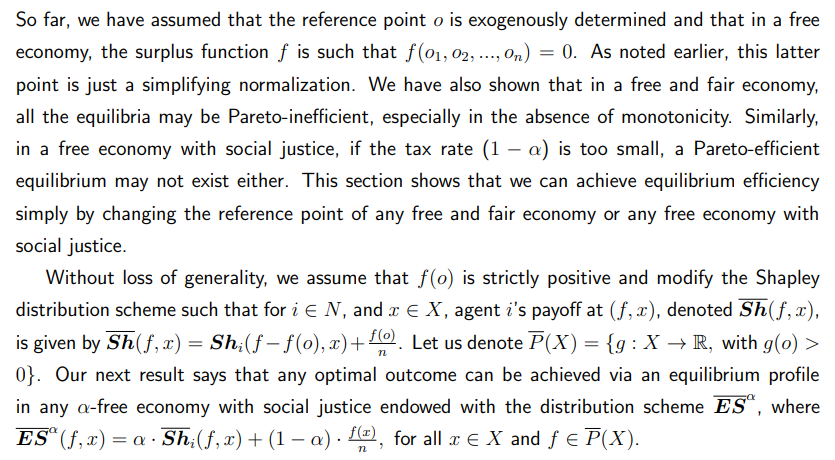
This article explores how a simple change in the reference point can achieve a Pareto-efficient equilibrium in both free and fair economies and those with social justice.
Share
Hackernoon2025/09/17 22:30