Online gambling activities in Nigeria have reached a significant level, with new reports revealing the market has surged…Online gambling activities in Nigeria have reached a significant level, with new reports revealing the market has surged…

How poverty and lack are funding Nigeria’s N5.6trn online gambling market

5 min read

Online gambling activities in Nigeria have reached a significant level, with new reports revealing the market has surged to an estimated N5.6 trillion in value. 

While the surge shows the continuous growth of sports betting, casinos and gambling among Nigerians, it has raised serious concerns over the increased dependence of a large part of the Nigerian population on online gambling for survival. 

Firstly, amid poverty and economic hardship, a significant amount is being spent on online gambling. Secondly, the increase in smartphone usage, flexibility of digital payment and the struggle for daily survival, especially among Nigerian youth, are fueling the gambling market. 

According to Dr Emomotimi Agama, Director-General of the Securities and Exchange Commission, Nigeria (SEC), about 60 million Nigerians spend $5.5 million daily on gambling. This means that, at least, 1 in every 4 Nigerians engages in gambling. This also shows that a large part of the population prefers everyday risk-taking to the 3 million active Nigerians in the capital market. 

Another 2023 report corroborates the above submission. The report, by the National Lottery Trust Fund (NLTF), revealed that around 65 million Nigerians engage in regular betting activities, with an average daily expenditure of $15 per person. During that year, the agency noted that about 14 million bets and payments were made online in Nigeria every day. 

How poverty and lack is funding Nigeria's N5.6trn online gambling

As online gambling offers instant returns and an alternative source of income, the market is projected to grow nearly 10% and reach more than $366 million by 2027.

The drivers 

    Gambling is a larger term that includes both physical centres and online platforms where gamblers can stake using their smartphones. Commercial gambling encompasses many activities, including lotteries, number games, sports betting, horse betting, poker and other card games, casino table games, and electronic gaming machines

    However, sports betting is popular in Nigeria due to the already-established grounds. Engaging in online gambling has become easier with the creation of an online account whose payments are linked to the owner’s bank account.

    Online gambling activities are gaining prominence among Nigerian youths, picturing it as a fast means to escape poverty. While risks abound in the market, the convenience it brings is a contributing factor. Others include peer influence and the availability of experts who provide betting codes.
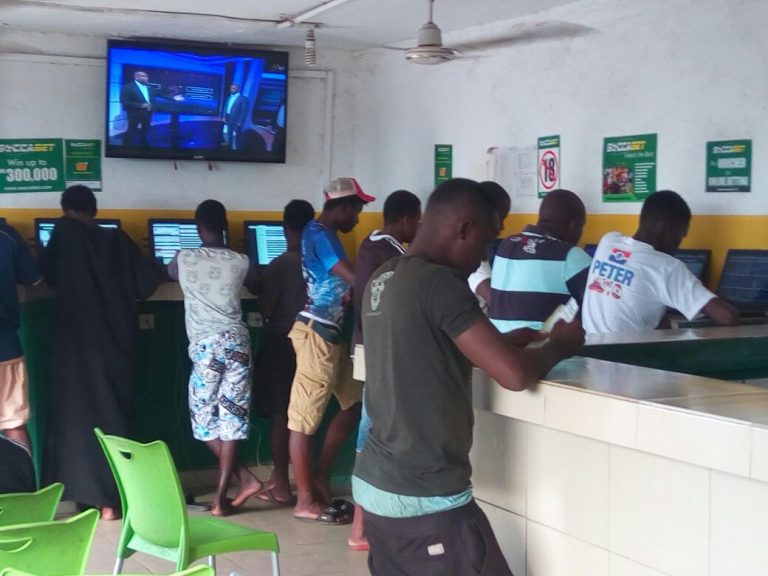
    Sports betting: Nigerian lawmaker denies moving motion to banA betting hub

    In their desperate state and survival mode, online gambling offers hope for quick riches with minimal initial capital or stake. For instance, using as low as N100 or N200 to a possible 6-digit win offers a life-changing opportunity and serves as a motivator. The fact that ample success stories exist is enough to keep the hopes of youths high and maintain consistency in the game.

    However, with consistency comes addiction. Gamblers can be hell-bent on spending a higher proportion of their income on betting, which potentially leads to deeper poverty. As online gambling receives more funding, the addiction fuels more gambling behaviour. 

    For Nigerian youths who want to keep up to expected standards, unemployment, underemployment, frequent financial hardship and social marginalisation can create emotional tension and psychological distress. To some, gambling can be used as a temporary escape or a coping mechanism to alleviate stress and despair, further fueling the behaviour. 

    To some extent, online gambling has become a side hustle, an alternative source of income and what many youths consider a means of escaping poverty. The fact that the market offers quick returns despite its risky nature, is easily accessible and requires limited expert guidance, is fueling its adoption among Nigerians, especially youths. 

    Also Read: See full list of legal and illegal gambling platforms in Lagos State.

    The mixed bag

    On a positive note, the gambling industry creates jobs, generates revenue for the Nigerian government, and offers investment opportunities for market stakeholders. While internet penetration is a leading factor in its surge, the rate of commercialisation, marketing and rise in popularity are also factors. 

    Meanwhile, rather than being a solution to poverty, online gambling tends to undermine the economic resilience of individuals and families, diverting funds from essential needs and perpetuating a cycle of debt and poverty.
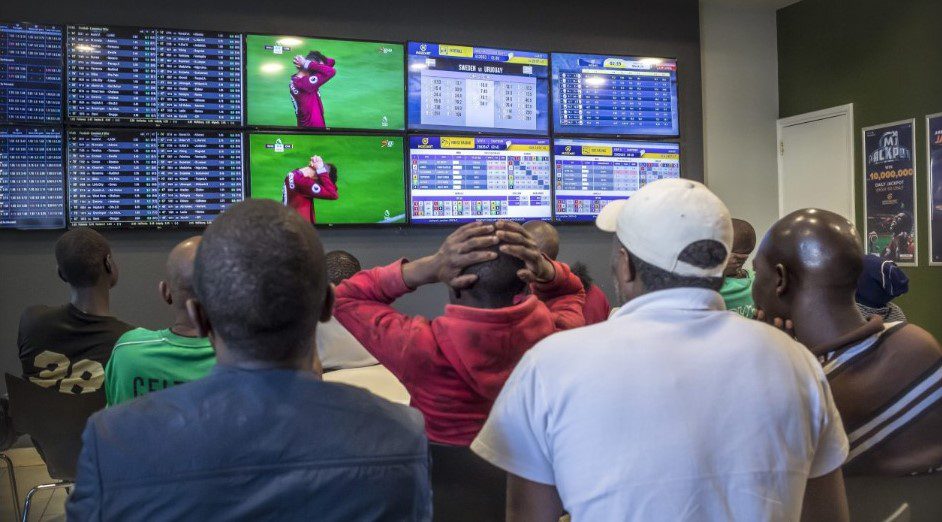
    Online GamblingGambling (Image Credit: Rest of World)

    Experts posit that people who gamble at harmful levels generate around 60% of losses and can threaten health, leading to increased incidents of mental illness and suicide. Other social issues include relationship breakdown, domestic violence, financial distress, and potential involvement in theft and fraud.

    Online gambling can drive poverty by diverting household spending from essential goods and services. Also, the activity has been revealed as a common way to launder money obtained through illegal activities.

    In some cases, it takes a serious therapy session or spiritual intervention to alleviate addiction to gambling.

    The future 

    Industry analysts estimate global gambling revenue will reach $700 billion by 2028, driven by smartphone use in low and middle-income countries. In Nigeria, the market is expected to reach N531 trillion ($366 million) by 2027.

    As adoption rates are expected to skyrocket, experts acknowledge the need for stable regulation to rebuild public trust and attract long-term capital.

    In Nigeria, for instance, the dispute over who regulates gambling activities remains unresolved. This follows the Supreme Court’s November 2024 verdict that nullified the National Lottery Act, ruling that gaming falls under state rather than federal jurisdiction. Amid the lack of clarity, a proposed Central Gaming Bill intended to harmonise licensing, taxation and standards has advanced through the National Assembly. 

    The ongoing dispute had slowed efforts to regularise both online gambling and physical betting activities, thereby creating a hole in a market that’s witnessing rapid growth.

    Also Read: Inside Nigeria’s online gambling boom and the fintech platforms powering it. 

    Disclaimer: The articles reposted on this site are sourced from public platforms and are provided for informational purposes only. They do not necessarily reflect the views of MEXC. All rights remain with the original authors. If you believe any content infringes on third-party rights, please contact service@support.mexc.com for removal. MEXC makes no guarantees regarding the accuracy, completeness, or timeliness of the content and is not responsible for any actions taken based on the information provided. The content does not constitute financial, legal, or other professional advice, nor should it be considered a recommendation or endorsement by MEXC.

    You May Also Like

    Best Crypto to Buy as Saylor & Crypto Execs Meet in US Treasury Council

    Best Crypto to Buy as Saylor & Crypto Execs Meet in US Treasury Council

    The post Best Crypto to Buy as Saylor & Crypto Execs Meet in US Treasury Council appeared on BitcoinEthereumNews.com. Michael Saylor and a group of crypto executives met in Washington, D.C. yesterday to push for the Strategic Bitcoin Reserve Bill (the BITCOIN Act), which would see the U.S. acquire up to 1M $BTC over five years. With Bitcoin being positioned yet again as a cornerstone of national monetary policy, many investors are turning their eyes to projects that lean into this narrative – altcoins, meme coins, and presales that could ride on the same wave. Read on for three of the best crypto projects that seem especially well‐suited to benefit from this macro shift:  Bitcoin Hyper, Best Wallet Token, and Remittix. These projects stand out for having a strong use case and high adoption potential, especially given the push for a U.S. Bitcoin reserve.   Why the Bitcoin Reserve Bill Matters for Crypto Markets The strategic Bitcoin Reserve Bill could mark a turning point for the U.S. approach to digital assets. The proposal would see America build a long-term Bitcoin reserve by acquiring up to one million $BTC over five years. To make this happen, lawmakers are exploring creative funding methods such as revaluing old gold certificates. The plan also leans on confiscated Bitcoin already held by the government, worth an estimated $15–20B. This isn’t just a headline for policy wonks. It signals that Bitcoin is moving from the margins into the core of financial strategy. Industry figures like Michael Saylor, Senator Cynthia Lummis, and Marathon Digital’s Fred Thiel are all backing the bill. They see Bitcoin not just as an investment, but as a hedge against systemic risks. For the wider crypto market, this opens the door for projects tied to Bitcoin and the infrastructure that supports it. 1. Bitcoin Hyper ($HYPER) – Turning Bitcoin Into More Than Just Digital Gold The U.S. may soon treat Bitcoin as…
    Share
    BitcoinEthereumNews2025/09/18 00:27
    Breaking: CME Group Unveils Solana and XRP Options

    Breaking: CME Group Unveils Solana and XRP Options

    CME Group launches Solana and XRP options, expanding crypto offerings. SEC delays Solana and XRP ETF approvals, market awaits clarity. Strong institutional demand drives CME’s launch of crypto options contracts. In a bold move to broaden its cryptocurrency offerings, CME Group has officially launched options on Solana (SOL) and XRP futures. Available since October 13, 2025, these options will allow traders to hedge and manage exposure to two of the most widely traded digital assets in the market. The new contracts come in both full-size and micro-size formats, with expiration options available daily, monthly, and quarterly, providing flexibility for a diverse range of market participants. This expansion aligns with the rising demand for innovative products in the crypto space. Giovanni Vicioso, CME Group’s Global Head of Cryptocurrency Products, noted that the new options offer increased flexibility for traders, from institutions to active individual investors. The growing liquidity in Solana and XRP futures has made the introduction of these options a timely move to meet the needs of an expanding market. Also Read: Vitalik Buterin Reveals Ethereum’s Bold Plan to Stay Quantum-Secure and Simple! Rapid Growth in Solana and XRP Futures Trading CME Group’s decision to roll out options on Solana and XRP futures follows the substantial growth in these futures products. Since the launch of Solana futures in March 2025, more than 540,000 contracts, totaling $22.3 billion in notional value, have been traded. In August 2025, Solana futures set new records, with an average daily volume (ADV) of 9,000 contracts valued at $437.4 million. The average daily open interest (ADOI) hit 12,500 contracts, worth $895 million. Similarly, XRP futures, which launched in May 2025, have seen significant adoption, with over 370,000 contracts traded, totaling $16.2 billion. XRP futures also set records in August 2025, with an ADV of 6,600 contracts valued at $385 million and a record ADOI of 9,300 contracts, worth $942 million. Institutional Demand for Advanced Hedging Tools CME Group’s expansion into options is a direct response to growing institutional interest in sophisticated cryptocurrency products. Roman Makarov from Cumberland Options Trading at DRW highlighted the market demand for more varied crypto products, enabling more advanced risk management strategies. Joshua Lim from FalconX also noted that the new options products meet the increasing need for institutional hedging tools for assets like Solana and XRP, further cementing their role in the digital asset space. The launch of options on Solana and XRP futures marks another step toward the maturation of the cryptocurrency market, providing a broader range of tools for managing digital asset exposure. SEC’s Delay on Solana and XRP ETF Approvals While CME Group expands its offerings, the broader market is also watching the progress of Solana and XRP exchange-traded funds (ETFs). The U.S. Securities and Exchange Commission (SEC) has delayed its decisions on multiple crypto-related ETF filings, including those for Solana and XRP. Despite the delay, analysts anticipate approval may be on the horizon. This week, REX Shares and Osprey Funds are expected to launch an XRP ETF that will hold XRP directly and allocate at least 40% of its assets to other XRP-related ETFs. Despite the delays, some analysts believe that approval could come soon, fueling further interest in these assets. The delay by the SEC has left many crypto investors awaiting clarity, but approval of these ETFs could fuel further momentum in the Solana and XRP futures markets. Also Read: Tether CEO Breaks Silence on $117,000 Bitcoin Price – Market Reacts! The post Breaking: CME Group Unveils Solana and XRP Options appeared first on 36Crypto.
    Share
    Coinstats2025/09/18 02:35
    Optimizely Named a Leader in the 2026 Gartner® Magic Quadrant™ for Personalization Engines

    Optimizely Named a Leader in the 2026 Gartner® Magic Quadrant™ for Personalization Engines

    Company recognized as a Leader for the second consecutive year NEW YORK, Feb. 5, 2026 /PRNewswire/ — Optimizely, the leading digital experience platform (DXP) provider
    Share
    AI Journal2026/02/06 00:47