The post New Zealand Dollar dips as risk appetite wanes, RBNZ limits downside appeared on BitcoinEthereumNews.com. NZD/USD declines on Monday, trading around 0.5770 at the time of writing, down 0.10% on the day. After briefly touching 0.5790, the pair erased its earlier gains as market sentiment turned more cautious. China’s trade surplus largely exceeded expectations in November, reaching $111.68 billion. This result, driven by a 5.9% YoY increase in exports, highlights the resilience of Chinese external demand. However, the improvement was not enough to sustain the New Zealand Dollar’s (NZD) upward momentum, as markets trimmed risk exposure in the absence of additional catalysts. The US Dollar (USD) remains indecisive ahead of Wednesday’s Federal Reserve (Fed) meeting. Markets are pricing nearly a 90% chance of a 25-basis-point rate cut, while also considering further reductions in 2026. Recent inflation readings, combined with mixed labour indicators, have encouraged caution and limited directional positioning across risk-linked currency pairs. The Reserve Bank of New Zealand (RBNZ), for its part, has signaled the end of its easing cycle after a rate cut in November. Governor Anna Breman reiterated last week that the institution remains “fully focused on inflation,” reinforcing the view of a stable monetary stance in the coming months. This stance, relatively more restrictive than what is expected from the Fed, helps cushion the downside in NZD/USD. In this environment, the pair’s next moves will largely depend on Fed President Jerome Powell’s remarks on Wednesday, as well as the Fed’s updated economic projections outlining the policy path into 2026. New Zealand Dollar Price Today The table below shows the percentage change of New Zealand Dollar (NZD) against listed major currencies today. New Zealand Dollar was the strongest against the Swiss Franc. USD EUR GBP JPY CAD AUD NZD CHF USD 0.15% 0.14% 0.37% -0.01% 0.26% 0.15% 0.44% EUR -0.15% -0.01% 0.22% -0.16% 0.11% 0.00% 0.29% GBP -0.14% 0.01% 0.25% -0.15% 0.12%… The post New Zealand Dollar dips as risk appetite wanes, RBNZ limits downside appeared on BitcoinEthereumNews.com. NZD/USD declines on Monday, trading around 0.5770 at the time of writing, down 0.10% on the day. After briefly touching 0.5790, the pair erased its earlier gains as market sentiment turned more cautious. China’s trade surplus largely exceeded expectations in November, reaching $111.68 billion. This result, driven by a 5.9% YoY increase in exports, highlights the resilience of Chinese external demand. However, the improvement was not enough to sustain the New Zealand Dollar’s (NZD) upward momentum, as markets trimmed risk exposure in the absence of additional catalysts. The US Dollar (USD) remains indecisive ahead of Wednesday’s Federal Reserve (Fed) meeting. Markets are pricing nearly a 90% chance of a 25-basis-point rate cut, while also considering further reductions in 2026. Recent inflation readings, combined with mixed labour indicators, have encouraged caution and limited directional positioning across risk-linked currency pairs. The Reserve Bank of New Zealand (RBNZ), for its part, has signaled the end of its easing cycle after a rate cut in November. Governor Anna Breman reiterated last week that the institution remains “fully focused on inflation,” reinforcing the view of a stable monetary stance in the coming months. This stance, relatively more restrictive than what is expected from the Fed, helps cushion the downside in NZD/USD. In this environment, the pair’s next moves will largely depend on Fed President Jerome Powell’s remarks on Wednesday, as well as the Fed’s updated economic projections outlining the policy path into 2026. New Zealand Dollar Price Today The table below shows the percentage change of New Zealand Dollar (NZD) against listed major currencies today. New Zealand Dollar was the strongest against the Swiss Franc. USD EUR GBP JPY CAD AUD NZD CHF USD 0.15% 0.14% 0.37% -0.01% 0.26% 0.15% 0.44% EUR -0.15% -0.01% 0.22% -0.16% 0.11% 0.00% 0.29% GBP -0.14% 0.01% 0.25% -0.15% 0.12%…

New Zealand Dollar dips as risk appetite wanes, RBNZ limits downside

For feedback or concerns regarding this content, please contact us at crypto.news@mexc.com

NZD/USD declines on Monday, trading around 0.5770 at the time of writing, down 0.10% on the day. After briefly touching 0.5790, the pair erased its earlier gains as market sentiment turned more cautious.

China’s trade surplus largely exceeded expectations in November, reaching $111.68 billion. This result, driven by a 5.9% YoY increase in exports, highlights the resilience of Chinese external demand. However, the improvement was not enough to sustain the New Zealand Dollar’s (NZD) upward momentum, as markets trimmed risk exposure in the absence of additional catalysts.

The US Dollar (USD) remains indecisive ahead of Wednesday’s Federal Reserve (Fed) meeting. Markets are pricing nearly a 90% chance of a 25-basis-point rate cut, while also considering further reductions in 2026. Recent inflation readings, combined with mixed labour indicators, have encouraged caution and limited directional positioning across risk-linked currency pairs.

The Reserve Bank of New Zealand (RBNZ), for its part, has signaled the end of its easing cycle after a rate cut in November. Governor Anna Breman reiterated last week that the institution remains “fully focused on inflation,” reinforcing the view of a stable monetary stance in the coming months. This stance, relatively more restrictive than what is expected from the Fed, helps cushion the downside in NZD/USD.

In this environment, the pair’s next moves will largely depend on Fed President Jerome Powell’s remarks on Wednesday, as well as the Fed’s updated economic projections outlining the policy path into 2026.

New Zealand Dollar Price Today

The table below shows the percentage change of New Zealand Dollar (NZD) against listed major currencies today. New Zealand Dollar was the strongest against the Swiss Franc.

USD EUR GBP JPY CAD AUD NZD CHF
USD 0.15% 0.14% 0.37% -0.01% 0.26% 0.15% 0.44%
EUR -0.15% -0.01% 0.22% -0.16% 0.11% 0.00% 0.29%
GBP -0.14% 0.01% 0.25% -0.15% 0.12% 0.02% 0.30%
JPY -0.37% -0.22% -0.25% -0.37% -0.11% -0.22% 0.07%
CAD 0.00% 0.16% 0.15% 0.37% 0.27% 0.16% 0.42%
AUD -0.26% -0.11% -0.12% 0.11% -0.27% -0.11% 0.18%
NZD -0.15% -0.01% -0.02% 0.22% -0.16% 0.11% 0.29%
CHF -0.44% -0.29% -0.30% -0.07% -0.42% -0.18% -0.29%

The heat map shows percentage changes of major currencies against each other. The base currency is picked from the left column, while the quote currency is picked from the top row. For example, if you pick the New Zealand Dollar from the left column and move along the horizontal line to the US Dollar, the percentage change displayed in the box will represent NZD (base)/USD (quote).

Source: https://www.fxstreet.com/news/new-zealand-dollar-weakens-as-risk-appetite-fades-rbnz-stance-cushions-losses-202512081537

Market Opportunity
Moonveil Logo
Moonveil Price(MORE)
$0.0000666
$0.0000666$0.0000666
-3.61%
USD
Moonveil (MORE) Live Price Chart
Disclaimer: The articles reposted on this site are sourced from public platforms and are provided for informational purposes only. They do not necessarily reflect the views of MEXC. All rights remain with the original authors. If you believe any content infringes on third-party rights, please contact crypto.news@mexc.com for removal. MEXC makes no guarantees regarding the accuracy, completeness, or timeliness of the content and is not responsible for any actions taken based on the information provided. The content does not constitute financial, legal, or other professional advice, nor should it be considered a recommendation or endorsement by MEXC.

You May Also Like

Glenn Hughes Scores His Greatest Chart Debut On His Own

Glenn Hughes Scores His Greatest Chart Debut On His Own

The post Glenn Hughes Scores His Greatest Chart Debut On His Own appeared on BitcoinEthereumNews.com. Nearly 10 years after Resonate, Glenn Hughes scores a new career high as Chosen opens at No. 4 on the Official Rock and Metal Albums chart. NEW YORK, NEW YORK – APRIL 08: Glenn Hughes of Deep Purple speaks onstage during the 31st Annual Rock And Roll Hall Of Fame Induction Ceremony at Barclays Center on April 8, 2016 in New York City. (Photo by Mike Coppola/Getty Images) Getty Images Almost a decade after his last solo album Resonate arrived, Glenn Hughes returns with Chosen. The rock superstar’s fifteenth project under his own name debuts on multiple charts in the United Kingdom, where he remains a legend in his chosen field. Chosen opens inside loftiest tiers on multiple tallies and even gives Hughes his first solo win on one roster. Glenn Hughes Scores First Hit on One Chart Chosen debuts on the Official Albums Downloads chart at No. 60. Hughes scores his first solo win on the list of the bestselling full-lengths and EPs on download platforms like iTunes and Amazon in the U.K., as his latest project arrives. Glenn Hughes Reaches a New Peak Chosen earns its loftiest starting point on the Official Rock and Metal Albums chart, where it kicks off at No. 4. Hughes reaches a new all-time high as the set arrives and collects his second top 10. Resonate peaked at No. 6, earning Hughes his first top 10 bestseller almost 10 years back, while Music for the Divine only spent one frame at No. 33 nearly 20 years ago. Glenn Hughes on the Albums Charts Chosen also brings Hughes to new all-time peak positions on both the Official Albums Sales and Official Physical Albums charts. The set debuts at Nos. 25 and 26 on those tallies, respectively. Only Resonate had previously landed on those lists,…
Share
BitcoinEthereumNews2025/09/18 02:41
Aptos Technology Concepts Compared to XRP Tundra’s Approach

Aptos Technology Concepts Compared to XRP Tundra’s Approach

The post Aptos Technology Concepts Compared to XRP Tundra’s Approach appeared on BitcoinEthereumNews.com. The conversation around blockchain innovation often centers on scalability, speed, and utility. Aptos is a Layer-1 blockchain built on Move language principles. It has positioned itself as a network prioritizing parallel execution and developer flexibility. While its technical ambitions have generated attention, the project still competes in a crowded field of platforms racing to establish themselves as the backbone of decentralized finance. XRP Tundra, in contrast, has anchored its design around an immediate problem facing millions of XRP holders: idle assets that generate no yield. Tundra is not competing directly in the smart contract arms race. It introduces a practical application through its dual-token model and staking vaults. The approach brings staking, yield farming, and governance functions directly into the XRP ecosystem. That also without requiring holders to leave the XRPL environment. How Does XRP Tundra Differ from Aptos’ Model? Aptos has emphasized modular scalability and throughput, seeking to attract developers who need high-performance infrastructure. Its model, while technically impressive, depends on widespread adoption of its unique Move programming language and the creation of a vibrant dApp ecosystem. The success of this vision is closely tied to developer participation and long-term ecosystem growth. XRP Tundra addresses an entirely different user base and challenge. For years, XRP has remained locked in wallets with no direct staking or yield options. Tundra introduces Cryo Vaults, where XRP can be “frozen” for 7 to 90 days. Thus, it rewards holders with yields that can reach up to 30% APY.  Enhancements through Frost Keys, special NFTs that boost returns, add further incentives for long-term engagement. Importantly, XRP never leaves the XRPL, ensuring holders maintain the security of the native ledger while activating passive income streams. Where Aptos focuses on abstract performance metrics, XRP Tundra focuses on a tangible need of its core community. It turns…
Share
BitcoinEthereumNews2025/09/22 21:42
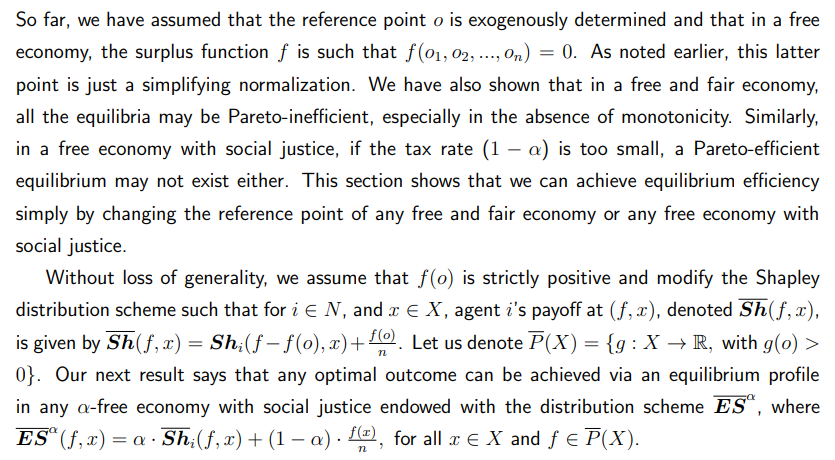
The Role of Reference Points in Achieving Equilibrium Efficiency in Fair and Socially Just Economies

The Role of Reference Points in Achieving Equilibrium Efficiency in Fair and Socially Just Economies

This article explores how a simple change in the reference point can achieve a Pareto-efficient equilibrium in both free and fair economies and those with social justice.
Share
Hackernoon2025/09/17 22:30