BitcoinWorld Crucial $3.4 Billion in Bitcoin Options Expire Today: What Traders Must Know The crypto derivatives market holds its breath today. A massive batch of Bitcoin options expire, representing a staggering $3.4 billion in notional value. This event, scheduled for 8:00 a.m. UTC on December 5th, is a key moment that could influence short-term price action and trader sentiment across the entire digital asset space. What Happens When […] This post Crucial $3.4 Billion in Bitcoin Options Expire Today: What Traders Must Know first appeared on BitcoinWorld.BitcoinWorld Crucial $3.4 Billion in Bitcoin Options Expire Today: What Traders Must Know The crypto derivatives market holds its breath today. A massive batch of Bitcoin options expire, representing a staggering $3.4 billion in notional value. This event, scheduled for 8:00 a.m. UTC on December 5th, is a key moment that could influence short-term price action and trader sentiment across the entire digital asset space. What Happens When […] This post Crucial $3.4 Billion in Bitcoin Options Expire Today: What Traders Must Know first appeared on BitcoinWorld.

Crucial $3.4 Billion in Bitcoin Options Expire Today: What Traders Must Know

2025/12/05 08:45
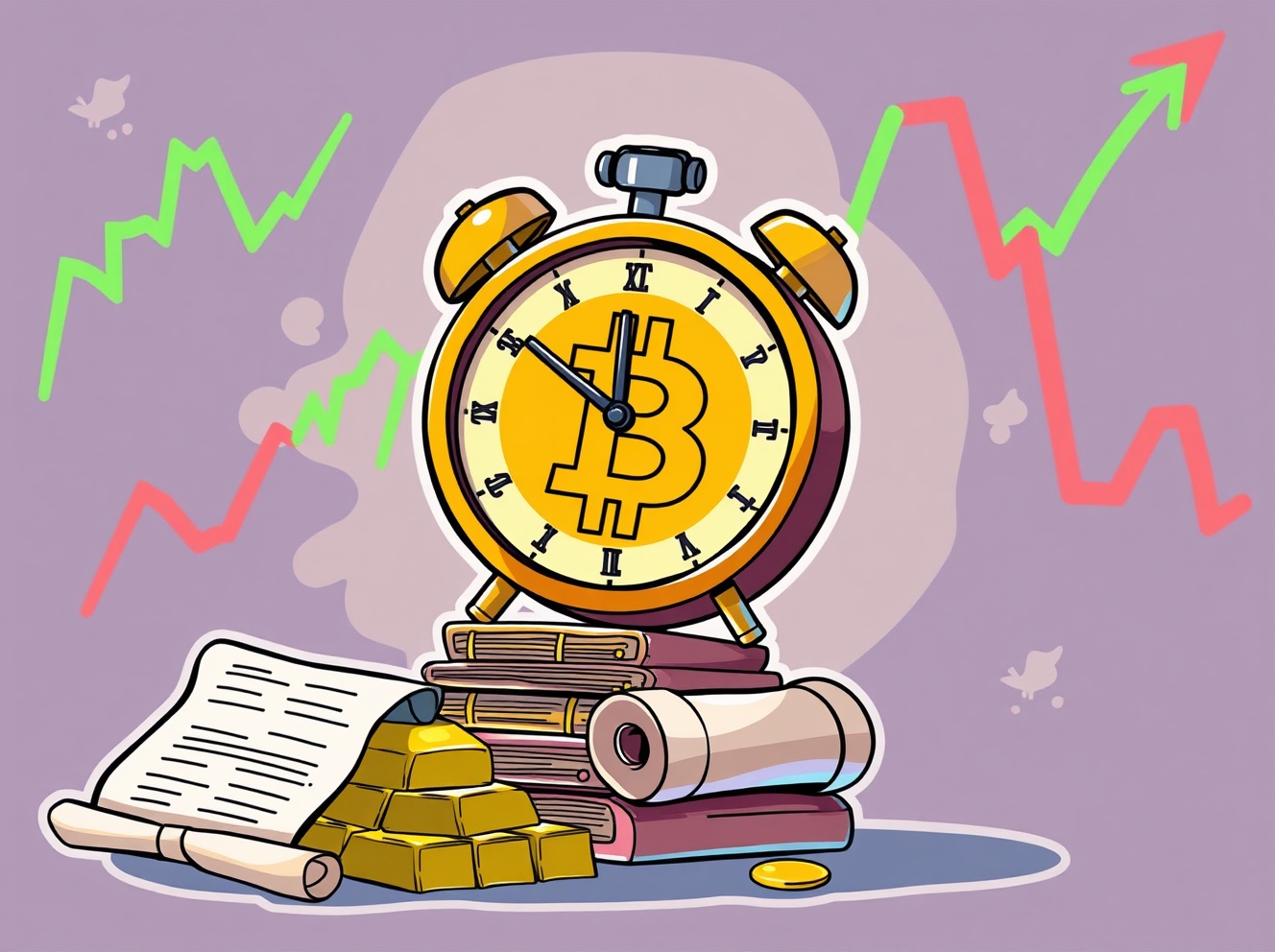
Cartoon illustration of a ticking clock marking the deadline for crucial Bitcoin options expire, symbolizing market anticipation.

BitcoinWorld

Crucial $3.4 Billion in Bitcoin Options Expire Today: What Traders Must Know

The crypto derivatives market holds its breath today. A massive batch of Bitcoin options expire, representing a staggering $3.4 billion in notional value. This event, scheduled for 8:00 a.m. UTC on December 5th, is a key moment that could influence short-term price action and trader sentiment across the entire digital asset space.

What Happens When $3.4B in Bitcoin Options Expire?

When options contracts reach their expiration date, holders must decide to exercise their right to buy or sell, or let the contract become worthless. This large-scale expiry creates a focal point for market forces. Data from leading exchange Deribit shows this batch has a put/call ratio of 0.91 and a “max pain” price of $91,000. But what do these terms actually mean for you?

  • Put/Call Ratio (0.91): This metric shows nearly equal numbers of put (bet on price drop) and call (bet on price rise) options. A ratio below 1.0 often indicates a slightly more bullish sentiment among options traders.
  • Max Pain Price ($91,000): This is the price at which the maximum number of options would expire worthless, causing the most financial “pain” to options buyers. It can act as a temporary gravitational pull for the spot price.

Ethereum Joins the Expiry Frenzy

It’s not just Bitcoin in the spotlight. A significant $660 million in Ethereum options are set to expire simultaneously. These contracts show a put/call ratio of 0.78 and a max pain price of $3,050. The lower put/call ratio suggests options traders for ETH are exhibiting even stronger bullish leanings compared to BTC ahead of this expiry event.

This dual expiry creates a compounded effect on the market. Large traders and institutions with positions in both assets may execute coordinated hedging or closing strategies, potentially increasing volatility. Therefore, watching both markets is crucial today.

How Could This Options Expiry Impact Bitcoin’s Price?

The immediate impact of an options expire event often revolves around the max pain price. Market makers—the entities that provide liquidity—often hedge their risk by buying or selling the underlying asset. As expiry approaches, they may unwind these positions, which can push the spot price toward the max pain level to minimize their own losses.

However, this is not a guaranteed rule. Strong external news or overwhelming spot market buying/selling pressure can easily override this effect. The key takeaway is to expect potentially heightened volatility and watch for unusual trading volume around the 8:00 a.m. UTC mark as positions are settled.

Actionable Insights for Crypto Traders

Navigating an options expire day requires a calm strategy. First, avoid making impulsive trades based solely on the expiry. Use it as one data point among many. Second, monitor trading volume and order book depth on major spot exchanges. Third, remember that the market’s reaction is often most pronounced in the hours immediately before and after the expiry time.

For long-term investors, these events are typically noise. Short-term traders, however, should be aware of the potential for rapid price swings and ensure their risk management—like stop-loss orders—is firmly in place.

Conclusion: A Pivotal Moment for Market Sentiment

Today’s multi-billion dollar Bitcoin options expire is more than just a derivatives settlement. It acts as a live stress test for current market sentiment and liquidity. The resulting price action will offer valuable clues about the balance of power between bulls and bears. While the max pain price provides a theoretical focal point, the true direction will be determined by the broader market’s conviction. By understanding the mechanics, traders can observe this event not with anxiety, but with informed perspective.

Frequently Asked Questions (FAQs)

Q: What does ‘notional value’ mean in options?
A: Notional value is the total value of the underlying asset controlled by the options contracts. The $3.4B figure is calculated by multiplying the number of contracts by the strike price, not the premium paid.

Q: Is a put/call ratio of 0.91 bullish or bearish?
A: Generally, a ratio below 1.0 (more calls than puts) is considered bullish for options market sentiment, while a ratio above 1.0 is considered bearish.

Q: What happens to options that expire “in the money”?
A: Options that are in-the-money (ITM) are typically automatically exercised by the exchange, meaning the holder of a call option will buy the asset, and the holder of a put option will sell it, at the agreed strike price.

Q: Can retail traders influence the max pain price?
A> It’s highly unlikely. The max pain price is primarily influenced by large institutions and market makers who hold significant opposing positions and engage in complex hedging activities.

Q: How often do these large Bitcoin options expire?
A: Major quarterly and monthly expiry events like this one happen regularly, often on the last Friday of the month or at the end of a quarter, and are closely watched by the market.

Found this breakdown of the crucial Bitcoin options expiry helpful? Share this article with fellow traders on X (Twitter), Telegram, or your favorite social platform to help them navigate today’s market moves. Knowledge is power, especially during high-impact events!

To learn more about the latest crypto market trends, explore our article on key developments shaping Bitcoin price action and institutional adoption.

This post Crucial $3.4 Billion in Bitcoin Options Expire Today: What Traders Must Know first appeared on BitcoinWorld.

Disclaimer: The articles reposted on this site are sourced from public platforms and are provided for informational purposes only. They do not necessarily reflect the views of MEXC. All rights remain with the original authors. If you believe any content infringes on third-party rights, please contact service@support.mexc.com for removal. MEXC makes no guarantees regarding the accuracy, completeness, or timeliness of the content and is not responsible for any actions taken based on the information provided. The content does not constitute financial, legal, or other professional advice, nor should it be considered a recommendation or endorsement by MEXC.

You May Also Like

Citadel pushes SEC to classify open-source developers as unregistered stockbrokers

Citadel pushes SEC to classify open-source developers as unregistered stockbrokers

The post Citadel pushes SEC to classify open-source developers as unregistered stockbrokers appeared on BitcoinEthereumNews.com. On Dec. 2, Citadel Securities filed a 13-page letter with the SEC arguing that decentralized protocols facilitating tokenized US equity trading already meet statutory definitions of exchanges and broker-dealers, and regulators should treat them accordingly. Two days later, the SEC’s Investor Advisory Committee convened a panel on tokenized equities that made clear the question is no longer whether stocks can move on-chain, but whether they can do so without dismantling the permissionless architecture that built DeFi. The gap between those two positions now defines the most consequential regulatory fight in crypto since the Howey test debates. Citadel’s letter arrived at the moment when tokenized equities stopped being a thought experiment. The firm welcomes tokenization in principle but insists that realizing its benefits requires applying “the key bedrock principles and investor protections that underpin the fairness, efficiency, and resiliency of US equity markets.” In other words, the document suggests that companies seeking to trade tokenized Apple shares must comply with Nasdaq rules, including transparent fees, consolidated tape reporting, market surveillance, fair access, and registration as an exchange or broker-dealer. The filing warns that granting broad exemptive relief to DeFi platforms creates a shadow US equity market in which liquidity fragments, retail investors lose Exchange Act protections, and incumbents face regulatory arbitrage from unregistered competitors. Within hours, Uniswap founder Hayden Adams fired back on X, calling Citadel’s position an attempt to “treat software developers of decentralized protocols like centralized intermediaries.” He invoked ConstitutionDAO, the 2021 crowdfunding effort that pooled $47 million in Ethereum to bid on a first-edition Constitution at Sotheby’s, only to lose to Griffin’s $43.2 million bid. Additionally, Adams zeroed in on Citadel’s fair-access argument, calling it “actual nerve” from the dominant player in retail order flow. The exchange captured crypto’s core narrative of permissionless code versus gatekeeper control and…
Share
BitcoinEthereumNews2025/12/07 02:32
RWA Tokenization and Crypto Activities Declared High-Risk, Unapproved

RWA Tokenization and Crypto Activities Declared High-Risk, Unapproved

The post RWA Tokenization and Crypto Activities Declared High-Risk, Unapproved appeared on BitcoinEthereumNews.com. Key Takeaways: Seven major Chinese financial associations issued a coordinated warning against RWA tokenization and all virtual-currency-related activity. Regulators stressed that no RWA tokenization projects are authorized in China, citing risks of fraud, speculation, and illegal fundraising. Institutions and individuals were told to avoid all forms of crypto involvement, while enforcement measures widen to include foreign firms serving mainland users. China has delivered one of its strongest signals yet that crypto-linked products, especially RWA tokenization remain firmly off-limits. A rare joint notice issued by seven national financial associations warns that emerging narratives around “stablecoins,” “air coins,” mining, and tokenized real-world assets are now being used as fronts for fraudulent fundraising, cross-border fund transfers, and market manipulation. Below is a structured, journalist-style breakdown of the alert, written uniquely, with expanded insights to help readers understand the regulatory landscape and its implications for global crypto markets. Read More: China to Shake Crypto Markets With First-Ever Yuan Stablecoin Plan Amid U.S. Dollar Dominance China’s Joint Warning: RWA Tokenization Not Approved and Considered High-Risk China’s latest advisory makes it clear that the rapid rise of RWA tokenization in global markets does not translate into tolerance at home. The notice states that financial regulators have not approved any RWA token issuance, trading, or financing activities inside the mainland. Officials emphasized that tokenizing traditional assets such as bonds, real estate claims, or corporate receivables introduces several layers of risk. These include: Fake or unverifiable underlying assets Operational and governance failures Speculative hype marketed as financial innovation Use of RWA tokens for illegal fundraising or unapproved securities issuance The message is unambiguous: any assumption that RWAs occupy a regulatory grey zone in China is incorrect. They are grouped alongside virtual currencies, mining schemes, and stablecoins as activities that can trigger criminal liability when conducted domestically. Why RWAs…
Share
BitcoinEthereumNews2025/12/07 02:40