

Crucial Defense: Vitalik Buterin’s 3 Key Updates to Minimize Ethereum Attack Vectors
BitcoinWorld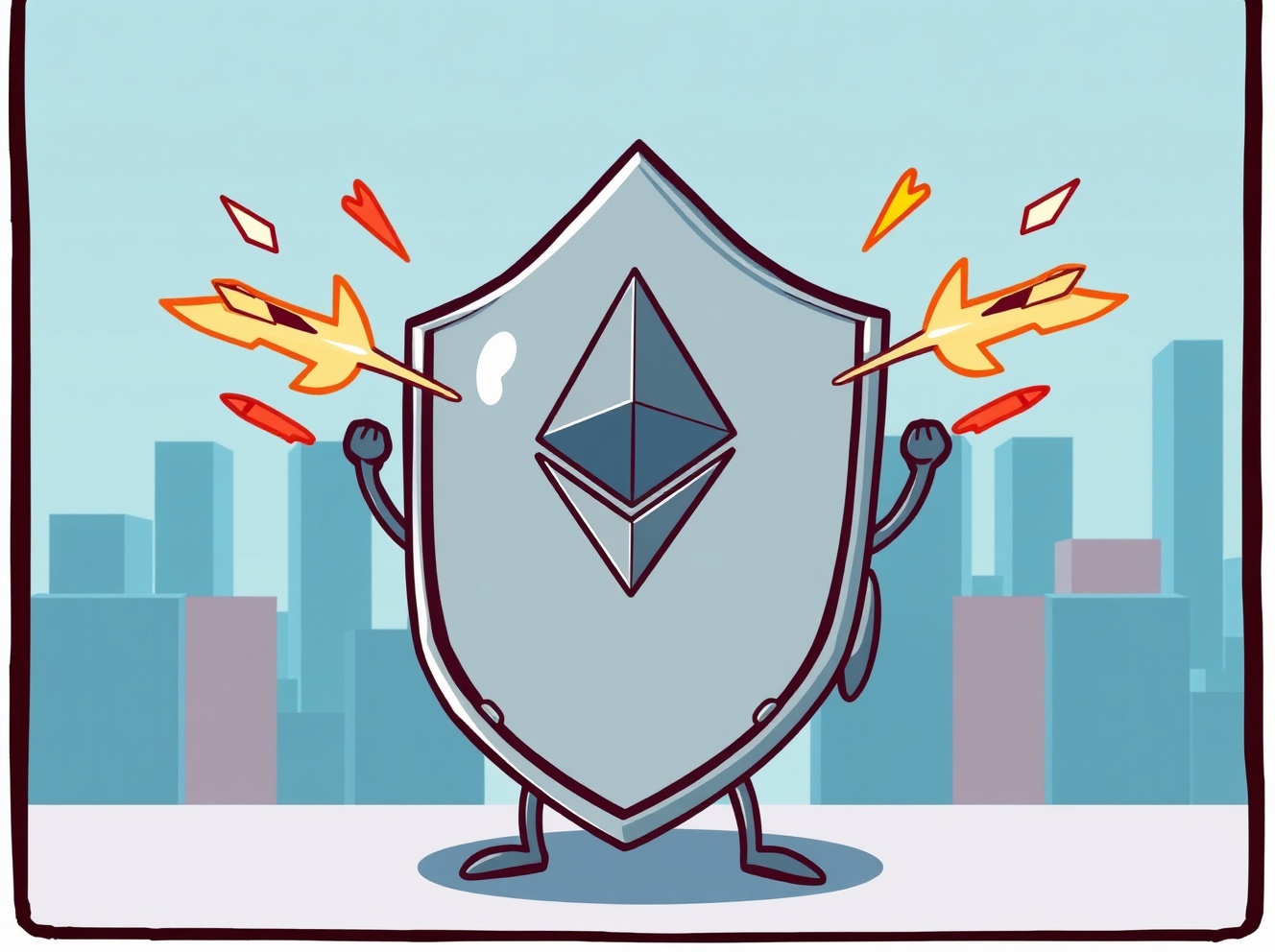
Crucial Defense: Vitalik Buterin’s 3 Key Updates to Minimize Ethereum Attack Vectors
Ethereum’s security is getting a major upgrade. In a significant move, founder Vitalik Buterin has outlined three structural changes designed to fortify the network’s defenses. These updates aim to proactively minimize Ethereum attack vectors, making the entire ecosystem more robust and predictable for developers and users alike. Let’s break down what this means for the future of the world’s leading smart contract platform.
Why is Minimizing Ethereum Attack Vectors So Important?
Think of a blockchain like a digital fortress. The larger and more complex it becomes, the more potential doors and windows exist for bad actors to exploit. Ethereum’s incredible flexibility, which allows for complex decentralized applications (dApps), also increases its potential “attack surface.” Buterin’s new proposals are about strategically reinforcing the walls and limiting how much force any single transaction can exert on the system. This shift is crucial for long-term stability as Ethereum scales to serve billions.
Update 1: Limiting Contract Code Access Per Transaction
The first change involves placing a sensible limit on how much contract code a single transaction can interact with. Currently, a malicious transaction could theoretically try to call upon vast amounts of code, creating unpredictable loads. By capping this, Ethereum introduces a fundamental constraint.
- Benefit: It prevents resource exhaustion attacks that could slow down or destabilize the network.
- Result: More predictable gas costs and execution times for everyone.
This is a foundational step to minimize Ethereum attack vectors related to computational spam and denial-of-service scenarios.
Update 2: Capping ZK-EVM Prover Cycles
With the rise of zero-knowledge (ZK) scaling solutions, a new type of computational load enters the picture: proof generation. Buterin proposes a hard cap on the number of prover cycles—the computational work needed to generate a ZK proof—that can be demanded per block.
- Benefit: It ensures Layer 2 rollups using ZK technology cannot overwhelm the main Ethereum chain with excessively complex proofs.
- Result: A smoother integration of scaling tech, preserving network security as it grows.
This forward-thinking rule safeguards the base layer as advanced cryptography becomes more common, directly addressing future Ethereum attack vectors.
Update 3: Overhauling EVM Memory & Strengthening Hard Caps
The third update tackles the Ethereum Virtual Machine’s (EVM) memory model. Buterin suggests revising the cost structure for memory usage and, more importantly, strengthening the existing hard caps on how much memory a transaction can consume.
- Benefit: It makes memory-based attacks economically unfeasible and technically bounded.
- Result: A more efficient and secure execution environment for all smart contracts.
This change closes loopholes that could be used to craft transactions designed to greedily consume resources and crash nodes.
How Will These Changes Impact Developers and Users?
You might wonder if these constraints will hinder innovation. The answer is a strategic “no.” Buterin frames this as “making Ethereum a simpler and more secure system.” For developers, it means working within clearer, safer boundaries. For users, it translates to greater network reliability and security for their assets and applications. The goal isn’t to limit creativity but to provide a stable foundation for it to flourish, free from the shadow of major exploits. By systematically working to minimize Ethereum attack vectors, the network becomes a more trustworthy platform for the next generation of the web.
A Compelling Summary: A More Predictable and Secure Ethereum
Vitalik Buterin’s three proposed updates represent a mature evolution in Ethereum’s design philosophy. The network is moving from a “maximally flexible” approach to a “maximally secure and predictable” one. This proactive stance to minimize Ethereum attack vectors is not about fixing past mistakes, but about engineering a resilient future. By placing intelligent limits on transaction load, proof complexity, and memory use, Ethereum is building the digital equivalent of shock absorbers and circuit breakers. This foresight ensures the network can handle exponential growth while remaining the secure, decentralized backbone of Web3.
Frequently Asked Questions (FAQs)
Q1: Will these updates make Ethereum transactions more expensive?
A: Not necessarily. While they introduce new limits, they also aim to create more predictable pricing. The changes are designed to prevent extreme, unpredictable gas spikes caused by malicious transactions, which could lead to a more stable cost environment overall.
Q2: Do these changes mean my existing smart contract will break?
A: Most existing, well-designed contracts should operate normally. The updates are focused on establishing upper limits for extreme edge cases. Developers should review the final specifications, but widespread breakage is not the intention.
Q3: When will these updates be implemented?
A: These are proposals from Vitalik Buterin and will need to be discussed, refined, and formally accepted by the Ethereum developer community. They will likely be included in a future network upgrade (hard fork), so implementation is months away at a minimum.
Q4: How do these changes relate to Ethereum’s scalability?
A: They are complementary. Scalability solutions like rollups handle transaction volume, while these updates ensure the base layer security that those rollups rely on remains rock-solid. They make Ethereum a more secure anchor for scaling.
Q5: What is the main benefit for the average crypto user?
A: Increased security and reliability. A network with minimized attack vectors is less likely to suffer from disruptive exploits or downtime, which protects the value and functionality of the assets and applications you use.
Q6: Are other blockchains implementing similar measures?
A: Many newer blockchains are designed with similar resource limits from the start. Ethereum is applying these lessons proactively to its mature, established network, which is a complex but necessary task to ensure its long-term health.
Found this deep dive into Ethereum’s security evolution valuable? Help the community stay informed by sharing this article on X (Twitter) or your favorite social media platform. Let’s spread the word about how Ethereum is building a more secure future!
To learn more about the latest Ethereum trends, explore our article on key developments shaping Ethereum institutional adoption.
This post Crucial Defense: Vitalik Buterin’s 3 Key Updates to Minimize Ethereum Attack Vectors first appeared on BitcoinWorld.
You May Also Like

WHO launches initiative for digital health wallets in Southeast Asia

JANCTION Forges Alliance with AltLayer to Enhance Blockchain Interoperability

