

Must Read
IN MEMORY OF. A woman looks on next to paper cranes at the makeshift memorial to victims of the Wang Fuk Court housing complex last week’s deadly fire, in Tai Po, Hong Kong, on December 3, 2025.IN MEMORY OF. A woman looks on next to paper cranes at the makeshift memorial to victims of the Wang Fuk Court housing complex last week’s deadly fire, in Tai Po, Hong Kong, on December 3, 2025.
Hong Kong fire tragedy: A token of solidarity for ‘heroic’ domestic workers
For feedback or concerns regarding this content, please contact us at crypto.news@mexc.com
HONG KONG – Ubiquitous in the bustling financial hub that is Hong Kong are the hundreds of thousands of foreign domestic helpers with babies strapped on their backs as they wheel in cartfuls of groceries, fetching schoolchildren, pushing wheelchairs of elderly popo or kung kung or pet dog strollers, or tutoring their wards in households that help keep the city’s economic engine buzzing.
The Tai Po Fire that tore through the residential complex shone a light at this urban lifestyle that is uniquely Hong Kong.
At least 159 people, including domestic helpers, perished as the blaze rapidly jumped from one 31-story block to the next.
That employer-helper dynamic has been whispered among concern groups for decades since the former British colony started importing foreign helpers so locals could work and make money.
Those concerns grew amid the devastating No. 5-alarm inferno within days of the November 26 carnage.
At the end of the three-day official mourning for the dead on Monday, December 1, the government announced late the same night a package of additional “tokens of solidarity,” including a special subsidy of HK$20,000 to foreign domestic helpers employed at Wang Fuk Court in Tai Po.
“They may not have support from family or relatives in Hong Kong, and their personal belongings may already be completely destroyed by the blaze, or their employers may have tragically passed away,” a government spokesman said in a statement.
As of Tuesday, December 2, 10 helpers have died, comprising one Filipino and nine Indonesians. Three helpers are in the hospital while 30 are reported missing.
Official figures showed 235 foreign domestic helpers worked at Wang Fuk.
Government assistance
On Tuesday, Hong Kong’s Secretary for Labor and Welfare James Sun told a packed press briefing that apart from the statutory compensation, which will be over HK$500,000, the family of a helper who died in the fire will also be receiving a one-off financial assistance of HK$200,000, plus another HK$50,000 of support.
“Adding all those together, for foreign domestic helpers who died in the fire, [their families] will be receiving roughly HK$800,000. That is roughly equivalent to US$100,000.”
Sun continued: “I would like to extend our deepest condolences to the families of the deceased foreign domestic helpers. At the same time, I wish all those who were injured in the fire a very speedy recovery.”
“We are truly grateful for their selflessness and also their heroic acts during the fire because many of them were taking care of the elderly, children, and babies in Wang Fuk Court.”
Those words lit up Christmas cheers in the Tai Po community of Filipino and Indonesian helpers as global media organizations like BBC, CNN, NBC, and Bloomberg sent correspondents to beam shocking images of despair to the world.
The helpers felt they were being left by the wayside as the government announced emergency relief money for the Wang Fuk Court families with no direct reference that their helpers were to receive “tokens of solidarity.”
Geralyn, a 43-year-old Filipino at Wang Fuk, tried to ask her employer about the initial slew of Hong Kong government assistance last Saturday, November 29.
“I told my employer that the [Philippine] consulate told me to ask you if we have a subsidy from the Hong Kong government. My employer said they do not know and will ask the government,” Geralyn told Rappler in an interview when she dropped by a help desk for migrants in Tai Po.
Puji-Astutik, a 42-year-old Indonesian helper also at Wang Fuk, told Rappler: “I have not heard that the [Hong Kong] government is giving allowance. My employer told me about the $2,000 Octopus card.”
Chief Executive John Lee was asked why he deserved to keep his job after the Wang Fuk fire at a media session ahead of an Executive Council meeting Tuesday morning. Lee also announced a committee of inquiry headed by a judge to examine the incident and help reform the whole building renovation system.
“Nobody, of course, wants a fire to happen. We will do our best; it has been the effort of the government, of everybody in society, of everybody involved in this area to do their best. Fires happen in different cities, despite different cities’ governments and communities having tried their best. We will do our best to prevent it.”
A Labor Department spokesman, in answer to questions from Rappler, said in an email Monday ahead of the press briefings, “With regard to the families of deceased foreign domestic helpers (FDHs), the HKSAR government will each provide $200,000 token of solidarity which should go to the next-of-kin (or the authorized recipient).”
“We are working closely with the respective consulates-general in Hong Kong to identify the rightful family members and firm up the transfer arrangements.”
The spokesman added: “A separate non-accountable allowance of HK$50,000 will be provided specifically for funeral arrangements and repatriation of remains. The consulates will consult the families on their wishes, and the Labor Department (LD) will render all necessary assistance to ensure the process is smooth and respectful.”
On the HK$20,000 special subsidy for each of the affected helpers, the LD “will commence disbursement as swiftly as possible while upholding safeguards to ensure that the intended and eligible recipients could benefit from the subsidy.”
“The detailed arrangements for application and payment will be announced shortly. In the meantime, LD has established a dedicated hotline at 3582-8987, manned by officers fluent in Tagalog, Bahasa Indonesia, Cantonese, and English, to address inquiries from FDHs, their employers, or any parties assisting them on employment-related matters arising from the incident.”
When asked about the government’s Support Fund of HK$1.6 billion, the spokesman said the fund is aimed to help affected residents rebuild their homes and live over an extended period.
“Resources from the Fund will be used for the accommodation, repairs, daily necessities, and other recovery needs of the whole households, hence benefiting all household members including FDHs,” the LD spokesman said.
“Regarding the injury grant, injured FDHs are fully entitled to receive it in addition to the $20,000 special subsidy. Both forms of assistance will be provided to eligible FDHs who suffered injuries in the incident, ensuring they receive comprehensive support for their medical needs and immediate financial relief.”
The labor chief Sun held the media session on Tuesday together with the Philippine Secretary for Migrant Workers Hans Leo Cacdac Jr. after meeting at the Government Headquarters in Tamar.
Cacdac thanked the SAR government for their medical aid for the Philippine national.
“We are so thankful for the medical procedure for our national who was initially in a critical stage when brought to the ICU. But with the successful medical procedure, should I say an innovative one, she has been saved and is in recovery mode. We are hoping to have her home soon with her family.”
 IN MEMORY OF. A woman looks on next to paper cranes at the makeshift memorial to victims of the Wang Fuk Court housing complex last week’s deadly fire, in Tai Po, Hong Kong, on December 3, 2025.
More help from groups
Perhaps not since the two-week rule for terminated helpers to go back to their home countries, enforced since 1986, has a single incident galvanized the community, which asked that their voices be heard.
The Philippine consulate general in a statement Monday said it “has confirmed that of all the Filipino nationals concerned, 86 are safe and accounted for.” But two others are “left for verification.”
The Indonesian diplomatic mission said 36 others remain unaccounted for.
Following the announcement of subsidies for the Wang Fuk helpers, Sringatin, a spokeswoman for the Asian Migrants Coordinating Body and the leader of the Indonesian Migrant Workers Union, said the Hong Kong government should set out clear guidelines written in different languages on how the helpers could apply.
She also hoped that Hong Kong would not allow recruitment agencies to coordinate with families of the deceased in Indonesia when handling the tokens of solidarity.
She said some people already were posting so-called family documents in Indonesia on social media claiming to be the husband of a Wang Fuk victim. “The husband didn’t know (about the subsidies). The Indonesian consulate (in Hong Kong) doesn’t care. They use recruitment agencies to pass the information to the family. We don’t trust them.”
The Mission for Migrant Workers (MFMW), in its latest update, said there were a total of 201 migrant domestic workers working at Wang Fuk Court comprising 82 Filipinos and 119 Indonesians.
In the four days since they set up the help desk in Tai Po on Thursday night, November 27, “we were able to find more than 50 migrants affected.”
The four nongovernment agencies — MFMW, Bethune House, Asian Migrants Coordinating Body, and the International Migrants Alliance — also were able to get in touch with the families of the workers who have died.
The alliance also has been assisted by the Association for the Rights of Industrial Accident Victims on the fatal cases.
They have visited two workers who remain critically ill in the hospital ICU and offered supplies.
Others who were rescued and not injured “have immediately returned to work, supporting employers and their families in this difficult time.”
Those who went to the help desk, including Hong Kong-Chinese who survived, were handed emergency supplies donated to the MFMW alliance, including personal hygiene items, clothes, underwear, hijabs, scarves, water, medicine, and even lunch boxes of Filipino, Chinese, or halal food.
Immediate PH government response needed
Dolores Balladares, chairwoman of the United Filipinos in Hong Kong, told Rappler on Monday that many of the fire-displaced domestic workers told them they needed money and asked how they could ask help from the Overseas Workers Welfare Administration (OWWA) in the Philippine consulate.
She said the Philippine Department of Migrant Workers headed by Cacdac should have a P1.3-billion budget for financial assistance to those faced with disasters abroad, such as fires, or health problems.
“It is not transparent to workers how much is available for them (amid the Tai Po Fire),” she said.
“Philippine government intervention response should be immediate, but so far there has been no announcement,” she said.
The helpers also fear they could be sacked, and they’re scared to ask their employers about it. They also want to know if they are considered household members under the Hong Kong government fire relief for the residents.
Geralyn, the Filipino helper, said she asked her employer if she would continue working with the family on Saturday night. Her employer told her, “Don’t worry; we will be better soon.”
The Filipino said all her documents were lost in the fire, “even the cash of HK$8,000 that I had saved up” that she kept in her belongings at the flat.
The Philippine consulate’s OWWA gave her a sum that’s less than that, she said.
Her boss said she needed to renew her Philippine passport before they could go to the Immigration Department to get a replacement Hong Kong ID card.
The employer also told her that her monthly salary would be deposited to a bank account from now on. Geralyn has yet to open an account as she waits for replacement documents.
The Indonesian Puji-Astutik is taking all these in stride, however, saying that when faced with a fire: “Don’t panic. First, you have to save yourself, and if you can, try to save the employer.” – Rappler.com
Mary Ann Benitez is a multi-award-winning health journalist who has also covered ethnic minorities and socioeconomic issues. She is based in Hong Kong.
Market Opportunity
TokenFi Price(TOKEN)
$0.002703
$0.002703$0.002703
USD
TokenFi (TOKEN) Live Price Chart
Disclaimer: The articles reposted on this site are sourced from public platforms and are provided for informational purposes only. They do not necessarily reflect the views of MEXC. All rights remain with the original authors. If you believe any content infringes on third-party rights, please contact crypto.news@mexc.com for removal. MEXC makes no guarantees regarding the accuracy, completeness, or timeliness of the content and is not responsible for any actions taken based on the information provided. The content does not constitute financial, legal, or other professional advice, nor should it be considered a recommendation or endorsement by MEXC.
You May Also Like
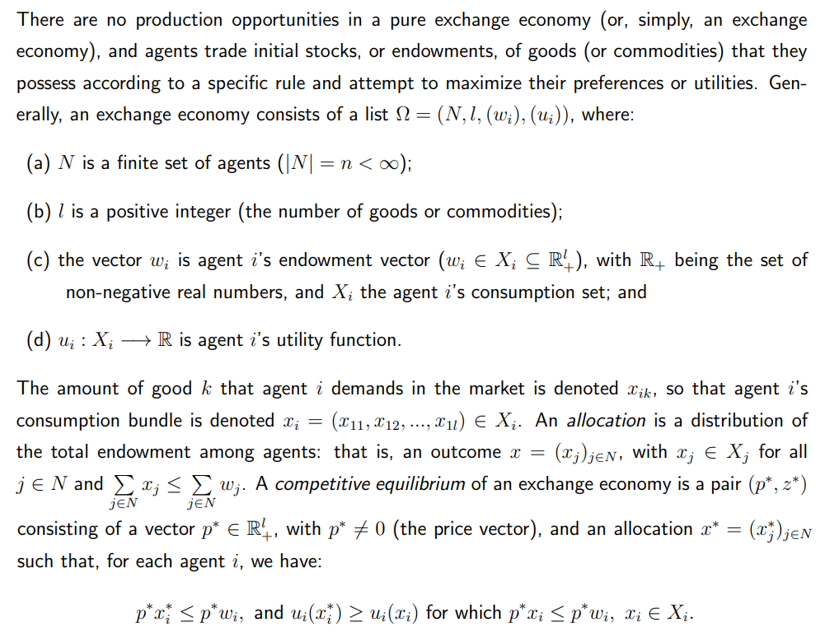
Game Theory and Exchange Economies: A New Model for Pure Exchange and Transferable Payoff
This article applies a free and fair economy model to analyze pure exchange economies and markets with transferable payoff.
Share
Hackernoon2025/09/17 23:30

Crypto Supercycle in 2025? DeepSeek Ranks the Best Altcoins to Buy Right Now
The post Crypto Supercycle in 2025? DeepSeek Ranks the Best Altcoins to Buy Right Now appeared on BitcoinEthereumNews.com. Crypto Supercycle in 2025? DeepSeek Ranks the Best Altcoins to Buy Right Now Sign Up for Our Newsletter! For updates and exclusive offers enter your email. As a crypto writer, Krishi splits his time between decoding the chaos of the markets and writing about it in a way that doesn’t put you to sleep. He’s been at it for nearly two years in the crypto trenches. Yes, he regrets missing the magnificent rallies that came before that (who doesn’t!), but he’s more than ready to put his money where his words are. Before diving headfirst into crypto, Krishi spent over five years writing for some of the biggest names in tech, including TechRadar, Tom’s Guide, and PC Gaming, covering everything from gadgets and cybersecurity to gaming and software. When he’s not scouring and writing about the latest happenings in crypto, Krishi trades the forex market while keeping crypto in his long-term HODL plans. He’s a Bitcoin believer, though he never lets that bias creep into his writing. This website uses cookies. By continuing to use this website you are giving consent to cookies being used. Visit our Privacy Center or Cookie Policy. I Agree Source: https://bitcoinist.com/crypto-supercycle-2025-best-altcoins-to-buy-now-deepseek/
Share
BitcoinEthereumNews2025/09/18 01:45

Gold Hits $3,700 as Sprott’s Wong Says Dollar’s Store-of-Value Crown May Slip
The post Gold Hits $3,700 as Sprott’s Wong Says Dollar’s Store-of-Value Crown May Slip appeared on BitcoinEthereumNews.com. Gold is strutting its way into record territory, smashing through $3,700 an ounce Wednesday morning, as Sprott Asset Management strategist Paul Wong says the yellow metal may finally snatch the dollar’s most coveted role: store of value. Wong Warns: Fiscal Dominance Puts U.S. Dollar on Notice, Gold on Top Gold prices eased slightly to $3,678.9 […] Source: https://news.bitcoin.com/gold-hits-3700-as-sprotts-wong-says-dollars-store-of-value-crown-may-slip/
Share
BitcoinEthereumNews2025/09/18 00:33

