What to Know: Bitcoin’s November selloff showed that DeFi and core crypto infrastructure are tougher than they look, boosting the case for real utility 1000x plays.  Bitcoin Hyper ($HYPER) brings SVM execution and ultra low latency smart contracts to Bitcoin, aiming for high speed wrapped $BTC DeFi on a modular Layer 2. PEPENODE ($PEPENODE) reshapes meme coins with a mine to earn virtual node system that rewards engagement instead of blind speculation. Cardano ($ADA) keeps building as a research driven base layer, supported by Hydra scaling and new exposure through the Brave wallet. Bitcoin’s November crash looked painful on the charts. Prices swung double digits in days, and every social media chart wizard acted like the sky was falling. But under the surface, something more interesting happened. DeFi infrastructure held. Trades cleared. Liquidations worked. Yield strategies kept running. There were no chain meltdowns or domino style collapses like in previous cycles. It was boring in the best possible way. That resilience matters. It shows that capital is finally shifting to systems that actually work during volatility. Not the hype coins that vanish after one bad weekend, but the rails that keep the market running when the heat turns up.  If you think the next 1000x crypto to buy is the project that survives these stress tests, then you’re already looking past the usual noise. You want speed, strong security assumptions, and tech stacks that do not explode the moment gas fees spike. Below are three new crypto projects that match that idea. Bitcoin Hyper ($HYPER) as a bold Bitcoin Layer 2 execution engine. PEPENODE ($PEPENODE) as a mine to earn twist on memecoins. And Cardano ($ADA) as the slow and steady research chain that keeps shipping L2 capacity. 1. Bitcoin Hyper ($HYPER) – First Bitcoin L2 With SVM Execution Bitcoin Hyper ($HYPER) calls itself the first Bitcoin Layer 2 that runs the Solana Virtual Machine. In simple terms, it tries to bolt Solana level performance onto Bitcoin’s settlement layer. Bitcoin keeps its security. $HYPER provides the speed. Instead of waiting for Bitcoin’s ~10 minute blocks and dealing with its limited scripting, $HYPER sends execution to a real time SVM Layer 2. The setup is modular: Bitcoin L1 for settlement, one trusted sequencer for ordering, and an SVM execution layer that targets sub second confirmations and very low fees. It gives DeFi on Bitcoin a Solana style user experience. Bitcoin Hyper wants wrapped $BTC to feel like a real DeFi asset. Fast payments. Tiny fees. Swaps, lending, and staking inside SVM contracts. Even NFTs and gaming rails through Rust based SDKs. SPL compatible tokens make it easy for Solana builders to join the ecosystem. The market seems to like the idea. The presale has already raised over $28M, and you can buy $HYPER now for just $0.013365. Staking begins right after TGE, and presale stakers get a 7 day vesting window. It’s set up for long term participation instead of quick flips. If you think Bitcoin’s next big move comes from fast, programmable liquidity built on Bitcoin instead of moving away from it, Bitcoin Hyper is a strong high beta bet on that future. For more context on this project, check out Bitcoin Hyper price prediction and see what the future holds. Join the $HYPER presale now. 2. PEPENODE ($PEPENODE) – Mine‑to‑Earn Memecoin With Node Economics November reminded everyone that most meme coins still trade like lottery tickets taped to a roller coaster. PEPENODE ($PEPENODE) wants to change that with a mine to earn model that rewards users for running virtual nodes and being active, not just watching charts. The core of the system is a virtual mining setup with tiered node rewards. Engagement produces tokens and higher tier nodes lead to better performance. Users track progress through a dashboard that looks more like a simple DeFi mining UI than a standard meme page. For a project still in presale, traction is strong. $PEPENODE has raised over $2M so far, with tokens priced at $0.0011731. The official staking program offers 578% APY, while the node reward system works as a soft yield tool, sending new supply toward active community members instead of random speculators. Most meme coins depend on hype loops, influencers, and luck. PEPENODE brings back a touch of early DeFi mining energy. It’s gamified, but with actual rules and transparent dashboards. If you want meme upside without wandering around blindfolded, this one deserves a spot on your radar. To dive deeper into the project, you can also check out PEPENODE price prediction and see how 2026 looks like for this memecoin. Join the PEPENODE presale. 3. Cardano ($ADA) – Research‑Driven Base Layer With Hydra Scaling Bitcoin Hyper tries to improve Bitcoin from the outside. Cardano ($ADA) does the opposite. It builds its base layer slowly and scientifically, with formal methods and a layered design. Its Ouroboros proof of stake system aims for proof of work level security while staying energy efficient. Cardano separates settlement and computation. This lets developers create more complex smart contracts without overloading the base chain. Hydra adds Layer 2 scaling on top, letting apps run high throughput activity off chain and anchor back to the mainnet when needed. The ecosystem has been expanding in the background. Brave wallet integration now gives $ADA exposure to more than 85M users. This brings a steady flow of potential new holders and dApp users into the Cardano world. At the same time, institutions continue exploring DeFi, identity, and real world asset ideas on Cardano. $ADA is currently trading around $0.3934, giving the network a relatively steady valuation as development keeps moving. Cardano isn’t the loudest chain. It doesn’t shout about transactions per second every week. But its mix of formal verification, Hydra scaling, and massive user distribution makes it one of the more durable large cap platforms. If your thesis favors slow cooking infrastructure that wins long term, ADA still belongs in the conversation. Buy Cardano from Binance now. Bitcoin’s November dip was more than a price correction. It was a live stress test. And the winners were the projects that kept working while everything else shook. Recap: Bitcoin Hyper ($HYPER) pushes fast DeFi execution on Bitcoin. PEPENODE ($PEPENODE) upgrades memes with node based rewards. Cardano ($ADA) keeps compounding with research driven tech and new scaling layers. If Bitcoin’s future growth comes from tools that keep running during chaos, these three offer very different but very real ways to position early. This article is for informational purposes only and doesn’t constitute financial, investment, or trading advice. Always do your own research (DYOR) before investing in crypto. Authored by Aaron Walker, NewsBTC – https://www.newsbtc.com/news/next-1000x-crypto-to-buy-defi-recovers-after-bitcoin-crashWhat to Know: Bitcoin’s November selloff showed that DeFi and core crypto infrastructure are tougher than they look, boosting the case for real utility 1000x plays.  Bitcoin Hyper ($HYPER) brings SVM execution and ultra low latency smart contracts to Bitcoin, aiming for high speed wrapped $BTC DeFi on a modular Layer 2. PEPENODE ($PEPENODE) reshapes meme coins with a mine to earn virtual node system that rewards engagement instead of blind speculation. Cardano ($ADA) keeps building as a research driven base layer, supported by Hydra scaling and new exposure through the Brave wallet. Bitcoin’s November crash looked painful on the charts. Prices swung double digits in days, and every social media chart wizard acted like the sky was falling. But under the surface, something more interesting happened. DeFi infrastructure held. Trades cleared. Liquidations worked. Yield strategies kept running. There were no chain meltdowns or domino style collapses like in previous cycles. It was boring in the best possible way. That resilience matters. It shows that capital is finally shifting to systems that actually work during volatility. Not the hype coins that vanish after one bad weekend, but the rails that keep the market running when the heat turns up.  If you think the next 1000x crypto to buy is the project that survives these stress tests, then you’re already looking past the usual noise. You want speed, strong security assumptions, and tech stacks that do not explode the moment gas fees spike. Below are three new crypto projects that match that idea. Bitcoin Hyper ($HYPER) as a bold Bitcoin Layer 2 execution engine. PEPENODE ($PEPENODE) as a mine to earn twist on memecoins. And Cardano ($ADA) as the slow and steady research chain that keeps shipping L2 capacity. 1. Bitcoin Hyper ($HYPER) – First Bitcoin L2 With SVM Execution Bitcoin Hyper ($HYPER) calls itself the first Bitcoin Layer 2 that runs the Solana Virtual Machine. In simple terms, it tries to bolt Solana level performance onto Bitcoin’s settlement layer. Bitcoin keeps its security. $HYPER provides the speed. Instead of waiting for Bitcoin’s ~10 minute blocks and dealing with its limited scripting, $HYPER sends execution to a real time SVM Layer 2. The setup is modular: Bitcoin L1 for settlement, one trusted sequencer for ordering, and an SVM execution layer that targets sub second confirmations and very low fees. It gives DeFi on Bitcoin a Solana style user experience. Bitcoin Hyper wants wrapped $BTC to feel like a real DeFi asset. Fast payments. Tiny fees. Swaps, lending, and staking inside SVM contracts. Even NFTs and gaming rails through Rust based SDKs. SPL compatible tokens make it easy for Solana builders to join the ecosystem. The market seems to like the idea. The presale has already raised over $28M, and you can buy $HYPER now for just $0.013365. Staking begins right after TGE, and presale stakers get a 7 day vesting window. It’s set up for long term participation instead of quick flips. If you think Bitcoin’s next big move comes from fast, programmable liquidity built on Bitcoin instead of moving away from it, Bitcoin Hyper is a strong high beta bet on that future. For more context on this project, check out Bitcoin Hyper price prediction and see what the future holds. Join the $HYPER presale now. 2. PEPENODE ($PEPENODE) – Mine‑to‑Earn Memecoin With Node Economics November reminded everyone that most meme coins still trade like lottery tickets taped to a roller coaster. PEPENODE ($PEPENODE) wants to change that with a mine to earn model that rewards users for running virtual nodes and being active, not just watching charts. The core of the system is a virtual mining setup with tiered node rewards. Engagement produces tokens and higher tier nodes lead to better performance. Users track progress through a dashboard that looks more like a simple DeFi mining UI than a standard meme page. For a project still in presale, traction is strong. $PEPENODE has raised over $2M so far, with tokens priced at $0.0011731. The official staking program offers 578% APY, while the node reward system works as a soft yield tool, sending new supply toward active community members instead of random speculators. Most meme coins depend on hype loops, influencers, and luck. PEPENODE brings back a touch of early DeFi mining energy. It’s gamified, but with actual rules and transparent dashboards. If you want meme upside without wandering around blindfolded, this one deserves a spot on your radar. To dive deeper into the project, you can also check out PEPENODE price prediction and see how 2026 looks like for this memecoin. Join the PEPENODE presale. 3. Cardano ($ADA) – Research‑Driven Base Layer With Hydra Scaling Bitcoin Hyper tries to improve Bitcoin from the outside. Cardano ($ADA) does the opposite. It builds its base layer slowly and scientifically, with formal methods and a layered design. Its Ouroboros proof of stake system aims for proof of work level security while staying energy efficient. Cardano separates settlement and computation. This lets developers create more complex smart contracts without overloading the base chain. Hydra adds Layer 2 scaling on top, letting apps run high throughput activity off chain and anchor back to the mainnet when needed. The ecosystem has been expanding in the background. Brave wallet integration now gives $ADA exposure to more than 85M users. This brings a steady flow of potential new holders and dApp users into the Cardano world. At the same time, institutions continue exploring DeFi, identity, and real world asset ideas on Cardano. $ADA is currently trading around $0.3934, giving the network a relatively steady valuation as development keeps moving. Cardano isn’t the loudest chain. It doesn’t shout about transactions per second every week. But its mix of formal verification, Hydra scaling, and massive user distribution makes it one of the more durable large cap platforms. If your thesis favors slow cooking infrastructure that wins long term, ADA still belongs in the conversation. Buy Cardano from Binance now. Bitcoin’s November dip was more than a price correction. It was a live stress test. And the winners were the projects that kept working while everything else shook. Recap: Bitcoin Hyper ($HYPER) pushes fast DeFi execution on Bitcoin. PEPENODE ($PEPENODE) upgrades memes with node based rewards. Cardano ($ADA) keeps compounding with research driven tech and new scaling layers. If Bitcoin’s future growth comes from tools that keep running during chaos, these three offer very different but very real ways to position early. This article is for informational purposes only and doesn’t constitute financial, investment, or trading advice. Always do your own research (DYOR) before investing in crypto. Authored by Aaron Walker, NewsBTC – https://www.newsbtc.com/news/next-1000x-crypto-to-buy-defi-recovers-after-bitcoin-crash

Next 1000x Crypto to Buy After Bitcoin’s November Stress Test

2025/12/02 20:44

What to Know:

  • Bitcoin’s November selloff showed that DeFi and core crypto infrastructure are tougher than they look, boosting the case for real utility 1000x plays. 
  • Bitcoin Hyper ($HYPER) brings SVM execution and ultra low latency smart contracts to Bitcoin, aiming for high speed wrapped $BTC DeFi on a modular Layer 2.
  • PEPENODE ($PEPENODE) reshapes meme coins with a mine to earn virtual node system that rewards engagement instead of blind speculation.
  • Cardano ($ADA) keeps building as a research driven base layer, supported by Hydra scaling and new exposure through the Brave wallet.

Bitcoin’s November crash looked painful on the charts. Prices swung double digits in days, and every social media chart wizard acted like the sky was falling.

But under the surface, something more interesting happened.

DeFi infrastructure held. Trades cleared. Liquidations worked. Yield strategies kept running. There were no chain meltdowns or domino style collapses like in previous cycles.
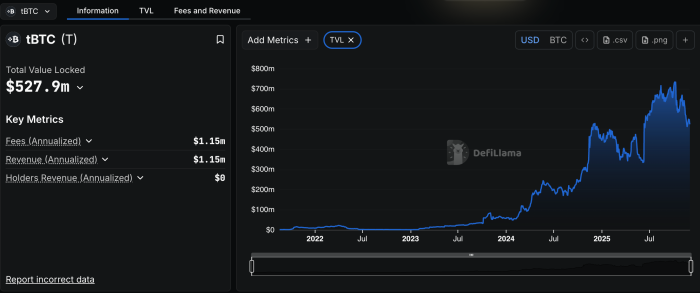
tBTC TVL stayed firm through the November volatility by DefiLlama.

It was boring in the best possible way.

That resilience matters. It shows that capital is finally shifting to systems that actually work during volatility. Not the hype coins that vanish after one bad weekend, but the rails that keep the market running when the heat turns up. 

If you think the next 1000x crypto to buy is the project that survives these stress tests, then you’re already looking past the usual noise.

You want speed, strong security assumptions, and tech stacks that do not explode the moment gas fees spike.

Below are three new crypto projects that match that idea.

Bitcoin Hyper ($HYPER) as a bold Bitcoin Layer 2 execution engine. PEPENODE ($PEPENODE) as a mine to earn twist on memecoins. And Cardano ($ADA) as the slow and steady research chain that keeps shipping L2 capacity.

1. Bitcoin Hyper ($HYPER) – First Bitcoin L2 With SVM Execution

Bitcoin Hyper ($HYPER) calls itself the first Bitcoin Layer 2 that runs the Solana Virtual Machine.

In simple terms, it tries to bolt Solana level performance onto Bitcoin’s settlement layer. Bitcoin keeps its security. $HYPER provides the speed.

Instead of waiting for Bitcoin’s ~10 minute blocks and dealing with its limited scripting, $HYPER sends execution to a real time SVM Layer 2.

The setup is modular: Bitcoin L1 for settlement, one trusted sequencer for ordering, and an SVM execution layer that targets sub second confirmations and very low fees. It gives DeFi on Bitcoin a Solana style user experience.

Bitcoin Hyper wants wrapped $BTC to feel like a real DeFi asset. Fast payments. Tiny fees. Swaps, lending, and staking inside SVM contracts.

Even NFTs and gaming rails through Rust based SDKs. SPL compatible tokens make it easy for Solana builders to join the ecosystem.

The market seems to like the idea. The presale has already raised over $28M, and you can buy $HYPER now for just $0.013365.

Staking begins right after TGE, and presale stakers get a 7 day vesting window. It’s set up for long term participation instead of quick flips.

If you think Bitcoin’s next big move comes from fast, programmable liquidity built on Bitcoin instead of moving away from it, Bitcoin Hyper is a strong high beta bet on that future.

For more context on this project, check out Bitcoin Hyper price prediction and see what the future holds.

Join the $HYPER presale now.

2. PEPENODE ($PEPENODE) – Mine‑to‑Earn Memecoin With Node Economics

November reminded everyone that most meme coins still trade like lottery tickets taped to a roller coaster.

PEPENODE ($PEPENODE) wants to change that with a mine to earn model that rewards users for running virtual nodes and being active, not just watching charts.

The core of the system is a virtual mining setup with tiered node rewards. Engagement produces tokens and higher tier nodes lead to better performance. Users track progress through a dashboard that looks more like a simple DeFi mining UI than a standard meme page.

For a project still in presale, traction is strong. $PEPENODE has raised over $2M so far, with tokens priced at $0.0011731.

The official staking program offers 578% APY, while the node reward system works as a soft yield tool, sending new supply toward active community members instead of random speculators.

Most meme coins depend on hype loops, influencers, and luck. PEPENODE brings back a touch of early DeFi mining energy. It’s gamified, but with actual rules and transparent dashboards.

If you want meme upside without wandering around blindfolded, this one deserves a spot on your radar.

To dive deeper into the project, you can also check out PEPENODE price prediction and see how 2026 looks like for this memecoin.

Join the PEPENODE presale.

3. Cardano ($ADA) – Research‑Driven Base Layer With Hydra Scaling

Bitcoin Hyper tries to improve Bitcoin from the outside.

Cardano ($ADA) does the opposite. It builds its base layer slowly and scientifically, with formal methods and a layered design. Its Ouroboros proof of stake system aims for proof of work level security while staying energy efficient.

Cardano separates settlement and computation. This lets developers create more complex smart contracts without overloading the base chain.

Hydra adds Layer 2 scaling on top, letting apps run high throughput activity off chain and anchor back to the mainnet when needed.

The ecosystem has been expanding in the background. Brave wallet integration now gives $ADA exposure to more than 85M users.

This brings a steady flow of potential new holders and dApp users into the Cardano world. At the same time, institutions continue exploring DeFi, identity, and real world asset ideas on Cardano.

$ADA is currently trading around $0.3934, giving the network a relatively steady valuation as development keeps moving.
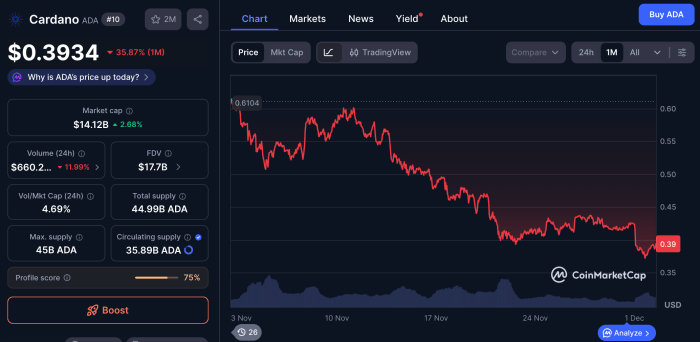
Cardano on coinmarketcap showing the recent performance.

Cardano isn’t the loudest chain. It doesn’t shout about transactions per second every week. But its mix of formal verification, Hydra scaling, and massive user distribution makes it one of the more durable large cap platforms.

If your thesis favors slow cooking infrastructure that wins long term, ADA still belongs in the conversation.

Buy Cardano from Binance now.

Bitcoin’s November dip was more than a price correction. It was a live stress test. And the winners were the projects that kept working while everything else shook.

Recap: Bitcoin Hyper ($HYPER) pushes fast DeFi execution on Bitcoin. PEPENODE ($PEPENODE) upgrades memes with node based rewards. Cardano ($ADA) keeps compounding with research driven tech and new scaling layers.

If Bitcoin’s future growth comes from tools that keep running during chaos, these three offer very different but very real ways to position early.

This article is for informational purposes only and doesn’t constitute financial, investment, or trading advice. Always do your own research (DYOR) before investing in crypto.

Authored by Aaron Walker, NewsBTC – https://www.newsbtc.com/news/next-1000x-crypto-to-buy-defi-recovers-after-bitcoin-crash

Market Opportunity
DeFi Logo
DeFi Price(DEFI)
$0.000541
$0.000541$0.000541
+8.20%
USD
DeFi (DEFI) Live Price Chart
Disclaimer: The articles reposted on this site are sourced from public platforms and are provided for informational purposes only. They do not necessarily reflect the views of MEXC. All rights remain with the original authors. If you believe any content infringes on third-party rights, please contact service@support.mexc.com for removal. MEXC makes no guarantees regarding the accuracy, completeness, or timeliness of the content and is not responsible for any actions taken based on the information provided. The content does not constitute financial, legal, or other professional advice, nor should it be considered a recommendation or endorsement by MEXC.

You May Also Like

LMAX Group Deepens Ripple Partnership With RLUSD Collateral Rollout

LMAX Group Deepens Ripple Partnership With RLUSD Collateral Rollout

LMAX Group has revealed a multi-year partnership with Ripple to integrate traditional finance with digital asset markets. As part of the agreement, LMAX will introduce
Share
Tronweekly2026/01/16 23:00
Fed rate decision September 2025

Fed rate decision September 2025

The post Fed rate decision September 2025 appeared on BitcoinEthereumNews.com. WASHINGTON – The Federal Reserve on Wednesday approved a widely anticipated rate cut and signaled that two more are on the way before the end of the year as concerns intensified over the U.S. labor market. In an 11-to-1 vote signaling less dissent than Wall Street had anticipated, the Federal Open Market Committee lowered its benchmark overnight lending rate by a quarter percentage point. The decision puts the overnight funds rate in a range between 4.00%-4.25%. Newly-installed Governor Stephen Miran was the only policymaker voting against the quarter-point move, instead advocating for a half-point cut. Governors Michelle Bowman and Christopher Waller, looked at for possible additional dissents, both voted for the 25-basis point reduction. All were appointed by President Donald Trump, who has badgered the Fed all summer to cut not merely in its traditional quarter-point moves but to lower the fed funds rate quickly and aggressively. In the post-meeting statement, the committee again characterized economic activity as having “moderated” but added language saying that “job gains have slowed” and noted that inflation “has moved up and remains somewhat elevated.” Lower job growth and higher inflation are in conflict with the Fed’s twin goals of stable prices and full employment.  “Uncertainty about the economic outlook remains elevated” the Fed statement said. “The Committee is attentive to the risks to both sides of its dual mandate and judges that downside risks to employment have risen.” Markets showed mixed reaction to the developments, with the Dow Jones Industrial Average up more than 300 points but the S&P 500 and Nasdaq Composite posting losses. Treasury yields were modestly lower. At his post-meeting news conference, Fed Chair Jerome Powell echoed the concerns about the labor market. “The marked slowing in both the supply of and demand for workers is unusual in this less dynamic…
Share
BitcoinEthereumNews2025/09/18 02:44
Aave V4 roadmap signals end of multichain sprawl

Aave V4 roadmap signals end of multichain sprawl

The post Aave V4 roadmap signals end of multichain sprawl appeared on BitcoinEthereumNews.com. Aave Labs has released its official launch roadmap for V4, laying out the final steps ahead of the major upgrade’s Q4 mainnet launch.  Alongside new architectural and security improvements, the roadmap introduces a fundamental shift in how user balances are tracked and highlights a strategic pullback from economically underperforming deployments across layer-2 and alternative layer-1 networks. The V4 release moves away from aTokens’ rebasing-style mechanics toward ERC-4626-style share accounting, a change that promises cleaner integrations, easier tax treatment, and better compatibility with downstream DeFi infrastructure.  In a recent technical development update, Aave Labs confirmed that “tokenization is to remain optional and built using ERC 4626 vaults,” and that internal accounting will eliminate the use of exchange rates or scaled balances. The goal is to “further improve the overall reliability of the protocol.” ERC-4626 is a widely adopted Ethereum standard that expresses user deposits as shares of a vault rather than balances that grow over time. In Aave V3, aTokens accrue interest by increasing a user’s balance directly — behavior that resembles rebasing tokens and often confuses integrations and portfolio accounting tools.  By contrast, ERC-4626 tracks yield through a rising price-per-share metric, leaving token balances unchanged. The result is more predictable behavior for integrators, auditors and tax software, as well as a clearer cost basis for users. The roadmap also outlines a series of release milestones, including a formal codebase publication, a public testnet launch with a redesigned interface, and the completion of a multi-layered security review involving formal verification and manual audits. Aave Labs said the roadmap reflects the protocol’s “final stages of review, testing, and deployment,” and that additional documentation and launch preparation materials will be released in the coming weeks. But the most pointed strategic shift comes not from the codebase, but from Aave’s own governance forums. “Aave…
Share
BitcoinEthereumNews2025/09/18 07:40