Nvidia has unveiled new tools and open model development for physical and digital AI, including Nvidia Drive Alpamayo-R1 for autonomous driving.Nvidia has unveiled new tools and open model development for physical and digital AI, including Nvidia Drive Alpamayo-R1 for autonomous driving.

Nvidia rolls out new open models to boost physical and digital AI

2025/12/02 17:34
4 min read
For feedback or concerns regarding this content, please contact us at crypto.news@mexc.com

Nvidia has unveiled new tools and open model development for physical and digital AI, including Nvidia Drive Alpamayo-R1 (AR1) for autonomous driving. The tech giant announced at the NeurIPS AI conference that it is further increasing its cluster of open AI models, tools, and datasets.

Nvidia said its new open physical and digital AI models aim to support research in the AI industry and beyond. It touted that its Alpamayo-R1 is the world’s first-ever industry-scale open reasoning vision language action (VLA) model for self-driving cars. The chipmaker also hinted at the release of new datasets and models for AI safety and speech. 

The tech firm’s researchers have prepared over 70 papers, workshops, and talks for presentation at the conference. The company is sharing its innovative projects that span medical research, autonomous driving, and AI reasoning. 

Nvidia shows stronger commitment to open source

The tech giant demonstrated a more substantial commitment to open source at the AI event, an effort recognized by AI benchmarking platform Artificial Analysis with its new Openness Index. The Artificial Analysis Open Index rated the company’s Nemotron family of AI tools as one of the best available. The rating is based on the amount of technical information shared, the ease of using model licenses, and the clarity of data use regulations. 

Meanwhile, AR1 (Alpamayo-R1) integrates chain-of-thought AI reasoning with path planning to enable level 4 autonomy and enhance AV (autonomous vehicle) safety in various road scenarios. The chipmaker said previous iterations of autonomous driving models struggled with situations such as a pedestrian-heavy intersection, a car double-parked in a bicycle lane, or an approaching road closure. However, reasoning gives autonomous vehicles the common sense to drive like humans.

The AR1 model achieves this by breaking down scenarios and reasoning through each step to consider all possible outcomes. It then uses contextual data to determine the most effective course of action. 

Nvidia claims that the AR1 taps into the chain-of-thought reasoning that allows it to process data along its path and use the information to plan a trajectory, such as stopping for jaywalkers. The model’s open foundation is based on the tech firm’s Cosmos Reason, which allows researchers to customize it for their non-commercial use cases. 

Researchers can also customize the AR1 model for benchmarking or developing experimental applications for AVs, according to the chipmaker. Nvidia Drive Alpamayo-R1 will be available on Hugging Face and GitHub, while a subset of the data used to train and evaluate models is available on Nvidia Physical AI Open Datasets. 

Reinforcement learning proves effective for AR1’s post-training 

Nvidia researchers claimed that reinforcement training had proven effective for AR1’s post-training. They pointed out that developers can also learn how to use and post-train models based on Cosmos using step-by-step reasoning. The researchers said examples of quick-start inference and advanced post-training can be found in the Cosmos Cookbook. The comprehensive guide for physical AI developers covers step-by-step data curation, model evaluation, and the generation of synthetic data.

Meanwhile, the chipmaker said the possibilities for Cosmos-based applications are virtually limitless. The tech giant provided examples of Cosmos-based applications, including LidarGen, Omniverse NuRec Fixer, Cosmos Policy, and ProtoMotions3. 

The tech firm boasted that LidarGen was the world’s first model to generate lidar data for autonomous vehicle simulations. It also mentioned that its Omniverse NuRec Fixer model for robotics and AV simulation taps into Nvidia’s Cosmos Predict. 

The ProtoMotions3 is an open-source, GPU-accelerated framework built on Nvidia Newton and Isaac Lab. The framework can be used to train physically simulated humanoid robots and digital humans, according to the chipmaker. The Cosmos world foundation models (WFMs) can be used to generate realistic scenes.

Nvidia also mentioned that policy models can be trained in Isaac SIM and Isaac Lab. The data generated from the policy models can then be used to post-train the chipmaker’s Groot N models for robotics. 

Sharpen your strategy with mentorship + daily ideas - 30 days free access to our trading program

Market Opportunity
OpenLedger Logo
OpenLedger Price(OPEN)
$0.18197
$0.18197$0.18197
+7.70%
USD
OpenLedger (OPEN) Live Price Chart
Disclaimer: The articles reposted on this site are sourced from public platforms and are provided for informational purposes only. They do not necessarily reflect the views of MEXC. All rights remain with the original authors. If you believe any content infringes on third-party rights, please contact crypto.news@mexc.com for removal. MEXC makes no guarantees regarding the accuracy, completeness, or timeliness of the content and is not responsible for any actions taken based on the information provided. The content does not constitute financial, legal, or other professional advice, nor should it be considered a recommendation or endorsement by MEXC.

You May Also Like

Why YouCam AI API is the Secret Weapon for E-Commerce Startups
Why YouCam AI API is the Secret Weapon for E-Commerce Startups

 The New Standard of Personalized Shopping In an era where digital engagement dictates market share, the transition from “browsing” to “buying” depends on confidence
Share
Techbullion2026/03/25 14:34
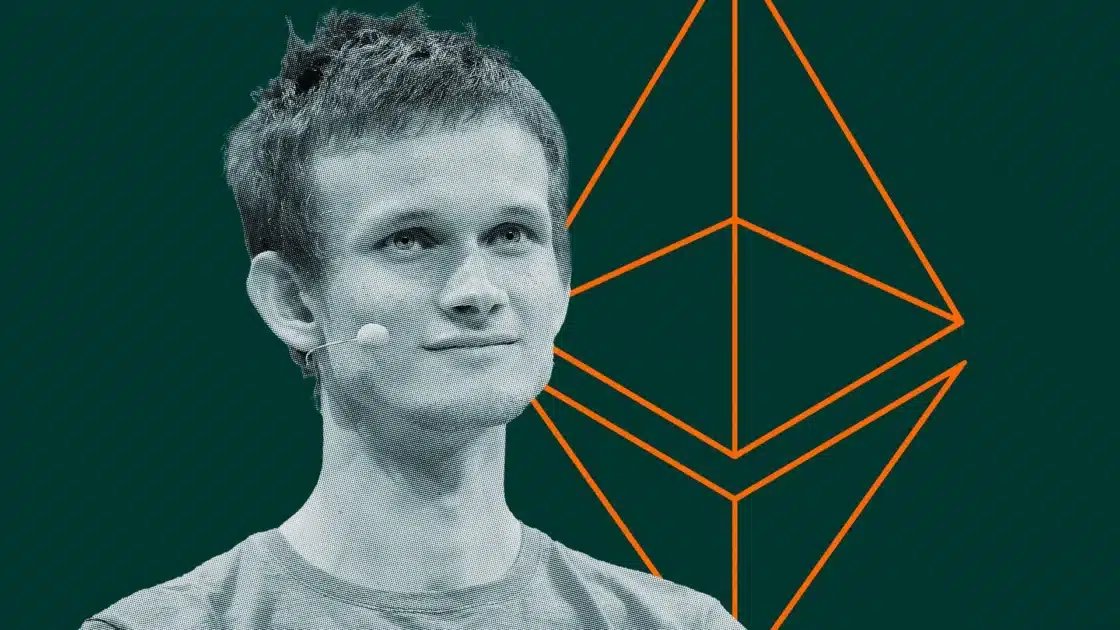
Vitalik Buterin Reveals Ethereum’s Bold Plan to Stay Quantum-Secure and Simple!

Vitalik Buterin Reveals Ethereum’s Bold Plan to Stay Quantum-Secure and Simple!

Buterin unveils Ethereum’s strategy to tackle quantum security challenges ahead. Ethereum focuses on simplifying architecture while boosting security for users. Ethereum’s market stability grows as Buterin’s roadmap gains investor confidence. Ethereum founder Vitalik Buterin has unveiled his long-term vision for the blockchain, focusing on making Ethereum quantum-secure while maintaining its simplicity for users. Buterin presented his roadmap at the Japanese Developer Conference, and splits the future of Ethereum into three phases: short-term, mid-term, and long-term. Buterin’s most ambitious goal for Ethereum is to safeguard the blockchain against the threats posed by quantum computing.  The danger of such future developments is that the future may call into question the cryptographic security of most blockchain systems, and Ethereum will be able to remain ahead thanks to more sophisticated mathematical techniques to ensure the safety and integrity of its protocols. Buterin is committed to ensuring that Ethereum evolves in a way that not only meets today’s security challenges but also prepares for the unknowns of tomorrow. Also Read: Ethereum Giant The Ether Machine Takes Major Step Toward Going Public! However, in spite of such high ambitions, Buterin insisted that Ethereum also needed to simplify its architecture. An important aspect of this vision is to remove unnecessary complexity and make Ethereum more accessible and maintainable without losing its strong security capabilities. Security and simplicity form the core of Buterin’s strategy, as they guarantee that the users of Ethereum experience both security and smooth processes. Focus on Speed and Efficiency in the Short-Term In the short term, Buterin aims to enhance Ethereum’s transaction efficiency, a crucial step toward improving scalability and reducing transaction costs. These advantages are attributed to the fact that, within the mid-term, Ethereum is planning to enhance the speed of transactions in layer-2 networks. According to Butterin, this is part of Ethereum’s expansion, particularly because there is still more need to use blockchain technology to date. The other important aspect of Ethereum’s development is the layer-2 solutions. Buterin supports an approach in which the layer-2 networks are dependent on layer-1 to perform some essential tasks like data security, proof, and censorship resistance. This will enable the layer-2 systems of Ethereum to be concerned with verifying and sequencing transactions, which will improve the overall speed and efficiency of the network. Ethereum’s Market Stability Reflects Confidence in Long-Term Strategy Ethereum’s market performance has remained solid, with the cryptocurrency holding steady above $4,000. Currently priced at $4,492.15, Ethereum has experienced a slight 0.93% increase over the last 24 hours, while its trading volume surged by 8.72%, reaching $34.14 billion. These figures point to growing investor confidence in Ethereum’s long-term vision. The crypto community remains optimistic about Ethereum’s future, with many predicting the price could rise to $5,500 by mid-October. Buterin’s clear, forward-thinking strategy continues to build trust in Ethereum as one of the most secure and scalable blockchain platforms in the market. Also Read: Whales Dump 200 Million XRP in Just 2 Weeks – Is XRP’s Price on the Verge of Collapse? The post Vitalik Buterin Reveals Ethereum’s Bold Plan to Stay Quantum-Secure and Simple! appeared first on 36Crypto.
Share
Coinstats2025/09/18 01:22
Resilient Pair Softens Below 111.00 Amidst Prevailing Bullish Momentum

Resilient Pair Softens Below 111.00 Amidst Prevailing Bullish Momentum

The post Resilient Pair Softens Below 111.00 Amidst Prevailing Bullish Momentum appeared on BitcoinEthereumNews.com. AUD/JPY Price Forecast: Resilient Pair Softens
Share
BitcoinEthereumNews2026/03/25 14:01