Kalshi has integrated the Solana blockchain to launch tokenized versions of its event contracts on-chain. As prediction markets have become a major area of interest in the U.S., Kalshi is looking to tap into the cryptocurrency community by offering on-chain…Kalshi has integrated the Solana blockchain to launch tokenized versions of its event contracts on-chain. As prediction markets have become a major area of interest in the U.S., Kalshi is looking to tap into the cryptocurrency community by offering on-chain…

Kalshi launches tokenized event contracts on Solana to tap crypto liquidity

2025/12/02 15:17
4 min read
For feedback or concerns regarding this content, please contact us at crypto.news@mexc.com

Kalshi has integrated the Solana blockchain to launch tokenized versions of its event contracts on-chain.

Summary
  • Kalshi has launched tokenized versions of its event contracts on the Solana blockchain.
  • The move is expected to enhance liquidity across Kalshi’s markets.
  • Kalshi will be directly competing against Polymarket as both platforms scale up U.S. market activity.

As prediction markets have become a major area of interest in the U.S., Kalshi is looking to tap into the cryptocurrency community by offering on-chain versions of its contracts, company insiders told CNBC on Dec. 1.

Kalshi to rival Polymarket

Kalshi’s traditional contracts operate through a regulated exchange and require full identity verification, but the tokenized alternatives offer a distinct advantage, mainly in terms of anonymity and speed, that could bring them on par with its crypto-native rival, Polymarket.

For those unaware, tokenization involves creating a digital version of a real-world asset, which in this case means turning event contracts into tokens that can be freely traded on the Solana blockchain. 

With tokenized contracts, Kalshi would be able to operate at lower costs, offer global accessibility, and deliver better pricing efficiency. And since these versions run on-chain, they enable pseudo-anonymous trading through crypto wallets rather than through Kalshi’s traditional identity-based accounts.

Kalshi already houses a sizable global userbase and regulated market presence, but the company plans to aggressively attract crypto users who have poured billions of dollars into decentralized prediction markets like Polymarket. Trading volumes across the sector have been surging, hitting nearly $2.3 billion in a single week in October alone.

Kalshi has set up a dedicated on-chain ecosystem strategy and appointed John Wang, a well-known figure in the Web3 space, as its head of crypto to oversee the expansion.

“There’s a lot of power users in crypto,” Wang said, adding that the move is also about “enabling developers to build third-party front ends that utilize Kalshi’s liquidity.”

There’s also the question of liquidity depth, which Kalshi could benefit from by drawing in crypto-native traders, allowing it to offer more accurate and competitive pricing across its markets, he added.

Besides Polymarket, Kalshi will be going up against a growing list of new entrants that have flooded the U.S. market with alternative platforms ever since the Commodity Futures Trading Commission cleared political markets and dropped its appeal over Kalshi’s court victory earlier this year.

Months later, the commission also issued a no-action letter to QCX LLC and QC Clearing LLC, entities acquired by Polymarket, which was widely seen as a signal of regulatory support among investors and added another layer of legitimacy to the space.

Kalshi’s partners with crypto firms 

Kalshi’s engagement with Solana first began taking shape in May 2025, when the platform enabled SOL deposits through a partnership with Zero Hash. 

Since then, the two have collaborated on multiple initiatives, including the launch of a beta prediction market by Jupiter, a Solana-based decentralized exchange. Kalshi has also funded developer grants through its ecosystem hub to spur third-party innovation around its liquidity.

For its stablecoin custody and payouts, Kalshi has selected Coinbase as a partner, which now holds the platform’s USDC reserves under institutional custody.

More recently, reports suggested that Kalshi was in talks with several decentralized finance protocols and market makers alongside Polymarket to deepen on-chain liquidity and broaden access to its tokenized markets.

Kalshi now serves users in more than 140 countries and has managed to draw in significant venture capital. As part of its latest funding round, the company raised $1 billion in November, less than two months after it secured $300 million in an earlier round. The latest round valued the company at roughly $11 billion.

Market Opportunity
TAP Protocol Logo
TAP Protocol Price(TAP)
$0.0996
$0.0996$0.0996
+0.40%
USD
TAP Protocol (TAP) Live Price Chart
Disclaimer: The articles reposted on this site are sourced from public platforms and are provided for informational purposes only. They do not necessarily reflect the views of MEXC. All rights remain with the original authors. If you believe any content infringes on third-party rights, please contact crypto.news@mexc.com for removal. MEXC makes no guarantees regarding the accuracy, completeness, or timeliness of the content and is not responsible for any actions taken based on the information provided. The content does not constitute financial, legal, or other professional advice, nor should it be considered a recommendation or endorsement by MEXC.

You May Also Like

Why YouCam AI API is the Secret Weapon for E-Commerce Startups
Why YouCam AI API is the Secret Weapon for E-Commerce Startups

 The New Standard of Personalized Shopping In an era where digital engagement dictates market share, the transition from “browsing” to “buying” depends on confidence
Share
Techbullion2026/03/25 14:34
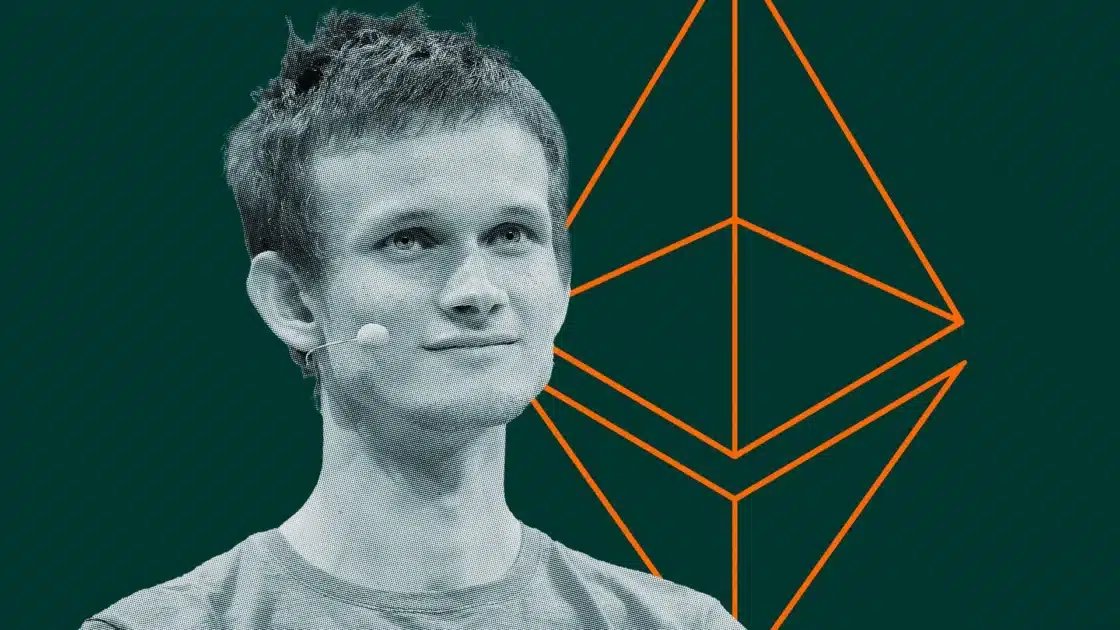
Vitalik Buterin Reveals Ethereum’s Bold Plan to Stay Quantum-Secure and Simple!

Vitalik Buterin Reveals Ethereum’s Bold Plan to Stay Quantum-Secure and Simple!

Buterin unveils Ethereum’s strategy to tackle quantum security challenges ahead. Ethereum focuses on simplifying architecture while boosting security for users. Ethereum’s market stability grows as Buterin’s roadmap gains investor confidence. Ethereum founder Vitalik Buterin has unveiled his long-term vision for the blockchain, focusing on making Ethereum quantum-secure while maintaining its simplicity for users. Buterin presented his roadmap at the Japanese Developer Conference, and splits the future of Ethereum into three phases: short-term, mid-term, and long-term. Buterin’s most ambitious goal for Ethereum is to safeguard the blockchain against the threats posed by quantum computing.  The danger of such future developments is that the future may call into question the cryptographic security of most blockchain systems, and Ethereum will be able to remain ahead thanks to more sophisticated mathematical techniques to ensure the safety and integrity of its protocols. Buterin is committed to ensuring that Ethereum evolves in a way that not only meets today’s security challenges but also prepares for the unknowns of tomorrow. Also Read: Ethereum Giant The Ether Machine Takes Major Step Toward Going Public! However, in spite of such high ambitions, Buterin insisted that Ethereum also needed to simplify its architecture. An important aspect of this vision is to remove unnecessary complexity and make Ethereum more accessible and maintainable without losing its strong security capabilities. Security and simplicity form the core of Buterin’s strategy, as they guarantee that the users of Ethereum experience both security and smooth processes. Focus on Speed and Efficiency in the Short-Term In the short term, Buterin aims to enhance Ethereum’s transaction efficiency, a crucial step toward improving scalability and reducing transaction costs. These advantages are attributed to the fact that, within the mid-term, Ethereum is planning to enhance the speed of transactions in layer-2 networks. According to Butterin, this is part of Ethereum’s expansion, particularly because there is still more need to use blockchain technology to date. The other important aspect of Ethereum’s development is the layer-2 solutions. Buterin supports an approach in which the layer-2 networks are dependent on layer-1 to perform some essential tasks like data security, proof, and censorship resistance. This will enable the layer-2 systems of Ethereum to be concerned with verifying and sequencing transactions, which will improve the overall speed and efficiency of the network. Ethereum’s Market Stability Reflects Confidence in Long-Term Strategy Ethereum’s market performance has remained solid, with the cryptocurrency holding steady above $4,000. Currently priced at $4,492.15, Ethereum has experienced a slight 0.93% increase over the last 24 hours, while its trading volume surged by 8.72%, reaching $34.14 billion. These figures point to growing investor confidence in Ethereum’s long-term vision. The crypto community remains optimistic about Ethereum’s future, with many predicting the price could rise to $5,500 by mid-October. Buterin’s clear, forward-thinking strategy continues to build trust in Ethereum as one of the most secure and scalable blockchain platforms in the market. Also Read: Whales Dump 200 Million XRP in Just 2 Weeks – Is XRP’s Price on the Verge of Collapse? The post Vitalik Buterin Reveals Ethereum’s Bold Plan to Stay Quantum-Secure and Simple! appeared first on 36Crypto.
Share
Coinstats2025/09/18 01:22
Resilient Pair Softens Below 111.00 Amidst Prevailing Bullish Momentum

Resilient Pair Softens Below 111.00 Amidst Prevailing Bullish Momentum

The post Resilient Pair Softens Below 111.00 Amidst Prevailing Bullish Momentum appeared on BitcoinEthereumNews.com. AUD/JPY Price Forecast: Resilient Pair Softens
Share
BitcoinEthereumNews2026/03/25 14:01