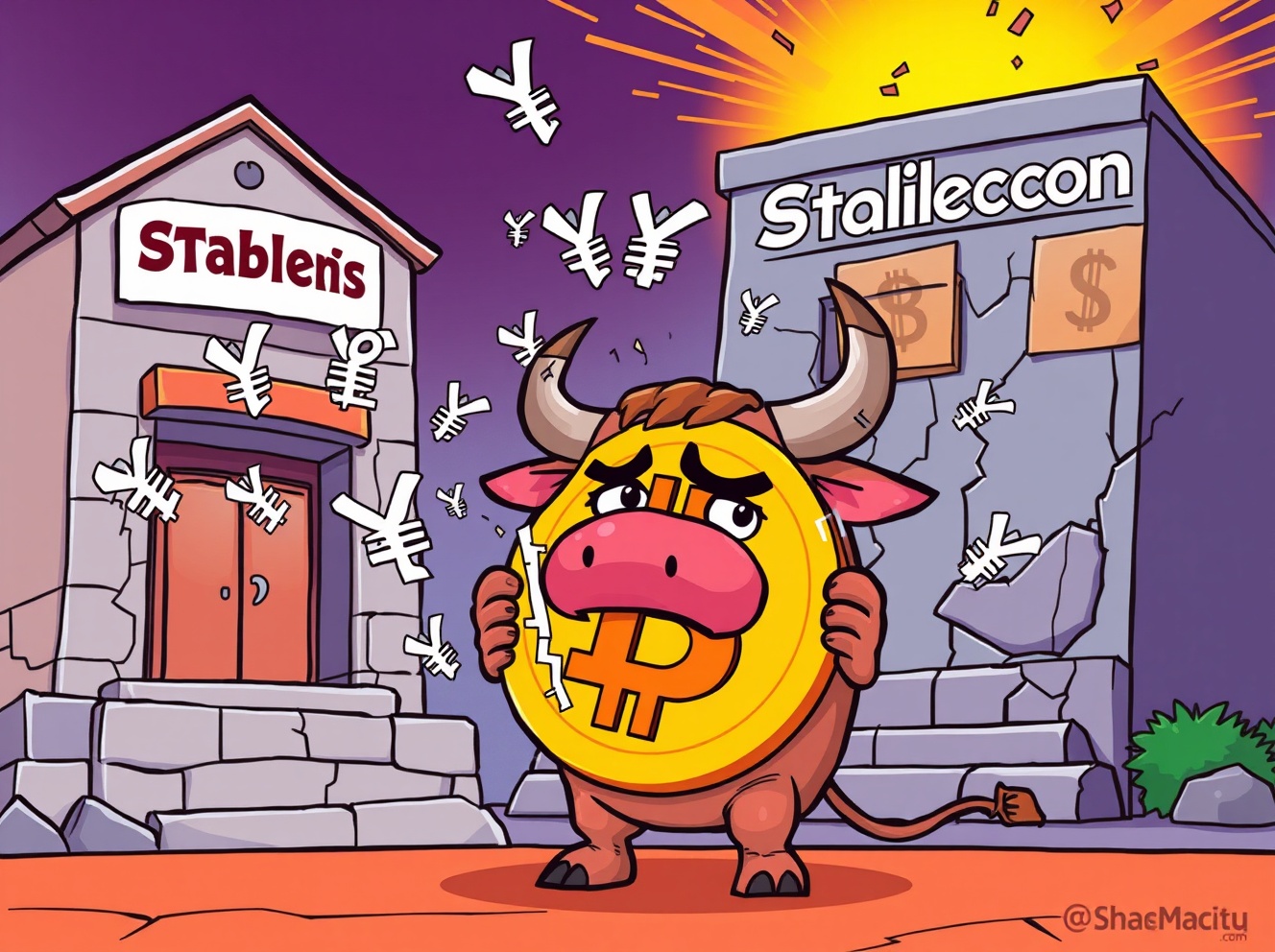
BitcoinWorld Bitcoin Sell-Off Deepens: The Frightening Impact of Yen Trades and USDT Fears The Bitcoin sell-off is gaining momentum, sending shockwaves through the entire crypto market. This isn’t just typical volatility; a powerful cocktail of global financial tremors and internal crypto risks is driving the pressure. If you’re holding digital assets, understanding these forces is crucial for navigating the current turbulence. What’s Driving the Intense Bitcoin Sell-Off? Recent days have seen a significant spike in selling pressure. Analysts point to a surge in risk-off sentiment as the primary catalyst. This means investors are rapidly moving their money away from risky assets like cryptocurrencies and into safer havens. The trigger? A seismic shift in Japan’s bond market that has global implications. How Did Japan’s Bond Market Spark a Crypto Crash? The yield on Japan’s 20-year government bond recently hit a 25-year high. This technical event has a very practical, dangerous effect on crypto: it threatens the yen carry trade. For years, traders borrowed cheap Japanese yen to invest in higher-yielding assets worldwide, including Bitcoin. Now, with Japanese yields rising, this trade is becoming expensive to maintain, leading to widespread liquidations. Carry Trade Unwinding: Traders must sell their Bitcoin and other crypto holdings to repay their cheap yen loans. Global Domino Effect: This creates a wave of selling that floods the market. Compounding Fear: The liquidation wave fuels panic, encouraging other investors to sell. Are Broader Economic Woes Making the Bitcoin Sell-Off Worse? Absolutely. The yen situation is not happening in a vacuum. Global economic uncertainties are amplifying the market’s nervousness. Investors are grappling with emerging debt risks in the high-flying AI sector and China’s continued tightening of regulations around digital assets. This creates a ‘risk-off’ environment where crypto, seen as volatile, is often sold first. Why is USDT’s Downgrade a Major Red Flag? Amid this external pressure, a critical internal pillar of the crypto market showed cracks. S&P Global Ratings downgraded its stability assessment for Tether’s USDT to a ‘5’—its lowest score. This rating reflects concerns about the reserves backing the world’s largest stablecoin. The immediate impact was visible in China, where USDT traded below its $1 peg. For a market built on stability, this event severely dampened investor sentiment. Key Risks Highlighted by the USDT Situation: Reserve Transparency: Ongoing questions about the quality and availability of Tether’s backing assets. Market Confidence: Stablecoins are the lifeblood of crypto trading; doubt in them causes systemic worry. Contagion Fear: Problems with USDT can quickly spread to other stablecoins and crypto assets. What Can Investors Do During This Bitcoin Sell-Off? While the headlines seem frightening, periods of high volatility are part of the crypto cycle. First, assess your risk tolerance. This Bitcoin sell-off is a stark reminder that cryptocurrencies remain highly correlated to global macro events. Diversification and a focus on long-term fundamentals, rather than short-term price swings, are essential. Secondly, monitor stablecoin news closely, as their health is vital for overall market liquidity. Conclusion: Navigating the Perfect Storm The current Bitcoin sell-off is a perfect storm. It combines a technical unwinding of the yen carry trade with deep-seated concerns about the foundational stability of the crypto market itself, exemplified by the USDT downgrade. For the informed investor, this is not merely a time of fear but of education. Understanding these interconnected forces—global macroeconomics and internal crypto governance—is the key to developing a resilient investment strategy for the future. Frequently Asked Questions (FAQs) Q: What is a yen carry trade, and why does it affect Bitcoin?A: A yen carry trade is when investors borrow Japanese yen at low interest rates to invest in higher-yielding assets elsewhere, like Bitcoin. When Japanese interest rates rise, these trades become costly to hold, forcing investors to sell their Bitcoin to cover their positions, creating selling pressure. Q: Should I be worried about my USDT holdings?A: The S&P downgrade highlights ongoing risks, not an immediate collapse. However, it’s a reminder to be aware of counterparty risk. For large holdings, consider diversifying across other reputable stablecoins or holding a portion in fiat during times of high uncertainty. Q: Is this Bitcoin sell-off different from previous crashes?A> While all crashes involve panic selling, this one is uniquely driven by a specific global macroeconomic event (yen carry trade unwinding) combined with a blow to confidence in a major market stablecoin. This makes its drivers more complex than past events driven purely by speculation. Q: How long might this selling pressure last?A> It’s difficult to predict. The pressure may ease once the bulk of the yen-related liquidations are complete and if no further negative news emerges regarding major stablecoins or global markets. However, volatility is likely to remain elevated. Q: Is this a good time to buy Bitcoin?A> This depends entirely on your investment strategy and risk profile. Some investors see major sell-offs as buying opportunities (“buying the dip”), but this carries significant risk if the downward trend continues. Never invest more than you can afford to lose. Q: What other cryptocurrencies are affected by this sell-off?A> Nearly all cryptocurrencies are affected. Bitcoin often sets the trend for the broader market. When Bitcoin experiences a major sell-off, altcoins (alternative cryptocurrencies) typically see even larger percentage declines due to their higher risk profile. Found this analysis of the Bitcoin sell-off helpful? The crypto market moves fast, and knowledge is power. Share this article with your network on Twitter, LinkedIn, or Telegram to help other investors understand the complex forces shaping the market today. To learn more about the latest Bitcoin trends, explore our article on key developments shaping Bitcoin price action and long-term adoption. This post Bitcoin Sell-Off Deepens: The Frightening Impact of Yen Trades and USDT Fears first appeared on BitcoinWorld.BitcoinWorld Bitcoin Sell-Off Deepens: The Frightening Impact of Yen Trades and USDT Fears The Bitcoin sell-off is gaining momentum, sending shockwaves through the entire crypto market. This isn’t just typical volatility; a powerful cocktail of global financial tremors and internal crypto risks is driving the pressure. If you’re holding digital assets, understanding these forces is crucial for navigating the current turbulence. What’s Driving the Intense Bitcoin Sell-Off? Recent days have seen a significant spike in selling pressure. Analysts point to a surge in risk-off sentiment as the primary catalyst. This means investors are rapidly moving their money away from risky assets like cryptocurrencies and into safer havens. The trigger? A seismic shift in Japan’s bond market that has global implications. How Did Japan’s Bond Market Spark a Crypto Crash? The yield on Japan’s 20-year government bond recently hit a 25-year high. This technical event has a very practical, dangerous effect on crypto: it threatens the yen carry trade. For years, traders borrowed cheap Japanese yen to invest in higher-yielding assets worldwide, including Bitcoin. Now, with Japanese yields rising, this trade is becoming expensive to maintain, leading to widespread liquidations. Carry Trade Unwinding: Traders must sell their Bitcoin and other crypto holdings to repay their cheap yen loans. Global Domino Effect: This creates a wave of selling that floods the market. Compounding Fear: The liquidation wave fuels panic, encouraging other investors to sell. Are Broader Economic Woes Making the Bitcoin Sell-Off Worse? Absolutely. The yen situation is not happening in a vacuum. Global economic uncertainties are amplifying the market’s nervousness. Investors are grappling with emerging debt risks in the high-flying AI sector and China’s continued tightening of regulations around digital assets. This creates a ‘risk-off’ environment where crypto, seen as volatile, is often sold first. Why is USDT’s Downgrade a Major Red Flag? Amid this external pressure, a critical internal pillar of the crypto market showed cracks. S&P Global Ratings downgraded its stability assessment for Tether’s USDT to a ‘5’—its lowest score. This rating reflects concerns about the reserves backing the world’s largest stablecoin. The immediate impact was visible in China, where USDT traded below its $1 peg. For a market built on stability, this event severely dampened investor sentiment. Key Risks Highlighted by the USDT Situation: Reserve Transparency: Ongoing questions about the quality and availability of Tether’s backing assets. Market Confidence: Stablecoins are the lifeblood of crypto trading; doubt in them causes systemic worry. Contagion Fear: Problems with USDT can quickly spread to other stablecoins and crypto assets. What Can Investors Do During This Bitcoin Sell-Off? While the headlines seem frightening, periods of high volatility are part of the crypto cycle. First, assess your risk tolerance. This Bitcoin sell-off is a stark reminder that cryptocurrencies remain highly correlated to global macro events. Diversification and a focus on long-term fundamentals, rather than short-term price swings, are essential. Secondly, monitor stablecoin news closely, as their health is vital for overall market liquidity. Conclusion: Navigating the Perfect Storm The current Bitcoin sell-off is a perfect storm. It combines a technical unwinding of the yen carry trade with deep-seated concerns about the foundational stability of the crypto market itself, exemplified by the USDT downgrade. For the informed investor, this is not merely a time of fear but of education. Understanding these interconnected forces—global macroeconomics and internal crypto governance—is the key to developing a resilient investment strategy for the future. Frequently Asked Questions (FAQs) Q: What is a yen carry trade, and why does it affect Bitcoin?A: A yen carry trade is when investors borrow Japanese yen at low interest rates to invest in higher-yielding assets elsewhere, like Bitcoin. When Japanese interest rates rise, these trades become costly to hold, forcing investors to sell their Bitcoin to cover their positions, creating selling pressure. Q: Should I be worried about my USDT holdings?A: The S&P downgrade highlights ongoing risks, not an immediate collapse. However, it’s a reminder to be aware of counterparty risk. For large holdings, consider diversifying across other reputable stablecoins or holding a portion in fiat during times of high uncertainty. Q: Is this Bitcoin sell-off different from previous crashes?A> While all crashes involve panic selling, this one is uniquely driven by a specific global macroeconomic event (yen carry trade unwinding) combined with a blow to confidence in a major market stablecoin. This makes its drivers more complex than past events driven purely by speculation. Q: How long might this selling pressure last?A> It’s difficult to predict. The pressure may ease once the bulk of the yen-related liquidations are complete and if no further negative news emerges regarding major stablecoins or global markets. However, volatility is likely to remain elevated. Q: Is this a good time to buy Bitcoin?A> This depends entirely on your investment strategy and risk profile. Some investors see major sell-offs as buying opportunities (“buying the dip”), but this carries significant risk if the downward trend continues. Never invest more than you can afford to lose. Q: What other cryptocurrencies are affected by this sell-off?A> Nearly all cryptocurrencies are affected. Bitcoin often sets the trend for the broader market. When Bitcoin experiences a major sell-off, altcoins (alternative cryptocurrencies) typically see even larger percentage declines due to their higher risk profile. Found this analysis of the Bitcoin sell-off helpful? The crypto market moves fast, and knowledge is power. Share this article with your network on Twitter, LinkedIn, or Telegram to help other investors understand the complex forces shaping the market today. To learn more about the latest Bitcoin trends, explore our article on key developments shaping Bitcoin price action and long-term adoption. This post Bitcoin Sell-Off Deepens: The Frightening Impact of Yen Trades and USDT Fears first appeared on BitcoinWorld.

Bitcoin Sell-Off Deepens: The Frightening Impact of Yen Trades and USDT Fears

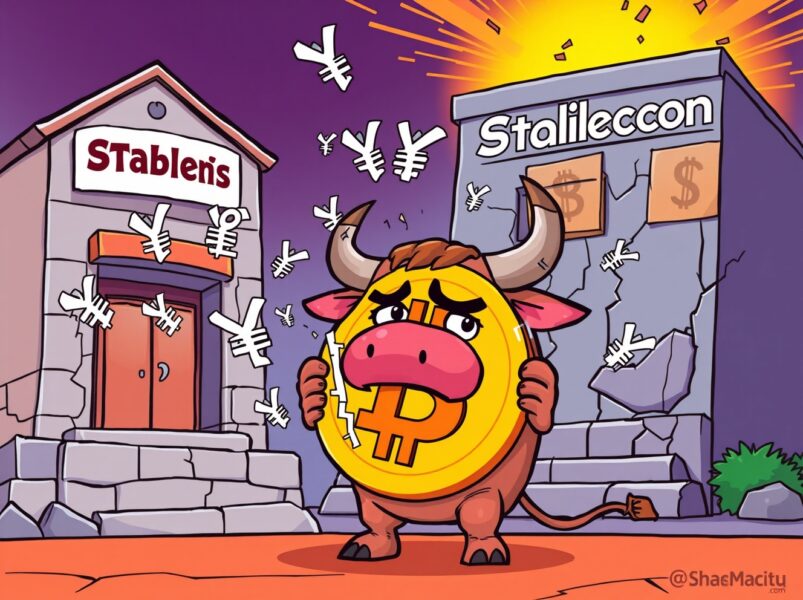
A cartoon illustration showing the intense pressure on Bitcoin from global financial forces and stablecoin instability.

BitcoinWorld

Bitcoin Sell-Off Deepens: The Frightening Impact of Yen Trades and USDT Fears

The Bitcoin sell-off is gaining momentum, sending shockwaves through the entire crypto market. This isn’t just typical volatility; a powerful cocktail of global financial tremors and internal crypto risks is driving the pressure. If you’re holding digital assets, understanding these forces is crucial for navigating the current turbulence.

What’s Driving the Intense Bitcoin Sell-Off?

Recent days have seen a significant spike in selling pressure. Analysts point to a surge in risk-off sentiment as the primary catalyst. This means investors are rapidly moving their money away from risky assets like cryptocurrencies and into safer havens. The trigger? A seismic shift in Japan’s bond market that has global implications.

How Did Japan’s Bond Market Spark a Crypto Crash?

The yield on Japan’s 20-year government bond recently hit a 25-year high. This technical event has a very practical, dangerous effect on crypto: it threatens the yen carry trade. For years, traders borrowed cheap Japanese yen to invest in higher-yielding assets worldwide, including Bitcoin. Now, with Japanese yields rising, this trade is becoming expensive to maintain, leading to widespread liquidations.

  • Carry Trade Unwinding: Traders must sell their Bitcoin and other crypto holdings to repay their cheap yen loans.
  • Global Domino Effect: This creates a wave of selling that floods the market.
  • Compounding Fear: The liquidation wave fuels panic, encouraging other investors to sell.

Are Broader Economic Woes Making the Bitcoin Sell-Off Worse?

Absolutely. The yen situation is not happening in a vacuum. Global economic uncertainties are amplifying the market’s nervousness. Investors are grappling with emerging debt risks in the high-flying AI sector and China’s continued tightening of regulations around digital assets. This creates a ‘risk-off’ environment where crypto, seen as volatile, is often sold first.

Why is USDT’s Downgrade a Major Red Flag?

Amid this external pressure, a critical internal pillar of the crypto market showed cracks. S&P Global Ratings downgraded its stability assessment for Tether’s USDT to a ‘5’—its lowest score. This rating reflects concerns about the reserves backing the world’s largest stablecoin. The immediate impact was visible in China, where USDT traded below its $1 peg. For a market built on stability, this event severely dampened investor sentiment.

Key Risks Highlighted by the USDT Situation:

  • Reserve Transparency: Ongoing questions about the quality and availability of Tether’s backing assets.
  • Market Confidence: Stablecoins are the lifeblood of crypto trading; doubt in them causes systemic worry.
  • Contagion Fear: Problems with USDT can quickly spread to other stablecoins and crypto assets.

What Can Investors Do During This Bitcoin Sell-Off?

While the headlines seem frightening, periods of high volatility are part of the crypto cycle. First, assess your risk tolerance. This Bitcoin sell-off is a stark reminder that cryptocurrencies remain highly correlated to global macro events. Diversification and a focus on long-term fundamentals, rather than short-term price swings, are essential. Secondly, monitor stablecoin news closely, as their health is vital for overall market liquidity.

Conclusion: Navigating the Perfect Storm

The current Bitcoin sell-off is a perfect storm. It combines a technical unwinding of the yen carry trade with deep-seated concerns about the foundational stability of the crypto market itself, exemplified by the USDT downgrade. For the informed investor, this is not merely a time of fear but of education. Understanding these interconnected forces—global macroeconomics and internal crypto governance—is the key to developing a resilient investment strategy for the future.

Frequently Asked Questions (FAQs)

Q: What is a yen carry trade, and why does it affect Bitcoin?
A: A yen carry trade is when investors borrow Japanese yen at low interest rates to invest in higher-yielding assets elsewhere, like Bitcoin. When Japanese interest rates rise, these trades become costly to hold, forcing investors to sell their Bitcoin to cover their positions, creating selling pressure.

Q: Should I be worried about my USDT holdings?
A: The S&P downgrade highlights ongoing risks, not an immediate collapse. However, it’s a reminder to be aware of counterparty risk. For large holdings, consider diversifying across other reputable stablecoins or holding a portion in fiat during times of high uncertainty.

Q: Is this Bitcoin sell-off different from previous crashes?
A> While all crashes involve panic selling, this one is uniquely driven by a specific global macroeconomic event (yen carry trade unwinding) combined with a blow to confidence in a major market stablecoin. This makes its drivers more complex than past events driven purely by speculation.

Q: How long might this selling pressure last?
A> It’s difficult to predict. The pressure may ease once the bulk of the yen-related liquidations are complete and if no further negative news emerges regarding major stablecoins or global markets. However, volatility is likely to remain elevated.

Q: Is this a good time to buy Bitcoin?
A> This depends entirely on your investment strategy and risk profile. Some investors see major sell-offs as buying opportunities (“buying the dip”), but this carries significant risk if the downward trend continues. Never invest more than you can afford to lose.

Q: What other cryptocurrencies are affected by this sell-off?
A> Nearly all cryptocurrencies are affected. Bitcoin often sets the trend for the broader market. When Bitcoin experiences a major sell-off, altcoins (alternative cryptocurrencies) typically see even larger percentage declines due to their higher risk profile.

Found this analysis of the Bitcoin sell-off helpful? The crypto market moves fast, and knowledge is power. Share this article with your network on Twitter, LinkedIn, or Telegram to help other investors understand the complex forces shaping the market today.

To learn more about the latest Bitcoin trends, explore our article on key developments shaping Bitcoin price action and long-term adoption.

This post Bitcoin Sell-Off Deepens: The Frightening Impact of Yen Trades and USDT Fears first appeared on BitcoinWorld.

Market Opportunity
Threshold Logo
Threshold Price(T)
$0.009883
$0.009883$0.009883
-0.37%
USD
Threshold (T) Live Price Chart
Disclaimer: The articles reposted on this site are sourced from public platforms and are provided for informational purposes only. They do not necessarily reflect the views of MEXC. All rights remain with the original authors. If you believe any content infringes on third-party rights, please contact service@support.mexc.com for removal. MEXC makes no guarantees regarding the accuracy, completeness, or timeliness of the content and is not responsible for any actions taken based on the information provided. The content does not constitute financial, legal, or other professional advice, nor should it be considered a recommendation or endorsement by MEXC.

You May Also Like

Modernizing Legacy E-Commerce Platforms: From Oracle ATG To Cloud-Native Architectures

Modernizing Legacy E-Commerce Platforms: From Oracle ATG To Cloud-Native Architectures

Oracle ATG Commerce was the platform of record for large enterprises for many years. But the e-commerce game has changed, and now, speed, agility, and scalability are the name of the game.
Share
Hackernoon2025/09/18 04:42
ArtGis Finance Partners with MetaXR to Expand its DeFi Offerings in the Metaverse

ArtGis Finance Partners with MetaXR to Expand its DeFi Offerings in the Metaverse

By using this collaboration, ArtGis utilizes MetaXR’s infrastructure to widen access to its assets and enable its customers to interact with the metaverse.
Share
Blockchainreporter2025/09/18 00:07
Headwind Helps Best Wallet Token

Headwind Helps Best Wallet Token

The post Headwind Helps Best Wallet Token appeared on BitcoinEthereumNews.com. Google has announced the launch of a new open-source protocol called Agent Payments Protocol (AP2) in partnership with Coinbase, the Ethereum Foundation, and 60 other organizations. This allows AI agents to make payments on behalf of users using various methods such as real-time bank transfers, credit and debit cards, and, most importantly, stablecoins. Let’s explore in detail what this could mean for the broader cryptocurrency markets, and also highlight a presale crypto (Best Wallet Token) that could explode as a result of this development. Google’s Push for Stablecoins Agent Payments Protocol (AP2) uses digital contracts known as ‘Intent Mandates’ and ‘Verifiable Credentials’ to ensure that AI agents undertake only those payments authorized by the user. Mandates, by the way, are cryptographically signed, tamper-proof digital contracts that act as verifiable proof of a user’s instruction. For example, let’s say you instruct an AI agent to never spend more than $200 in a single transaction. This instruction is written into an Intent Mandate, which serves as a digital contract. Now, whenever the AI agent tries to make a payment, it must present this mandate as proof of authorization, which will then be verified via the AP2 protocol. Alongside this, Google has also launched the A2A x402 extension to accelerate support for the Web3 ecosystem. This production-ready solution enables agent-based crypto payments and will help reshape the growth of cryptocurrency integration within the AP2 protocol. Google’s inclusion of stablecoins in AP2 is a massive vote of confidence in dollar-pegged cryptocurrencies and a huge step toward making them a mainstream payment option. This widens stablecoin usage beyond trading and speculation, positioning them at the center of the consumption economy. The recent enactment of the GENIUS Act in the U.S. gives stablecoins more structure and legal support. Imagine paying for things like data crawls, per-task…
Share
BitcoinEthereumNews2025/09/18 01:27