

How Rocket Health is expanding access to mental healthcare across India
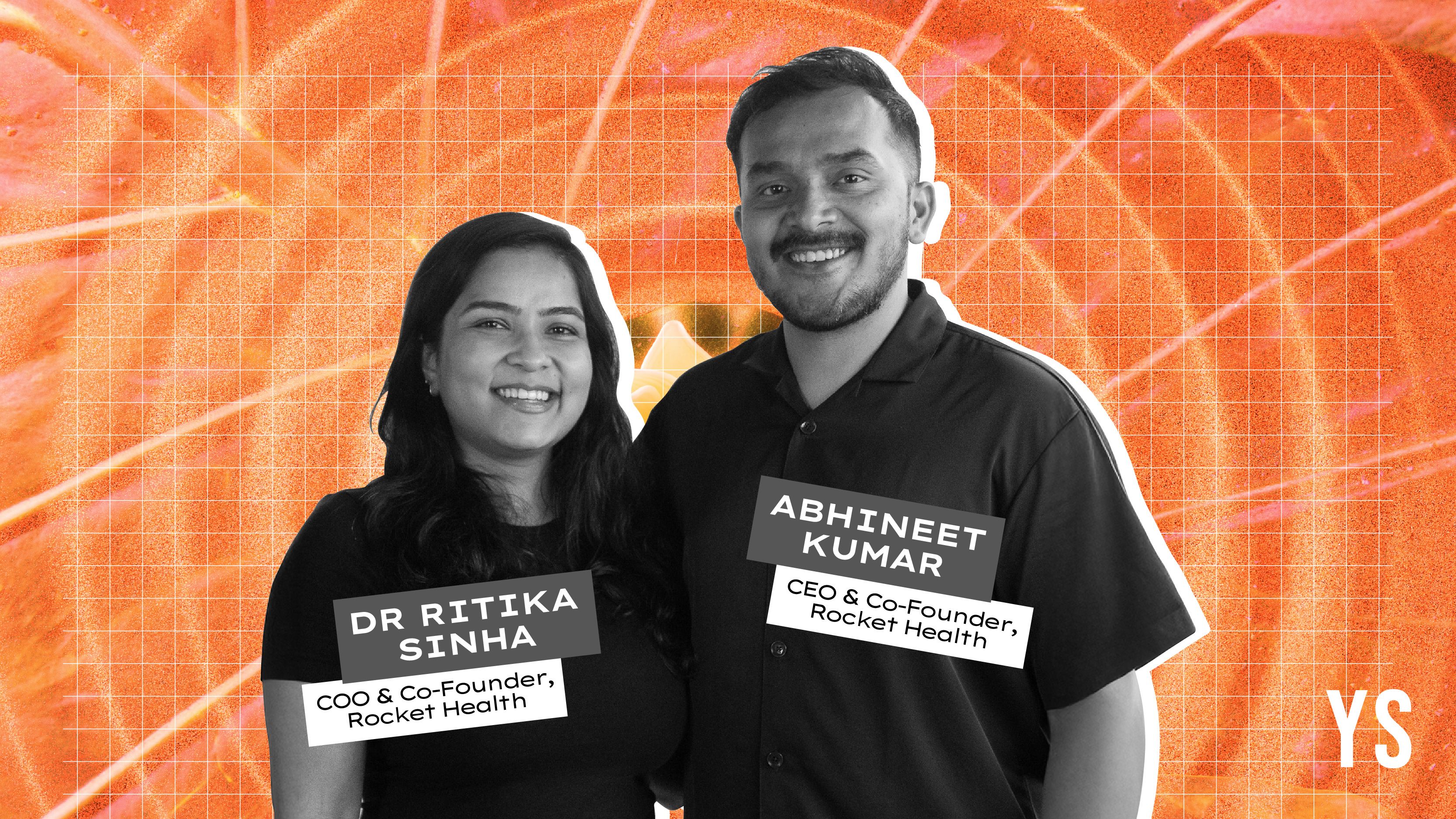
Even as mental health awareness grows across India, access to mental health services remains scarce. Stigma, shortage of trained professionals, and limited accessible care options continue to create barriers for those seeking support.
Siblings Dr Ritika Sinha and Abhineet Kumar from Gaya, Bihar, witnessed this gap first-hand. Sinha, a doctor, and Kumar, then working in the US, launched a volunteer-led teleconsultation initiative that offered free mental health support to people through the pandemic. The initiative reached more than 4,000 people across India through social media.
What began as an emergency response soon revealed a larger gap: With a growing awareness of mental wellness, Indians were expressing a strong desire for mental health services.
“In smaller towns and cities, there were few psychologists or psychiatrists available. It’s a widespread problem affecting hundreds of cities across India,” Sinha says. Keen to resolve these challenges, the siblings launched Rocket Health in 2021.
How Rocket Health works
Rocket Health aims to make mental healthcare accessible, affordable, and stigma-free. The platform brings together therapy, psychiatry, diagnosis, and a cloud pharmacy in one confidential, judgment-free space.
Users can book a session through Rocket Health’s website or app by filling out a form describing their concerns. The platform then matches them with the right professional, with sessions starting at Rs 1,000. After the first consultation, users receive a personalised care roadmap and can choose between single sessions or bundled packages, depending on their needs.
Beyond consultations, the startup works to ensure privacy and continuity of care. The company operates a cloud pharmacy, working with local pharmacy partners to deliver prescription medication in discreet, unmarked packaging. For diagnostics, it collaborates with 1mg Healthcare, creating a unified ecosystem for mental and physical well-being.
The platform caters to men, women, and the LGBTQIA+ community, offering support for concerns ranging from stress, anxiety, and depression to ADHD, grief, cancer care, and relationship challenges. It also provides specialised counselling for couples and queer individuals.
“For couples, therapy treats the relationship as the client, not either of the partners. We build healthier communication and break unhelpful cycles instead of assigning blame," Sinha says. Sessions typically include individual meetings with each partner, then a joint session.
For queer individuals, therapy centres their identity and lived experience, addressing systemic factors like heteronormativity and discrimination while creating space to work through self-discovery, coming out, and navigating marginalisation.
The startup offers its services in over 14 languages. “This makes mental healthcare accessible to many more people across the country,” Sinha says.
"Privacy remains central to Rocket Health’s model,” Kumar says. “Sessions are never recorded, and therapists can refer users internally for specialised support, if needed.”
A dedicated customer care team handles user inquiries via WhatsApp and the website. An algorithm matches users with therapists based on needs, therapy modality, language, age, and cultural compatibility.
Users can request a new therapist if the match doesn't work for them. After each session, users rate their experience on a 1–10 scale and low ratings trigger follow-ups to resolve issues.
According to the founders, the platform emphasises human interaction over automation. The care team undergoes 45–60 days of training in empathy and accessibility. “If someone faces a care issue, the first interaction has to feel positive, cheerful, and conversational,” Sinha says.
In four years, the platform has facilitated more than 200,000 consultations, supported by a team of 90 experts and 30 backend staff. “We’re building a global mental health brand that's focused on making high-quality care accessible and affordable for everyone,” Sinha says.
Ensuring high-quality care
To deliver high-quality and personalised care, Rocket Health connects users with mental health professionals such as counselling psychologists, who address everyday challenges like stress and relationships; clinical psychologists who treat conditions including depression, obsessive-compulsive disorder (OCD), Attention-Deficit/Hyperactivity Disorder (ADHD), and personality disorders; and psychiatrists who prescribe medication and manage the full spectrum of mental health conditions.
The professionals on the platform undergo a strict vetting process, such as resume and experience verification, and mock therapy sessions are evaluated by clinical teams.
Beyond therapy
To complement its therapy services, the company has developed an AI-powered voice journaling app called Rocket Journal, available on iOS. The app provides guided prompts, mood tracking, structured check-ins, and a free-form “Rant Mode”.
Kumar says the platform follows "globally compliant privacy protocols that are already used across trusted health-tech products."
While the platform is not positioned as a replacement for therapy, it uses an LLM trained on cognitive behavioural therapy principles to generate empathetic responses, with voice modulation for more natural conversations. The app can flag potentially concerning content and direct users towards professional help when necessary.
Rocket Health also runs community initiatives such as cancer stigma discussions on Discord and peer-to-peer conversations. It also hosts quarterly walk clubs offline in Bengaluru and conducts training workshops through Rocket Academy.
Audience and growth
Rocket Health mainly caters to Gen Z and millennial users looking for both clinical and non-clinical support.
“We wanted a space that felt open, seamless, and part of everyday conversation,” Kumar adds.
It competes with YourDOST and Amaha Health in the online therapy service market, which Modor Intelligence estimates to be at $9.78 billion in 2025. The sector is expected to grow at a CAGR of 22.67% and reach $27.14 billion by 2030.
The startup generates revenue primarily through direct payment for therapy and psychiatry sessions. Additional income streams include prescribed medications and diagnostic checkups booked through the platform.
Despite being entirely bootstrapped, the company is profitable. With a team of 130 professionals across India, Rocket Health has completed 2 lakh therapy sessions since its inception. “We are on track to complete 1 lakh therapy sessions this year alone,” Sinha says.
Looking ahead, the company plans to expand to the US, UK, and UAE in the coming years. It also aims to onboard between five and ten professionals each month and launch an Android version of its AI journaling app soon.
“Our broader vision is to build a trusted, technology-enabled mental healthcare brand that reduces stigma while staying accessible and user-centric,” Sinha tells YourStory.
You May Also Like

Siren Token Sheds 70% as Analysts Question Supply Structure

Academic Publishing and Fairness: A Game-Theoretic Model of Peer-Review Bias

