Highlights: Uzbekistan will test digital payments and tokenized assets inside a controlled system that begins in early next year. Uzbekistan will launch stablecoin payments through a strict sandbox that supports secure market activity. Global and regional policy shifts have helped Uzbekistan build secure digital markets with strict rules for asset activity. Uzbekistan will introduce a controlled regime for digital assets on January 1, 2026. The plan will allow stablecoins and tokenized securities to operate under strong oversight. Authorities confirmed that the new system will support payment tests, tokenized asset issuance, and a broader push to modernize the financial sector. The National Agency for Perspective Projects and the Central Bank will run the program. Both institutions will supervise all activity and track risk, technology strength, and market behavior. JUST IN: Uzbekistan will recognize stablecoins as legal tender starting January 2026 pic.twitter.com/0rZCQlJXVw — Meme Coin Monarch (@monarch_co36825) November 29, 2025 The special regime will launch through a regulatory sandbox. The sandbox will create a controlled space where stablecoins and related tools can run under strict supervision. Regulators will review performance, user patterns, and possible pressure on existing payment systems. They will also test a distributed-ledger payment network designed to support fast settlement. Uzbekistan is transitioning to a regulated digital-asset space instead of rigid restrictions. The nation, which previously limited the use of cryptos, is currently advocating for a regulated approach and licensed operations. The transformation comes after years of reviews and multiple regulatory updates. Uzbekistan Launches Stablecoin Payments Through a Controlled Sandbox Model The sandbox will allow stablecoins to run inside a monitored payment system. Regulators plan to track user demand, market flow, and technical reliability. They also want to understand how stablecoins interact with the wider economy. This approach supports a cautious but active expansion of digital payments. Domestic companies can issue tokenized stocks and bonds from January next year. Exchanges licensed will establish specific platforms that will handle such assets. These platforms will handle placement, circulation, and access by investors. The shift will also increase access to capital markets in Uzbekistan. Uzbekistan already enforces tight rules on the sector. All crypto transactions that transpire after January 2023 are required to go through licensed local providers. These laws do not allow unidentified sales and inhibit access to foreign exchange. They demand five years of data retention by identity check and force providers. Mining is still permitted, although it must be done by solar power and with the conditions of registration. Regional Policy Momentum Strengthens Uzbekistan’s Digital Strategy The Central Asia region is on the road to dynamic crypto regulation. Kazakhstan has recently signed new rules on digital assets. Moreover, Kyrgyzstan launched a gold-backed stablecoin and expanded its licensing regime. Turkmenistan also came up with a law that encompassed mining and exchange activity. Turkmenistan has passed a new law legalizing and regulating digital assets, introducing licensing for crypto exchanges and mining companies. The framework will be effective on Jan 1, 2026 and aims to attract investment and support economic diversification, according to government… — Wu Blockchain (@WuBlockchain) November 28, 2025 Global oversight is already building. The European Union started applying its MiCA framework. The United States advanced federal stablecoin rules through the GENIUS Act. The UAE and Hong Kong expanded licensing for token issuers. Kenya, Brazil, and South Africa developed rules for cross-border and domestic use. Industry associations are also engaged in smoother digital settlement. The Blockchain Payments Consortium was founded by a coalition of Polygon Labs, Solana Foundation, TON Foundation, and Fireblocks. The group seeks to standardize the movement of assets among networks. Uzbekistan expects these trends to support its transition. The government also plans to grow its fintech market to 200 firms. A $50 million venture fund will support this expansion. Officials hope to attract up to $1 billion in investment over five years. eToro Platform Best Crypto Exchange Over 90 top cryptos to trade Regulated by top-tier entities User-friendly trading app 30+ million users 9.9 Visit eToro eToro is a multi-asset investment platform. The value of your investments may go up or down. Your capital is at risk. Don’t invest unless you’re prepared to lose all the money you invest. This is a high-risk investment, and you should not expect to be protected if something goes wrong. Highlights: Uzbekistan will test digital payments and tokenized assets inside a controlled system that begins in early next year. Uzbekistan will launch stablecoin payments through a strict sandbox that supports secure market activity. Global and regional policy shifts have helped Uzbekistan build secure digital markets with strict rules for asset activity. Uzbekistan will introduce a controlled regime for digital assets on January 1, 2026. The plan will allow stablecoins and tokenized securities to operate under strong oversight. Authorities confirmed that the new system will support payment tests, tokenized asset issuance, and a broader push to modernize the financial sector. The National Agency for Perspective Projects and the Central Bank will run the program. Both institutions will supervise all activity and track risk, technology strength, and market behavior. JUST IN: Uzbekistan will recognize stablecoins as legal tender starting January 2026 pic.twitter.com/0rZCQlJXVw — Meme Coin Monarch (@monarch_co36825) November 29, 2025 The special regime will launch through a regulatory sandbox. The sandbox will create a controlled space where stablecoins and related tools can run under strict supervision. Regulators will review performance, user patterns, and possible pressure on existing payment systems. They will also test a distributed-ledger payment network designed to support fast settlement. Uzbekistan is transitioning to a regulated digital-asset space instead of rigid restrictions. The nation, which previously limited the use of cryptos, is currently advocating for a regulated approach and licensed operations. The transformation comes after years of reviews and multiple regulatory updates. Uzbekistan Launches Stablecoin Payments Through a Controlled Sandbox Model The sandbox will allow stablecoins to run inside a monitored payment system. Regulators plan to track user demand, market flow, and technical reliability. They also want to understand how stablecoins interact with the wider economy. This approach supports a cautious but active expansion of digital payments. Domestic companies can issue tokenized stocks and bonds from January next year. Exchanges licensed will establish specific platforms that will handle such assets. These platforms will handle placement, circulation, and access by investors. The shift will also increase access to capital markets in Uzbekistan. Uzbekistan already enforces tight rules on the sector. All crypto transactions that transpire after January 2023 are required to go through licensed local providers. These laws do not allow unidentified sales and inhibit access to foreign exchange. They demand five years of data retention by identity check and force providers. Mining is still permitted, although it must be done by solar power and with the conditions of registration. Regional Policy Momentum Strengthens Uzbekistan’s Digital Strategy The Central Asia region is on the road to dynamic crypto regulation. Kazakhstan has recently signed new rules on digital assets. Moreover, Kyrgyzstan launched a gold-backed stablecoin and expanded its licensing regime. Turkmenistan also came up with a law that encompassed mining and exchange activity. Turkmenistan has passed a new law legalizing and regulating digital assets, introducing licensing for crypto exchanges and mining companies. The framework will be effective on Jan 1, 2026 and aims to attract investment and support economic diversification, according to government… — Wu Blockchain (@WuBlockchain) November 28, 2025 Global oversight is already building. The European Union started applying its MiCA framework. The United States advanced federal stablecoin rules through the GENIUS Act. The UAE and Hong Kong expanded licensing for token issuers. Kenya, Brazil, and South Africa developed rules for cross-border and domestic use. Industry associations are also engaged in smoother digital settlement. The Blockchain Payments Consortium was founded by a coalition of Polygon Labs, Solana Foundation, TON Foundation, and Fireblocks. The group seeks to standardize the movement of assets among networks. Uzbekistan expects these trends to support its transition. The government also plans to grow its fintech market to 200 firms. A $50 million venture fund will support this expansion. Officials hope to attract up to $1 billion in investment over five years. eToro Platform Best Crypto Exchange Over 90 top cryptos to trade Regulated by top-tier entities User-friendly trading app 30+ million users 9.9 Visit eToro eToro is a multi-asset investment platform. The value of your investments may go up or down. Your capital is at risk. Don’t invest unless you’re prepared to lose all the money you invest. This is a high-risk investment, and you should not expect to be protected if something goes wrong.

Uzbekistan Launches Stablecoin Payments Under Tight Oversight
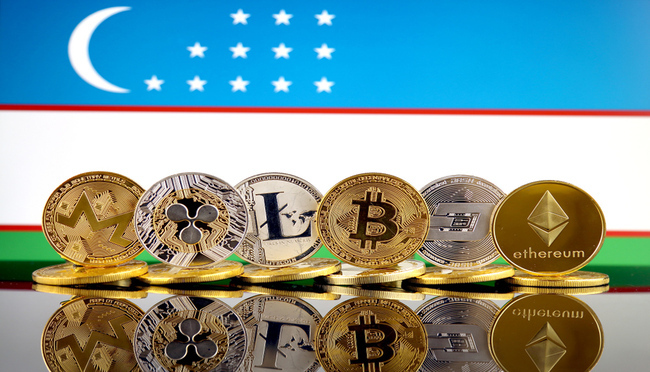
Highlights:

  • Uzbekistan will test digital payments and tokenized assets inside a controlled system that begins in early next year.
  • Uzbekistan will launch stablecoin payments through a strict sandbox that supports secure market activity.
  • Global and regional policy shifts have helped Uzbekistan build secure digital markets with strict rules for asset activity.

Uzbekistan will introduce a controlled regime for digital assets on January 1, 2026. The plan will allow stablecoins and tokenized securities to operate under strong oversight. Authorities confirmed that the new system will support payment tests, tokenized asset issuance, and a broader push to modernize the financial sector. The National Agency for Perspective Projects and the Central Bank will run the program. Both institutions will supervise all activity and track risk, technology strength, and market behavior.

The special regime will launch through a regulatory sandbox. The sandbox will create a controlled space where stablecoins and related tools can run under strict supervision. Regulators will review performance, user patterns, and possible pressure on existing payment systems. They will also test a distributed-ledger payment network designed to support fast settlement.

Uzbekistan is transitioning to a regulated digital-asset space instead of rigid restrictions. The nation, which previously limited the use of cryptos, is currently advocating for a regulated approach and licensed operations. The transformation comes after years of reviews and multiple regulatory updates.

Uzbekistan Launches Stablecoin Payments Through a Controlled Sandbox Model

The sandbox will allow stablecoins to run inside a monitored payment system. Regulators plan to track user demand, market flow, and technical reliability. They also want to understand how stablecoins interact with the wider economy. This approach supports a cautious but active expansion of digital payments.

Domestic companies can issue tokenized stocks and bonds from January next year. Exchanges licensed will establish specific platforms that will handle such assets. These platforms will handle placement, circulation, and access by investors. The shift will also increase access to capital markets in Uzbekistan.

Uzbekistan already enforces tight rules on the sector. All crypto transactions that transpire after January 2023 are required to go through licensed local providers. These laws do not allow unidentified sales and inhibit access to foreign exchange. They demand five years of data retention by identity check and force providers. Mining is still permitted, although it must be done by solar power and with the conditions of registration.

Regional Policy Momentum Strengthens Uzbekistan’s Digital Strategy

The Central Asia region is on the road to dynamic crypto regulation. Kazakhstan has recently signed new rules on digital assets. Moreover, Kyrgyzstan launched a gold-backed stablecoin and expanded its licensing regime. Turkmenistan also came up with a law that encompassed mining and exchange activity.

Global oversight is already building. The European Union started applying its MiCA framework. The United States advanced federal stablecoin rules through the GENIUS Act. The UAE and Hong Kong expanded licensing for token issuers. Kenya, Brazil, and South Africa developed rules for cross-border and domestic use.

Industry associations are also engaged in smoother digital settlement. The Blockchain Payments Consortium was founded by a coalition of Polygon Labs, Solana Foundation, TON Foundation, and Fireblocks. The group seeks to standardize the movement of assets among networks. Uzbekistan expects these trends to support its transition. The government also plans to grow its fintech market to 200 firms. A $50 million venture fund will support this expansion. Officials hope to attract up to $1 billion in investment over five years.

eToro Platform

Best Crypto Exchange

  • Over 90 top cryptos to trade
  • Regulated by top-tier entities
  • User-friendly trading app
  • 30+ million users
9.9
Visit eToro

eToro is a multi-asset investment platform. The value of your investments may go up or down. Your capital is at risk. Don’t invest unless you’re prepared to lose all the money you invest. This is a high-risk investment, and you should not expect to be protected if something goes wrong.


Market Opportunity
EPNS Logo
EPNS Price(PUSH)
$0.01126
$0.01126$0.01126
-1.22%
USD
EPNS (PUSH) Live Price Chart
Disclaimer: The articles reposted on this site are sourced from public platforms and are provided for informational purposes only. They do not necessarily reflect the views of MEXC. All rights remain with the original authors. If you believe any content infringes on third-party rights, please contact service@support.mexc.com for removal. MEXC makes no guarantees regarding the accuracy, completeness, or timeliness of the content and is not responsible for any actions taken based on the information provided. The content does not constitute financial, legal, or other professional advice, nor should it be considered a recommendation or endorsement by MEXC.

You May Also Like

Shocking OpenVPP Partnership Claim Draws Urgent Scrutiny

Shocking OpenVPP Partnership Claim Draws Urgent Scrutiny

The post Shocking OpenVPP Partnership Claim Draws Urgent Scrutiny appeared on BitcoinEthereumNews.com. The cryptocurrency world is buzzing with a recent controversy surrounding a bold OpenVPP partnership claim. This week, OpenVPP (OVPP) announced what it presented as a significant collaboration with the U.S. government in the innovative field of energy tokenization. However, this claim quickly drew the sharp eye of on-chain analyst ZachXBT, who highlighted a swift and official rebuttal that has sent ripples through the digital asset community. What Sparked the OpenVPP Partnership Claim Controversy? The core of the issue revolves around OpenVPP’s assertion of a U.S. government partnership. This kind of collaboration would typically be a monumental endorsement for any private cryptocurrency project, especially given the current regulatory climate. Such a partnership could signify a new era of mainstream adoption and legitimacy for energy tokenization initiatives. OpenVPP initially claimed cooperation with the U.S. government. This alleged partnership was said to be in the domain of energy tokenization. The announcement generated considerable interest and discussion online. ZachXBT, known for his diligent on-chain investigations, was quick to flag the development. He brought attention to the fact that U.S. Securities and Exchange Commission (SEC) Commissioner Hester Peirce had directly addressed the OpenVPP partnership claim. Her response, delivered within hours, was unequivocal and starkly contradicted OpenVPP’s narrative. How Did Regulatory Authorities Respond to the OpenVPP Partnership Claim? Commissioner Hester Peirce’s statement was a crucial turning point in this unfolding story. She clearly stated that the SEC, as an agency, does not engage in partnerships with private cryptocurrency projects. This response effectively dismantled the credibility of OpenVPP’s initial announcement regarding their supposed government collaboration. Peirce’s swift clarification underscores a fundamental principle of regulatory bodies: maintaining impartiality and avoiding endorsements of private entities. Her statement serves as a vital reminder to the crypto community about the official stance of government agencies concerning private ventures. Moreover, ZachXBT’s analysis…
Share
BitcoinEthereumNews2025/09/18 02:13
Bitcoin Has Taken Gold’s Role In Today’s World, Eric Trump Says

Bitcoin Has Taken Gold’s Role In Today’s World, Eric Trump Says

Eric Trump on Tuesday described Bitcoin as a “modern-day gold,” calling it a liquid store of value that can act as a hedge to real estate and other assets. Related Reading: XRP’s Biggest Rally Yet? Analyst Projects $20+ In October 2025 According to reports, the remark came during a TV appearance on CNBC’s Squawk Box, tied to the launch of American Bitcoin, the mining and treasury firm he helped start. Company Holdings And Strategy Based on public filings and company summaries, American Bitcoin has accumulated 2,443 BTC on its balance sheet. That stash has been valued in the low hundreds of millions of dollars at recent spot prices. The firm mixes large-scale mining with the goal of holding Bitcoin as a strategic reserve, which it says will help it grow both production and asset holdings over time. Eric Trump’s comments were direct. He told viewers that institutions are treating Bitcoin more like a store of value than a fringe idea, and he warned firms that resist blockchain adoption. The tone was strong at times, and the line about Bitcoin being a modern equivalent of gold was used to frame American Bitcoin’s role as both miner and holder.   Eric Trump has said: bitcoin is modern-day gold — unusual_whales (@unusual_whales) September 16, 2025 How The Company Went Public American Bitcoin moved toward a public listing via an all-stock merger with Gryphon Digital Mining earlier this year, a deal that kept most of the original shareholders in control and positioned the new entity for a Nasdaq debut. Reports show that mining partner Hut 8 holds a large ownership stake, leaving the Trump family and other backers with a minority share. The listing brought fresh attention and capital to the firm as it began trading under the ticker ABTC. Market watchers say the firm’s public debut highlights two trends: mining companies are trying to grow by both producing and holding Bitcoin, and political ties are bringing more headlines to crypto firms. Some analysts point out that holding large amounts of Bitcoin on the balance sheet exposes a company to price swings, while supporters argue it aligns incentives between miners and investors. Related Reading: Ethereum Bulls Target $8,500 With Big Money Backing The Move – Details Reaction And Possible Risks Based on coverage of the launch, investors have reacted with both enthusiasm and caution. Supporters praise the prospect of a US-based miner that aims to be transparent and aggressive about building a reserve. Critics point to governance questions, possible conflicts tied to high-profile backers, and the usual risks of a volatile asset being held on corporate balance sheets. Eric Trump’s remark that Bitcoin has taken gold’s role in today’s world reflects both his belief in its value and American Bitcoin’s strategy of mining and holding. Whether that view sticks will depend on how investors and institutions respond in the months ahead. Featured image from Meta, chart from TradingView
Share
NewsBTC2025/09/18 06:00
XRP Holds $1.88 Fibonacci Support as 3-Day Chart Signals Bullish Continuation

XRP Holds $1.88 Fibonacci Support as 3-Day Chart Signals Bullish Continuation

XRP is once again drawing attention on higher timeframes as its 3-day chart begins to mirror past bullish phases. Market observers are closely watching how the
Share
Tronweekly2026/01/11 21:30