BitcoinWorld Revealing Truth: Why Layer 1 Tokens Struggle With Long-Term Value According to AllianceDAO Founder Have you ever wondered why some blockchain investments fail to deliver long-term returns? AllianceDAO founder Qiao Wang recently dropped a bombshell revelation about Layer 1 tokens and their fundamental competitive challenges. His insights explain why these foundational blockchain networks struggle to maintain value in today’s rapidly evolving crypto landscape. Why Are Layer 1 Tokens Losing […] This post Revealing Truth: Why Layer 1 Tokens Struggle With Long-Term Value According to AllianceDAO Founder first appeared on BitcoinWorld.BitcoinWorld Revealing Truth: Why Layer 1 Tokens Struggle With Long-Term Value According to AllianceDAO Founder Have you ever wondered why some blockchain investments fail to deliver long-term returns? AllianceDAO founder Qiao Wang recently dropped a bombshell revelation about Layer 1 tokens and their fundamental competitive challenges. His insights explain why these foundational blockchain networks struggle to maintain value in today’s rapidly evolving crypto landscape. Why Are Layer 1 Tokens Losing […] This post Revealing Truth: Why Layer 1 Tokens Struggle With Long-Term Value According to AllianceDAO Founder first appeared on BitcoinWorld.

Revealing Truth: Why Layer 1 Tokens Struggle With Long-Term Value According to AllianceDAO Founder

2025/11/28 09:50
4 min read
For feedback or concerns regarding this content, please contact us at crypto.news@mexc.com

BitcoinWorld

Revealing Truth: Why Layer 1 Tokens Struggle With Long-Term Value According to AllianceDAO Founder

Have you ever wondered why some blockchain investments fail to deliver long-term returns? AllianceDAO founder Qiao Wang recently dropped a bombshell revelation about Layer 1 tokens and their fundamental competitive challenges. His insights explain why these foundational blockchain networks struggle to maintain value in today’s rapidly evolving crypto landscape.

Why Are Layer 1 Tokens Losing Their Competitive Edge?

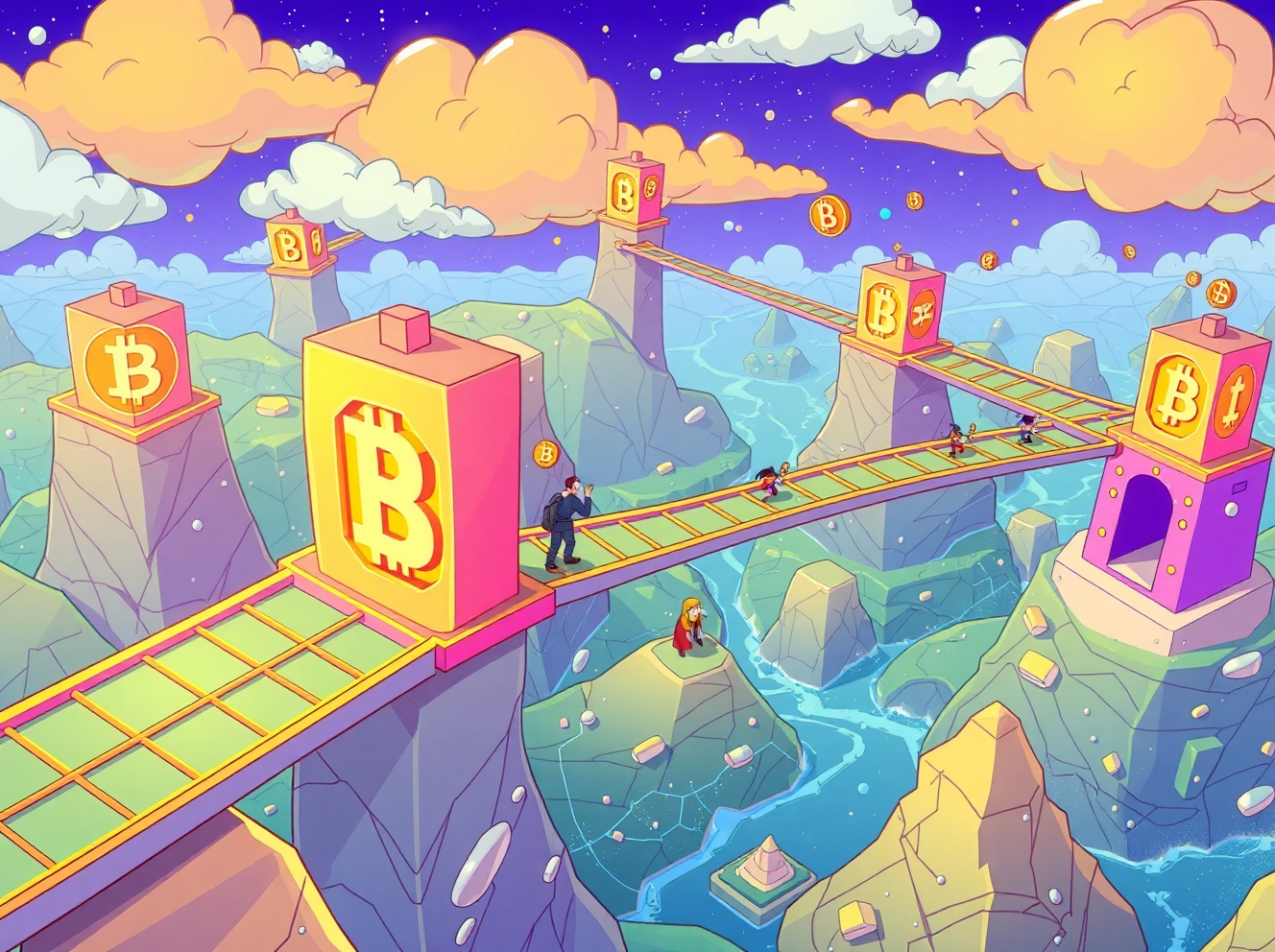
Qiao Wang argues that Layer 1 tokens face an existential threat: they lack distinct competitive advantages. Cross-chain bridges have become incredibly user-friendly, allowing developers to migrate between networks with surprising ease. This mobility creates a highly competitive environment where no single chain can maintain dominance for long.

The situation becomes more challenging when you consider that launching new chains has never been simpler. Wang emphasizes that switching blockchain ecosystems costs significantly less than migrating between cloud platforms like AWS. This low switching cost fundamentally undermines the long-term value proposition of Layer 1 tokens.

How Cross-Chain Technology Changes Everything

Cross-chain bridges have revolutionized how applications operate across different blockchain networks. Here’s what makes migration so accessible:

  • Most applications can move between chains without major technical hurdles
  • Only applications with highly complex smart contracts face migration challenges
  • Development tools and frameworks have standardized across multiple chains
  • User experience has improved dramatically across bridge interfaces

This interoperability means developers can chase better incentives, lower fees, or improved performance without being locked into a single ecosystem. Consequently, Layer 1 tokens must constantly compete to retain their application base.

The Vertical Integration Solution: Chains Owning Their Applications

Wang proposes a compelling solution for Layer 1 networks seeking sustainable competitive advantages. He suggests that chains must vertically integrate by directly owning their application layers. This strategy creates natural ecosystem lock-in and strengthens network effects.

Several prominent chains have already embraced this approach:

  • Solana has developed strong native applications and ecosystem projects
  • Base leverages its Coinbase integration for built-in user acquisition
  • Hyperliquid focuses on specialized financial applications
  • Tempo builds payment-focused solutions directly into its chain

This vertical integration creates stronger moats around Layer 1 tokens, making them more resilient to competitive pressures and migration trends.

What Does This Mean for Blockchain Investors?

For investors believing in blockchain technology’s long-term growth, Wang suggests focusing on chains that control their application layers. These Layer 1 tokens demonstrate stronger defensive characteristics and sustainable competitive advantages.

The traditional model of generic Layer 1 tokens competing purely on technical specifications appears increasingly vulnerable. Instead, chains with strategic vertical integration and owned application ecosystems show greater promise for long-term value retention.

Conclusion: The Future of Layer 1 Competition

The blockchain landscape is undergoing a fundamental shift. Layer 1 tokens can no longer rely on technical superiority alone. Sustainable competitive advantages now require strategic ecosystem development and application layer control. Chains that successfully implement vertical integration strategies will likely outperform their generic counterparts in the long run.

Frequently Asked Questions

What are Layer 1 tokens?

Layer 1 tokens are the native cryptocurrencies of base blockchain networks like Ethereum, Solana, or Bitcoin. They form the foundation upon which other applications and tokens are built.

Why do Layer 1 tokens lack competitive advantages?

They face intense competition because cross-chain bridges make migration easy, and launching new chains has become simpler, reducing switching costs for developers and users.

What is vertical integration in blockchain?

Vertical integration occurs when a blockchain network directly owns or controls applications built on its platform, creating stronger ecosystem lock-in and network effects.

Which chains are successfully implementing vertical integration?

Solana, Base, Hyperliquid, and Tempo are examples of chains that have adopted vertical integration strategies by developing or controlling key applications within their ecosystems.

How does this affect my investment strategy?

Focus on Layer 1 tokens with strong vertical integration and owned application ecosystems, as they demonstrate better defensive characteristics against competitive pressures.

Are all Layer 1 tokens facing these challenges?

While most face similar competitive pressures, chains with unique technological advantages or strong ecosystem development may maintain better competitive positioning.

Found this analysis insightful? Share this article with fellow crypto enthusiasts on social media to spread these crucial insights about Layer 1 token competitiveness!

To learn more about the latest blockchain trends, explore our article on key developments shaping cryptocurrency institutional adoption.

This post Revealing Truth: Why Layer 1 Tokens Struggle With Long-Term Value According to AllianceDAO Founder first appeared on BitcoinWorld.

Market Opportunity
Swarm Network Logo
Swarm Network Price(TRUTH)
$0.009442
$0.009442$0.009442
+0.06%
USD
Swarm Network (TRUTH) Live Price Chart
Disclaimer: The articles reposted on this site are sourced from public platforms and are provided for informational purposes only. They do not necessarily reflect the views of MEXC. All rights remain with the original authors. If you believe any content infringes on third-party rights, please contact crypto.news@mexc.com for removal. MEXC makes no guarantees regarding the accuracy, completeness, or timeliness of the content and is not responsible for any actions taken based on the information provided. The content does not constitute financial, legal, or other professional advice, nor should it be considered a recommendation or endorsement by MEXC.

You May Also Like

BTC supply on centralized exchanges is at a 7-year low
BTC supply on centralized exchanges is at a 7-year low

PANews reported on September 18th that crypto analyst The DeFi Investor wrote on the X platform: "The supply of BTC on centralized exchanges is at its lowest level in seven years. The scale of funds invested by institutions in purchasing Bitcoin in this cycle is incredible."
Share
PANews2025/09/18 09:53
Breaking: CME Group Unveils Solana and XRP Options

Breaking: CME Group Unveils Solana and XRP Options

CME Group launches Solana and XRP options, expanding crypto offerings. SEC delays Solana and XRP ETF approvals, market awaits clarity. Strong institutional demand drives CME’s launch of crypto options contracts. In a bold move to broaden its cryptocurrency offerings, CME Group has officially launched options on Solana (SOL) and XRP futures. Available since October 13, 2025, these options will allow traders to hedge and manage exposure to two of the most widely traded digital assets in the market. The new contracts come in both full-size and micro-size formats, with expiration options available daily, monthly, and quarterly, providing flexibility for a diverse range of market participants. This expansion aligns with the rising demand for innovative products in the crypto space. Giovanni Vicioso, CME Group’s Global Head of Cryptocurrency Products, noted that the new options offer increased flexibility for traders, from institutions to active individual investors. The growing liquidity in Solana and XRP futures has made the introduction of these options a timely move to meet the needs of an expanding market. Also Read: Vitalik Buterin Reveals Ethereum’s Bold Plan to Stay Quantum-Secure and Simple! Rapid Growth in Solana and XRP Futures Trading CME Group’s decision to roll out options on Solana and XRP futures follows the substantial growth in these futures products. Since the launch of Solana futures in March 2025, more than 540,000 contracts, totaling $22.3 billion in notional value, have been traded. In August 2025, Solana futures set new records, with an average daily volume (ADV) of 9,000 contracts valued at $437.4 million. The average daily open interest (ADOI) hit 12,500 contracts, worth $895 million. Similarly, XRP futures, which launched in May 2025, have seen significant adoption, with over 370,000 contracts traded, totaling $16.2 billion. XRP futures also set records in August 2025, with an ADV of 6,600 contracts valued at $385 million and a record ADOI of 9,300 contracts, worth $942 million. Institutional Demand for Advanced Hedging Tools CME Group’s expansion into options is a direct response to growing institutional interest in sophisticated cryptocurrency products. Roman Makarov from Cumberland Options Trading at DRW highlighted the market demand for more varied crypto products, enabling more advanced risk management strategies. Joshua Lim from FalconX also noted that the new options products meet the increasing need for institutional hedging tools for assets like Solana and XRP, further cementing their role in the digital asset space. The launch of options on Solana and XRP futures marks another step toward the maturation of the cryptocurrency market, providing a broader range of tools for managing digital asset exposure. SEC’s Delay on Solana and XRP ETF Approvals While CME Group expands its offerings, the broader market is also watching the progress of Solana and XRP exchange-traded funds (ETFs). The U.S. Securities and Exchange Commission (SEC) has delayed its decisions on multiple crypto-related ETF filings, including those for Solana and XRP. Despite the delay, analysts anticipate approval may be on the horizon. This week, REX Shares and Osprey Funds are expected to launch an XRP ETF that will hold XRP directly and allocate at least 40% of its assets to other XRP-related ETFs. Despite the delays, some analysts believe that approval could come soon, fueling further interest in these assets. The delay by the SEC has left many crypto investors awaiting clarity, but approval of these ETFs could fuel further momentum in the Solana and XRP futures markets. Also Read: Tether CEO Breaks Silence on $117,000 Bitcoin Price – Market Reacts! The post Breaking: CME Group Unveils Solana and XRP Options appeared first on 36Crypto.
Share
Coinstats2025/09/18 02:35
Why Fintech Platforms Are Growing Faster Than Traditional Banks

Why Fintech Platforms Are Growing Faster Than Traditional Banks

Fintech platforms are outpacing traditional banks in growth across nearly every measurable dimension. Customer acquisition rates, revenue growth, geographic expansion
Share
Techbullion2026/03/24 07:58