The post Saudi Arabia’s Push For AI Remains A Challenge appeared on BitcoinEthereumNews.com. The U.S.-Saudi Arabia relationship under the second administration is quickly being defined by cooperation in AI and hi-tech sectors, rather than purely focusing on oil. (Photo by Win McNamee/Getty Images) Getty Images Prince Mohammed bin Salman recently wrapped up a successful visit to the White House, boosting the 80-year-old strategic relationship between Saudi Arabia and the U.S. The desert kingdom’s quest for technological progress was front and center. Yet, making Saudi Arabia a global leader in AI remains challenging. The Future Investment Initiative, otherwise known as “Davos in the Desert,” an annual event held in Riyadh showcasing the plans of Vision 2030, has taken center stage for AI development. Saudi Arabia, which currently lags behind AI field leaders China and the U.S., aims to become a major player in the global AI and data infrastructure race. The country’s pivot towards the AI sector signifies more than potential economic diversification for the region as it seeks to protect itself against oil price fluctuations. If successful, it could also mark a shift in the Middle East’s and the Arab world’s competition for global power. However, there is a rocky road ahead for these ambitions. Saudi Arabia’s AI Gambit Saudi Arabia may be trailing behind other competitors in the AI race, but not for lack of trying. Established in 2019, the Saudi Data and Artificial Intelligence Authority has been attempting to push the kingdom towards AI advancement by focusing on research and development, and the pathways to becoming a leading AI economy. Investing in AI development is seen as a way to help boost Saudi Arabia’s position in the race and move beyond its oil economy. The country’s ambitious investment program is driven by an understanding of the substantial benefits of building and maintaining an AI infrastructure. The kingdom’s massive oil revenue could… The post Saudi Arabia’s Push For AI Remains A Challenge appeared on BitcoinEthereumNews.com. The U.S.-Saudi Arabia relationship under the second administration is quickly being defined by cooperation in AI and hi-tech sectors, rather than purely focusing on oil. (Photo by Win McNamee/Getty Images) Getty Images Prince Mohammed bin Salman recently wrapped up a successful visit to the White House, boosting the 80-year-old strategic relationship between Saudi Arabia and the U.S. The desert kingdom’s quest for technological progress was front and center. Yet, making Saudi Arabia a global leader in AI remains challenging. The Future Investment Initiative, otherwise known as “Davos in the Desert,” an annual event held in Riyadh showcasing the plans of Vision 2030, has taken center stage for AI development. Saudi Arabia, which currently lags behind AI field leaders China and the U.S., aims to become a major player in the global AI and data infrastructure race. The country’s pivot towards the AI sector signifies more than potential economic diversification for the region as it seeks to protect itself against oil price fluctuations. If successful, it could also mark a shift in the Middle East’s and the Arab world’s competition for global power. However, there is a rocky road ahead for these ambitions. Saudi Arabia’s AI Gambit Saudi Arabia may be trailing behind other competitors in the AI race, but not for lack of trying. Established in 2019, the Saudi Data and Artificial Intelligence Authority has been attempting to push the kingdom towards AI advancement by focusing on research and development, and the pathways to becoming a leading AI economy. Investing in AI development is seen as a way to help boost Saudi Arabia’s position in the race and move beyond its oil economy. The country’s ambitious investment program is driven by an understanding of the substantial benefits of building and maintaining an AI infrastructure. The kingdom’s massive oil revenue could…

Saudi Arabia’s Push For AI Remains A Challenge

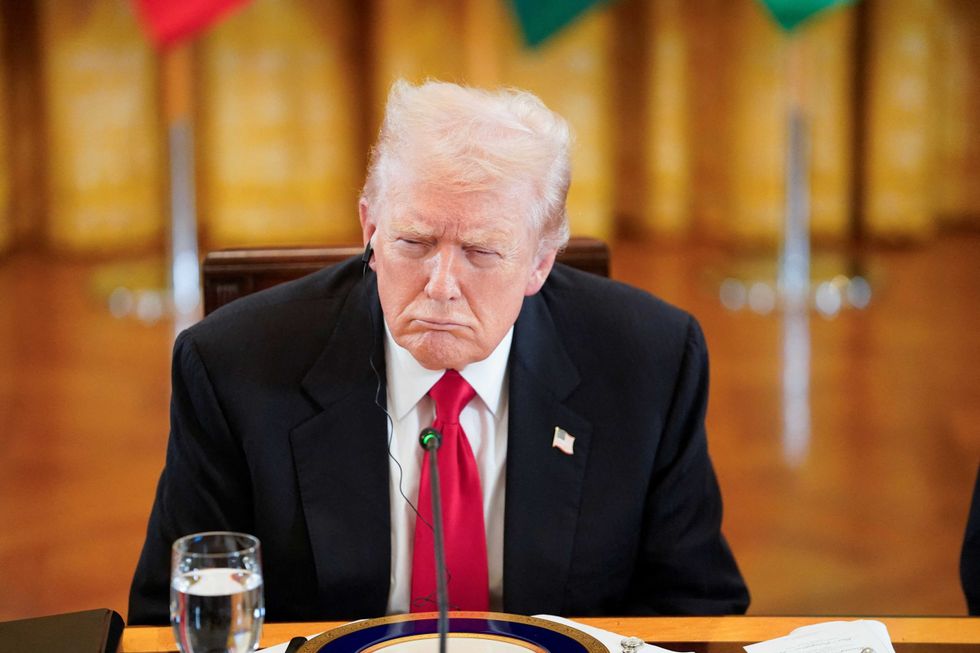
The U.S.-Saudi Arabia relationship under the second administration is quickly being defined by cooperation in AI and hi-tech sectors, rather than purely focusing on oil. (Photo by Win McNamee/Getty Images)

Getty Images

Prince Mohammed bin Salman recently wrapped up a successful visit to the White House, boosting the 80-year-old strategic relationship between Saudi Arabia and the U.S. The desert kingdom’s quest for technological progress was front and center. Yet, making Saudi Arabia a global leader in AI remains challenging.

The Future Investment Initiative, otherwise known as “Davos in the Desert,” an annual event held in Riyadh showcasing the plans of Vision 2030, has taken center stage for AI development. Saudi Arabia, which currently lags behind AI field leaders China and the U.S., aims to become a major player in the global AI and data infrastructure race. The country’s pivot towards the AI sector signifies more than potential economic diversification for the region as it seeks to protect itself against oil price fluctuations. If successful, it could also mark a shift in the Middle East’s and the Arab world’s competition for global power. However, there is a rocky road ahead for these ambitions.

Saudi Arabia’s AI Gambit

Saudi Arabia may be trailing behind other competitors in the AI race, but not for lack of trying. Established in 2019, the Saudi Data and Artificial Intelligence Authority has been attempting to push the kingdom towards AI advancement by focusing on research and development, and the pathways to becoming a leading AI economy. Investing in AI development is seen as a way to help boost Saudi Arabia’s position in the race and move beyond its oil economy.

The country’s ambitious investment program is driven by an understanding of the substantial benefits of building and maintaining an AI infrastructure. The kingdom’s massive oil revenue could be utilized for AI R&D, data centers, and other energy-intensive enterprises. AI development may provide a means for Saudi Arabia to escape its dependence on energy exports and achieve economic diversification.

Saudi Arabia’s focus on AI development shows its intent to diversify away from its oil economy and vie for leadership in burgeoning AI and data center industries. (Photo by Nicolas Economou/NurPhoto via Getty Images)

NurPhoto via Getty Images

Focusing on computing power, Saudi Arabia wants to develop relationships with leading AI and technology firms. Notably, the launch of the country’s signature “HumAIn” platform and its partnership with the American firm Qualcomm were timed with President Trump’s visit to the region in May, positioning the kingdom’s hi-tech ventures as a cornerstone of the modern Saudi-U.S. relationship.

Partnerships with the U.S. firms leading in areas such as chipmaking and software systems can foster more trade and investment between the two countries. Opportunities to partner with China may prove less abundant as it seeks to import advanced chips from the U.S., but Saudi Arabia’s unique position in the race may enable it to negotiate with both tech leaders.

Infrastructure development by the U.S. and China in Saudi Arabia could shift the geopolitics of the tech race. Establishing relationships with rivals and allowing them to develop tech ecosystems within a consolidated hub might be a signal by Riyadh that the kingdom is in no one’s pocket. The tech leader who integrates first in Saudi Arabia will almost certainly gain an advantage in the region.

Limitations to Saudi AI Development

Despite Saudi Arabia’s ambitions to become an AI powerhouse, constraints are likely to limit the development of the infrastructure crucial to sector growth. Data centers require immense amounts of water and the kingdom’s resources are limited. Given Saudi Arabia’s geographic location, acquiring the water needed to cool data centers poses challenges. Water desalination is a particularly energy-intensive process, and the abundant solar energy currently produces water that is too expensive to drink, let alone cool data centers. Despite producing massive amounts of oil, the Kingdom is lacking ample gas supplies.

The Arabian desert’s high temperatures make cooling through water even more costly and challenging to maintain. In addition, building infrastructures in a desert environment incur additional costs in areas such as air-cooling efficiency and grid stability.

Human capital and resources are equally important. Saudi Arabia currently has a shallow talent pool, as the Kingdom allowed religious education through college for decades to the exclusion of STEM and other areas of study, graduating millions of people without marketable skills. Acknowledging this gap is the first step to growth, but it is still a barrier to implementing the vision that the kingdom’s leaders have for its future. Once the infrastructure is built and ready for use, the country’s ambitions in competitive and beneficial AI research will need to be backed by billions of dollars and extensive expertise.

Saudi Arabia’s solar energy is not enough to aid in the cooling of data centers as they grow in number across the country. (Photo credit should read FAYEZ NURELDINE/AFP via Getty Images)

AFP via Getty Images

The Saudi leadership clearly understands the imperative to transition from a 20th century oil economy to 21st century high tech-based society. But the nation’s push for AI requires more than meeting with tech executives and establishing relationships with industry leaders happy to take the Kingdom’s money; it also demands a deep understanding of what will be needed to succeed. Geographical, technological, and human capital limitations determine what is currently possible and must be overcome if an AI ecosystem is to develop. Though Saudi Arabia’s pivot to the industries of the future is understandable and desirable, its leaders need to ensure that there is a wide societal buy-in, and it is fully equipped to usher in this new era of science and tech.

Source: https://www.forbes.com/sites/arielcohen/2025/11/26/saudi-arabias-push-for-ai-remains-a-challenge/
Market Opportunity
EPNS Logo
EPNS Price(PUSH)
$0.01115
$0.01115$0.01115
+0.08%
USD
EPNS (PUSH) Live Price Chart
Disclaimer: The articles reposted on this site are sourced from public platforms and are provided for informational purposes only. They do not necessarily reflect the views of MEXC. All rights remain with the original authors. If you believe any content infringes on third-party rights, please contact service@support.mexc.com for removal. MEXC makes no guarantees regarding the accuracy, completeness, or timeliness of the content and is not responsible for any actions taken based on the information provided. The content does not constitute financial, legal, or other professional advice, nor should it be considered a recommendation or endorsement by MEXC.

You May Also Like

XRPL Validator Reveals Why He Just Vetoed New Amendment

XRPL Validator Reveals Why He Just Vetoed New Amendment

Vet has explained that he has decided to veto the Token Escrow amendment to prevent breaking things
Share
Coinstats2025/09/18 00:28
Philippines grants visa-free entry to Chinese | The wRap

Philippines grants visa-free entry to Chinese | The wRap

Today’s headlines: PH-China relations, US immigration, Manuel Bonoan
Share
Rappler2026/01/15 22:11
CME Group to launch Solana and XRP futures options in October

CME Group to launch Solana and XRP futures options in October

The post CME Group to launch Solana and XRP futures options in October appeared on BitcoinEthereumNews.com. CME Group is preparing to launch options on SOL and XRP futures next month, giving traders new ways to manage exposure to the two assets.  The contracts are set to go live on October 13, pending regulatory approval, and will come in both standard and micro sizes with expiries offered daily, monthly and quarterly. The new listings mark a major step for CME, which first brought bitcoin futures to market in 2017 and added ether contracts in 2021. Solana and XRP futures have quickly gained traction since their debut earlier this year. CME says more than 540,000 Solana contracts (worth about $22.3 billion), and 370,000 XRP contracts (worth $16.2 billion), have already been traded. Both products hit record trading activity and open interest in August. Market makers including Cumberland and FalconX plan to support the new contracts, arguing that institutional investors want hedging tools beyond bitcoin and ether. CME’s move also highlights the growing demand for regulated ways to access a broader set of digital assets. The launch, which still needs the green light from regulators, follows the end of XRP’s years-long legal fight with the US Securities and Exchange Commission. A federal court ruling in 2023 found that institutional sales of XRP violated securities laws, but programmatic exchange sales did not. The case officially closed in August 2025 after Ripple agreed to pay a $125 million fine, removing one of the biggest uncertainties hanging over the token. This is a developing story. This article was generated with the assistance of AI and reviewed by editor Jeffrey Albus before publication. Get the news in your inbox. Explore Blockworks newsletters: Source: https://blockworks.co/news/cme-group-solana-xrp-futures
Share
BitcoinEthereumNews2025/09/17 23:55
