Japan’s Financial Services Agency (FSA) is preparing a legislative overhaul that will require domestic cryptocurrency exchanges to maintain liability reserves, marking a significant shift toward stronger investor safeguards.Japan’s Financial Services Agency (FSA) is preparing a legislative overhaul that will require domestic cryptocurrency exchanges to maintain liability reserves, marking a significant shift toward stronger investor safeguards.

Japan Sets Sights on Stronger Oversight With Crypto Reserve Legislation

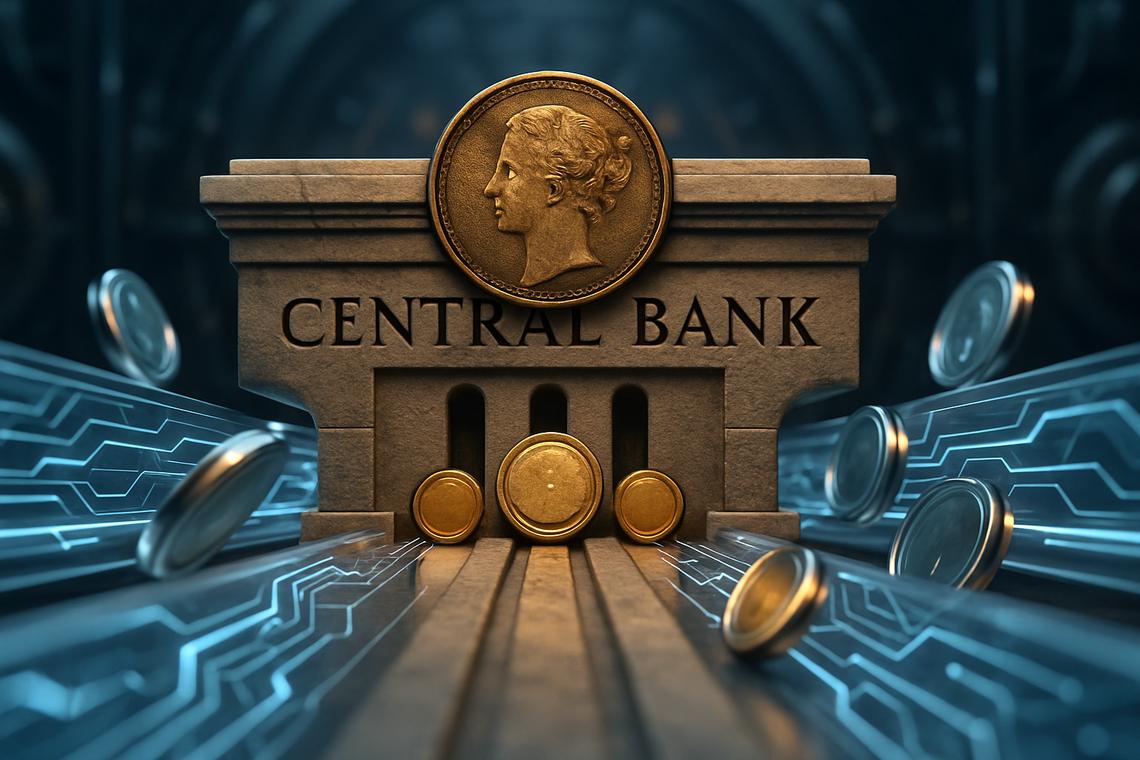
Japan’s Financial Services Agency (FSA) is preparing a legislative overhaul that will require domestic cryptocurrency exchanges to maintain liability reserves, marking a significant shift toward stronger investor safeguards.

FSA Prepares New Reserve Framework

Japan’s Financial Services Agency is advancing plans to introduce mandatory liability reserves for crypto exchanges, aiming to strengthen consumer protection and align the digital asset sector with traditional financial standards. According to reports from Nikkei Asia, the agency intends to submit the proposed legislation to parliament in 2026.

Under the current rules, exchanges must store customer assets in offline cold wallets, a measure designed to reduce the risk of theft. However, there is no legal requirement compelling platforms to maintain reserves specifically for compensating users if funds are lost due to cyberattacks or internal failures. The FSA now intends to eliminate that gap by obligating exchanges to hold reserves earmarked for potential liabilities.

Modelled on Traditional Securities Rules

The forthcoming system is expected to resemble the reserve requirements imposed on securities firms, which hold between ¥2 billion and ¥40 billion (approximately $12.7 million to $255 million) depending on trading activity. If adopted, the framework would scrap the existing exemption tied to the use of cold wallets and establish clearer procedures for asset distribution during insolvency.

One notable element includes empowering court-appointed administrators to manage customer payouts if an exchange enters bankruptcy. The move is aimed at preventing years-long delays in asset recovery, an issue that has plagued the industry.

Security Incidents Drive Regulatory Pressure

Japan’s push for tighter oversight follows repeated security breaches involving domestic exchanges. The sector continues to deal with the aftermath of the Mt. Gox collapse, when roughly 850,000 BTC was stolen in 2014. Repayments only began in 2024 and are scheduled to continue through October 2026.

More recent cases have reinforced concerns. In May, DMM Bitcoin disclosed a loss of 4,502 BTC, worth around $305 million, after North Korean hackers compromised a contractor at Ginco, the wallet software provider managing its transactions. Last month, blockchain investigators also traced the theft of approximately $21 million in Bitcoin and other cryptocurrencies from addresses linked to SBI Crypto, identifying laundering activity through Tornado Cash and potential ties to North Korea.

Broader Regulatory Reforms Under Consideration

Japan is simultaneously pursuing wider reforms in its digital asset regulatory framework. The FSA is evaluating whether cryptocurrencies should be reclassified under the Financial Instruments and Exchange Act instead of the Payment Services Act, a shift that would treat crypto assets more explicitly as financial products. The proposal is paired with discussions around lowering tax rates on digital asset gains to a flat 20%, bringing them in line with equities and bonds.

The government has also continued to expand its stablecoin strategy, lending support to a joint yen-denominated stablecoin initiative involving three major banks. Regulators view fiat-backed stablecoins as strategically important to the country’s long-term financial infrastructure.

Disclaimer: This article is provided for informational purposes only. It is not offered or intended to be used as legal, tax, investment, financial, or other advice

Disclaimer: The articles reposted on this site are sourced from public platforms and are provided for informational purposes only. They do not necessarily reflect the views of MEXC. All rights remain with the original authors. If you believe any content infringes on third-party rights, please contact service@support.mexc.com for removal. MEXC makes no guarantees regarding the accuracy, completeness, or timeliness of the content and is not responsible for any actions taken based on the information provided. The content does not constitute financial, legal, or other professional advice, nor should it be considered a recommendation or endorsement by MEXC.

You May Also Like

Gold Hits $3,700 as Sprott’s Wong Says Dollar’s Store-of-Value Crown May Slip

Gold Hits $3,700 as Sprott’s Wong Says Dollar’s Store-of-Value Crown May Slip

The post Gold Hits $3,700 as Sprott’s Wong Says Dollar’s Store-of-Value Crown May Slip appeared on BitcoinEthereumNews.com. Gold is strutting its way into record territory, smashing through $3,700 an ounce Wednesday morning, as Sprott Asset Management strategist Paul Wong says the yellow metal may finally snatch the dollar’s most coveted role: store of value. Wong Warns: Fiscal Dominance Puts U.S. Dollar on Notice, Gold on Top Gold prices eased slightly to $3,678.9 […] Source: https://news.bitcoin.com/gold-hits-3700-as-sprotts-wong-says-dollars-store-of-value-crown-may-slip/
Share
BitcoinEthereumNews2025/09/18 00:33
Nvidia Invests $5 Billion in Intel for Chip Development

Nvidia Invests $5 Billion in Intel for Chip Development

Detail: https://coincu.com/blockchain/nvidia-intel-chip-partnership/
Share
Coinstats2025/09/18 19:39
CME Group to Launch Solana and XRP Futures Options

CME Group to Launch Solana and XRP Futures Options

The post CME Group to Launch Solana and XRP Futures Options appeared on BitcoinEthereumNews.com. An announcement was made by CME Group, the largest derivatives exchanger worldwide, revealed that it would introduce options for Solana and XRP futures. It is the latest addition to CME crypto derivatives as institutions and retail investors increase their demand for Solana and XRP. CME Expands Crypto Offerings With Solana and XRP Options Launch According to a press release, the launch is scheduled for October 13, 2025, pending regulatory approval. The new products will allow traders to access options on Solana, Micro Solana, XRP, and Micro XRP futures. Expiries will be offered on business days on a monthly, and quarterly basis to provide more flexibility to market players. CME Group said the contracts are designed to meet demand from institutions, hedge funds, and active retail traders. According to Giovanni Vicioso, the launch reflects high liquidity in Solana and XRP futures. Vicioso is the Global Head of Cryptocurrency Products for the CME Group. He noted that the new contracts will provide additional tools for risk management and exposure strategies. Recently, CME XRP futures registered record open interest amid ETF approval optimism, reinforcing confidence in contract demand. Cumberland, one of the leading liquidity providers, welcomed the development and said it highlights the shift beyond Bitcoin and Ethereum. FalconX, another trading firm, added that rising digital asset treasuries are increasing the need for hedging tools on alternative tokens like Solana and XRP. High Record Trading Volumes Demand Solana and XRP Futures Solana futures and XRP continue to gain popularity since their launch earlier this year. According to CME official records, many have bought and sold more than 540,000 Solana futures contracts since March. A value that amounts to over $22 billion dollars. Solana contracts hit a record 9,000 contracts in August, worth $437 million. Open interest also set a record at 12,500 contracts.…
Share
BitcoinEthereumNews2025/09/18 01:39