The post RBI Governor Says Crypto and Stablecoins Pose “Huge Risk” To India’s Economy appeared first on Coinpedia Fintech News The Reserve Bank of India (RBI) Governor, Sanjay Malhotra, has issued a strong public warning against the rising adoption of cryptocurrencies and stablecoins in India, citing their “huge risk” to national financial stability and monetary policy, if not handled carefully. While the US is planning to make Bitcoin a strategic reserve, India is choosing a …The post RBI Governor Says Crypto and Stablecoins Pose “Huge Risk” To India’s Economy appeared first on Coinpedia Fintech News The Reserve Bank of India (RBI) Governor, Sanjay Malhotra, has issued a strong public warning against the rising adoption of cryptocurrencies and stablecoins in India, citing their “huge risk” to national financial stability and monetary policy, if not handled carefully. While the US is planning to make Bitcoin a strategic reserve, India is choosing a …

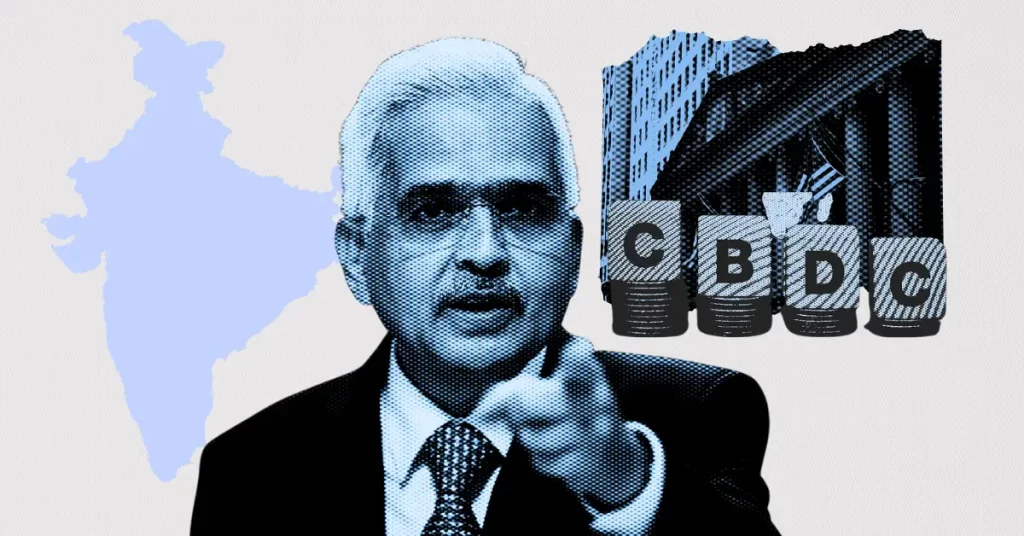
RBI Governor Says Crypto and Stablecoins Pose “Huge Risk” To India’s Economy
2025/11/21 19:39
2 min read
For feedback or concerns regarding this content, please contact us at crypto.news@mexc.com
CBDCs vs Cryptos: Why India Is Betting Big on Digital Currency?

The post RBI Governor Says Crypto and Stablecoins Pose “Huge Risk” To India’s Economy appeared first on Coinpedia Fintech News

The Reserve Bank of India (RBI) Governor, Sanjay Malhotra, has issued a strong public warning against the rising adoption of cryptocurrencies and stablecoins in India, citing their “huge risk” to national financial stability and monetary policy, if not handled carefully.

While the US is planning to make Bitcoin a strategic reserve, India is choosing a slow and cautious approach, and the reason is simple, safety first.

Why RBI Sees Crypto & Stablecoin as a Risk?

In a recent memorial lecture at the Delhi School of Economics, the RBI Governor warned that private digital assets, including crypto and dollar-backed stablecoins, can affect the financial stability of countries. 

According to economists, if people start using dollar-based stablecoins widely, it might weaken the power of local currencies and influence global monetary policies in ways India cannot control.

If too many people choose digital dollars instead of the Indian rupee, it could create serious challenges in the future.

RBI Deputy Governor T. Rabi Sankar added to these concerns. He said unbacked cryptocurrencies have no real value, and even stablecoins backed by assets can still reduce a country’s monetary power. According to him, they could lead to policy problems that are “best avoided.”

RBI Prefers CBDC Over Private Stablecoins

Despite its concerns about private crypto, the RBI is not against digital money itself. In fact, it strongly supports India’s own Central Bank Digital Currency (CBDC), a digital version of the rupee.

For RBI, CBDC is the safer and smarter path because:

  • It is fully controlled by the central bank
  • It does not depend on foreign currencies
  • It keeps financial power inside the country

In public forums, such as the recent International Monetary Fund and World Bank meetings, Malhotra has called on other nations’ central banks to prioritize CBDCs rather than stablecoins for cross-border payments, citing better control over policy and financial integrity.

Who Will Make the Final Decision?

Even though RBI is sharing strong warnings, the final call will not be taken by RBI alone. The government will decide the rules for crypto in India after more discussions with financial experts.

Right now, RBI’s message is clear, move carefully, avoid risks, and protect people from possible financial shocks.

Market Opportunity
Lorenzo Protocol Logo
Lorenzo Protocol Price(BANK)
$0.03788
$0.03788$0.03788
+1.41%
USD
Lorenzo Protocol (BANK) Live Price Chart
Disclaimer: The articles reposted on this site are sourced from public platforms and are provided for informational purposes only. They do not necessarily reflect the views of MEXC. All rights remain with the original authors. If you believe any content infringes on third-party rights, please contact crypto.news@mexc.com for removal. MEXC makes no guarantees regarding the accuracy, completeness, or timeliness of the content and is not responsible for any actions taken based on the information provided. The content does not constitute financial, legal, or other professional advice, nor should it be considered a recommendation or endorsement by MEXC.

You May Also Like

The Channel Factories We’ve Been Waiting For

The Channel Factories We’ve Been Waiting For

The post The Channel Factories We’ve Been Waiting For appeared on BitcoinEthereumNews.com. Visions of future technology are often prescient about the broad strokes while flubbing the details. The tablets in “2001: A Space Odyssey” do indeed look like iPads, but you never see the astronauts paying for subscriptions or wasting hours on Candy Crush.  Channel factories are one vision that arose early in the history of the Lightning Network to address some challenges that Lightning has faced from the beginning. Despite having grown to become Bitcoin’s most successful layer-2 scaling solution, with instant and low-fee payments, Lightning’s scale is limited by its reliance on payment channels. Although Lightning shifts most transactions off-chain, each payment channel still requires an on-chain transaction to open and (usually) another to close. As adoption grows, pressure on the blockchain grows with it. The need for a more scalable approach to managing channels is clear. Channel factories were supposed to meet this need, but where are they? In 2025, subnetworks are emerging that revive the impetus of channel factories with some new details that vastly increase their potential. They are natively interoperable with Lightning and achieve greater scale by allowing a group of participants to open a shared multisig UTXO and create multiple bilateral channels, which reduces the number of on-chain transactions and improves capital efficiency. Achieving greater scale by reducing complexity, Ark and Spark perform the same function as traditional channel factories with new designs and additional capabilities based on shared UTXOs.  Channel Factories 101 Channel factories have been around since the inception of Lightning. A factory is a multiparty contract where multiple users (not just two, as in a Dryja-Poon channel) cooperatively lock funds in a single multisig UTXO. They can open, close and update channels off-chain without updating the blockchain for each operation. Only when participants leave or the factory dissolves is an on-chain transaction…
Share
BitcoinEthereumNews2025/09/18 00:09
Top 3 Altcoins for the Next Bull Run Ethereum, Solana and Mutuum Finance

Top 3 Altcoins for the Next Bull Run Ethereum, Solana and Mutuum Finance

Ethereum and Solana already sit near the top of most serious altcoin watchlists, and Mutuum Finance is starting to enter that same conversation from a very different
Share
Techbullion2026/03/20 23:07
Trump: We want to negotiate with Iran, but we have no negotiating partner.

Trump: We want to negotiate with Iran, but we have no negotiating partner.

PANews reported on March 20 that US President Trump stated: "We want to negotiate with Iran, but we have no one to negotiate with. Nobody wants to be Iran's leader
Share
PANews2026/03/20 23:04