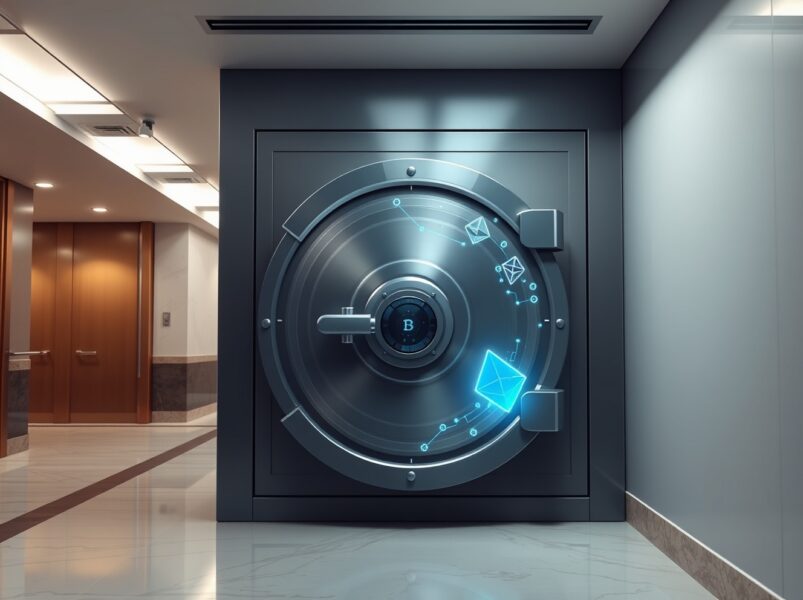
The post Banks Can Now Own Crypto To Pay Blockchain Fees appeared on BitcoinEthereumNews.com. The OCC authorized national banks to hold crypto on their balance sheets to pay “gas” fees. This “principal” holding status removes a key barrier, allowing banks to process on-chain payments. The move positions banks to compete with stablecoins, which are eroding traditional deposit bases. U.S. regulators have cleared a final operational hurdle for banks entering the blockchain space. The Office of the Comptroller of the Currency (OCC) confirmed on Tuesday that national banks can legally hold cryptocurrency. This authority is strictly limited to assets held as “principal” to pay for blockchain network fees. The ‘Gas’ Rule: Why Banks Need to Hold Crypto as Principal The new guidance, published in Interpretive Letter No. 1186, addresses a critical infrastructure problem. To process transactions on public blockchains, an operator must pay “gas” fees using the network’s native token (like ETH or SOL). Until now, it was unclear if banks could legally own these volatile assets on their own books. Related: OCC Expands Crypto Activities for Banks, Allowing Buy and Sell of Assets The OCC ruling clarifies that banks can hold the specific amounts necessary for these payments. This allows institutions to run blockchain nodes and streamline settlement. The guidance emphasizes that these holdings must be “incidental” to banking activities, not speculative investments. Banks have intensified calls for this clarity. Stablecoin networks are rapidly capturing transaction volume that once routed through legacy ACH and card systems. Treasury officials have warned these stablecoin rails threaten core deposit balances. Consequently, banks are rushing to integrate blockchain settlement to retain corporate clients. Clearing the Path for Tokenized Settlement The OCC’s guidance arrives as U.S. banks confront a rapid shift in deposit behavior. Stablecoin volumes on major networks have surged. This has prompted corporate treasurers to bypass traditional settlement systems in favor of faster, programmable transfers. Banks risk… The post Banks Can Now Own Crypto To Pay Blockchain Fees appeared on BitcoinEthereumNews.com. The OCC authorized national banks to hold crypto on their balance sheets to pay “gas” fees. This “principal” holding status removes a key barrier, allowing banks to process on-chain payments. The move positions banks to compete with stablecoins, which are eroding traditional deposit bases. U.S. regulators have cleared a final operational hurdle for banks entering the blockchain space. The Office of the Comptroller of the Currency (OCC) confirmed on Tuesday that national banks can legally hold cryptocurrency. This authority is strictly limited to assets held as “principal” to pay for blockchain network fees. The ‘Gas’ Rule: Why Banks Need to Hold Crypto as Principal The new guidance, published in Interpretive Letter No. 1186, addresses a critical infrastructure problem. To process transactions on public blockchains, an operator must pay “gas” fees using the network’s native token (like ETH or SOL). Until now, it was unclear if banks could legally own these volatile assets on their own books. Related: OCC Expands Crypto Activities for Banks, Allowing Buy and Sell of Assets The OCC ruling clarifies that banks can hold the specific amounts necessary for these payments. This allows institutions to run blockchain nodes and streamline settlement. The guidance emphasizes that these holdings must be “incidental” to banking activities, not speculative investments. Banks have intensified calls for this clarity. Stablecoin networks are rapidly capturing transaction volume that once routed through legacy ACH and card systems. Treasury officials have warned these stablecoin rails threaten core deposit balances. Consequently, banks are rushing to integrate blockchain settlement to retain corporate clients. Clearing the Path for Tokenized Settlement The OCC’s guidance arrives as U.S. banks confront a rapid shift in deposit behavior. Stablecoin volumes on major networks have surged. This has prompted corporate treasurers to bypass traditional settlement systems in favor of faster, programmable transfers. Banks risk…

Banks Can Now Own Crypto To Pay Blockchain Fees

  • The OCC authorized national banks to hold crypto on their balance sheets to pay “gas” fees.
  • This “principal” holding status removes a key barrier, allowing banks to process on-chain payments.
  • The move positions banks to compete with stablecoins, which are eroding traditional deposit bases.

U.S. regulators have cleared a final operational hurdle for banks entering the blockchain space. The Office of the Comptroller of the Currency (OCC) confirmed on Tuesday that national banks can legally hold cryptocurrency. This authority is strictly limited to assets held as “principal” to pay for blockchain network fees.

The ‘Gas’ Rule: Why Banks Need to Hold Crypto as Principal

The new guidance, published in Interpretive Letter No. 1186, addresses a critical infrastructure problem. To process transactions on public blockchains, an operator must pay “gas” fees using the network’s native token (like ETH or SOL). Until now, it was unclear if banks could legally own these volatile assets on their own books.

Related: OCC Expands Crypto Activities for Banks, Allowing Buy and Sell of Assets

The OCC ruling clarifies that banks can hold the specific amounts necessary for these payments. This allows institutions to run blockchain nodes and streamline settlement. The guidance emphasizes that these holdings must be “incidental” to banking activities, not speculative investments.

Banks have intensified calls for this clarity. Stablecoin networks are rapidly capturing transaction volume that once routed through legacy ACH and card systems. Treasury officials have warned these stablecoin rails threaten core deposit balances. Consequently, banks are rushing to integrate blockchain settlement to retain corporate clients.

Clearing the Path for Tokenized Settlement

The OCC’s guidance arrives as U.S. banks confront a rapid shift in deposit behavior. Stablecoin volumes on major networks have surged. This has prompted corporate treasurers to bypass traditional settlement systems in favor of faster, programmable transfers. Banks risk losing transaction revenue unless they adopt compatible on-chain infrastructure.

The new guidance provides regulatory cover for blockchain settlement. Holding network fees as principal allows banks to test tokenized workflows. They can now process transactions without assuming broader balance-sheet exposure to volatile assets.

By authorizing this specific type of ownership, the OCC removes a key operational bottleneck. This bottleneck had limited banks’ ability to transact on public chains. Institutions now face rising expectations to integrate tokenized settlement in the coming year.

Related: Circle Applies for a National Trust Bank Charter with the US OCC

Disclaimer: The information presented in this article is for informational and educational purposes only. The article does not constitute financial advice or advice of any kind. Coin Edition is not responsible for any losses incurred as a result of the utilization of content, products, or services mentioned. Readers are advised to exercise caution before taking any action related to the company.

Source: https://coinedition.com/occ-clears-us-banks-to-hold-crypto-as-principal-for-network-fees/

Market Opportunity
Nowchain Logo
Nowchain Price(NOW)
$0.0007
$0.0007$0.0007
-1.40%
USD
Nowchain (NOW) Live Price Chart
Disclaimer: The articles reposted on this site are sourced from public platforms and are provided for informational purposes only. They do not necessarily reflect the views of MEXC. All rights remain with the original authors. If you believe any content infringes on third-party rights, please contact service@support.mexc.com for removal. MEXC makes no guarantees regarding the accuracy, completeness, or timeliness of the content and is not responsible for any actions taken based on the information provided. The content does not constitute financial, legal, or other professional advice, nor should it be considered a recommendation or endorsement by MEXC.

You May Also Like

XMR price pumps as a rare pattern points to Monero hitting $1,000

XMR price pumps as a rare pattern points to Monero hitting $1,000

XMR price jumped to a record high today, January 15, as demand for privacy tokens rose.
Share
Crypto.news2026/01/17 04:37
Polygon Tops RWA Rankings With $1.1B in Tokenized Assets

Polygon Tops RWA Rankings With $1.1B in Tokenized Assets

The post Polygon Tops RWA Rankings With $1.1B in Tokenized Assets appeared on BitcoinEthereumNews.com. Key Notes A new report from Dune and RWA.xyz highlights Polygon’s role in the growing RWA sector. Polygon PoS currently holds $1.13 billion in RWA Total Value Locked (TVL) across 269 assets. The network holds a 62% market share of tokenized global bonds, driven by European money market funds. The Polygon POL $0.25 24h volatility: 1.4% Market cap: $2.64 B Vol. 24h: $106.17 M network is securing a significant position in the rapidly growing tokenization space, now holding over $1.13 billion in total value locked (TVL) from Real World Assets (RWAs). This development comes as the network continues to evolve, recently deploying its major “Rio” upgrade on the Amoy testnet to enhance future scaling capabilities. This information comes from a new joint report on the state of the RWA market published on Sept. 17 by blockchain analytics firm Dune and data platform RWA.xyz. The focus on RWAs is intensifying across the industry, coinciding with events like the ongoing Real-World Asset Summit in New York. Sandeep Nailwal, CEO of the Polygon Foundation, highlighted the findings via a post on X, noting that the TVL is spread across 269 assets and 2,900 holders on the Polygon PoS chain. The Dune and https://t.co/W6WSFlHoQF report on RWA is out and it shows that RWA is happening on Polygon. Here are a few highlights: – Leading in Global Bonds: Polygon holds 62% share of tokenized global bonds (driven by Spiko’s euro MMF and Cashlink euro issues) – Spiko U.S.… — Sandeep | CEO, Polygon Foundation (※,※) (@sandeepnailwal) September 17, 2025 Key Trends From the 2025 RWA Report The joint publication, titled “RWA REPORT 2025,” offers a comprehensive look into the tokenized asset landscape, which it states has grown 224% since the start of 2024. The report identifies several key trends driving this expansion. According to…
Share
BitcoinEthereumNews2025/09/18 00:40
Tweede Kamer stemt om belastingregels met grote gevolgen voor crypto

Tweede Kamer stemt om belastingregels met grote gevolgen voor crypto

De Tweede Kamer staat op het punt een besluit te nemen over de hervorming van Box 3, oftewel de belasting op vermogen. Na jaren van juridische strijd en tijdelijke
Share
Coinstats2026/01/17 03:33