Canada Faces Crypto Oversight Struggles As Underground Transactions Facilitate AML Violations
An undercover investigation revealed that both registered and unregistered crypto platforms in Canada have exploited the country’s regulatory loopholes and facilitated violations of Anti-Money Laundering (AML) rules.
Canada’s Crypto-Cash Service Compliance Concerns
On Monday, CBC News shared a joint investigation with Radio-Canada, the Toronto Star, and La Presse, as part of a global reporting effort named The Coin Laundry from the Washington-based International Consortium of Investigative Journalists.
Reporters unveiled that multiple exchanges in Canada and offshore are reportedly evading local financial laws by offering crypto-to-cash services without proper registration or ID verification.
According to the news media outlet, the country’s long-standing problem with illicit funds in the traditional financial system, along with a lack of strong regulations and enforcement in the crypto sector, has opened “new frontiers for laundering and illicit finance.”
The investigation found that companies both registered and unregistered with Canada’s national watchdog, the Financial Transactions and Reports Analysis Centre of Canada (FINTRAC), have facilitated transactions that violate AML rules.
In Toronto, a FINTRAC-registered company handed $1,900 in cash to an undercover reporter after receiving a 2,000 USDT deposit to a Ukraine-based crypto exchange, 001k. The employee only verified the serial number of a $5 bill to confirm it was the correct recipient for the transaction.
Meanwhile, two overseas platforms, including 001k, contacted by another undercover journalist, also proposed to deliver up to $1 million in cash to a location in Montreal in exchange for crypto, but never asked for any personal information or ID.
Under Canada’s AML law, it is illegal for a money transfer business to remit more than $1,000 to someone without registration of the recipient’s personal information and ID verification. Moreover, it is illegal for unregistered exchanges to do business with Canadians.
“One web directory lists more than 20 services for converting crypto into cash in cities across the country, from Halifax to Vancouver, none of them registered with FINTRAC. Contacted anonymously by reporters for the Toronto Star, a handful of the Toronto-based services said they wouldn’t ask for any ID,” CBC News added.
Richard Sanders, a crypto-to-cash network investigator, affirmed that “If you have this way to move money with absolutely zero checks on it, you’re facilitating an unlimited amount of crime.”
Nick Smart, Crystal Intelligence’s Chief Intelligence Officer, noted the “absolutely staggering” amount of money being pushed through crypto-to-cash services, highlighting the $2.5 billion processed in Hong Kong in 2024 alone.
FINTRAC Faces Regulatory Challenges
The Canadian watchdog did not answer the reporters’ questions about the undercover transactions or whether it was aware of the crypto-to-cash illicit services available in the country.
However, it said in a statement that “FINTRAC is prepared to take strong action as necessary so that businesses take their responsibilities seriously,” adding that it “can include administrative monetary penalties and referrals of any non-compliance to law enforcement.”
Notably, FINTRAC imposed a $126 million fine on Vancouver-based digital assets trading platform Cryptomus in October for breaching multiple federal AML and Counter-Terrorist Financing (CTF) laws. Additionally, it is developing a comprehensive framework that aligns with global crypto regulations.
As reported by Bitcoinist, Canada’s 2025 federal budget unveiled plans to establish stablecoin-related regulations seeking to boost consumer confidence and modernize the country’s payment ecosystem.
Nonetheless, Joseph Iuso, executive director of the Canadian Money Services Business Association, told CBC News that FINTRAC faces challenges in overseeing these illicit transactions. According to Iuso, the financial watchdog doesn’t have enough resources to supervise properly the over 2,600 registered money-service businesses.
As a result, it also doesn’t have the capacity to track and act against unregistered platforms that illicitly offer services. “There’s just tons,” Iuso affirmed. “They’re all trying to circumvent the regulations. And, unfortunately, how do you police that?” he concluded.


You May Also Like
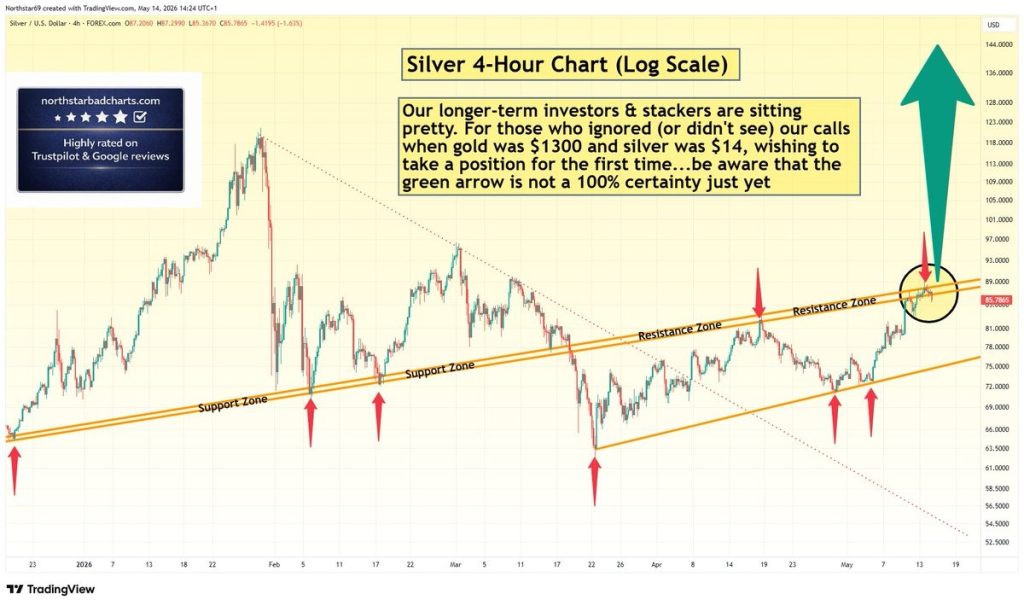
Silver Price Warning: Green Arrow Setup Is Not Confirmed – Wait for Clear Signal

Facebook spotlights African cinema in 6th ‘Made by Africa, loved by the world’ campaign