Samsung hikes prices as memory chip shortage headache grows
Samsung has sharply increased the cost of DDR5 memory by up to 60% in just two months, as demand surges due to worldwide competition to develop AI data centers. The escalating shortages are squeezing major tech manufacturers and driving up costs across servers, smartphones, and computers.
The increase in memory prices follows Samsung’s decision to postpone a formal pricing announcement for supply contracts until October, stating that pricing information is typically released monthly. Samsung has threatened to raise the prices of other products, such as smartphones and computers, that also use memory chips.
Global memory shortage drives higher costs and delays
Global shortage is caused by an increase in demand for AI data centers, which is driving up prices for server builders and electronics manufacturers.
Tobey Gonnerman, president of semiconductor distributor Fusion Worldwide, claimed that many of the largest manufacturers of servers and data centers are now acknowledging that they cannot obtain nearly enough products. He further argued that the cost premiums are very high.
Samsung raised contract prices for 32GB DDR5 modules from $149 in September to $239 in November. According to Gonnerman, prices for 64GB and 96GB DDR5 modules increased by more than 30%. The prices for 16GB and 128GB modules increased by approximately 50%, reaching $135 and $1,194, respectively.
Industry analysts claim that the chip shortage has been so severe that some consumers have resorted to panic buying.
For instance, Semiconductor Manufacturing International Corp (SMIC) said on Friday that its clients are delaying orders for other semiconductors due to rising concerns about a memory chip shortage.
Haijun claimed that manufacturers of memory-based vehicles and smartphones will experience pricing pressure and supply uncertainties next year. He commented that the current memory market is in short supply, and costs have increased sharply.
According to Haijun, the “super cycle” in the memory industry would also increase competition for foundries. At the same time, customers sought to negotiate lower contract pricing for other types of integrated circuits to counteract growing price pressure on memory chips.
SMIC’s third-quarter revenue increased 9.7% from the same period last year to $2.38 billion due to strong domestic demand, while profit increased 28.9% to $191.75 million. According to LSEG statistics, both exceeded analysts’ projections.
SMIC’s monthly output capacity grew 3.2% quarter over quarter to 1.02 million eight-inch equivalent wafers. Additionally, utilization rates, which gauge a foundry’s production intensity, improved to 95.8% from 92.5% in the second quarter.
Last month, Xiaomi, a Chinese producer of smartphones, gadgets, and automobiles, also issued a warning that the cost of producing phones has increased due to rising costs.
Xiaomi President Lu Weibing stated that memory chip prices are higher than anticipated and are likely to continue rising. Cryptopolitan reported that Xiaomi plans to reduce the price of the most popular K90 model, featuring 12GB RAM and 512GB storage, by 300 yuan ($42), bringing the price down to 2,899 yuan ($407) during the first month of sales.
Samsung uses scarcity to boost smartphone sales
Samsung, which has lagged competitors in providing AI chips and had not seen its revenues rise nearly as much until lately, is benefiting from the scarcity. Jeff Kim, head of research at KB Securities, claimed that Samsung has more pricing power than its smaller competitors in memory, such as SK Hynix (SKHNF) and Micron (MU.O), due to its slower transition to AI chips.
Notably, according to the Korean news source Maeil Business News, Samsung intends to sell 35 million units of its flagship Galaxy S26, with 24 million units expected to be sold in the first half of the year. In contrast, the company projected that sales of the January-released Galaxy S25 smartphone would reach 22 million within the first half of the year.
Get seen where it counts. Advertise in Cryptopolitan Research and reach crypto’s sharpest investors and builders.


You May Also Like
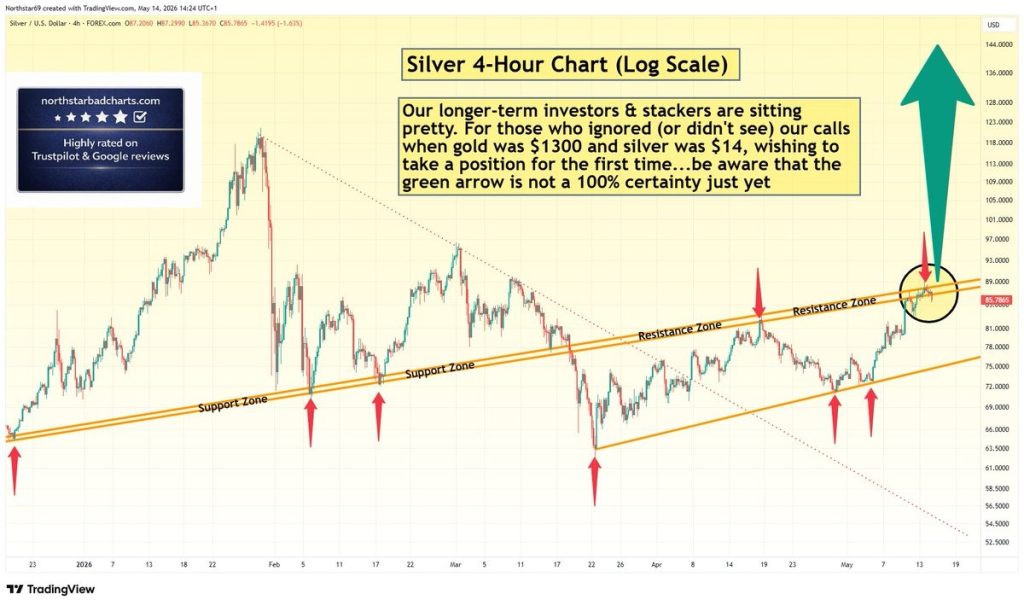
Silver Price Warning: Green Arrow Setup Is Not Confirmed – Wait for Clear Signal

Facebook spotlights African cinema in 6th ‘Made by Africa, loved by the world’ campaign