Zero Knowledge Proof (ZKP) Explained: The Privacy-First Blockchain Built for Real-Time AI Compute!
At a time when blockchain projects still rely on promises and prototypes, Zero Knowledge Proof (ZKP) will be operational from presale day one. Its ecosystem isn’t a concept or a testnet; it’s a fully built network with encrypted smart contracts, compressed proofs, and real-time computation.
The architecture powering it all is what makes the ZKP blockchain stand out: a four-layer structure engineered for security, privacy, and scalable computation. With the whitelist now open, ZKP’s infrastructure is being positioned as a technical benchmark for the next generation of privacy-first, AI-powered blockchains.
Layer One: Hybrid Security for Verified Compute
The foundation of the ZKP blockchain lies in its hybrid consensus layer, designed to merge computational power and spatial validation into a single security model. This layer combines Proof-of-Intelligence (PoI) and Proof-of-Space (PoS) mechanisms to strike a balance between efficiency, decentralization, and trust.
Proof-of-Intelligence validates active computational work done across the network, whether by Proof Pods or virtual nodes, while Proof-of-Space confirms that operators are allocating sufficient storage to maintain distributed reliability. Together, they create a more equitable and secure environment than traditional Proof-of-Work or Proof-of-Stake models.
Every transaction, task, and proof submission in the ZKP blockchain begins here, verified mathematically through zero-knowledge algorithms. It’s not mining as we know it; it’s verified contribution.
Layer Two: Private Contract Execution
The application layer handles real-world functionality. Unlike typical blockchain systems, this layer supports both EVM and WASM environments, giving developers flexibility in building decentralized applications without sacrificing privacy.
Smart contracts on the ZKP blockchain execute in fully encrypted states. Inputs, outputs, and intermediate computations remain private, yet every step of the process can still be verified through cryptographic proofs. This model enables enterprise-level use cases such as confidential financial transactions, private data exchanges, and secure governance voting, all while remaining transparent at the protocol level.
Because the ZKP blockchain executes contracts on encrypted data, it bridges a crucial gap between blockchain and artificial intelligence: AI models can operate on private datasets without ever accessing or exposing them. This privacy-by-design execution framework makes ZKP one of the few networks truly capable of supporting compliant, real-time data computation.
Layer Three: Real-Time Proof Compression
The zero-knowledge layer is the cryptographic core of the ZKP blockchain. It handles the generation, verification, and compression of cryptographic proofs that verify the accuracy of computations.
In traditional blockchains, validation requires reprocessing or revealing transaction details, an approach that’s both inefficient and insecure. The ZKP blockchain eliminates that trade-off through proof compression. Instead of verifying each operation individually, it bundles multiple proofs into a single lightweight mathematical certificate.
This compression dramatically improves scalability, allowing the network to handle thousands of concurrent computations without congestion. It also ensures that every validation cycle consumes minimal bandwidth and compute power.
For enterprise applications and decentralized AI systems, this layer transforms ZKP from a privacy tool into a performance engine. Each proof created here is mathematically verifiable, meaning trust no longer depends on intermediaries or node consensus; it depends on math itself.
Layer Four: Encrypted, Decentralized Storage
The storage layer completes the architecture, handling large datasets and computation outputs through an integrated system combining IPFS and Filecoin. It ensures that every piece of information processed by the network remains immutable, verifiable, and encrypted.
This layer doesn’t just store data; it maintains cryptographic integrity across distributed storage providers. Each dataset is linked with a Merkle-proof structure, allowing it to be verified without exposing its contents.
For the growing field of AI-driven applications, this kind of verifiable storage is critical. Machine learning models can reference and operate on data without accessing it directly, creating a truly private yet interoperable ecosystem. The result is a network that achieves the holy grail of data management: privacy, performance, and permanence.
The Architecture in Motion: Living Proof Network
What ties these four layers together is what ZKP calls its “living proof network.” Every computation performed, whether it’s verifying a smart contract or executing an AI model, is expressed as a zero-knowledge proof. These proofs serve as immutable attestations of truth that can be verified by anyone without revealing the underlying data.
This structure gives ZKP the unique ability to act as both a compute network and a trust layer for other blockchains and enterprises. It can validate external computations, enable private interoperability between chains, and function as a decentralized verification engine for artificial intelligence.
The architecture is not static; it adapts dynamically to network load and computational demand. Each layer scales independently, ensuring that the system remains performant under real-world usage conditions.
Practical Use and Adoption Potential
With its architecture complete and infrastructure operational, the ZKP blockchain is poised for adoption across industries where data integrity and confidentiality are paramount.
- Enterprises can deploy private smart contracts that comply with data protection laws.
- Developers can build decentralized apps that compute on encrypted data.
- AI researchers can run federated learning models that remain confidential and verifiable.
This combination of privacy, interoperability, and active computation makes ZKP a foundational technology for the next phase of blockchain utility, where performance and privacy are not in conflict.
With the whitelist live and presale preparations underway, ZKP stands out not only as an innovation but also as a functioning system ready for immediate use. Its four-layer structure is more than a technical achievement; it’s a demonstration of what a mature blockchain can look like when built for both scalability and trust.
Explore Zero Knowledge Proof (ZKP):
Website: zkp.com
This publication is sponsored. Coindoo does not endorse or assume responsibility for the content, accuracy, quality, advertising, products, or any other materials on this page. Readers are encouraged to conduct their own research before engaging in any cryptocurrency-related actions. Coindoo will not be liable, directly or indirectly, for any damages or losses resulting from the use of or reliance on any content, goods, or services mentioned. Always do your own researchs.
The post Zero Knowledge Proof (ZKP) Explained: The Privacy-First Blockchain Built for Real-Time AI Compute! appeared first on Coindoo.


You May Also Like

Bitcoin treasury sell-off accelerates as Riot, Bhutan, and public companies exit positions
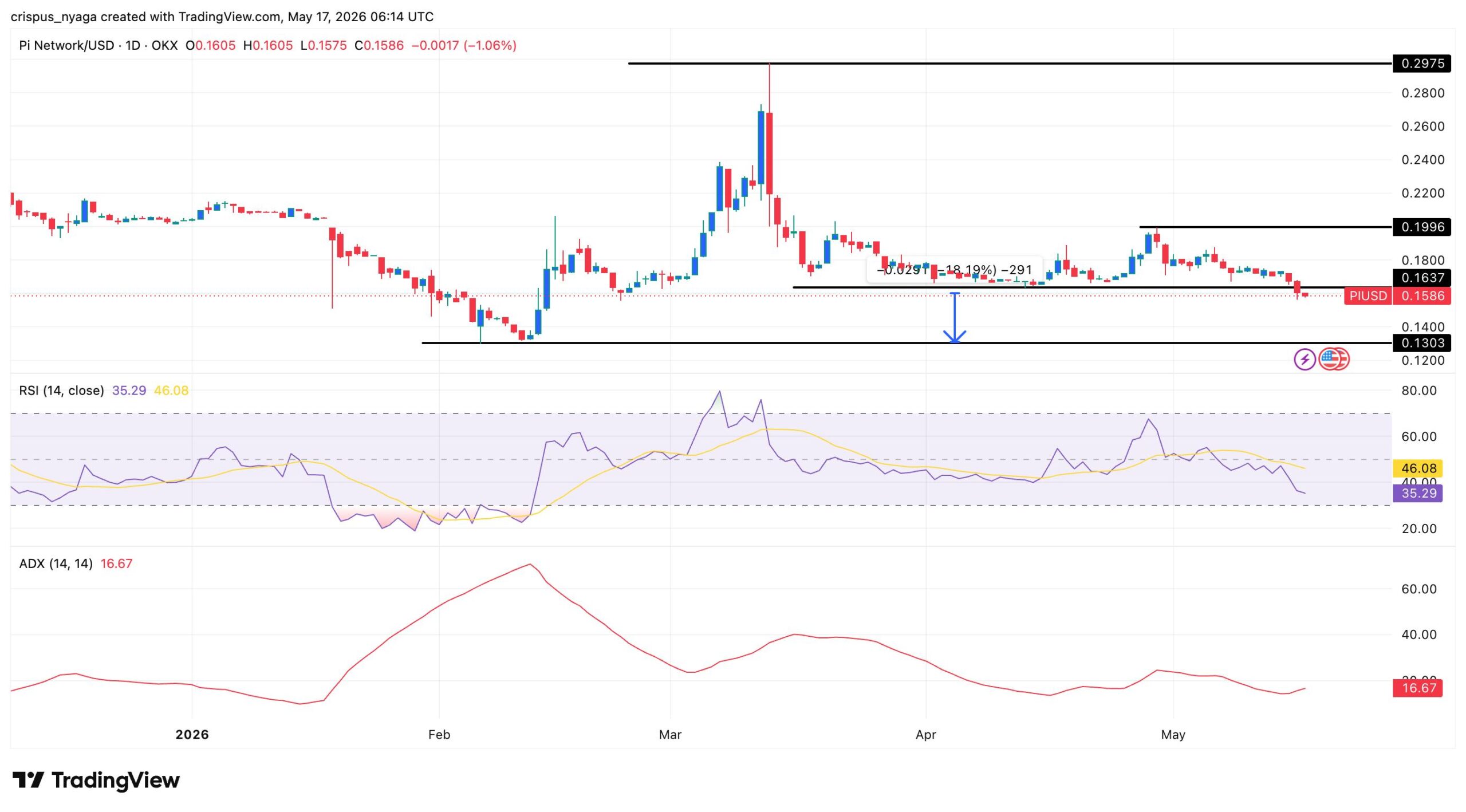
Pi Coin Price Crashes Another 7.5% Before Pi Network Protocol 23 Mainnet Activation