The post The Gen Z Fashion Trend That’s Baffling Apparel Retailers appeared on BitcoinEthereumNews.com. The Gen Z Fashion Trend That’s Baffling Apparel Retailers getty It’s time to stop talking about Gen Zers as lazy, spoiled, screen-obsessed snowflakes. First, they aren’t kids anymore. Second, there are a lot of them—estimated to be about 25% of the global population. And third, they have become discerning consumers who now have money to spend and will have a lot more when the Great Inheritance begins to trickle down through the generations. Their global spending power is forecast by NielsenIQ to reach $12 trillion by 2030. The day that Gen Z became a consumer force to be reckoned with is here and, according to a recent report by PricewaterhouseCoopers (PwC), Z’ers are “a riddle that many retailers can’t quite crack.” That’s especially true in fashion. Gen Z’ers are 13 to 28 years old this year and there are now about 60 million out of the total U.S. population of 343 million. That’s 60 million young people who are right now forming long-term emotional bonds with brands and developing lifelong biases and preferences. This wave of consumers is a new challenge for the fashion industry. Labels are discovering that the aspirational look that Millennials favored—fitted silhouettes, minimalistic styling, athleisure, tailored jackets—has no appeal for Gen Z. Where Millennials wanted to belong or blend in, Gen Zers want to stand out. It’s all about self-branding and personalization. That means micro-trends, like vintage looks that come and go on social media before the fast-fashion machine can catch up. Gender expression is fluid. Boys are dyeing their hair. Girls are wearing oversized blazers and baggy jeans. Bold colors, chunky jewelry, and big, bold eyewear are in. Gen Z’ers are also quite frugal. This holiday season they plan to spend about 25% less than last year, according to a PwC survey, and they expect… The post The Gen Z Fashion Trend That’s Baffling Apparel Retailers appeared on BitcoinEthereumNews.com. The Gen Z Fashion Trend That’s Baffling Apparel Retailers getty It’s time to stop talking about Gen Zers as lazy, spoiled, screen-obsessed snowflakes. First, they aren’t kids anymore. Second, there are a lot of them—estimated to be about 25% of the global population. And third, they have become discerning consumers who now have money to spend and will have a lot more when the Great Inheritance begins to trickle down through the generations. Their global spending power is forecast by NielsenIQ to reach $12 trillion by 2030. The day that Gen Z became a consumer force to be reckoned with is here and, according to a recent report by PricewaterhouseCoopers (PwC), Z’ers are “a riddle that many retailers can’t quite crack.” That’s especially true in fashion. Gen Z’ers are 13 to 28 years old this year and there are now about 60 million out of the total U.S. population of 343 million. That’s 60 million young people who are right now forming long-term emotional bonds with brands and developing lifelong biases and preferences. This wave of consumers is a new challenge for the fashion industry. Labels are discovering that the aspirational look that Millennials favored—fitted silhouettes, minimalistic styling, athleisure, tailored jackets—has no appeal for Gen Z. Where Millennials wanted to belong or blend in, Gen Zers want to stand out. It’s all about self-branding and personalization. That means micro-trends, like vintage looks that come and go on social media before the fast-fashion machine can catch up. Gender expression is fluid. Boys are dyeing their hair. Girls are wearing oversized blazers and baggy jeans. Bold colors, chunky jewelry, and big, bold eyewear are in. Gen Z’ers are also quite frugal. This holiday season they plan to spend about 25% less than last year, according to a PwC survey, and they expect…

The Gen Z Fashion Trend That’s Baffling Apparel Retailers

For feedback or concerns regarding this content, please contact us at crypto.news@mexc.com

The Gen Z Fashion Trend That’s Baffling Apparel Retailers

getty

It’s time to stop talking about Gen Zers as lazy, spoiled, screen-obsessed snowflakes.

First, they aren’t kids anymore. Second, there are a lot of them—estimated to be about 25% of the global population. And third, they have become discerning consumers who now have money to spend and will have a lot more when the Great Inheritance begins to trickle down through the generations.

Their global spending power is forecast by NielsenIQ to reach $12 trillion by 2030.

The day that Gen Z became a consumer force to be reckoned with is here and, according to a recent report by PricewaterhouseCoopers (PwC), Z’ers are “a riddle that many retailers can’t quite crack.”

That’s especially true in fashion.

Gen Z’ers are 13 to 28 years old this year and there are now about 60 million out of the total U.S. population of 343 million. That’s 60 million young people who are right now forming long-term emotional bonds with brands and developing lifelong biases and preferences.

This wave of consumers is a new challenge for the fashion industry. Labels are discovering that the aspirational look that Millennials favored—fitted silhouettes, minimalistic styling, athleisure, tailored jackets—has no appeal for Gen Z. Where Millennials wanted to belong or blend in, Gen Zers want to stand out.

It’s all about self-branding and personalization.

That means micro-trends, like vintage looks that come and go on social media before the fast-fashion machine can catch up. Gender expression is fluid. Boys are dyeing their hair. Girls are wearing oversized blazers and baggy jeans. Bold colors, chunky jewelry, and big, bold eyewear are in.

Gen Z’ers are also quite frugal. This holiday season they plan to spend about 25% less than last year, according to a PwC survey, and they expect deals. Gen Z’ers shop often in thrift stores, which have proliferated into a new, potent channel of direct competition. When Z’ers do spend, they want to feel they have gotten MORE THAN their money’s worth.

As if all this wasn’t enough pressure on the industry, there is the lurking threat of any sort of ethical or sustainability drama. Many retail brands are caught flat-footed when young consumers, who are paying close attention, hear that they have have factories that exploit indentured laborers, for example.

Gen Z’ers won’t just ghost a tarnished brand, they will make sure—thanks to social media—that the entire world knows about it.

For fashion retailers, it isn’t enough anymore to have the right merchandise at the right price. For most Gen Z’ers, customer loyalty has to be earned, and even then it is fragile. According to a report by the Dynamic Sustainability Lab at Syracuse University, 81% of Gen Z consumers “have changed their decision to buy a product based on brand actions or overall reputation.”

One thing is for certain, Gen Z’ers are a challenge to figure out, but they are authentic and will engage if you give them the chance. It is clear that this will not be a generation who the industry will be able to dictate fashion to and more one to be engaged, understood and served.

Source: https://www.forbes.com/sites/gregpetro/2025/11/07/the-gen-z-fashion-trend-thats-baffling-apparel-retailers/
Market Opportunity
LETSTOP Logo
LETSTOP Price(STOP)
$0.01361
$0.01361$0.01361
+0.07%
USD
LETSTOP (STOP) Live Price Chart
Disclaimer: The articles reposted on this site are sourced from public platforms and are provided for informational purposes only. They do not necessarily reflect the views of MEXC. All rights remain with the original authors. If you believe any content infringes on third-party rights, please contact crypto.news@mexc.com for removal. MEXC makes no guarantees regarding the accuracy, completeness, or timeliness of the content and is not responsible for any actions taken based on the information provided. The content does not constitute financial, legal, or other professional advice, nor should it be considered a recommendation or endorsement by MEXC.

You May Also Like

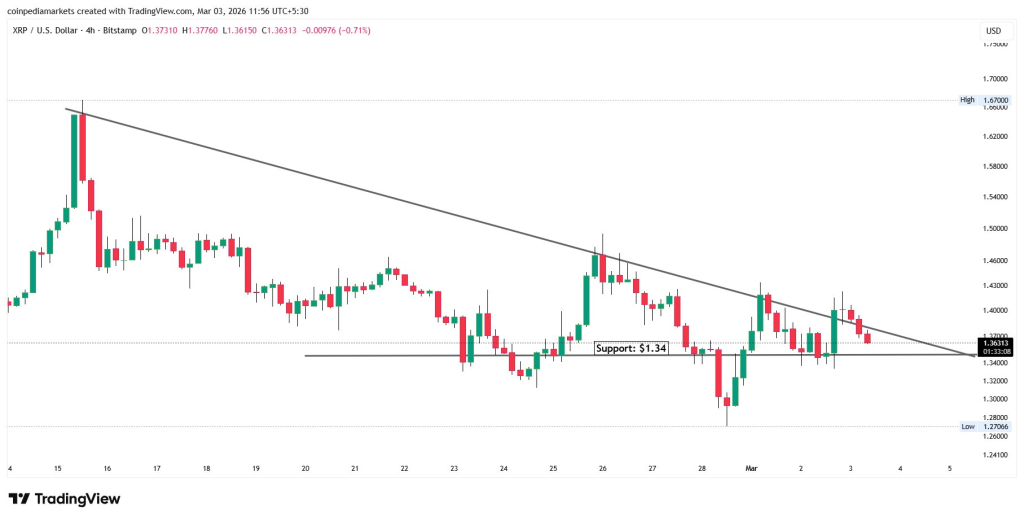
Warning Signs Flash for $XRP as $1.34 Support Gets Tested

Warning Signs Flash for $XRP as $1.34 Support Gets Tested

XRP lagged behind Bitcoin and Ethereum during yesterday’s relief bounce. In fact, BTC and ETH pushed higher over $70K and $2K respectively, but XRP only managed
Share
Captainaltcoin2026/03/03 14:49
PiDex Testnet Launch: What It Means for Pi Network and Picoin Value

PiDex Testnet Launch: What It Means for Pi Network and Picoin Value

Pi Network’s decentralized exchange, PiDex, went live on the testnet, marking a significant technical milestone for the ecosystem. Despite the launch, the m
Share
Hokanews2026/03/03 14:27
UK and US Seal $42 Billion Tech Pact Driving AI and Energy Future

UK and US Seal $42 Billion Tech Pact Driving AI and Energy Future

The post UK and US Seal $42 Billion Tech Pact Driving AI and Energy Future appeared on BitcoinEthereumNews.com. Key Highlights Microsoft and Google pledge billions as part of UK US tech partnership Nvidia to deploy 120,000 GPUs with British firm Nscale in Project Stargate Deal positions UK as an innovation hub rivaling global tech powers UK and US Seal $42 Billion Tech Pact Driving AI and Energy Future The UK and the US have signed a “Technological Prosperity Agreement” that paves the way for joint projects in artificial intelligence, quantum computing, and nuclear energy, according to Reuters. Donald Trump and King Charles review the guard of honour at Windsor Castle, 17 September 2025. Image: Kirsty Wigglesworth/Reuters The agreement was unveiled ahead of U.S. President Donald Trump’s second state visit to the UK, marking a historic moment in transatlantic technology cooperation. Billions Flow Into the UK Tech Sector As part of the deal, major American corporations pledged to invest $42 billion in the UK. Microsoft leads with a $30 billion investment to expand cloud and AI infrastructure, including the construction of a new supercomputer in Loughton. Nvidia will deploy 120,000 GPUs, including up to 60,000 Grace Blackwell Ultra chips—in partnership with the British company Nscale as part of Project Stargate. Google is contributing $6.8 billion to build a data center in Waltham Cross and expand DeepMind research. Other companies are joining as well. CoreWeave announced a $3.4 billion investment in data centers, while Salesforce, Scale AI, BlackRock, Oracle, and AWS confirmed additional investments ranging from hundreds of millions to several billion dollars. UK Positions Itself as a Global Innovation Hub British Prime Minister Keir Starmer said the deal could impact millions of lives across the Atlantic. He stressed that the UK aims to position itself as an investment hub with lighter regulations than the European Union. Nvidia spokesman David Hogan noted the significance of the agreement, saying it would…
Share
BitcoinEthereumNews2025/09/18 02:22