After establishing itself as a leading name in the on-chain perpetual DEX space, Hyperliquid (HYPE) is entering one of its biggest stress tests since launch. This November, Hyperliquid will unlock a massive amount of HYPE tokens, raising a critical question: Will the release fuel liquidity and adoption or trigger a sharp price correction? Supply–Demand Pressure and Short-Term Price Scenarios Tokenomist’s data shows that millions of Hyperliquid (HYPE) tokens will be unlocked in November, representing approximately 2.66% of the circulating supply. When a project releases many tokens at once, it inevitably faces the risks of dilution and sell pressure. Hyperliquid token unlock in November. Source: Tokenomist From a technical perspective, several analysts suggest that HYPE may be forming a head-and-shoulders pattern on the daily chart. This setup could project a potential decline toward $20, signaling a short-term correction phase if confirmed. HYPE technical analysis. Source: Ali Meanwhile, another trader noted that recent price action indicates “some TWAP out, slow efficient selling,” suggesting controlled offloading by large holders. The trader added: “Not sure what’s going on but going to just wait for more clarity.” he said. On the other hand, some traders see opportunity in the volatility. According to Route2FI, “HYPE closing a 1-minute candle around $40 in November could turn into a temporary yield farm.” The analyst referred to the potential opportunity to profit from short-term price fluctuations. However, this strategy is better suited for seasoned traders, as the HYPE unlock period may bring intense volatility. Strong On-chain Revenue and Long-term Balance Sheet Factors While short-term supply pressure seems unavoidable, Hyperliquid’s core strength lies in its on-chain revenue generation. Data from Artemis shared on X shows that in the past 24 hours, Hyperliquid has generated over $2.2 million in trading fees, surpassing all other blockchains. Hyperliquid leads in on-chain fee revenue (24h). Source: X Earlier this month, reports showed that Hyperliquid captured up to 33% of blockchain revenue. This made it the top fee earner in the crypto economy, effectively a “transaction fee goldmine” within DeFi. If the project uses some of these fees for token buybacks or burn mechanisms, it can partially absorb the selling pressure from the HYPE unlock and help stabilize the market. In summary, the upcoming HYPE unlock this November will be a major test for the project and its investors. In the short term, dilution risks and market caution may weigh on price action. However, Hyperliquid’s substantial on-chain revenue could help offset the upcoming supply shock. This would depend on how effectively the revenue is used through buybacks, staking, or liquidity programs. In the long run, HYPE’s value will depend on how well the team converts real revenue into tangible returns for holders, rather than relying on short-term hype surrounding the unlock. The November unlock won’t signal the end if Hyperliquid proves its model is sustainably profitable on-chain perpetual DEX. Instead, it could become a revaluation milestone for one of DeFi 2025’s most promising projects.After establishing itself as a leading name in the on-chain perpetual DEX space, Hyperliquid (HYPE) is entering one of its biggest stress tests since launch. This November, Hyperliquid will unlock a massive amount of HYPE tokens, raising a critical question: Will the release fuel liquidity and adoption or trigger a sharp price correction? Supply–Demand Pressure and Short-Term Price Scenarios Tokenomist’s data shows that millions of Hyperliquid (HYPE) tokens will be unlocked in November, representing approximately 2.66% of the circulating supply. When a project releases many tokens at once, it inevitably faces the risks of dilution and sell pressure. Hyperliquid token unlock in November. Source: Tokenomist From a technical perspective, several analysts suggest that HYPE may be forming a head-and-shoulders pattern on the daily chart. This setup could project a potential decline toward $20, signaling a short-term correction phase if confirmed. HYPE technical analysis. Source: Ali Meanwhile, another trader noted that recent price action indicates “some TWAP out, slow efficient selling,” suggesting controlled offloading by large holders. The trader added: “Not sure what’s going on but going to just wait for more clarity.” he said. On the other hand, some traders see opportunity in the volatility. According to Route2FI, “HYPE closing a 1-minute candle around $40 in November could turn into a temporary yield farm.” The analyst referred to the potential opportunity to profit from short-term price fluctuations. However, this strategy is better suited for seasoned traders, as the HYPE unlock period may bring intense volatility. Strong On-chain Revenue and Long-term Balance Sheet Factors While short-term supply pressure seems unavoidable, Hyperliquid’s core strength lies in its on-chain revenue generation. Data from Artemis shared on X shows that in the past 24 hours, Hyperliquid has generated over $2.2 million in trading fees, surpassing all other blockchains. Hyperliquid leads in on-chain fee revenue (24h). Source: X Earlier this month, reports showed that Hyperliquid captured up to 33% of blockchain revenue. This made it the top fee earner in the crypto economy, effectively a “transaction fee goldmine” within DeFi. If the project uses some of these fees for token buybacks or burn mechanisms, it can partially absorb the selling pressure from the HYPE unlock and help stabilize the market. In summary, the upcoming HYPE unlock this November will be a major test for the project and its investors. In the short term, dilution risks and market caution may weigh on price action. However, Hyperliquid’s substantial on-chain revenue could help offset the upcoming supply shock. This would depend on how effectively the revenue is used through buybacks, staking, or liquidity programs. In the long run, HYPE’s value will depend on how well the team converts real revenue into tangible returns for holders, rather than relying on short-term hype surrounding the unlock. The November unlock won’t signal the end if Hyperliquid proves its model is sustainably profitable on-chain perpetual DEX. Instead, it could become a revaluation milestone for one of DeFi 2025’s most promising projects.

Hyperliquid Faces Its First Real Crash Test — Will the $HYPE Unlock Break the Rally?

2025/11/04 08:31
3 min read

After establishing itself as a leading name in the on-chain perpetual DEX space, Hyperliquid (HYPE) is entering one of its biggest stress tests since launch.

This November, Hyperliquid will unlock a massive amount of HYPE tokens, raising a critical question: Will the release fuel liquidity and adoption or trigger a sharp price correction?

Supply–Demand Pressure and Short-Term Price Scenarios

Tokenomist’s data shows that millions of Hyperliquid (HYPE) tokens will be unlocked in November, representing approximately 2.66% of the circulating supply. When a project releases many tokens at once, it inevitably faces the risks of dilution and sell pressure.
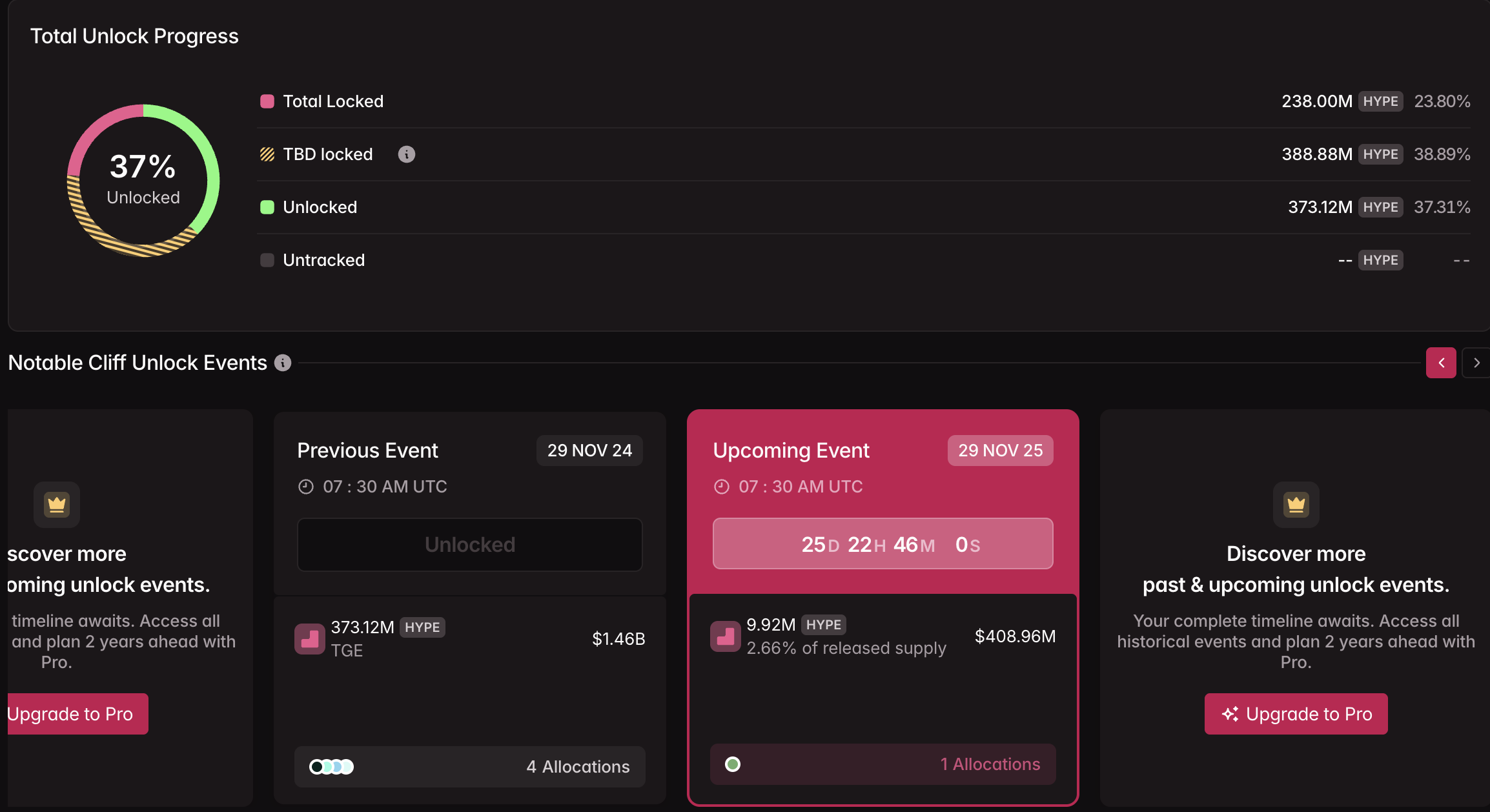
Hyperliquid token unlock in November. Source: TokenomistHyperliquid token unlock in November. Source: Tokenomist

From a technical perspective, several analysts suggest that HYPE may be forming a head-and-shoulders pattern on the daily chart. This setup could project a potential decline toward $20, signaling a short-term correction phase if confirmed.
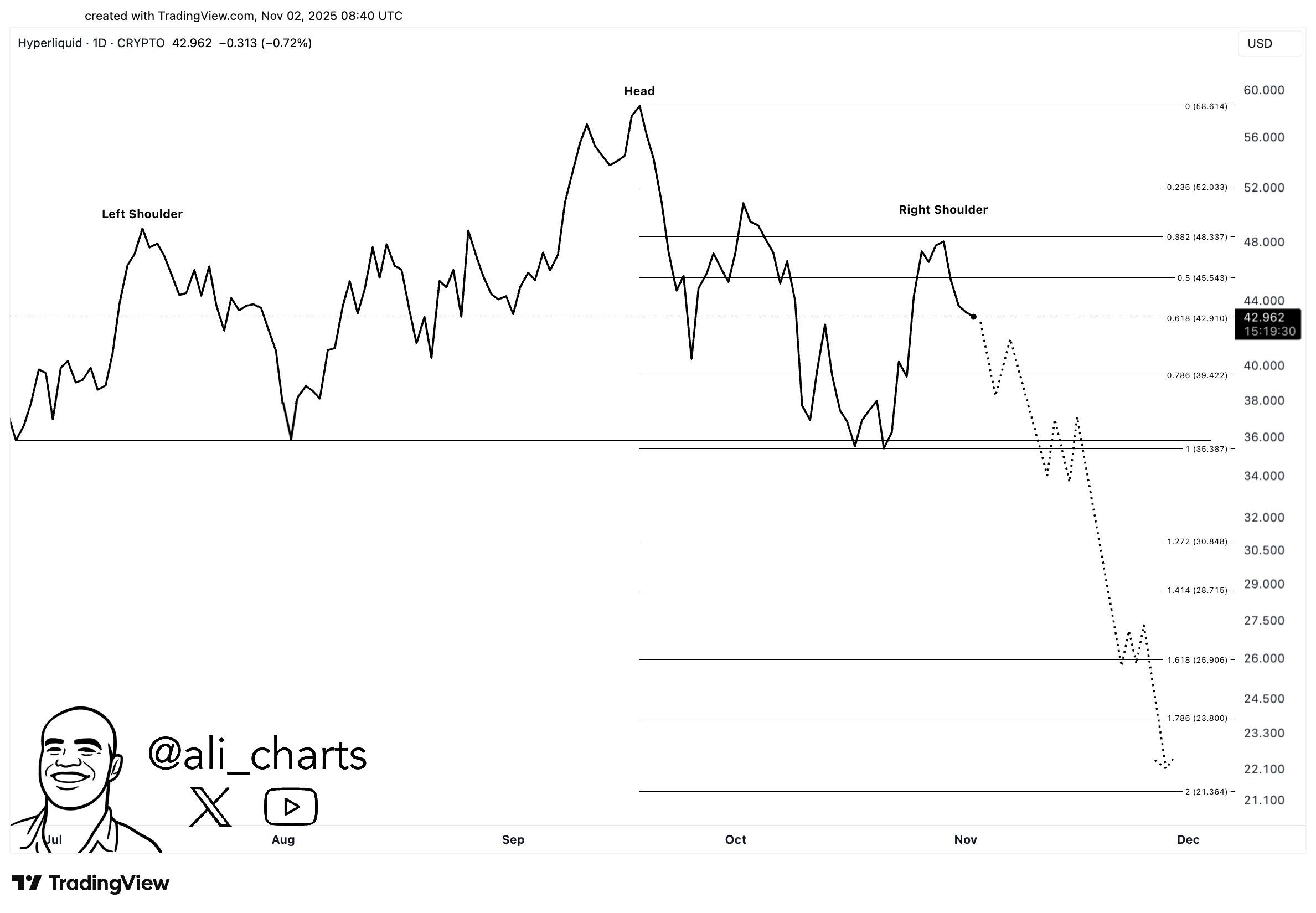
HYPE technical analysis. Source: AliHYPE technical analysis. Source: Ali

Meanwhile, another trader noted that recent price action indicates “some TWAP out, slow efficient selling,” suggesting controlled offloading by large holders. The trader added:

On the other hand, some traders see opportunity in the volatility. According to Route2FI, “HYPE closing a 1-minute candle around $40 in November could turn into a temporary yield farm.”

The analyst referred to the potential opportunity to profit from short-term price fluctuations. However, this strategy is better suited for seasoned traders, as the HYPE unlock period may bring intense volatility.

Strong On-chain Revenue and Long-term Balance Sheet Factors

While short-term supply pressure seems unavoidable, Hyperliquid’s core strength lies in its on-chain revenue generation. Data from Artemis shared on X shows that in the past 24 hours, Hyperliquid has generated over $2.2 million in trading fees, surpassing all other blockchains.
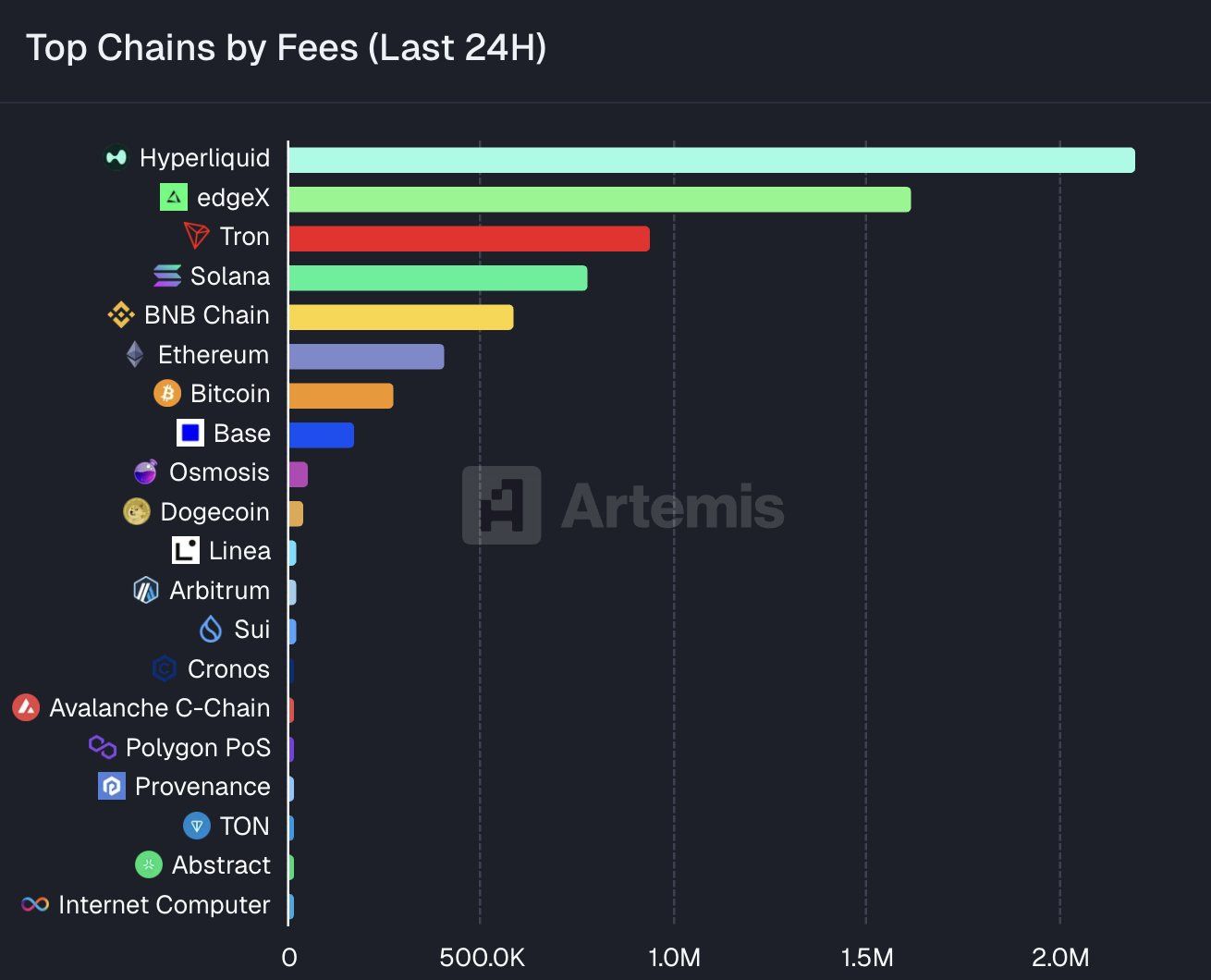
Hyperliquid leads in on-chain fee revenue (24h). Source: XHyperliquid leads in on-chain fee revenue (24h). Source: X

Earlier this month, reports showed that Hyperliquid captured up to 33% of blockchain revenue. This made it the top fee earner in the crypto economy, effectively a “transaction fee goldmine” within DeFi. If the project uses some of these fees for token buybacks or burn mechanisms, it can partially absorb the selling pressure from the HYPE unlock and help stabilize the market.

In summary, the upcoming HYPE unlock this November will be a major test for the project and its investors. In the short term, dilution risks and market caution may weigh on price action. However, Hyperliquid’s substantial on-chain revenue could help offset the upcoming supply shock. This would depend on how effectively the revenue is used through buybacks, staking, or liquidity programs.

In the long run, HYPE’s value will depend on how well the team converts real revenue into tangible returns for holders, rather than relying on short-term hype surrounding the unlock. The November unlock won’t signal the end if Hyperliquid proves its model is sustainably profitable on-chain perpetual DEX. Instead, it could become a revaluation milestone for one of DeFi 2025’s most promising projects.


Market Opportunity
RealLink Logo
RealLink Price(REAL)
$0.05242
$0.05242$0.05242
-0.94%
USD
RealLink (REAL) Live Price Chart
Disclaimer: The articles reposted on this site are sourced from public platforms and are provided for informational purposes only. They do not necessarily reflect the views of MEXC. All rights remain with the original authors. If you believe any content infringes on third-party rights, please contact service@support.mexc.com for removal. MEXC makes no guarantees regarding the accuracy, completeness, or timeliness of the content and is not responsible for any actions taken based on the information provided. The content does not constitute financial, legal, or other professional advice, nor should it be considered a recommendation or endorsement by MEXC.

You May Also Like

House Judiciary Rejects Vote To Subpoena Banks CEOs For Epstein Case

House Judiciary Rejects Vote To Subpoena Banks CEOs For Epstein Case

The post House Judiciary Rejects Vote To Subpoena Banks CEOs For Epstein Case appeared on BitcoinEthereumNews.com. Topline House Judiciary Committee Republicans blocked a Democrat effort Wednesday to subpoena a group of major banks as part of a renewed investigation into late sex offender Jeffrey Epstein’s financial ties. Congressman Jim Jordan, R-OH, is the chairman of the committee. (Photo by Nathan Posner/Anadolu via Getty Images) Anadolu via Getty Images Key Facts A near party-line vote squashed the effort to vote on a subpoena, with Rep. Thomas Massie, R-Ky., who is leading a separate effort to force the Justice Department to release more Epstein case materials, voting alongside Democrats. The vote, if successful, would have resulted in the issuing of subpoenas to JPMorgan Chase CEO Jamie Dimon, Bank of America CEO Brian Moynihan, Deutsche Bank CEO Christian Sewing and Bank of New York Mellon CEO Robin Vince. The subpoenas would have specifically looked into multiple reports that claimed the four banks flagged $1.5 billion in suspicious transactions linked to Epstein. The failed effort from Democrats followed an FBI oversight hearing in which agency director Kash Patel misleadingly claimed the FBI cannot release many of the files it has on Epstein. Get Forbes Breaking News Text Alerts: We’re launching text message alerts so you’ll always know the biggest stories shaping the day’s headlines. Text “Alerts” to (201) 335-0739 or sign up here. Crucial Quote Dimon, who attended a lunch with Senate Republicans before the vote, according to Politico, told reporters, “We regret any association with that man at all. And, of course, if it’s a legal requirement, we would conform to it. We have no issue with that.” Chief Critic “Republicans had the chance to subpoena the CEOs of JPMorgan, Bank of America, Deutsche Bank, and Bank of New York Mellon to expose Epstein’s money trail,” the House Judiciary Democrats said in a tweet. “Instead, they tried to bury…
Share
BitcoinEthereumNews2025/09/18 08:02
Propel to Report Q4 and Full Year 2025 Financial Results and Announces Dividend Increase

Propel to Report Q4 and Full Year 2025 Financial Results and Announces Dividend Increase

TORONTO, Feb. 10, 2026 /CNW/ – Propel Holdings Inc. (“Propel”) (TSX: PRL), the fintech facilitating access to credit for underserved consumers, announced today
Share
AI Journal2026/02/11 09:15
CME Group to launch options on XRP and SOL futures

CME Group to launch options on XRP and SOL futures

The post CME Group to launch options on XRP and SOL futures appeared on BitcoinEthereumNews.com. CME Group will offer options based on the derivative markets on Solana (SOL) and XRP. The new markets will open on October 13, after regulatory approval.  CME Group will expand its crypto products with options on the futures markets of Solana (SOL) and XRP. The futures market will start on October 13, after regulatory review and approval.  The options will allow the trading of MicroSol, XRP, and MicroXRP futures, with expiry dates available every business day, monthly, and quarterly. The new products will be added to the existing BTC and ETH options markets. ‘The launch of these options contracts builds on the significant growth and increasing liquidity we have seen across our suite of Solana and XRP futures,’ said Giovanni Vicioso, CME Group Global Head of Cryptocurrency Products. The options contracts will have two main sizes, tracking the futures contracts. The new market will be suitable for sophisticated institutional traders, as well as active individual traders. The addition of options markets singles out XRP and SOL as liquid enough to offer the potential to bet on a market direction.  The options on futures arrive a few months after the launch of SOL futures. Both SOL and XRP had peak volumes in August, though XRP activity has slowed down in September. XRP and SOL options to tap both institutions and active traders Crypto options are one of the indicators of market attitudes, with XRP and SOL receiving a new way to gauge sentiment. The contracts will be supported by the Cumberland team.  ‘As one of the biggest liquidity providers in the ecosystem, the Cumberland team is excited to support CME Group’s continued expansion of crypto offerings,’ said Roman Makarov, Head of Cumberland Options Trading at DRW. ‘The launch of options on Solana and XRP futures is the latest example of the…
Share
BitcoinEthereumNews2025/09/18 00:56