

Whitelist Opening Soon: Why Zero Knowledge Proof (ZKP) Is the Top Choice for Crypto Investments in 2025

The greatest gains in blockchain never happen when the spotlight burns brightest; they happen in the early curve, when the groundwork is quietly forming. Zero Knowledge Proof (ZKP) is now positioned exactly at that stage, just before acceleration begins.
Its upcoming whitelist marks the first opportunity to join a protocol designed to balance privacy, speed, and scalability at once. For those serious about investing in crypto, this early stage represents the rare window before recognition turns into mainstream momentum.
With its privacy-first design and recursive proofs architecture, Zero Knowledge Proof (ZKP) is poised to redefine how blockchain systems scale securely, a foundation that could make it one of 2025’s most defining crypto projects.
Why Early Entry Creates Real Advantage
In every crypto cycle, early participation decides who leads and who follows. The steepest growth curves begin long before the market notices. Zero Knowledge Proof (ZKP) stands precisely at that quiet inflection point where vision meets readiness.
The whitelist acts as the protocol’s first public bridge, letting early participants engage before widespread adoption magnifies value through network effects. Instead of speculation, this phase is about recognition, identifying utility before it becomes visible to the crowd.
Zero Knowledge Proof (ZKP) combines scalability and privacy into a single blockchain layer, solving one of crypto’s oldest tensions: performance versus protection. Its early adopters will not just observe growth, they’ll help shape the standards of verifiable privacy that define it. For investors studying the best crypto investment opportunities, this is where the curve begins, where participation aligns with innovation rather than hype.
How Privacy-First Design Drives Adoption
Privacy has become the cornerstone of user trust. Across industries, finance, healthcare, and communications, data protection is no longer a luxury; it’s a necessity. Zero Knowledge Proof (ZKP) is engineered to deliver that protection natively, without sacrificing usability or speed.
Unlike public ledgers that expose every transaction, Zero Knowledge Proof (ZKP) allows data to be verified without revealing its content. Businesses can remain compliant while preserving confidentiality, and individuals can interact freely without being traced.

This privacy-first design doesn’t slow adoption; it accelerates it. When users feel secure, engagement grows. When developers can build without compromising data, innovation scales. That’s the momentum forming beneath Zero Knowledge Proof (ZKP) today.
As global demand for digital confidentiality increases, this framework positions the protocol among the top choices for investing in crypto, where utility meets inevitability.
Recursive Proofs and Composability: The Growth Engine
The technology behind Zero Knowledge Proof (ZKP) crypto goes beyond privacy. It ensures blockchain scalability for the next decade. Recursive proofs enable entire chains of transactions to be verified in a single, compact process.
Rather than validating each transaction individually, recursive proofs compress millions of interactions into a single proof, allowing the system to expand faster as it grows. This results in limitless scalability, ultra-fast verification, and near-zero computational drag.
Combined with composability, where decentralized applications can interact securely without revealing data, Zero Knowledge Proof (ZKP) becomes an ecosystem multiplier. It allows complex financial systems, games, and governance tools to operate privately yet interoperably.
Where Ethereum pioneered smart contracts, Zero Knowledge Proof (ZKP) is pioneering smart privacy, a foundation for the next generation of scalable, secure, and composable decentralized systems.
The Whitelist Window: Early Access Before the Acceleration
Every market cycle has its moment of quiet opportunity, the one that later defines the leaders of the next phase. The Zero Knowledge Proof (ZKP) whitelist represents that moment now.
Entry today remains open, smooth, and uncluttered. The wider market has yet to price in recursive proofs or privacy-based scaling, which means the true growth curve hasn’t even begun. This early window won’t last. Once adoption accelerates and the demand grows, the barrier to entry rises naturally.
For those exploring investing in crypto opportunities, the whitelist serves as the signal before the surge, a chance to position before recognition replaces foresight. Missing this phase means entering later, when the curve is already steep and the early participants are setting the pace.
Why Zero Knowledge Proof (ZKP) Leads the 2025 Outlook
Zero Knowledge Proof (ZKP) brings together three rare traits in blockchain development: privacy-first engineering, recursive scaling, and composable architecture. Together, these elements form a foundation not just for a single project but for an entire category of next-generation blockchain infrastructure.
The whitelist is the access point to that vision, the moment when builders, early supporters, and investors can step in before adoption transforms availability. Privacy is no longer theoretical; it’s becoming the defining requirement for Web3.

For anyone asking which protocol represents the best crypto investment in 2025, Zero Knowledge Proof (ZKP) offers an answer grounded in both timing and technology. It’s not about chasing momentum; it’s about standing precisely where momentum begins.
Final Take: The Curve Has Just Begun
Every major blockchain era starts quietly. Bitcoin started in obscurity. Ethereum began as an experiment. Zero Knowledge Proof (ZKP) now stands at a similar beginning to the curve’s first turn, where innovation meets readiness.
With its whitelist opening soon, this is the early signal of a movement that blends privacy, speed, and scalability into one cohesive system. Those who act now gain the dual advantage of timing and technology, a position at the front of blockchain’s next evolution.For those serious about investing in crypto, the rule remains the same: the biggest opportunity comes before the spotlight. Zero Knowledge Proof (ZKP) blockchain is that opportunity privacy-first, recursive by design, and ready to define 2025’s next growth story.


You May Also Like
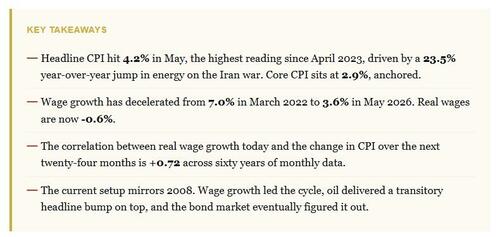
Wage Growth As A Leading Inflation Indicator

Retail Veteran Mitch Gould’s Distribution Platform Addresses Growing Complexity in U.S. Sports Nutrition Market

USA vs Belgium Odds: World Cup 2026 Win Probability and MEXC Prediction Market Guide



