The post Charles Hoskinson Outlines Bold Vision for Cardano’s Future by 2030 appeared first on Coinpedia Fintech News Cardano founder Charles Hoskinson has shared a clear and hopeful vision for where he wants to see Cardano by the year 2030. In a recent discussion with Sujal Jethwani, he talked about Cardano’s progress so far and what still needs to be done to make it one of the most widely used and trusted blockchains …The post Charles Hoskinson Outlines Bold Vision for Cardano’s Future by 2030 appeared first on Coinpedia Fintech News Cardano founder Charles Hoskinson has shared a clear and hopeful vision for where he wants to see Cardano by the year 2030. In a recent discussion with Sujal Jethwani, he talked about Cardano’s progress so far and what still needs to be done to make it one of the most widely used and trusted blockchains …

Charles Hoskinson Outlines Bold Vision for Cardano’s Future by 2030
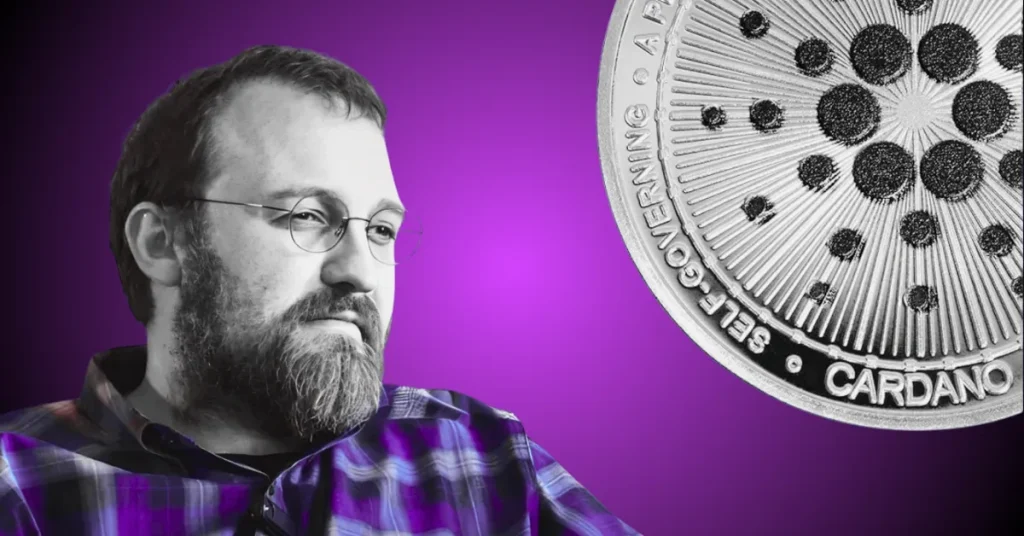
Charles Hoskinson Outlines Bold Vision for Cardano’s Future by 2030

The post Charles Hoskinson Outlines Bold Vision for Cardano’s Future by 2030 appeared first on Coinpedia Fintech News

Cardano founder Charles Hoskinson has shared a clear and hopeful vision for where he wants to see Cardano by the year 2030. In a recent discussion with Sujal Jethwani, he talked about Cardano’s progress so far and what still needs to be done to make it one of the most widely used and trusted blockchains in the world. His main focus was on adoption, governance, and privacy, three areas he believes will define Cardano’s future.

Cardano’s Big Step Toward Full Decentralization

Hoskinson proudly stated that Cardano has now achieved full decentralization, a goal that was made possible by the Chang hard fork in September 2024. This update gave more control to the Cardano community through decentralized representatives (DReps) and stake pool operators (SPOs). In simple terms, it means that Cardano is now being run by its users, not by a single company or authority.

He explained that this is just the beginning. Cardano will continue improving how it manages its governance, treasury funds, and network protocols. Hoskinson believes these upgrades will make the blockchain stronger and more competitive in the long run.

The Need for More Adoption

While Cardano’s structure and technology are improving, Hoskinson admitted that adoption and growth are still major challenges. He said that the network needs to attract more users, developers, and projects to truly compete with other blockchains.

He mentioned that Cardano already has powerful tools like Hydra, a scaling solution that can make transactions faster and cheaper. With such technology, Hoskinson expects Cardano’s total value locked (TVL) and transaction activity to rise over time. By 2030, he envisions Cardano having over 10 million active users and becoming a top player in the global crypto market.

  • Also Read :
  •   Ethereum Eyes $5,000 in November 2025 — But a Strong Monthly Close Is Crucial!
  •   ,

Midnight: The Next Big Chapter for Cardano

One of the biggest projects Hoskinson highlighted is Midnight, Cardano’s upcoming privacy-focused sidechain. He believes privacy will be the next major trend in crypto and that Midnight will play a huge role in bringing real-world assets (RWAs) and big institutional investors to blockchain.

Hoskinson explained that trillions of dollars in RWAs won’t enter the crypto space without privacy features that protect data and transactions. Midnight aims to solve this by offering programmable privacy, making Cardano more attractive to serious investors.

x402: A Big Leap Toward AI-Powered Payments

Adding to the excitement, Hoskinson also celebrated the upcoming x402 open-payment standard, which will enable AI agents to make automated blockchain payments. Developed by Coinbase, x402 uses the unused HTTP code “402 Payment Required” to support machine-to-machine transactions.

Patrick Tobler, founder of NMKR, announced that the first x402 proof-of-concept memecoin mint has gone live on Cardano, marking a huge step toward adoption. Hoskinson hailed the innovation as “very big for Cardano”, noting that it positions the network as a financial backbone for AI systems, outpacing competitors like Ethereum and Solana.

By 2030, Hoskinson expects Cardano to be a fully decentralized, widely adopted, and privacy-driven ecosystem, one that connects traditional finance with the future of blockchain.

Never Miss a Beat in the Crypto World!

Stay ahead with breaking news, expert analysis, and real-time updates on the latest trends in Bitcoin, altcoins, DeFi, NFTs, and more.

bell icon Subscribe to News

FAQs

What is Cardano’s Chang hard fork and why does it matter for decentralization?

The Chang hard fork in September 2024 made Cardano fully decentralized by handing control to community DReps and stake pool operators—no single entity runs the network now

How many active users does Charles Hoskinson predict for Cardano by 2030?

Hoskinson envisions over 10 million active users on Cardano by 2030, driven by better scaling, governance, and real-world adoption.

What is Midnight and how will it boost Cardano’s growth?

Midnight is Cardano’s privacy-focused sidechain that protects data for real-world assets, attracting trillions in institutional money to blockchain.

What is x402 and why is it a big deal for Cardano?

x402 is an open standard letting AI agents make automatic payments on Cardano—the first memecoin mint just went live, positioning it as AI’s financial backbone.


Market Opportunity
FUTURECOIN Logo
FUTURECOIN Price(FUTURE)
$0.10134
$0.10134$0.10134
-3.50%
USD
FUTURECOIN (FUTURE) Live Price Chart
Disclaimer: The articles reposted on this site are sourced from public platforms and are provided for informational purposes only. They do not necessarily reflect the views of MEXC. All rights remain with the original authors. If you believe any content infringes on third-party rights, please contact service@support.mexc.com for removal. MEXC makes no guarantees regarding the accuracy, completeness, or timeliness of the content and is not responsible for any actions taken based on the information provided. The content does not constitute financial, legal, or other professional advice, nor should it be considered a recommendation or endorsement by MEXC.

You May Also Like

The Channel Factories We’ve Been Waiting For

The Channel Factories We’ve Been Waiting For

The post The Channel Factories We’ve Been Waiting For appeared on BitcoinEthereumNews.com. Visions of future technology are often prescient about the broad strokes while flubbing the details. The tablets in “2001: A Space Odyssey” do indeed look like iPads, but you never see the astronauts paying for subscriptions or wasting hours on Candy Crush.  Channel factories are one vision that arose early in the history of the Lightning Network to address some challenges that Lightning has faced from the beginning. Despite having grown to become Bitcoin’s most successful layer-2 scaling solution, with instant and low-fee payments, Lightning’s scale is limited by its reliance on payment channels. Although Lightning shifts most transactions off-chain, each payment channel still requires an on-chain transaction to open and (usually) another to close. As adoption grows, pressure on the blockchain grows with it. The need for a more scalable approach to managing channels is clear. Channel factories were supposed to meet this need, but where are they? In 2025, subnetworks are emerging that revive the impetus of channel factories with some new details that vastly increase their potential. They are natively interoperable with Lightning and achieve greater scale by allowing a group of participants to open a shared multisig UTXO and create multiple bilateral channels, which reduces the number of on-chain transactions and improves capital efficiency. Achieving greater scale by reducing complexity, Ark and Spark perform the same function as traditional channel factories with new designs and additional capabilities based on shared UTXOs.  Channel Factories 101 Channel factories have been around since the inception of Lightning. A factory is a multiparty contract where multiple users (not just two, as in a Dryja-Poon channel) cooperatively lock funds in a single multisig UTXO. They can open, close and update channels off-chain without updating the blockchain for each operation. Only when participants leave or the factory dissolves is an on-chain transaction…
Share
BitcoinEthereumNews2025/09/18 00:09
What Is Zero Knowledge Proof (ZKP)? Inside The Blockchain Network Built for Private Computation & Secure Data Sharing

What Is Zero Knowledge Proof (ZKP)? Inside The Blockchain Network Built for Private Computation & Secure Data Sharing

Dive into Zero Knowledge Proof’s privacy-first blockchain, infrastructure, and presale auction system. Plus, see why analysts are calling it the best crypto to
Share
CoinLive2026/01/28 01:00
UNI Technical Analysis Jan 27

UNI Technical Analysis Jan 27

The post UNI Technical Analysis Jan 27 appeared on BitcoinEthereumNews.com. UNI is stabilizing around 4.69$ amid intraday fluctuations, with a short-term downtrend
Share
BitcoinEthereumNews2026/01/28 01:26