The post Garlinghouse Reminds Everyone XRP Has No CEO appeared on BitcoinEthereumNews.com. Altcoins Ripple’s chief executive, Brad Garlinghouse, used his appearance at DC Fintech Week to dismantle one of the crypto industry’s most persistent misconceptions – that Ripple and XRP are the same thing. He made it clear that Ripple is a private fintech company building payment infrastructure, while XRP is an independent, decentralized asset running on a public blockchain that Ripple neither owns nor controls. Ripple Is a Company, XRP Is a Network Garlinghouse said that many people still fail to grasp that Ripple merely uses XRP, rather than governs it. The company develops technology that leverages the XRP Ledger for cross-border payments, but the token itself functions on a global, open-source network anyone can build on. The misunderstanding, he noted, even became a focal point in Ripple’s long legal battle with the U.S. Securities and Exchange Commission (SEC). The lawsuit forced the company to clearly demonstrate that XRP’s ecosystem exists beyond Ripple’s corporate structure – a point Garlinghouse believes the market still doesn’t fully appreciate. “There’s No CEO of XRP” The Ripple CEO took a moment to address the internet’s favorite misconception head-on. “People sometimes say, ‘XRP has a CEO,’” he said. “That’s just wrong. Ripple has a CEO – that’s me. XRP doesn’t have one.” He added that the XRP Ledger is maintained by hundreds of developers, validators, and projects from around the world, all contributing independently. This decentralized participation is what, in his view, makes XRP closer in spirit to Bitcoin or Ethereum than to any corporate-owned token. Power Lies in the Community Garlinghouse emphasized that Ripple’s influence over XRP’s governance is limited. Decisions about protocol upgrades or amendments on the XRP Ledger require broad community consensus, not corporate approval. Ripple’s stance on certain proposals has even been overruled in the past – a sign, he said, that… The post Garlinghouse Reminds Everyone XRP Has No CEO appeared on BitcoinEthereumNews.com. Altcoins Ripple’s chief executive, Brad Garlinghouse, used his appearance at DC Fintech Week to dismantle one of the crypto industry’s most persistent misconceptions – that Ripple and XRP are the same thing. He made it clear that Ripple is a private fintech company building payment infrastructure, while XRP is an independent, decentralized asset running on a public blockchain that Ripple neither owns nor controls. Ripple Is a Company, XRP Is a Network Garlinghouse said that many people still fail to grasp that Ripple merely uses XRP, rather than governs it. The company develops technology that leverages the XRP Ledger for cross-border payments, but the token itself functions on a global, open-source network anyone can build on. The misunderstanding, he noted, even became a focal point in Ripple’s long legal battle with the U.S. Securities and Exchange Commission (SEC). The lawsuit forced the company to clearly demonstrate that XRP’s ecosystem exists beyond Ripple’s corporate structure – a point Garlinghouse believes the market still doesn’t fully appreciate. “There’s No CEO of XRP” The Ripple CEO took a moment to address the internet’s favorite misconception head-on. “People sometimes say, ‘XRP has a CEO,’” he said. “That’s just wrong. Ripple has a CEO – that’s me. XRP doesn’t have one.” He added that the XRP Ledger is maintained by hundreds of developers, validators, and projects from around the world, all contributing independently. This decentralized participation is what, in his view, makes XRP closer in spirit to Bitcoin or Ethereum than to any corporate-owned token. Power Lies in the Community Garlinghouse emphasized that Ripple’s influence over XRP’s governance is limited. Decisions about protocol upgrades or amendments on the XRP Ledger require broad community consensus, not corporate approval. Ripple’s stance on certain proposals has even been overruled in the past – a sign, he said, that…

Garlinghouse Reminds Everyone XRP Has No CEO

Altcoins

Ripple’s chief executive, Brad Garlinghouse, used his appearance at DC Fintech Week to dismantle one of the crypto industry’s most persistent misconceptions – that Ripple and XRP are the same thing.

He made it clear that Ripple is a private fintech company building payment infrastructure, while XRP is an independent, decentralized asset running on a public blockchain that Ripple neither owns nor controls.

Ripple Is a Company, XRP Is a Network

Garlinghouse said that many people still fail to grasp that Ripple merely uses XRP, rather than governs it. The company develops technology that leverages the XRP Ledger for cross-border payments, but the token itself functions on a global, open-source network anyone can build on.

The misunderstanding, he noted, even became a focal point in Ripple’s long legal battle with the U.S. Securities and Exchange Commission (SEC). The lawsuit forced the company to clearly demonstrate that XRP’s ecosystem exists beyond Ripple’s corporate structure – a point Garlinghouse believes the market still doesn’t fully appreciate.

“There’s No CEO of XRP”

The Ripple CEO took a moment to address the internet’s favorite misconception head-on. “People sometimes say, ‘XRP has a CEO,’” he said. “That’s just wrong. Ripple has a CEO – that’s me. XRP doesn’t have one.”

He added that the XRP Ledger is maintained by hundreds of developers, validators, and projects from around the world, all contributing independently. This decentralized participation is what, in his view, makes XRP closer in spirit to Bitcoin or Ethereum than to any corporate-owned token.

Power Lies in the Community

Garlinghouse emphasized that Ripple’s influence over XRP’s governance is limited. Decisions about protocol upgrades or amendments on the XRP Ledger require broad community consensus, not corporate approval. Ripple’s stance on certain proposals has even been overruled in the past – a sign, he said, that the system works exactly as a decentralized one should.

By removing centralized authority, the network ensures that no single company can dictate its direction, not even Ripple.

A Call for Education and Clarity

The Ripple boss argued that much of the confusion stems from a general lack of public understanding about how open blockchain systems operate. To fix this, he said, the industry needs better education about what decentralization actually means – and how companies like Ripple can support a crypto ecosystem without controlling it.

“Ripple is a participant, not the owner,” Garlinghouse said. “We build with XRP, but XRP belongs to the world.”

Garlinghouse’s comments come at a pivotal time, as regulators and investors are increasingly differentiating between corporate blockchain projects and community-driven digital assets. His message reinforced a simple truth that’s often lost in the noise: Ripple may be using XRP to reshape global payments, but the token itself is a product of collective innovation, not corporate control.


The information provided in this article is for educational purposes only and does not constitute financial, investment, or trading advice. Coindoo.com does not endorse or recommend any specific investment strategy or cryptocurrency. Always conduct your own research and consult with a licensed financial advisor before making any investment decisions.

Author

Alex is an experienced financial journalist and cryptocurrency enthusiast. With over 8 years of experience covering the crypto, blockchain, and fintech industries, he is well-versed in the complex and ever-evolving world of digital assets. His insightful and thought-provoking articles provide readers with a clear picture of the latest developments and trends in the market. His approach allows him to break down complex ideas into accessible and in-depth content. Follow his publications to stay up to date with the most important trends and topics.


Next article

Source: https://coindoo.com/ripple-news-garlinghouse-reminds-everyone-xrp-has-no-ceo/

Market Opportunity
XRP Logo
XRP Price(XRP)
$1.9277
$1.9277$1.9277
+0.34%
USD
XRP (XRP) Live Price Chart
Disclaimer: The articles reposted on this site are sourced from public platforms and are provided for informational purposes only. They do not necessarily reflect the views of MEXC. All rights remain with the original authors. If you believe any content infringes on third-party rights, please contact service@support.mexc.com for removal. MEXC makes no guarantees regarding the accuracy, completeness, or timeliness of the content and is not responsible for any actions taken based on the information provided. The content does not constitute financial, legal, or other professional advice, nor should it be considered a recommendation or endorsement by MEXC.

You May Also Like

Best Crypto to Buy as Saylor & Crypto Execs Meet in US Treasury Council

Best Crypto to Buy as Saylor & Crypto Execs Meet in US Treasury Council

The post Best Crypto to Buy as Saylor & Crypto Execs Meet in US Treasury Council appeared on BitcoinEthereumNews.com. Michael Saylor and a group of crypto executives met in Washington, D.C. yesterday to push for the Strategic Bitcoin Reserve Bill (the BITCOIN Act), which would see the U.S. acquire up to 1M $BTC over five years. With Bitcoin being positioned yet again as a cornerstone of national monetary policy, many investors are turning their eyes to projects that lean into this narrative – altcoins, meme coins, and presales that could ride on the same wave. Read on for three of the best crypto projects that seem especially well‐suited to benefit from this macro shift:  Bitcoin Hyper, Best Wallet Token, and Remittix. These projects stand out for having a strong use case and high adoption potential, especially given the push for a U.S. Bitcoin reserve.   Why the Bitcoin Reserve Bill Matters for Crypto Markets The strategic Bitcoin Reserve Bill could mark a turning point for the U.S. approach to digital assets. The proposal would see America build a long-term Bitcoin reserve by acquiring up to one million $BTC over five years. To make this happen, lawmakers are exploring creative funding methods such as revaluing old gold certificates. The plan also leans on confiscated Bitcoin already held by the government, worth an estimated $15–20B. This isn’t just a headline for policy wonks. It signals that Bitcoin is moving from the margins into the core of financial strategy. Industry figures like Michael Saylor, Senator Cynthia Lummis, and Marathon Digital’s Fred Thiel are all backing the bill. They see Bitcoin not just as an investment, but as a hedge against systemic risks. For the wider crypto market, this opens the door for projects tied to Bitcoin and the infrastructure that supports it. 1. Bitcoin Hyper ($HYPER) – Turning Bitcoin Into More Than Just Digital Gold The U.S. may soon treat Bitcoin as…
Share
BitcoinEthereumNews2025/09/18 00:27
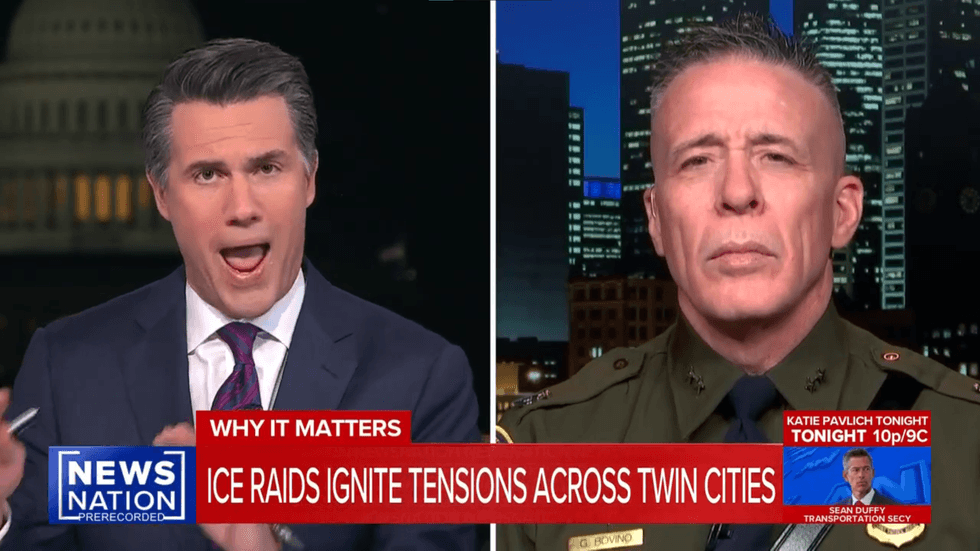
Trump's border chief insists Americans support ICE – and is shut down by host: 'Come on!'

Trump's border chief insists Americans support ICE – and is shut down by host: 'Come on!'

Border Patrol Chief Greg Bovino was shut down Friday during an appearance on NewsNation after suggesting that federal immigration officials enjoyed widespread support
Share
Rawstory2026/01/23 22:36
The Economics of Self-Isolation: A Game-Theoretic Analysis of Contagion in a Free Economy

The Economics of Self-Isolation: A Game-Theoretic Analysis of Contagion in a Free Economy

Exploring how the costs of a pandemic can lead to a self-enforcing lockdown in a networked economy, analyzing the resulting changes in network structure and the existence of stable equilibria.
Share
Hackernoon2025/09/17 23:00