

South Korea’s KOSPI Enters Bear Market as Chipmakers Tumble on AI Fears
TLDR
- The KOSPI dropped over 5% on Wednesday, falling more than 20% from its June record high
- Samsung Electronics fell 6.3% despite reporting record second-quarter profits
- SK Hynix dropped 5.7% after a 6% fall the previous session
- Leveraged ETFs linked to chipmaker stocks raised concerns, prompting a warning from South Korea’s Finance Minister
- The won strengthened past 1,500 per dollar, boosted by SK Hynix’s upcoming U.S. share sale
South Korea’s main stock index officially entered bear market territory on Wednesday after a sharp sell-off driven by chipmaking stocks and growing doubts about AI-fueled growth.
The KOSPI closed down 5.35%, finishing at 7,246.79 points. That puts it more than 20% below its record close of 9,114.55 on June 22, which meets the standard definition of a bear market.
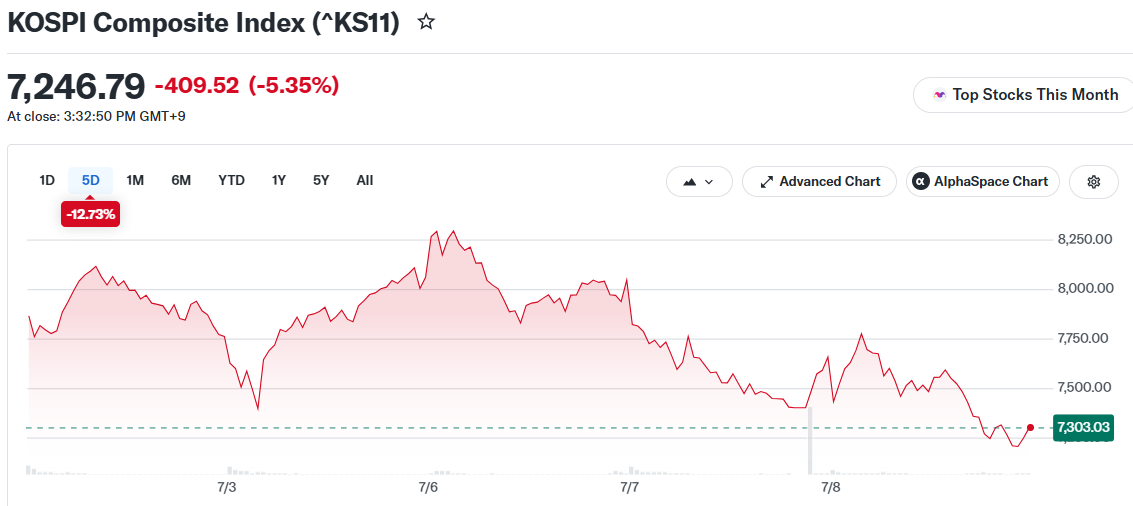 KOSPI Composite Index (^KS11)
Trading was volatile throughout the day. The index briefly rose 1.8% before plunging as much as 6.1%, triggering a “sidecar” curb that paused algorithmic trading.
Samsung’s Record Earnings Not Enough to Calm Markets
Samsung Electronics fell 6.3% on Wednesday, even after reporting record second-quarter profits. The problem was revenue, which fell short of some high expectations.
That miss raised questions about whether Samsung and its peers can keep growing at the pace investors had priced in. With the stock having more than doubled over the past year, many chose to take profits.
SK Hynix also fell 5.7%, following a 6% drop the day before. A report that Apple may turn to Chinese chip suppliers due to supply shortages in South Korea added to the pressure, as it could weigh on memory prices going forward.
Leveraged ETFs Add to Market Instability
South Korean Finance Minister Koo Yun-cheol said the government would closely monitor risks tied to single-stock leveraged ETFs linked to chipmaker stocks. Several of these products launched since May, and high leverage levels have made the sell-off worse.
This was the sixth time this year the KOSPI triggered a circuit breaker, and the 12th time in history.
Hyundai Motor, which had rallied 120% over the past 12 months on its Nvidia partnerships and AI plans, also fell 4.7% on Wednesday.
The Philadelphia Semiconductor Index in the U.S. dropped 4.7% the previous session, adding to pressure on South Korean chip stocks.
Won Strengthens as Foreign Buyers Return
The South Korean won strengthened past the 1,500 mark, trading 1.2% higher at 1,498.5 per dollar. That was its strongest level since May 29.
The gain was partly driven by dollar-selling tied to SK Hynix’s planned U.S. share sale, which is expected to be one of the largest new share sales in the world.
Foreign investors were net buyers of Korean shares worth 335.9 billion won on Wednesday, ending 13 straight sessions of selling.
Deputy Finance Minister Moon Ji-sung said pressure from foreign profit-taking should ease in the second half of the year as market conditions stabilize.
The KOSPI had been the best-performing major global stock index this year before the recent downturn. The index’s drop reflects a broader shift in sentiment around AI valuations.
The post South Korea’s KOSPI Enters Bear Market as Chipmakers Tumble on AI Fears appeared first on CoinCentral.


You May Also Like

SpaceX Stock Slides During Historic Nasdaq Debut As Broad Selloff Drags Down Rival Space Stocks

Sandiganbayan denies bid to inhibit Sixth Division in Co malversation case

Foreign Investors Pull More Than $100 Billion From South Korean Stocks



