

Eli Lilly’s $40M Bet on AI-Designed Injectable Antibody Sparks 36% Rally
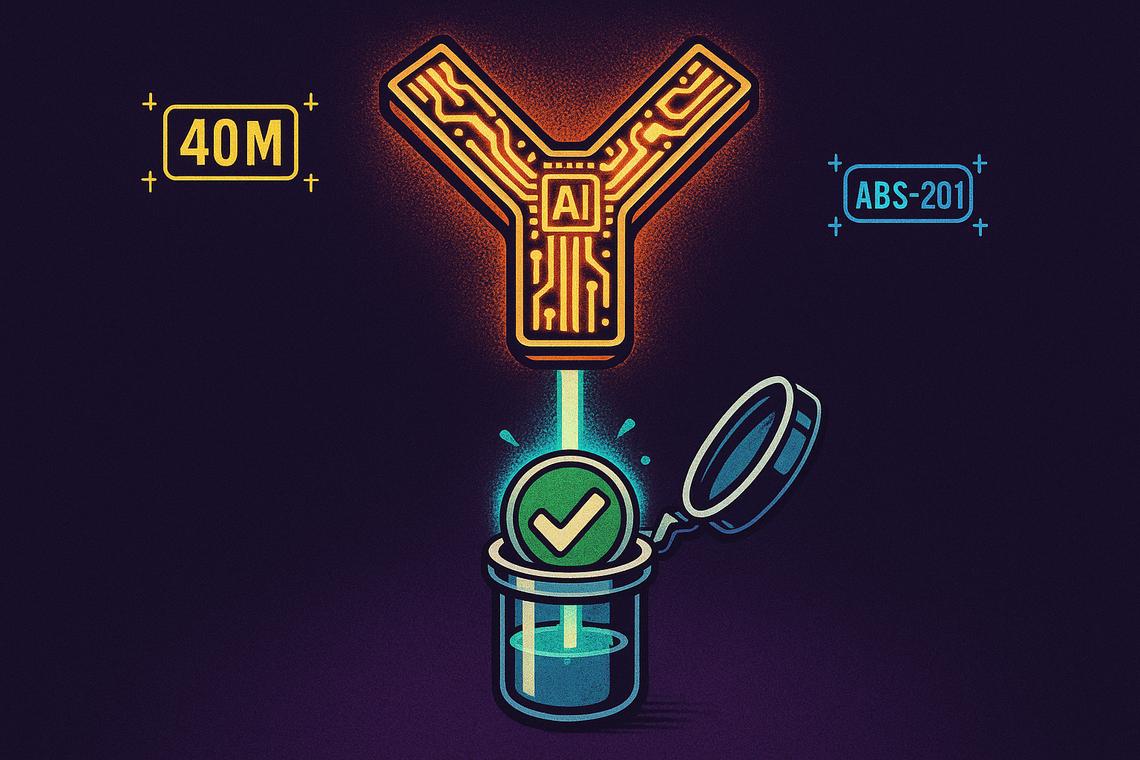
Eli Lilly has placed a $40 million bet on an AI-designed injectable antibody that could change how doctors treat two conditions affecting hundreds of millions of people worldwide — and for which no approved injectable option currently exists. The pharma giant’s investment came as part of a $100 million equity funding round for Absci Corporation, a Vancouver, Washington-based generative AI drug company whose lead asset, ABS-201, is now in human trials targeting androgenetic alopecia and endometriosis.
Key takeaways
- Eli Lilly invested $40 million in Absci as part of a $100 million equity round, with shares purchased at $7.41 each.
- ABS-201 is Absci’s first AI-designed therapeutic to enter human trials, targeting the prolactin receptor for hair loss and endometriosis — two conditions with zero approved injectable treatments.
- Interim Phase 1 data from the HEADLINE trial, which began dosing in December 2025, showed positive safety and pharmacokinetics.
- Preclinical data showed ABS-201 produced higher affinity for the prolactin receptor and stronger hair growth signals than minoxidil.
- Absci expects further clinical readouts over the next two years, with Phase 2 and Phase 3 trials still ahead.
Eli Lilly’s Strategic $40 Million Investment in Absci
Eli Lilly — the company that turned weight-loss injectables into a cultural phenomenon with Zepbound and Mounjaro — is now putting serious capital behind the idea that artificial intelligence can engineer a shot to address pattern baldness and endometriosis. The $40 million stake in Absci signals more than financial interest; it represents a strategic alignment between one of the world’s largest pharmaceutical companies and a relatively young AI drug design firm.
The broader $100 million equity round attracted additional institutional investors including Adage, BVF Partners, Columbia Threadneedle, Invus, and Redmile. Lilly purchased its shares at $7.41 each. The market reacted sharply, with ABSI shares rising approximately 36% on the news.
The timing was deliberate. Absci released the financing news on the same day as interim Phase 1 clinical data from the HEADLINE trial, maximizing the narrative signal: not just capital coming in, but early human trial results validating the science behind it. That kind of coordinated disclosure carries weight with institutional investors who track biotech closely.
The participation of a pharmaceutical heavyweight like Lilly is particularly meaningful here. It is not a passive financial bet — it is an implicit endorsement of Absci’s Integrated Drug Creation platform, the generative AI system that designed ABS-201 from scratch without traditional lab-based trial-and-error.
ABS-201: A First-in-Class AI-Designed Injectable Antibody
ABS-201 is a monoclonal antibody built entirely by Absci’s AI platform — making it the company’s first AI-designed therapeutic to reach human clinical trials. That milestone alone separates it from the broader wave of AI-assisted drug discovery tools that remain at the preclinical or computational stage.
Generative AI Drug Platform Behind ABS-201
Absci’s Integrated Drug Creation platform uses generative AI to design antibodies computationally, then validates them biologically. The process compresses timelines that would traditionally take years of laboratory iteration into a far shorter discovery cycle. ABS-201 is the most visible output of that system — a purpose-built molecule aimed at a specific biological target with defined therapeutic goals.
Targeting the Prolactin Receptor for Hair Growth and Reproductive Health
The antibody targets the prolactin receptor, a hormone receptor with documented links to both hair follicle biology and reproductive function. By blocking or modulating this receptor, ABS-201 is designed to intervene in two biologically distinct but mechanistically connected conditions: androgenetic alopecia and endometriosis.
That dual-indication strategy is notable. It means a single molecule, if it works, could unlock two separate commercial markets with a shared biological rationale — a compelling structure for both development economics and investor interest.
Therapeutic Innovation Addressing Unmet Medical Needs
Both target conditions represent significant gaps in the current treatment toolkit. Androgenetic alopecia — pattern baldness — affects large portions of both men and women globally, yet available treatments are limited to topical minoxidil, oral finasteride, and expensive surgical procedures. None of those are injectable biologics. Endometriosis affects roughly 10% of women of reproductive age worldwide and remains notoriously hard to treat effectively, with hormonal therapies and surgery as the primary options.
The absence of approved injectable treatments for either condition is the core of ABS-201’s positioning. Injectable monoclonal antibodies have transformed treatment in oncology, rheumatology, and immunology over the past two decades. The same class of precision medicine has not yet reached hair loss or endometriosis in any approved form.
That creates the opportunity — and the risk. First-in-class often means first-to-fail-or-win with no established benchmark. But it also means that if ABS-201 clears Phase 2 and Phase 3 successfully, there is no established competition in its exact format.
Promising Clinical Trial Progress and Future Outlook
Interim Phase 1 Results from the HEADLINE Trial
The HEADLINE trial began dosing its first participants in December 2025. Interim Phase 1 results reported positive findings on both safety and pharmacokinetics — meaning the drug behaved predictably in the body and did not produce early red flags. For a first-in-human study, that profile matters enormously. It de-risks the molecule enough to justify the next investment cycle.
Preclinical Efficacy Compared to Minoxidil
Before the human trial, preclinical data had already shown that ABS-201 produced higher affinity for the prolactin receptor and generated stronger hair growth signals than minoxidil, the active ingredient in Rogaine. That comparison has obvious limitations — preclinical results do not always translate to human outcomes — but it establishes a biological baseline that supports the mechanism and justifies further development.
Clinical Trial Timeline and Next Phases
Absci expects further clinical readouts over the next two years, meaning Phase 2 and Phase 3 trials still lie ahead. That is the period that will truly test the drug’s efficacy in larger patient populations and determine whether early safety signals hold. The $100 million raised is meant to fund that runway.
For the broader AI drug design field, how ABS-201 performs in those coming trials may set a reference point. Generative AI platforms have made bold promises about compressing drug discovery timelines, but clinical validation remains the only proof that matters. Absci now carries some of that proof-of-concept weight on behalf of the entire sector — and with Eli Lilly watching closely, the stakes extend well beyond a single molecule.
FAQ
What is ABS-201 and how was it developed?
ABS-201 is a monoclonal antibody designed entirely by Absci’s AI-powered Integrated Drug Creation platform. It targets the prolactin receptor, a hormone receptor linked to hair growth and reproductive health, making it the first AI-designed therapeutic from Absci to enter human clinical trials.
Which conditions does ABS-201 aim to treat?
ABS-201 targets androgenetic alopecia (pattern baldness) and endometriosis — two conditions that currently have no approved injectable treatments. Endometriosis alone affects approximately 10% of women of reproductive age worldwide.
What is the current status of ABS-201 clinical trials?
The HEADLINE trial began dosing participants in December 2025. Interim Phase 1 data showed positive safety and pharmacokinetics. Absci expects further clinical readouts, including Phase 2 and Phase 3 results, over the next two years.
Why is Eli Lilly investing in Absci?
Eli Lilly invested $40 million as part of a $100 million equity funding round to support the advancement of ABS-201. The investment reflects confidence in Absci’s AI-driven drug design platform and the commercial potential of a first-in-class injectable antibody addressing two large, underserved patient populations.
Article produced with the assistance of artificial intelligence and reviewed by the editorial team.


You May Also Like
Hamster Kombat Daily Cipher 2 July 2026: Play And Win
Lime (LIME) Goes Public: Scooter Company’s $167M IPO Sees Overwhelming Investor Demand


