

Yi He warns of alleged impersonation scam as CoinUp denies Zhu Pan ties
Binance co-founder Yi He warned users about an alleged impersonator referred to as “Zhu Pan” in Chinese-language posts on X.
- Yi He warned users about alleged impersonation as CoinUp denied operational ties to Zhu Pan.
- CoinUp said Zhu Pan was only linked to a listed project, not platform management work.
- CPX volatility drew scrutiny after Lookonchain reported highs above $0.829 before selling pressure arrived later.
She said the person had tried to impersonate others to scam her and had also impersonated her in an attempt to scam Tron founder Justin Sun.
“Absolutely true,” Justin Sun said. His post appeared to support Yi He’s account after she urged users to spread awareness and avoid falling for similar impersonation attempts.
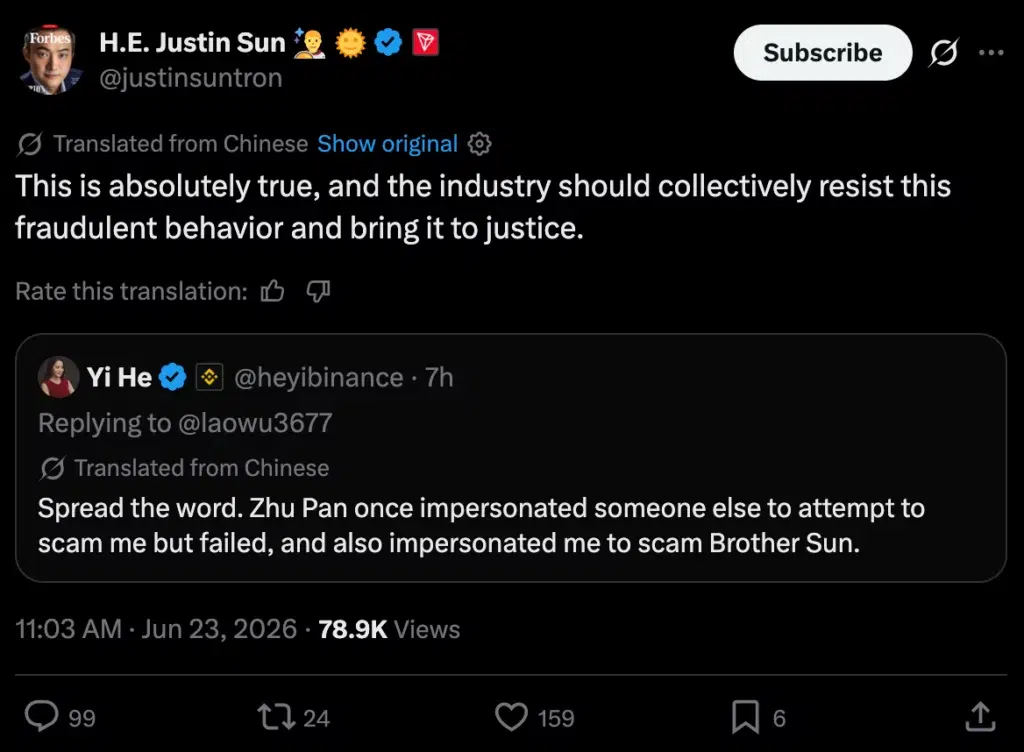
The warning came after a widely shared Chinese-language post linked Zhu Pan to CoinUp. The post raised questions about whether the individual had any role in the crypto derivatives trading platform.
CoinUp denies core platform role
The company issued the statement after the allegations spread across Chinese-language crypto circles. CoinUp said the claims created a wrong view of the platform’s relationship with the individual.
The exchange said Zhu Pan was linked to a project listed on its platform, but not to core CoinUp operations. The company did not say that it had removed the listed project or taken action against the individual.
Past project claims add to dispute
Public information about Zhu Pan remains limited and disputed. Chinese outlet Pencil News previously linked a person identified as Zhu Pan to the 2018 ZJLT initial coin offering project, which later drew investor complaints and fraud accusations.
The same report said Zhu Pan denied being a founder or operator of the project. That leaves the earlier claims unresolved and makes the current dispute harder to assess without court filings, platform records or verified law enforcement statements.
The case shows how old project claims can return when high-profile crypto figures raise new warnings. In this case, Yi He’s post, Sun’s response and CoinUp’s denial turned a Chinese-language dispute into a wider exchange reputation issue.
CPX volatility draws more scrutiny
CoinUp also addressed price swings in CPX, its native utility and ecosystem token. On-chain tracker Lookonchain reported that CPX reached a new all-time high above $0.829 last Friday.
The platform said later volatility came from concentrated market selling pressure. CoinUp said it was investigating the cause of the price swings and had found no evidence of hacking, data breaches or system weaknesses.
The dispute comes as crypto firms face rising impersonation risks. As previously reported by crypto.news, a Canadian man pleaded guilty in a $13 million crypto fraud case that relied on impersonation and social engineering.
Separately, a crypto.news guide warned that fake exchanges, copied branding and pressure to move chats to Telegram or WhatsApp remain common red flags. The CoinUp case now adds another reminder that users should verify claims through official channels before trusting private messages, referrals or market rumors.


You May Also Like

Bitcoin Drop Sparks $700M Liquidation Wave As Leverage Gets Flushed

A 68-Year-Old’s Roth Conversion Cost Him the $6,000 Senior Deduction That Was Shielding His Social Security

Datavault AI Expands WiSA Wireless Audio Technology Into Goldhorn Home Systems in China



