

South Korea’s FIU Chief Urges Unified Global Crypto Rules to Curb Regulatory Arbitrage
BitcoinWorld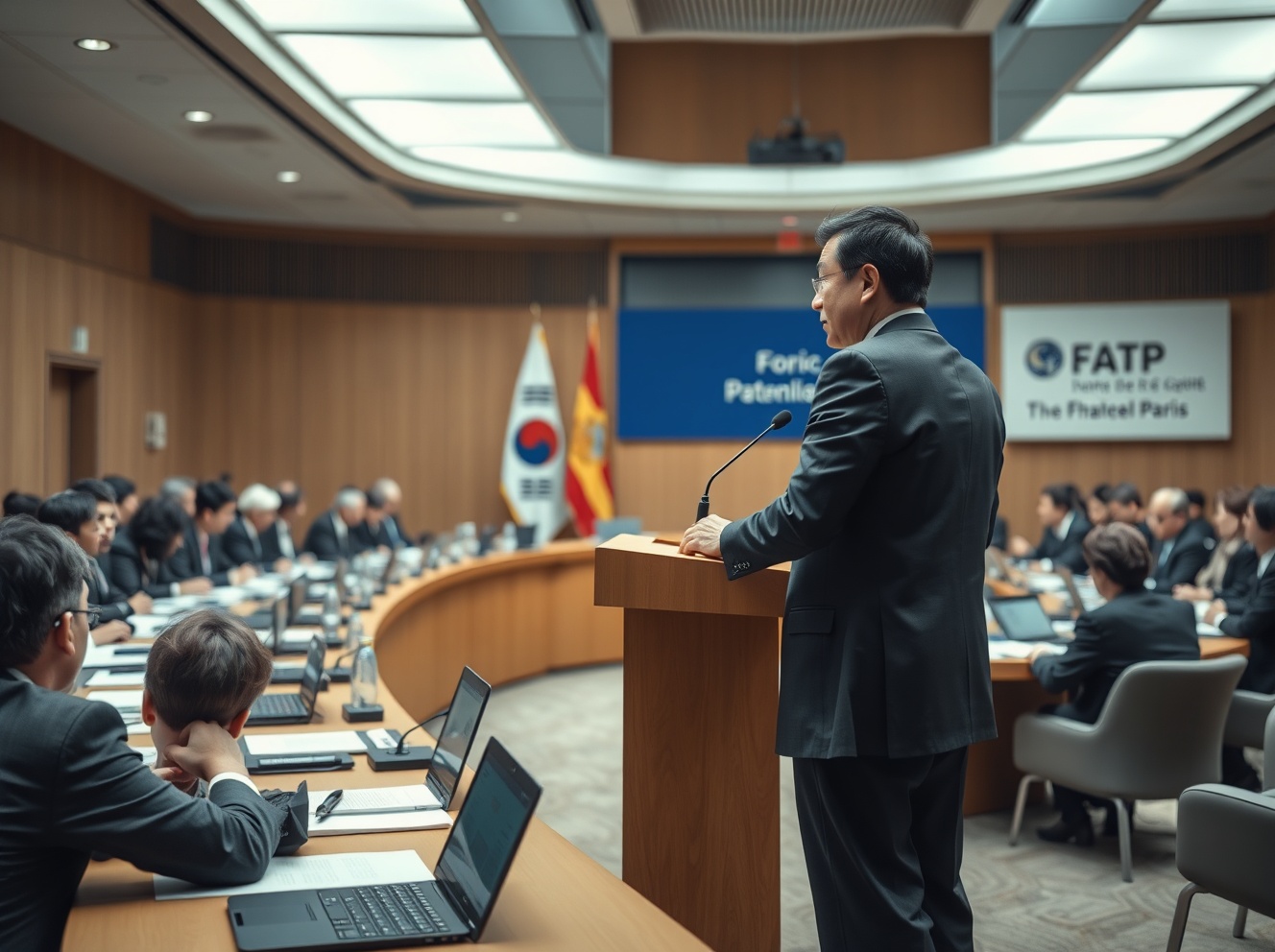
South Korea’s FIU Chief Urges Unified Global Crypto Rules to Curb Regulatory Arbitrage
The head of South Korea’s Financial Intelligence Unit (FIU) has issued a strong call for the global harmonization of virtual asset regulations, warning that fragmented national approaches are enabling regulatory arbitrage and undermining efforts to combat financial crime.
FIU Chief Warns of Fragmented Oversight
Lee Hyung-joo, who leads the FIU under South Korea’s Financial Services Commission, made the remarks during a plenary session of the Financial Action Task Force (FATF) held at the OECD headquarters in Paris. Lee argued that differing standards across jurisdictions for licensing, supervision, and the treatment of offshore virtual asset service providers (VASPs) create opportunities for bad actors to exploit weaker regulatory environments.
“Regulatory arbitrage weakens the effectiveness of anti-money laundering and counter-terrorism financing measures,” Lee stated, according to a report by Newsis. His comments come as the global cryptocurrency market continues to mature, with an increasing number of nations introducing bespoke regulatory frameworks—often with significant differences in scope and enforcement.
Why a Unified Framework Matters
The FATF has long advocated for a consistent global approach to virtual assets, issuing updated guidance for member countries. However, implementation remains uneven. Some jurisdictions have introduced comprehensive licensing regimes, while others maintain a more permissive stance, creating gaps that can be exploited for illicit fund flows.
Lee’s intervention highlights a growing concern among regulators: that without coordinated action, the fight against money laundering and terrorist financing in the crypto space will remain fragmented. South Korea itself has been proactive, implementing strict know-your-customer (KYC) and reporting requirements for VASPs operating within its borders. Yet, the effectiveness of such domestic measures is limited if offshore providers can easily circumvent them.
Implications for the Crypto Industry
For businesses operating in the digital asset space, the push for global standards signals a likely increase in compliance costs and operational complexity in the near term. However, a harmonized regulatory environment could ultimately reduce uncertainty and create a more level playing field for legitimate actors. Investors and users may benefit from stronger protections and clearer legal frameworks.
The timing of Lee’s statement is significant. With the FATF preparing for its next round of mutual evaluations, countries are under pressure to demonstrate tangible progress in implementing its recommendations. South Korea’s stance positions it as a leading voice for stricter, more uniform oversight.
Conclusion
Lee Hyung-joo’s call for a consistent global regulatory framework for virtual assets underscores a pivotal moment in international financial governance. As digital assets become more mainstream, the ability of regulators to collaborate and close loopholes will be critical to maintaining the integrity of the global financial system. The FATF’s role in driving this harmonization will be closely watched by industry participants and policymakers alike.
FAQs
Q1: What is regulatory arbitrage in the context of cryptocurrencies?
Regulatory arbitrage occurs when businesses or individuals exploit differences in regulations between countries to avoid stricter rules, such as moving operations to a jurisdiction with weaker anti-money laundering requirements.
Q2: Why is the FATF important for crypto regulation?
The Financial Action Task Force sets international standards for combating money laundering and terrorist financing. Its recommendations influence how member countries regulate virtual assets, aiming to create a more consistent global framework.
Q3: How does South Korea currently regulate virtual assets?
South Korea requires all virtual asset service providers to register with the FIU, implement strict KYC procedures, and report suspicious transactions. It has also banned anonymous trading accounts and imposed strict data reporting obligations.
This post South Korea’s FIU Chief Urges Unified Global Crypto Rules to Curb Regulatory Arbitrage first appeared on BitcoinWorld.


You May Also Like

Arthur Hayes Dumps Every Altcoin While Other Analysts Say Altcoin Bull Market Has Started

Bithumb to Temporarily Halt Deposits and Withdrawals for 28 Base Network Tokens

Hacking Incidents Hit All-Time High in Q2 2025, New Report Reveals


Trending News
More24/7 Live News
MoreQuick Reads
More
