

CME Takes CFTC to Court Over Perpetual Futures, CEO Warns of ‘Disaster Waiting to Happen’
Key highlights:
- The CFTC is facing fresh legal challenges from CME Group.
- CME is planning to sue the regulator over its decision on perpetual futures.
- The exchange believes that those products should be regulated as swaps.
The US Commodity Futures Trading Commission (CFTC) is under fire as the CME Group has reportedly announced plans to sue the regulator. The legal action targets the commission’s approval of perpetual futures contracts, arguing that the products should be regulated as swaps rather than futures.
Alongside the lawsuit, CME’s CEO Terrence Duffy has launched a direct attack on the CFTC. He warned that the regulator’s decision could be a “disaster waiting to happen” for markets and investors.
US CFTC faces legal challenge from CME Group; here’s all
CME Group, a prominent derivatives exchange, is gearing up to launch a lawsuit against the Commodity Futures Trading Commission over its Bitcoin perpetual futures decision. According to CME, perpetual futures should be treated as swaps. As the regulator has approved them as futures, the exchange is raising concerns about its monitoring. The exchange believes that CFTC’s current decision will likely create problems for investors and the broader financial system.
Terrence Duffy, the CEO of CME Group, raised his voice against the commission’s decision. He stated,
Earlier this month, while speaking at the Piper Sandler Global Exchange & Fintech Conference, he stated that these products are risky. He added that they carry higher leverage than contracts typically listed on CME’s markets.
Duffy also warned that inexperienced traders could face significant losses if they engage with the products without fully understanding them. His words read,
He further presented a comparison between today’s speculative trading environment and the conditions that preceded the 2008 financial crisis. He added, “I totally disagree with the government, and I'll deal with it as we need to move forward.”
Unveiling the growing debate over perpetual futures
Perpetual futures are a type of derivatives contracts. They allow traders to bet on the price movements of an asset like Bitcoin without actually holding it. They do not have an expiration date, unlike traditional futures contracts. This allows traders to hold positions for a long time without restrictions.
Notably, the current controversy between CME Group and CFTC follows the commission’s decision to approve Kalshi’s Bitcoin perpetual futures product in May. This move marked the first of its type in the United States.
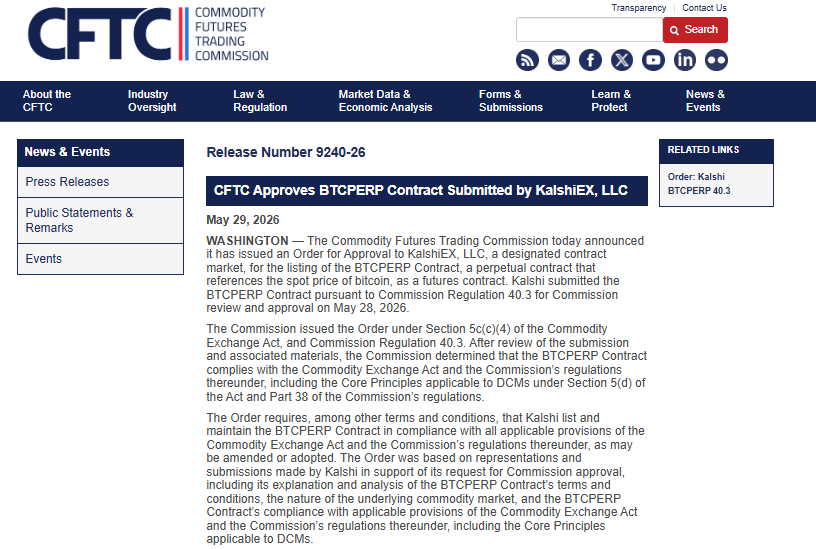
Source: CFTC
While the development marked a major milestone for the crypto industry, it faced backlash from major players like CME Group. Supporters believe that bringing perpetual futures products to the US market could provide investors with regulated access to instruments that are already widely available overseas.
It is also worth noting that Coinbase is one of the first platforms to offer perpetual-like crypto futures in the US. Through its Coinbase Financial Markets (CFM) division, the exchange had introduced similar products earlier.
More importantly, the lawsuit highlights the growing friction between traditional financial institutions and regulators in the United States. It also underscores the importance of crypto regulation. If a court ruling comes in CME Group’s favor, it could reshape rules governing crypto derivatives.


You May Also Like

‘Kidnap victim’, alleged abductor nabbed

FTX Cursor Stake Resurfaces After Massive Valuation Surge

Bitcoin at Crucial Pivot Point, Here's Why Fed Can Tilt Balance



