

👨🏿🚀TechCabal Daily – No free exits in Kenya
Good morning. 
Founders. Investors. Policymakers. Enterprise leaders. Moonshot 2026 brings together the people shaping Africa’s technology ecosystem across AI, commerce, climate, enterprise, and culture. Spotlight your brand today.
Let’s dive in.
Get smarter about Francophone Africa with our newsletter, Francophone Weekly—the startups, tech policies, and institutions building the pipelines for ecosystem growth.
- Kenya proposes 15% CGT on foreign exits
- Prosus wants to stop forced Delivery Hero sell-downs
- Shareholders to vote on MTN-IHS deal
- CAR’s new Internet plan
- World Wide Web 3
- Job Openings
Government
Kenya proposes 15% capital gains tax on foreign VC exits
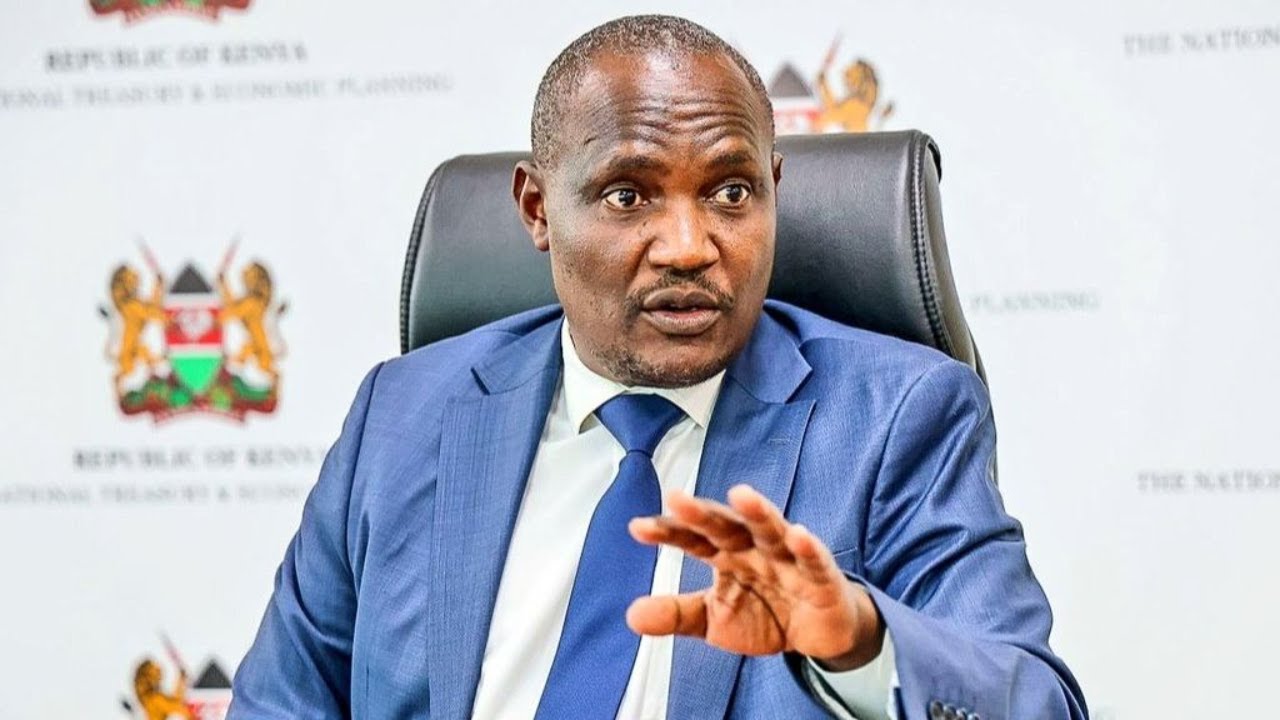 Kenya’s National Treasury secretary John Mbadi. Image source: NMG
Kenya wants foreign investors and venture capital (VC) firms to take a 15% haircut the next time they secure exits from the country’s startups.
The proposed Finance Bill 2026 would give the Kenya Revenue Authority (KRA), the country’s taxman, the power to tax gains from shares sold offshore, if those shares derive their value from Kenyan assets or operations.
The logic is simple enough: If you made your money in Kenya, the country should get some of it. But the structure of how foreign capital enters African markets has always made this complicated: investors route ownership through Mauritius, the Cayman Islands, or Delaware, not out of bad faith, but because international limited partners require it. That’s the price of accessing global capital, and African startups have largely had no choice but to play by those rules.
Between the lines: What Kenya is really doing here is challenging a system that was never designed with it in mind. The broader question is whether this proposal will make Kenya a more self-determining market or a more expensive one to bet on. Those two things are not mutually exclusive, but the balance is delicate.
Foreign investors already price in risk when they look at African markets. Add tax uncertainty on the way out, and some will simply look elsewhere. Others may restructure their holdings earlier in the investment cycle to sidestep the exposure entirely.
Kenya has been here before with Tullow Oil and Java House, and had to fight case by case. The proposal would either establish Kenya as a market that captures its fair share of the value it generates, or introduce a new layer of uncertainty that investors were probably not asking for.
We Have Secured the Bank of Ghana EPSP Licence.
Fincra has officially secured its Enhanced Payment Service Provider licence. This regulatory milestone authorizes Fincra to directly collect, process, and settle payments in Ghanaian Cedis, offering a highly streamlined financial pipeline for businesses operating within the region. Start here.
Companies
Prosus wants the EU to let it keep its Delivery Hero stake
 Image Source: TechCentral
Remember when Prosus started selling chunks of its stake in Delivery Hero (DH), a German food delivery giant, trying to meet an urgent deadline? Well… it may now want the European Union (EU) to pause that whole arrangement.
Let’s quickly reheat the tea  : In 2025, Prosus, the investment holding company owned by South African conglomerate Naspers, announced plans to acquire Just Eat Takeaway.com, another major European food delivery platform. The EU approved the deal in August 2025 with a major condition that Prosus had to reduce its equity stake in Delivery Hero from 26.3% to a single-digit percentage within 12 months.
Prosus already holds stakes in Brazil’s iFood, India’s Swiggy, China’s Meituan, Norway’s Oda, and Germany’s Flink. The EU requested that Prosus reduce its stake as part of anti-trust conditions, concerned that Prosus may dominate Europe’s food and grocery delivery market.
To meet that condition, Prosus began selling stakes in DH. First, it sold a 4.5% stake to Uber, the ride-hailing company, in April. It offloaded another 5% to Aspex Management the following month.
After both deals, Prosus’ ownership in DH dropped to 17%, with even more sell-downs expected. However, it seems Prosus isn’t willing to go down further—at least not without pleading its case first. Bloomberg reported on Monday that the firm wants the EU to drop or soften that requirement.
What might have changed? It looks like Prosus is trying to protect its interest in what looks like a brewing takeover battle. In May, Uber made a takeover offer for DH, valuing the business at €10 billion ($11.6 billion), according to Bloomberg. However, DoorDash, a US competitor for DH and an adjacent rival of Uber (via Uber Eats), also wants its paws on the pie. It is considering a rival bid for parts of DH’s business. If a bidding war drives up Delivery Hero’s valuation, Prosus stands to lose significant upside by being forced to sell its remaining stake at today’s prices.
Why is Delivery Hero now a catch? The business has been quietly getting healthier. In 2025, it reported operating profitability of €903 million ($1 billion), up 30% year-on-year, alongside positive free cash flow. In 2026, it also struck a deal to offload its Taiwan-based foodpanda to Grab for $600 million, pending regulatory approval.
What happens now? The EU hasn’t responded, and there’s no guarantee regulators will budge, especially since Prosus has spent months complying already. But one thing is clear: what started as a forced sell-down has become a four-way corporate custody battle between Prosus, Uber, Aspex, and possibly DoorDash.
We Empower Your Ambition
M&A
Shareholders to vote on MTN’s $2.2 billion IHS Towers acquisition
 Image Source: IHS Towers
MTN’s planned $2.2 billion acquisition of IHS Towers is moving closer to completion, with the tower company’s board throwing its full weight behind the deal ahead of a shareholder vote later this year. MTN and French investment group Wendel already control over 40% of voting rights between them, making approval likely.
What is worth sitting with is the irony. IHS Towers was built on the premise that infrastructure should be independent, a neutral landlord serving whoever needed towers, across Africa, the Middle East, and Latin America. That neutrality was the pitch to investors when IHS listed on the New York Stock Exchange (NYSE) in 2021. Four years later, its biggest customer is buying the building.
That shift reflects something larger happening across the continent. African operators have spent years outsourcing infrastructure to focus on their core business. Now they are reversing course, and not quietly. Airtel built out its own fibre management unit. Safaricom took direct control of its tower power systems. Now, in markets where currency swings can make a long-term lease ruinous overnight, owning the infrastructure is starting to look less like a cost and more like a hedge.
The deeper question MTN’s move raises is what happens to the independent tower model in Africa if the continent’s largest operator no longer needs it. Other operators still lease from IHS. But a landlord with a preferred tenant is a different kind of landlord entirely.
Payments for import, export, and commodity trade in emerging markets.
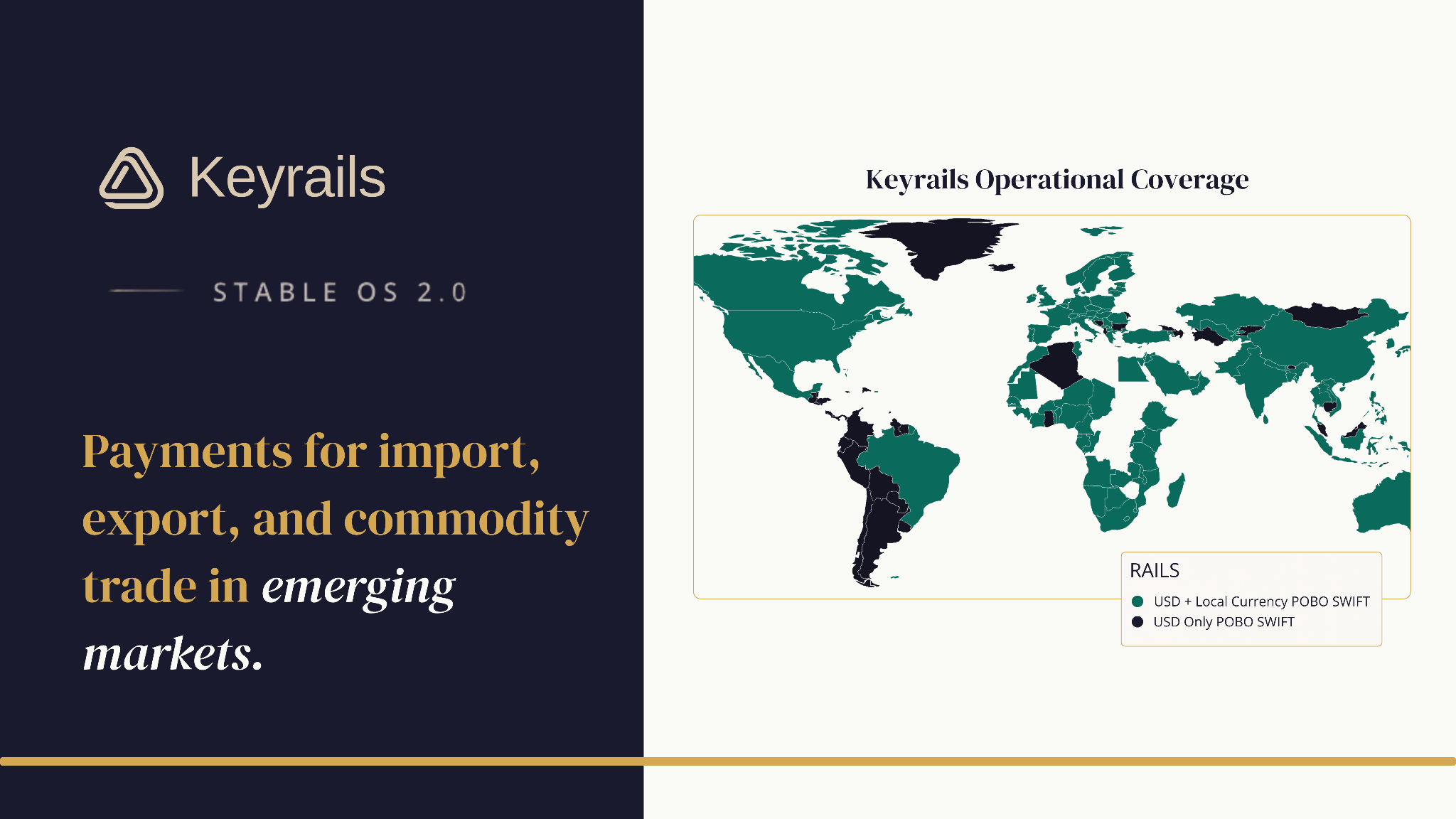
For African fintechs, banks, and trade operators, high-value supplier and commodity payments are still an execution problem. Stable OS 2.0 standardises these flows across 100+ markets and 75+ currencies through one unified RTGS-ready instruction/ through one unified instruction, with local RTGS reach. Learn more.
Internet
The Central African Republic is turning to South Sudan to improve its Internet
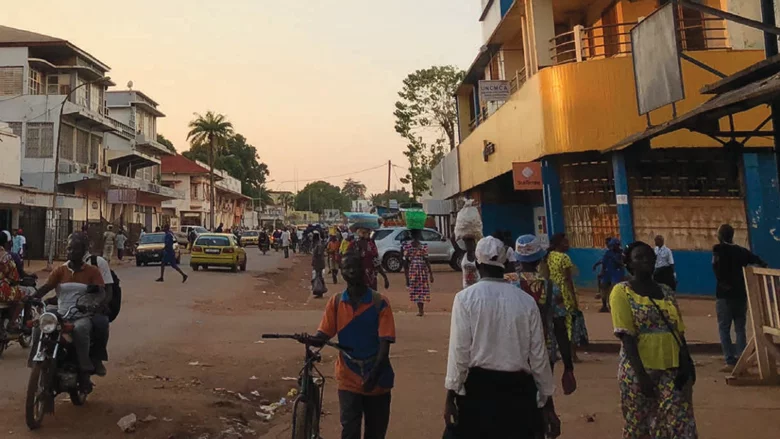 A street view in CAR. Image source: World Bank
In May, the Central African Republic (CAR) announced plans to launch a new Internet interconnection with South Sudan to strengthen connectivity and reduce its digital isolation. It was reported that the project will be led by the Central African Digital Development Agency alongside MTN, although authorities did not disclose the full technical details or implementation timeline.
It’s a geography problem:Most international Internet traffic travels through subsea cables. However, CAR is bordered by six other African countries: Chad, Sudan and South Sudan, the Democratic Republic of the Congo (DRC), Congo-Brazzaville, and Cameroon, which means it has no direct access to the subsea cables. To provide Internet to its citizens, mostly those in urban cities, CAR had to find a workaround: it depended on neighbouring countries.
Before 2023, the Central African Republic relied on satellite and limited cross-border links for connectivity due to the absence of a national fibre backbone. In 2023, the country installed the first national fibre-optic backbone through a connection to Cameroon and Congo-Brazzaville under the Central African Backbone (CAB) project.
With an Internet penetration of just over 15%, the new interconnection could make the Internet cheaper, improve stability, and strengthen access to digital services.
Here’s what’s interesting: South Sudan is also landlocked. Until it signed a fibre-optic cable deal with Kenya in 2023, South Sudan relied mostly on a single Internet interconnection route through Uganda.
Yet, Internet infrastructure is really about redundancy. The more routes countries have connecting them to global networks, the more protection it has against vandalism incidents or infrastructure failure.
Register to attend Digital Pay Expo 2026

What happens when regulators, fintech leaders, investors, financial institutions, payment providers, and technology innovators come together in one room?
Digital PayExpo 2026.
Date: June 17–18, 2026
Location: Landmark Centre, Lagos
Register now.
CRYPTO TRACKER
The World Wide Web3
Source:

|
Coin Name |
Current Value |
Day |
Month |
|---|---|---|---|
| Bitcoin | $76,812 |
– 0.68 |
– 1.56% |
| Ether | $2,098 |
– 0.40% |
– 9.94% |
| Solstice | $0.1598 |
– 21.22% |
– 21.22% |
| Solana | $84.68 |
– 1.60% |
– 1.20% |
* Data as of 06.50 AM WAT, May 26, 2026.
Naira Life 2026 is here!

Join 2,000+ in Lagos on August 22 for unfiltered wealth strategies, investment clinics, pitch competitions, and real talk about building long-term financial power. Get 15% off early bird tickets.
JOB OPENINGS
- Big Cabal Media — Senior Motion Designer, YouTube Growth Strategist, Editor-in-Chief (TechCabal), Reporter, Enterprise & Policy, Editor (Analytical), Business Development Executive — Lagos, Nigeria
There are more jobs on TechCabal’s job board. If you have job opportunities to share, please submit them at bit.ly/tcxjobs.
- Sita, Sars rubbish reports they were hacked
- Ask An Investor: Launch Africa’s playbook for managing one of Africa’s biggest VC portfolios
- AI is minting new billionaires, and workers want their share
Written by: Emmanuel Nwosu and Opeyemi Kareem
Edited by: Emmanuel Nwosu and Ganiu Oloruntade
Want more of TechCabal?
Sign up for our insightful newsletters on the business and economy of tech in Africa.
- The Next Wave: futuristic analysis of the business of tech in Africa.
- Francophone Weekly by TechCabal: insider insights and analysis of Francophone’s tech ecosystem
P:S If you’re often missing TC Daily in your inbox, check your Promotions folder and move any edition of TC Daily from “Promotions” to your “Main” or “Primary” folder and TC Daily will always come to you.



You May Also Like

Pony AI Inc. (PONY) Stock: Q1 Revenue Jumps 145% as Robotaxi Growth Accelerates
Taiwan market value TSMC story lifts stocks to $4.95T, just ahead of India
Solana Price Prediction: SOL Slides Below $80 As $270M Hack Triggers Selloff



