

Two KRWQ stablecoins are pulling Korea’s digital won race in different directions
TokenSquare, a South Korean AI payments infrastructure company, has launched KRWQ, a Korean won-denominated stablecoin infrastructure built on BSV blockchain technology, in partnership with the Switzerland-based BSV Association. The system is designed for real-time payments, micropayments, and enterprise settlement using digital won-based rails.
The project follows a memorandum of understanding signed in June 2025, followed by months of technical validation, node design work, and commercialization planning, according to TokenPost.
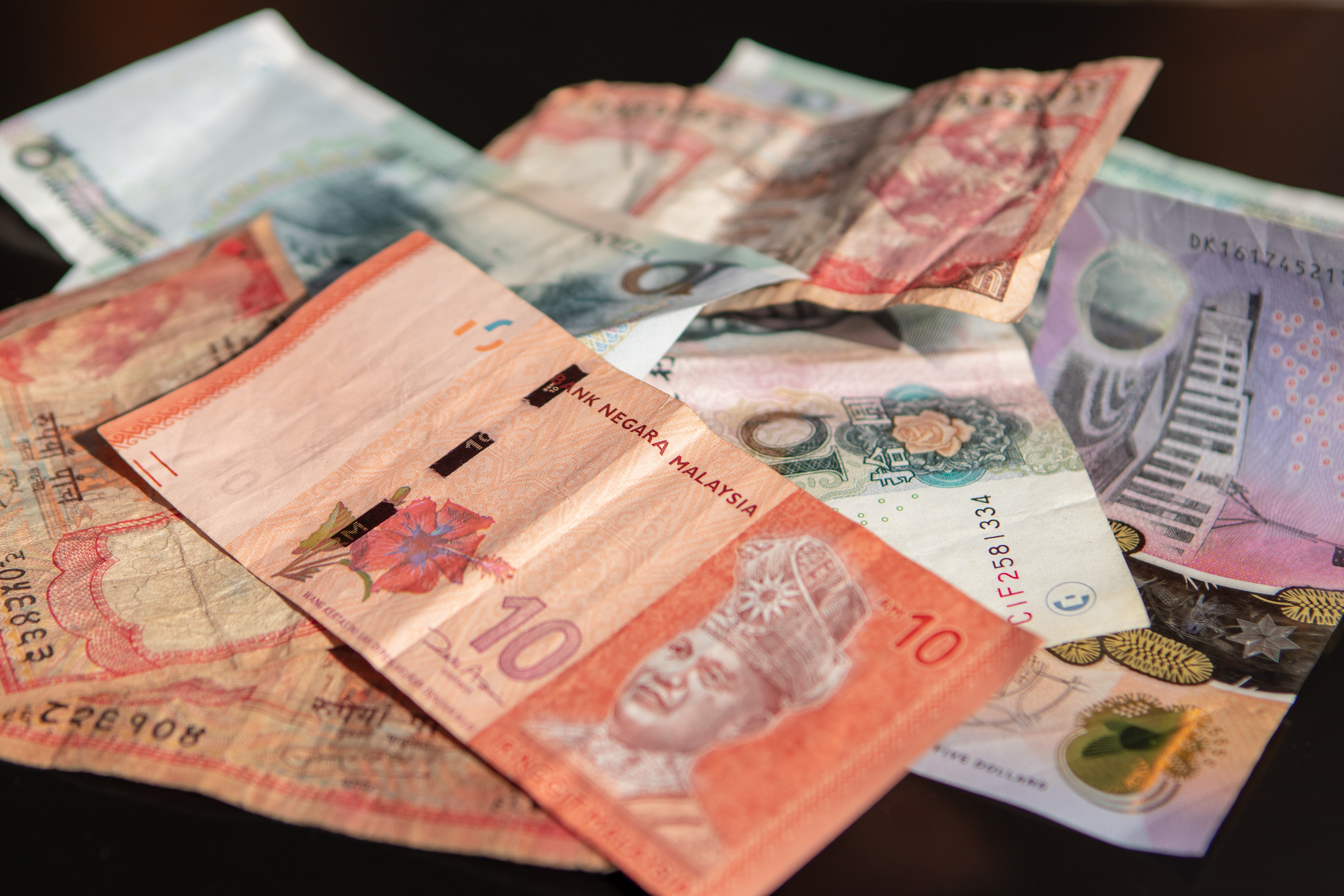
KRWQ is built on BSV’s Teranode architecture, which the project says has demonstrated the ability to process more than one million transactions per second in AWS testing environments.
TokenSquare CEO Oh Eun-jung said, as reported by TokenPost, that KRWQ is intended to function as a won-based infrastructure for large-scale real-time payment processing in Korea. The company also sees potential use cases in AI payments, micropayments, enterprise settlement, and broader digital commerce, rather than positioning KRWQ as a standalone crypto asset.
One KRWQ is for payments, another is for trading
KRWQ is entering a market where multiple projects are trying to bring the Korean won onto blockchain rails.
One of the more confusing aspects is that another separate project, also called KRWQ — developed by IQ and Frax Finance — is already listed on EDX Markets. That version is focused on institutional trading and is the first non-USD stablecoin to trade across both spot and perpetual futures markets on the platform, according to EDX Markets.
That version is designed for traders seeking exposure to Korean won liquidity, including hedging activity tied to offshore non-deliverable forward (NDF) markets, which exceed $100 billion in size.
According to The TRADE News, executives involved with the EDX-listed KRWQ describe it as a tool for regulated trading and hedging of Korean won exposure across both spot and derivatives markets. EDX Markets has also positioned the listing as part of its broader push to expand institutional access to non-USD digital assets in regulated markets.
TokenSquare’s version takes a very different direction. Instead of focusing on trading, it is aimed at the everyday payment infrastructure inside South Korea. The company has signed a custody arrangement with Korea Digital Asset (KODA) and has built compliance tools, including KYC/AML enforcement, address controls, and fund restriction capabilities, into its system, according to TokenPost.
Korea’s regulators have not settled who should control won stablecoins
South Korea’s Digital Asset Basic Act, the proposed framework to regulate stablecoin issuance, is still stuck in legislative limbo.
According to a Korea Times contribution by DWF Labs managing partner Andrei Grachev, regulators remain divided. The Bank of Korea supports a model requiring banks to hold a majority stake in any stablecoin issuer, while the Financial Services Commission (FSC) is considering a more flexible approach similar to Europe’s MiCA framework.
Despite the uncertainty, market activity is already happening.
Tiger Research CEO Kim Gyu-jin told a National Assembly seminar in April that offshore KRWQ trading had at times reached around 1 billion won (about $700,000) in daily volume, driven largely by foreign investors hedging exposure to Korean equities, according to Edaily.
South Korea is home to an estimated 18 million crypto investors, one of the highest participation rates globally, according to the Korea Times. One persistent feature of the market is the so-called “kimchi premium,” in which crypto assets often trade at higher prices locally than on global exchanges, a sign of strong domestic demand for exposure to digital currency.
BSV’s Teranode gives TokenSquare its payments pitch
At the core of KRWQ is BSV’s Teranode architecture, which is designed to prioritize high transaction throughput and low-cost settlement at scale.
In simple terms, the design focuses less on complex smart contract applications and more on moving large volumes of transactions quickly and efficiently. This contrasts with networks like Ethereum, which are built around programmable smart contracts, or Solana, which also focuses on speed but uses a different architecture for scaling.
BSV proponents argue that this type of structure is better suited to real-world payment systems, especially micropayments, machine-to-machine transactions, and real-time settlement flows, which could become more important in AI-driven economies.
That said, many of these performance claims remain largely within controlled or test environments, and large-scale national deployment has yet to be proven.
Global non-USD stablecoin initiatives
| Project | Currency | Primary focus | Infrastructure | Market positioning |
|---|---|---|---|---|
| KRWQ (TokenSquare) | KRW | Domestic payments, enterprise settlement | BSV Teranode | Korea’s real-time payments layer |
| KRWQ (IQ/Frax, EDX) | KRW | FX trading, hedging | Multi-chain stablecoin rails | Institutional derivatives & spot |
| EURC (Circle) | EUR | Euro payments | Multi-chain | Regulated euro digital cash |
| XSGD (StraitsX) | SGD | Cross-border payments | Ethereum / Zilliqa | Southeast Asia settlement layer |
| Offshore CNH stablecoins | CNH | Offshore yuan exposure | Multi-chain | FX hedging markets |
| BRZ (legacy issuance) | BRL | Payments and FX use cases | Ethereum | Latin America crypto FX |
While USD-pegged stablecoins still dominate global liquidity, non-USD stablecoins are slowly expanding as countries explore local-currency digital settlement systems.
What this means for global payments
The launch of KRWQ highlights a broader shift in the stablecoin market: currencies are starting to move from being just trading pairs to becoming full payment infrastructures.
If systems like KRWQ gain adoption, they could reduce dependence on traditional banking rails, speed up settlement times, and enable new forms of programmable payments, including automated transactions between machines and AI systems.
But the direction is still uncertain. Competing models from institutional trading-focused stablecoins to domestic payment infrastructures could end up fragmenting liquidity across different systems rather than unifying it.
In South Korea, the outcome will depend heavily on how lawmakers resolve the Digital Asset Basic Act. That decision will likely determine whether won-based stablecoins become tightly bank-controlled instruments or evolve into a broader digital payment infrastructure integrated with global crypto markets.
Your bank is using your money. You’re getting the scraps. Watch our free video on becoming your own bank


You May Also Like

Government regulations add nearly $132K to cost of new home, builders say

Could You Retire On Florida’s Space Coast And Watch Rocket Launches From Your Backyard?

Franklin Templeton CEO Dismisses 50bps Rate Cut Ahead FOMC



