Author: David Compiled by: TechFlow Over the summer, I’ve been quietly trading while thinking about and building tools related to prediction markets. I’ve been involved in this space on and off for over a year, ever since I joined Polymarket in mid-2024 and started trading during the election cycle. In June of this year, the conflict between Israel and Iran reignited my passion for prediction markets. At the time, I wasn't just trading real-time events on Polymarket for fun; I was using it as a vital source of information to guide my actual portfolio trading. Over the following months, I delved deeply into prediction markets, from their origins and numerous iterations to their visions of future possibilities. It felt like entering an endless intellectual labyrinth. It was incredibly exciting for me to learn about a niche market that had so much potential but wasn’t discussed or taken seriously. But then, along came John Wang. In early August, I noticed John starting tweeting about his deep dive into prediction markets, so I sent him a private message suggesting we chat. While I won't reveal the details of our conversation, it wasn't long before he was completely immersed in the subject, almost single-handedly bringing prediction markets to the forefront through a flurry of tweets. That said, while I’m excited about the early stages of prediction markets, they’re still in their infancy. While there’s a lot of discussion about their positive implications, there are still many challenges and limitations in their current form that need to be addressed if they are to truly become a new mainstream form of trading. Liquidity constraints The first major drawback of prediction markets is liquidity. Market liquidity is already insufficient for most professional traders, let alone funds capable of large-scale trading. Furthermore, due to the difficulty of market making in binary prediction markets, there are few willing market makers. Furthermore, the inherently low trading volume in these markets limits market makers' profit opportunities, making them less motivated to experiment. Binary markets are difficult to market-make for several reasons. The first is high inventory risk, which is difficult to hedge. Because these markets are event-driven, their nature means there's little or no chance of mean reversion following major news headlines. For example, a market may be trading at an 80% probability of a certain outcome (a "yes"), but then news breaks that significantly reduces the probability to 30%. If market makers are misplaced in this situation, they could be forced into holding large, losing positions that are often difficult to exit. This risk can be mitigated through hedging, but simple or efficient capital solutions aren't always available. Why are market makers afraid of being “tricked”? Another issue is "toxic flow" and a lack of demand diversity. Market makers typically profit from the bid-ask spread. For example, they might buy shares of X for $1 and sell them for $1.01, repeating this process without maintaining a directional view on the underlying asset. Market maker profitability depends largely on whether the market has a high proportion of "low information demand" and a low proportion of "high information demand." Taking the stock market as an example, "low information demand" typically refers to investors trading to hedge other positions or rebalance their portfolios. They buy stocks not because they believe they will rise, but because they need them for portfolio construction. This type of demand is generally beneficial to market makers because buyers are not price sensitive. The opposite is true for “high information demand” or “toxic traffic.” These buyers typically possess information or an advantage that has not yet been made public, believe the market is mispriced, and seek to profit from the transaction. A healthy ratio of these two types of buyers is necessary for market makers to profitably provide sufficient liquidity. However, current demand in prediction markets lacks diversity, with few participants other than speculators, and is susceptible to "toxic flow" from insiders. This demand structure must change if liquidity is to improve. Retail investor restrictions From a retail investor’s perspective, prediction markets have many limitations, which I will briefly describe. First, the market lacks sufficiently compelling opportunities and potential returns. Most markets like those on Polymarket and Kalshi typically offer low volatility, and the potential returns are insufficient to attract retail investors. Even if a seemingly certain outcome is trading at 70%, if its expiration date is two months away, it still lacks appeal for modern, dopamine-seeking retail investors. Furthermore, due to the aforementioned challenges faced by market makers, these markets are unable to offer leveraged trading options to increase potential returns. Secondly, the return ceiling of binary markets undermines the incentive to “get in first,” which is precisely one of the key reasons why stocks and cryptocurrencies are so attractive. There are currently some new prototypes being tested that introduce reflexivity by removing binary outcomes, but their success remains to be seen. Third, event-based markets reduce reflexivity. This is both a strength and a weakness, as it means prediction markets are less susceptible to manipulation or cabalism, similar to issues in cryptocurrencies. However, this also limits potential gains, preventing the 100x returns retail investors crave. I have some thoughts on this, but I won't discuss them today. Poor discovery and user experience Anyone actively using prediction markets will have encountered numerous annoyances in the current iteration of the user interface (UI). There are simply too many issues, and especially for advanced users, these issues cumulatively become a headache. The worst of these, in my opinion, is the market discovery mechanism. Polymarket and Kalshi There are tens of thousands of markets today, and the number is growing, but you’ve probably never heard of the vast majority of them, and there’s no easy way to find them. A ray of hope The good news is that many of these challenges are not unique to prediction markets. Early areas like decentralized finance (DeFi), perpetual contract exchanges, and short-term options contracts faced similar challenges. This, however, demonstrates the enormous opportunities inherent in prediction markets, which are still a niche market. Take Polymarket, for example, whose 250,000 active users traded $1 billion in volume last month. By comparison, almost every one of the top 100 traders on HyperLiquid reached that level of volume. We can be excited about new things, but we must also remain pragmatic and face their current actual state in order to push them to new heights.Author: David Compiled by: TechFlow Over the summer, I’ve been quietly trading while thinking about and building tools related to prediction markets. I’ve been involved in this space on and off for over a year, ever since I joined Polymarket in mid-2024 and started trading during the election cycle. In June of this year, the conflict between Israel and Iran reignited my passion for prediction markets. At the time, I wasn't just trading real-time events on Polymarket for fun; I was using it as a vital source of information to guide my actual portfolio trading. Over the following months, I delved deeply into prediction markets, from their origins and numerous iterations to their visions of future possibilities. It felt like entering an endless intellectual labyrinth. It was incredibly exciting for me to learn about a niche market that had so much potential but wasn’t discussed or taken seriously. But then, along came John Wang. In early August, I noticed John starting tweeting about his deep dive into prediction markets, so I sent him a private message suggesting we chat. While I won't reveal the details of our conversation, it wasn't long before he was completely immersed in the subject, almost single-handedly bringing prediction markets to the forefront through a flurry of tweets. That said, while I’m excited about the early stages of prediction markets, they’re still in their infancy. While there’s a lot of discussion about their positive implications, there are still many challenges and limitations in their current form that need to be addressed if they are to truly become a new mainstream form of trading. Liquidity constraints The first major drawback of prediction markets is liquidity. Market liquidity is already insufficient for most professional traders, let alone funds capable of large-scale trading. Furthermore, due to the difficulty of market making in binary prediction markets, there are few willing market makers. Furthermore, the inherently low trading volume in these markets limits market makers' profit opportunities, making them less motivated to experiment. Binary markets are difficult to market-make for several reasons. The first is high inventory risk, which is difficult to hedge. Because these markets are event-driven, their nature means there's little or no chance of mean reversion following major news headlines. For example, a market may be trading at an 80% probability of a certain outcome (a "yes"), but then news breaks that significantly reduces the probability to 30%. If market makers are misplaced in this situation, they could be forced into holding large, losing positions that are often difficult to exit. This risk can be mitigated through hedging, but simple or efficient capital solutions aren't always available. Why are market makers afraid of being “tricked”? Another issue is "toxic flow" and a lack of demand diversity. Market makers typically profit from the bid-ask spread. For example, they might buy shares of X for $1 and sell them for $1.01, repeating this process without maintaining a directional view on the underlying asset. Market maker profitability depends largely on whether the market has a high proportion of "low information demand" and a low proportion of "high information demand." Taking the stock market as an example, "low information demand" typically refers to investors trading to hedge other positions or rebalance their portfolios. They buy stocks not because they believe they will rise, but because they need them for portfolio construction. This type of demand is generally beneficial to market makers because buyers are not price sensitive. The opposite is true for “high information demand” or “toxic traffic.” These buyers typically possess information or an advantage that has not yet been made public, believe the market is mispriced, and seek to profit from the transaction. A healthy ratio of these two types of buyers is necessary for market makers to profitably provide sufficient liquidity. However, current demand in prediction markets lacks diversity, with few participants other than speculators, and is susceptible to "toxic flow" from insiders. This demand structure must change if liquidity is to improve. Retail investor restrictions From a retail investor’s perspective, prediction markets have many limitations, which I will briefly describe. First, the market lacks sufficiently compelling opportunities and potential returns. Most markets like those on Polymarket and Kalshi typically offer low volatility, and the potential returns are insufficient to attract retail investors. Even if a seemingly certain outcome is trading at 70%, if its expiration date is two months away, it still lacks appeal for modern, dopamine-seeking retail investors. Furthermore, due to the aforementioned challenges faced by market makers, these markets are unable to offer leveraged trading options to increase potential returns. Secondly, the return ceiling of binary markets undermines the incentive to “get in first,” which is precisely one of the key reasons why stocks and cryptocurrencies are so attractive. There are currently some new prototypes being tested that introduce reflexivity by removing binary outcomes, but their success remains to be seen. Third, event-based markets reduce reflexivity. This is both a strength and a weakness, as it means prediction markets are less susceptible to manipulation or cabalism, similar to issues in cryptocurrencies. However, this also limits potential gains, preventing the 100x returns retail investors crave. I have some thoughts on this, but I won't discuss them today. Poor discovery and user experience Anyone actively using prediction markets will have encountered numerous annoyances in the current iteration of the user interface (UI). There are simply too many issues, and especially for advanced users, these issues cumulatively become a headache. The worst of these, in my opinion, is the market discovery mechanism. Polymarket and Kalshi There are tens of thousands of markets today, and the number is growing, but you’ve probably never heard of the vast majority of them, and there’s no easy way to find them. A ray of hope The good news is that many of these challenges are not unique to prediction markets. Early areas like decentralized finance (DeFi), perpetual contract exchanges, and short-term options contracts faced similar challenges. This, however, demonstrates the enormous opportunities inherent in prediction markets, which are still a niche market. Take Polymarket, for example, whose 250,000 active users traded $1 billion in volume last month. By comparison, almost every one of the top 100 traders on HyperLiquid reached that level of volume. We can be excited about new things, but we must also remain pragmatic and face their current actual state in order to push them to new heights.

Liquidity is constrained, volatility is insufficient, and the forecast market is "falsely hot".

2025/09/19 17:01

Author: David

Compiled by: TechFlow

Over the summer, I’ve been quietly trading while thinking about and building tools related to prediction markets. I’ve been involved in this space on and off for over a year, ever since I joined Polymarket in mid-2024 and started trading during the election cycle.

In June of this year, the conflict between Israel and Iran reignited my passion for prediction markets. At the time, I wasn't just trading real-time events on Polymarket for fun; I was using it as a vital source of information to guide my actual portfolio trading. Over the following months, I delved deeply into prediction markets, from their origins and numerous iterations to their visions of future possibilities. It felt like entering an endless intellectual labyrinth.

It was incredibly exciting for me to learn about a niche market that had so much potential but wasn’t discussed or taken seriously.

But then, along came John Wang. In early August, I noticed John starting tweeting about his deep dive into prediction markets, so I sent him a private message suggesting we chat. While I won't reveal the details of our conversation, it wasn't long before he was completely immersed in the subject, almost single-handedly bringing prediction markets to the forefront through a flurry of tweets.

That said, while I’m excited about the early stages of prediction markets, they’re still in their infancy. While there’s a lot of discussion about their positive implications, there are still many challenges and limitations in their current form that need to be addressed if they are to truly become a new mainstream form of trading.

Liquidity constraints

The first major drawback of prediction markets is liquidity. Market liquidity is already insufficient for most professional traders, let alone funds capable of large-scale trading. Furthermore, due to the difficulty of market making in binary prediction markets, there are few willing market makers. Furthermore, the inherently low trading volume in these markets limits market makers' profit opportunities, making them less motivated to experiment.

Binary markets are difficult to market-make for several reasons. The first is high inventory risk, which is difficult to hedge. Because these markets are event-driven, their nature means there's little or no chance of mean reversion following major news headlines. For example, a market may be trading at an 80% probability of a certain outcome (a "yes"), but then news breaks that significantly reduces the probability to 30%. If market makers are misplaced in this situation, they could be forced into holding large, losing positions that are often difficult to exit. This risk can be mitigated through hedging, but simple or efficient capital solutions aren't always available.
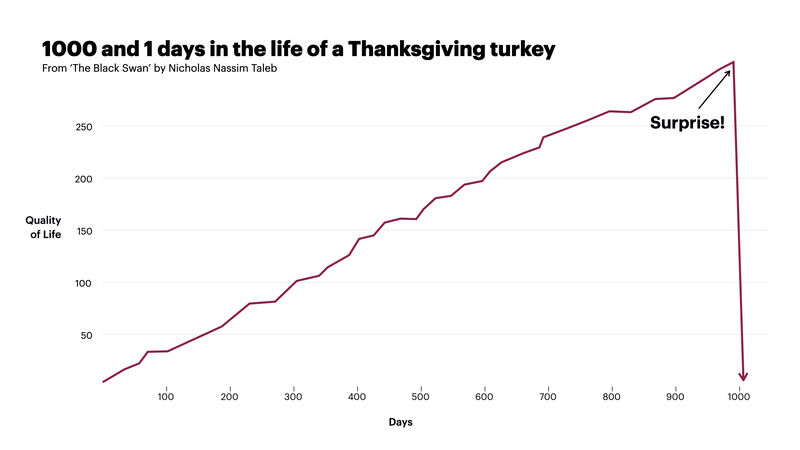
Why are market makers afraid of being “tricked”?

Another issue is "toxic flow" and a lack of demand diversity. Market makers typically profit from the bid-ask spread. For example, they might buy shares of X for $1 and sell them for $1.01, repeating this process without maintaining a directional view on the underlying asset. Market maker profitability depends largely on whether the market has a high proportion of "low information demand" and a low proportion of "high information demand."

Taking the stock market as an example, "low information demand" typically refers to investors trading to hedge other positions or rebalance their portfolios. They buy stocks not because they believe they will rise, but because they need them for portfolio construction. This type of demand is generally beneficial to market makers because buyers are not price sensitive.

The opposite is true for “high information demand” or “toxic traffic.” These buyers typically possess information or an advantage that has not yet been made public, believe the market is mispriced, and seek to profit from the transaction.

A healthy ratio of these two types of buyers is necessary for market makers to profitably provide sufficient liquidity. However, current demand in prediction markets lacks diversity, with few participants other than speculators, and is susceptible to "toxic flow" from insiders. This demand structure must change if liquidity is to improve.

Retail investor restrictions

From a retail investor’s perspective, prediction markets have many limitations, which I will briefly describe.

First, the market lacks sufficiently compelling opportunities and potential returns. Most markets like those on Polymarket and Kalshi typically offer low volatility, and the potential returns are insufficient to attract retail investors. Even if a seemingly certain outcome is trading at 70%, if its expiration date is two months away, it still lacks appeal for modern, dopamine-seeking retail investors. Furthermore, due to the aforementioned challenges faced by market makers, these markets are unable to offer leveraged trading options to increase potential returns.
Secondly, the return ceiling of binary markets undermines the incentive to “get in first,” which is precisely one of the key reasons why stocks and cryptocurrencies are so attractive. There are currently some new prototypes being tested that introduce reflexivity by removing binary outcomes, but their success remains to be seen.

Third, event-based markets reduce reflexivity. This is both a strength and a weakness, as it means prediction markets are less susceptible to manipulation or cabalism, similar to issues in cryptocurrencies. However, this also limits potential gains, preventing the 100x returns retail investors crave. I have some thoughts on this, but I won't discuss them today.

Poor discovery and user experience

Anyone actively using prediction markets will have encountered numerous annoyances in the current iteration of the user interface (UI). There are simply too many issues, and especially for advanced users, these issues cumulatively become a headache. The worst of these, in my opinion, is the market discovery mechanism.

Polymarket and Kalshi There are tens of thousands of markets today, and the number is growing, but you’ve probably never heard of the vast majority of them, and there’s no easy way to find them.

A ray of hope

The good news is that many of these challenges are not unique to prediction markets.

Early areas like decentralized finance (DeFi), perpetual contract exchanges, and short-term options contracts faced similar challenges. This, however, demonstrates the enormous opportunities inherent in prediction markets, which are still a niche market.

Take Polymarket, for example, whose 250,000 active users traded $1 billion in volume last month. By comparison, almost every one of the top 100 traders on HyperLiquid reached that level of volume.

We can be excited about new things, but we must also remain pragmatic and face their current actual state in order to push them to new heights.


Market Opportunity
MemeCore Logo
MemeCore Price(M)
$1.63242
$1.63242$1.63242
-1.75%
USD
MemeCore (M) Live Price Chart
Disclaimer: The articles reposted on this site are sourced from public platforms and are provided for informational purposes only. They do not necessarily reflect the views of MEXC. All rights remain with the original authors. If you believe any content infringes on third-party rights, please contact service@support.mexc.com for removal. MEXC makes no guarantees regarding the accuracy, completeness, or timeliness of the content and is not responsible for any actions taken based on the information provided. The content does not constitute financial, legal, or other professional advice, nor should it be considered a recommendation or endorsement by MEXC.

You May Also Like

Microsoft Corp. $MSFT blue box area offers a buying opportunity

Microsoft Corp. $MSFT blue box area offers a buying opportunity

The post Microsoft Corp. $MSFT blue box area offers a buying opportunity appeared on BitcoinEthereumNews.com. In today’s article, we’ll examine the recent performance of Microsoft Corp. ($MSFT) through the lens of Elliott Wave Theory. We’ll review how the rally from the April 07, 2025 low unfolded as a 5-wave impulse followed by a 3-swing correction (ABC) and discuss our forecast for the next move. Let’s dive into the structure and expectations for this stock. Five wave impulse structure + ABC + WXY correction $MSFT 8H Elliott Wave chart 9.04.2025 In the 8-hour Elliott Wave count from Sep 04, 2025, we saw that $MSFT completed a 5-wave impulsive cycle at red III. As expected, this initial wave prompted a pullback. We anticipated this pullback to unfold in 3 swings and find buyers in the equal legs area between $497.02 and $471.06 This setup aligns with a typical Elliott Wave correction pattern (ABC), in which the market pauses briefly before resuming its primary trend. $MSFT 8H Elliott Wave chart 7.14.2025 The update, 10 days later, shows the stock finding support from the equal legs area as predicted allowing traders to get risk free. The stock is expected to bounce towards 525 – 532 before deciding if the bounce is a connector or the next leg higher. A break into new ATHs will confirm the latter and can see it trade higher towards 570 – 593 area. Until then, traders should get risk free and protect their capital in case of a WXY double correction. Conclusion In conclusion, our Elliott Wave analysis of Microsoft Corp. ($MSFT) suggested that it remains supported against April 07, 2025 lows and bounce from the blue box area. In the meantime, keep an eye out for any corrective pullbacks that may offer entry opportunities. By applying Elliott Wave Theory, traders can better anticipate the structure of upcoming moves and enhance risk management in volatile markets. Source: https://www.fxstreet.com/news/microsoft-corp-msft-blue-box-area-offers-a-buying-opportunity-202509171323
Share
BitcoinEthereumNews2025/09/18 03:50
WTI drifts higher above $59.50 on Kazakh supply disruptions

WTI drifts higher above $59.50 on Kazakh supply disruptions

The post WTI drifts higher above $59.50 on Kazakh supply disruptions appeared on BitcoinEthereumNews.com. West Texas Intermediate (WTI), the US crude oil benchmark
Share
BitcoinEthereumNews2026/01/21 11:24
Fed forecasts only one rate cut in 2026, a more conservative outlook than expected

Fed forecasts only one rate cut in 2026, a more conservative outlook than expected

The post Fed forecasts only one rate cut in 2026, a more conservative outlook than expected appeared on BitcoinEthereumNews.com. Federal Reserve Chairman Jerome Powell talks to reporters following the regular Federal Open Market Committee meetings at the Fed on July 30, 2025 in Washington, DC. Chip Somodevilla | Getty Images The Federal Reserve is projecting only one rate cut in 2026, fewer than expected, according to its median projection. The central bank’s so-called dot plot, which shows 19 individual members’ expectations anonymously, indicated a median estimate of 3.4% for the federal funds rate at the end of 2026. That compares to a median estimate of 3.6% for the end of this year following two expected cuts on top of Wednesday’s reduction. A single quarter-point reduction next year is significantly more conservative than current market pricing. Traders are currently pricing in at two to three more rate cuts next year, according to the CME Group’s FedWatch tool, updated shortly after the decision. The gauge uses prices on 30-day fed funds futures contracts to determine market-implied odds for rate moves. Here are the Fed’s latest targets from 19 FOMC members, both voters and nonvoters: Zoom In IconArrows pointing outwards The forecasts, however, showed a large difference of opinion with two voting members seeing as many as four cuts. Three officials penciled in three rate reductions next year. “Next year’s dot plot is a mosaic of different perspectives and is an accurate reflection of a confusing economic outlook, muddied by labor supply shifts, data measurement concerns, and government policy upheaval and uncertainty,” said Seema Shah, chief global strategist at Principal Asset Management. The central bank has two policy meetings left for the year, one in October and one in December. Economic projections from the Fed saw slightly faster economic growth in 2026 than was projected in June, while the outlook for inflation was updated modestly higher for next year. There’s a lot of uncertainty…
Share
BitcoinEthereumNews2025/09/18 02:59