Kazakhstan President Kassym-Jomart Tokayev has pushed his plan to form a “full-fledged” crypto ecosystem by creating a state-backed reserve fund. “It is advisable to create a State Fund of Digital Assets on the basis of the National Bank’s Investment Corporation,” he said in his annual address on Monday. He said that the structure will accumulate a strategic crypto reserve consisting of “promising assets.” Tokayev has urged the government to review tax incentives for investors, adding that “priority should be given to projects that are significant and beneficial to the country’s economy.” President Tokayev’s $1B Plan in High-Tech and Fintech Sectors Besides, the President announced plans for up to $1 billion in a program aimed at fostering technological growth. “The Government should prepare it jointly with the National Bank,” he noted. Further, he called on second-tier banks to actively invest in the real sector, stressing the initiative should start immediately. President Tokayev also said that it is important for the National Bank and the Kazakh government to find effective ways to maximise the amount of money banks can put into the economy. Such laws should address “issues of attracting new market participants, promoting technologies in the financial system, and liberalizing the circulation of digital assets.” Introduction of Digital Tenge President Tokayev pledged to expand the digital tenge, which is already being used for financing projects through the National Fund. “The digital tenge can be used in the republican and local budgets, as well as in the budgets of state holdings,” he added. Furthermore, he stressed the benefits of mass digitization, at the same time warning about cybersecurity risks. The President pointed to the increasing threat of online fraud and the creation of an anti-fraud centre to combat cybercrimes. “It is necessary to create a more intelligent system that will allow for the prevention of cybercrime,” he saidKazakhstan President Kassym-Jomart Tokayev has pushed his plan to form a “full-fledged” crypto ecosystem by creating a state-backed reserve fund. “It is advisable to create a State Fund of Digital Assets on the basis of the National Bank’s Investment Corporation,” he said in his annual address on Monday. He said that the structure will accumulate a strategic crypto reserve consisting of “promising assets.” Tokayev has urged the government to review tax incentives for investors, adding that “priority should be given to projects that are significant and beneficial to the country’s economy.” President Tokayev’s $1B Plan in High-Tech and Fintech Sectors Besides, the President announced plans for up to $1 billion in a program aimed at fostering technological growth. “The Government should prepare it jointly with the National Bank,” he noted. Further, he called on second-tier banks to actively invest in the real sector, stressing the initiative should start immediately. President Tokayev also said that it is important for the National Bank and the Kazakh government to find effective ways to maximise the amount of money banks can put into the economy. Such laws should address “issues of attracting new market participants, promoting technologies in the financial system, and liberalizing the circulation of digital assets.” Introduction of Digital Tenge President Tokayev pledged to expand the digital tenge, which is already being used for financing projects through the National Fund. “The digital tenge can be used in the republican and local budgets, as well as in the budgets of state holdings,” he added. Furthermore, he stressed the benefits of mass digitization, at the same time warning about cybersecurity risks. The President pointed to the increasing threat of online fraud and the creation of an anti-fraud centre to combat cybercrimes. “It is necessary to create a more intelligent system that will allow for the prevention of cybercrime,” he said

Kazakhstan President Proposes State-Backed Crypto Fund Comprising ‘Promising’ Assets

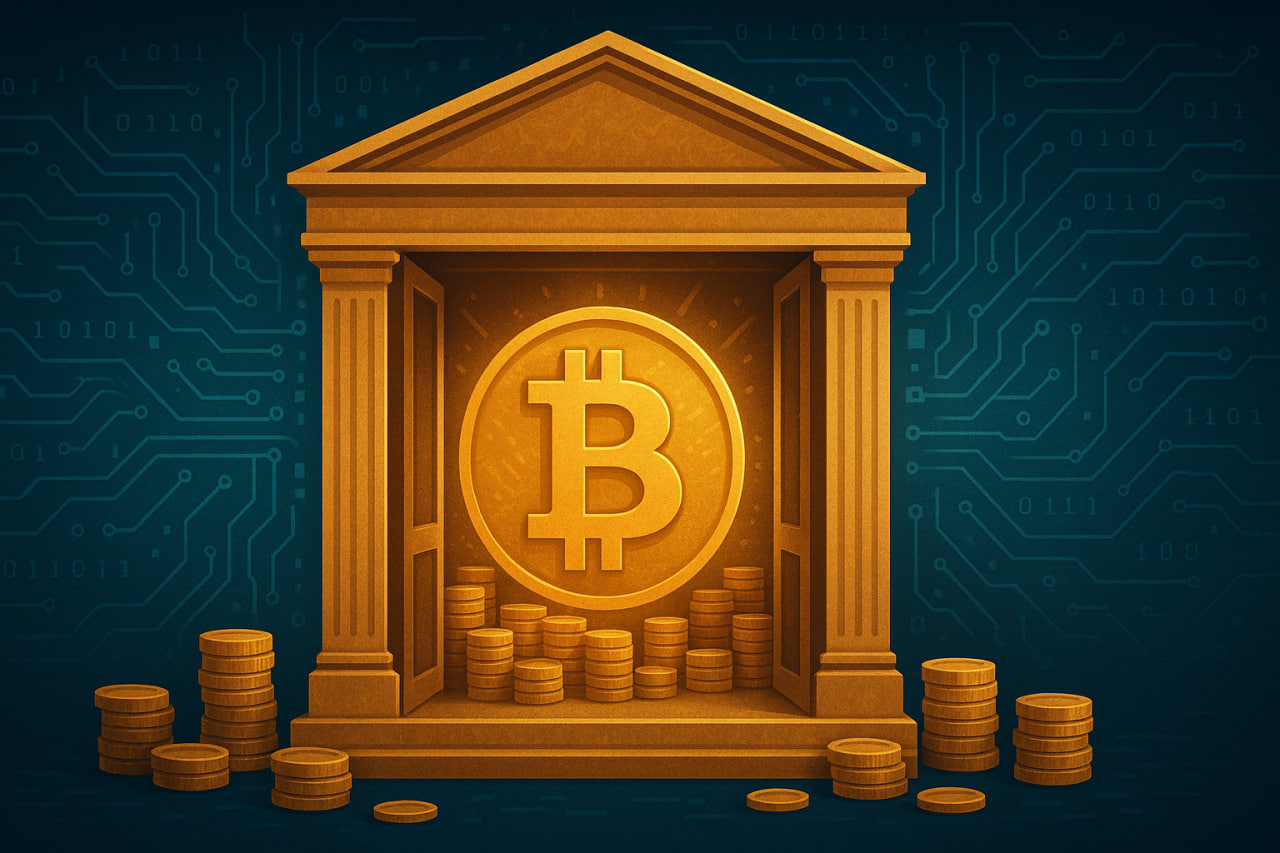
Kazakhstan President Kassym-Jomart Tokayev has pushed his plan to form a “full-fledged” crypto ecosystem by creating a state-backed reserve fund.

“It is advisable to create a State Fund of Digital Assets on the basis of the National Bank’s Investment Corporation,” he said in his annual address on Monday.

He said that the structure will accumulate a strategic crypto reserve consisting of “promising assets.”

Tokayev has urged the government to review tax incentives for investors, adding that “priority should be given to projects that are significant and beneficial to the country’s economy.”

President Tokayev’s $1B Plan in High-Tech and Fintech Sectors

Besides, the President announced plans for up to $1 billion in a program aimed at fostering technological growth. “The Government should prepare it jointly with the National Bank,” he noted.

Further, he called on second-tier banks to actively invest in the real sector, stressing the initiative should start immediately.

President Tokayev also said that it is important for the National Bank and the Kazakh government to find effective ways to maximise the amount of money banks can put into the economy.

Such laws should address “issues of attracting new market participants, promoting technologies in the financial system, and liberalizing the circulation of digital assets.”

Introduction of Digital Tenge

President Tokayev pledged to expand the digital tenge, which is already being used for financing projects through the National Fund.

“The digital tenge can be used in the republican and local budgets, as well as in the budgets of state holdings,” he added.

Furthermore, he stressed the benefits of mass digitization, at the same time warning about cybersecurity risks. The President pointed to the increasing threat of online fraud and the creation of an anti-fraud centre to combat cybercrimes.

“It is necessary to create a more intelligent system that will allow for the prevention of cybercrime,” he said.

Disclaimer: The articles reposted on this site are sourced from public platforms and are provided for informational purposes only. They do not necessarily reflect the views of MEXC. All rights remain with the original authors. If you believe any content infringes on third-party rights, please contact service@support.mexc.com for removal. MEXC makes no guarantees regarding the accuracy, completeness, or timeliness of the content and is not responsible for any actions taken based on the information provided. The content does not constitute financial, legal, or other professional advice, nor should it be considered a recommendation or endorsement by MEXC.

You May Also Like

The Stark Reality Of Post-Airdrop Market Dynamics

The Stark Reality Of Post-Airdrop Market Dynamics

The post The Stark Reality Of Post-Airdrop Market Dynamics appeared on BitcoinEthereumNews.com. Lighter Trading Volume Plummets: The Stark Reality Of Post-Airdrop
Share
BitcoinEthereumNews2026/01/19 13:16
Headwind Helps Best Wallet Token

Headwind Helps Best Wallet Token

The post Headwind Helps Best Wallet Token appeared on BitcoinEthereumNews.com. Google has announced the launch of a new open-source protocol called Agent Payments Protocol (AP2) in partnership with Coinbase, the Ethereum Foundation, and 60 other organizations. This allows AI agents to make payments on behalf of users using various methods such as real-time bank transfers, credit and debit cards, and, most importantly, stablecoins. Let’s explore in detail what this could mean for the broader cryptocurrency markets, and also highlight a presale crypto (Best Wallet Token) that could explode as a result of this development. Google’s Push for Stablecoins Agent Payments Protocol (AP2) uses digital contracts known as ‘Intent Mandates’ and ‘Verifiable Credentials’ to ensure that AI agents undertake only those payments authorized by the user. Mandates, by the way, are cryptographically signed, tamper-proof digital contracts that act as verifiable proof of a user’s instruction. For example, let’s say you instruct an AI agent to never spend more than $200 in a single transaction. This instruction is written into an Intent Mandate, which serves as a digital contract. Now, whenever the AI agent tries to make a payment, it must present this mandate as proof of authorization, which will then be verified via the AP2 protocol. Alongside this, Google has also launched the A2A x402 extension to accelerate support for the Web3 ecosystem. This production-ready solution enables agent-based crypto payments and will help reshape the growth of cryptocurrency integration within the AP2 protocol. Google’s inclusion of stablecoins in AP2 is a massive vote of confidence in dollar-pegged cryptocurrencies and a huge step toward making them a mainstream payment option. This widens stablecoin usage beyond trading and speculation, positioning them at the center of the consumption economy. The recent enactment of the GENIUS Act in the U.S. gives stablecoins more structure and legal support. Imagine paying for things like data crawls, per-task…
Share
BitcoinEthereumNews2025/09/18 01:27
Nasdaq Company Adds 7,500 BTC in Bold Treasury Move

Nasdaq Company Adds 7,500 BTC in Bold Treasury Move

The live-streaming and e-commerce company has struck a deal to acquire 7,500 BTC, instantly becoming one of the largest public […] The post Nasdaq Company Adds 7,500 BTC in Bold Treasury Move appeared first on Coindoo.
Share
Coindoo2025/09/18 02:15