

Shipfinex Advances Regulated Tokenized Ship Ownership in Dubai
Shipfinex FZCO has moved closer to operating as a fully regulated digital asset intermediary after securing in-principle approval for a broker-dealer license from Virtual Assets Regulatory Authority in Dubai. The preliminary authorization signals that the company’s operating model aligns with the regulator’s expectations for compliance, governance, and security. According to the firm, this validation confirms that its controls, oversight structures, and technology stack meet the authority’s standards, while additional conditions must still be fulfilled to obtain a complete virtual asset service provider license.
The platform applies distributed ledger technology to tokenize commercial vessels, enabling fractional ownership within a regulated framework. By combining on-chain transparency with professional governance and robust safeguards, Shipfinex positions its marketplace as a compliant environment for investors seeking exposure to maritime assets. The company has indicated that the approval represents a meaningful step toward building infrastructure suited to the needs of the global shipping sector.
Vision Behind Fractional Ship Ownership
During discussions held alongside a major offshore industry gathering in London in early February, founder and chief executive Vikas Pandey outlined the rationale behind the company’s approach. He conveyed that ships typically require significant capital, which limits participation to a narrow pool of investors. By applying blockchain-based fractionalization, the platform aims to lower entry barriers and broaden access to asset classes that have historically been capital-intensive. He also highlighted that tokenization has already been applied to a range of assets, and the same principles can be extended to maritime vessels with appropriate regulatory and legal structures in place.
From the company’s perspective, this model democratizes investment while maintaining institutional-grade controls. Tokenization is presented not as a speculative exercise, but as a method to modernize financing and ownership structures within a traditionally conservative industry.
New Financing Pathways for Shipowners
For vessel owners, Shipfinex offers an alternative route to capital formation. Owners can tokenize part or all of an existing ship or fleet to raise funds for acquisitions, expansions, or renewal programs. The company has emphasized that assets are not listed casually. Each vessel undergoes a comprehensive vetting process before it becomes available to investors on the platform.
This review reportedly includes an assessment of the operating company, historical contracts, revenue performance, and independent asset valuations. In addition, a full due diligence review of both the owners and the ships is conducted to ensure transparency and risk mitigation. Only after these steps are completed does the platform proceed with the legal fractionalization process.
A special-purpose vehicle is then established to hold the asset. Shipfinex has explained that this structure is designed to separate the ship’s operations from the parent company, thereby providing legal protection and clarity. The SPV framework also ensures that each fractional interest is tied to a clear legal title, which is represented digitally through maritime asset tokens. Shipowners retain discretion over how many tokens they choose to offer to the market.
Investor Access and Returns
On the investor side, the platform caters to a wide range of participants, including private investors, institutional players, and financial institutions. Registered users can trade tokenized maritime assets within the marketplace and receive dividend distributions linked to the underlying vessel’s performance. This structure is intended to mirror familiar investment mechanics while leveraging the efficiency and transparency of blockchain technology.
By aligning regulatory oversight with innovative financing tools, Shipfinex is positioning itself at the intersection of traditional shipping and digital asset markets. The company’s progress toward full licensure suggests a broader shift toward regulated tokenization as a viable mechanism for unlocking liquidity and participation in the maritime economy.
The post Shipfinex Advances Regulated Tokenized Ship Ownership in Dubai appeared first on CoinTrust.
You May Also Like

OpenClaw Creator Bans Bitcoin, Crypto Chatter After Joining OpenAI
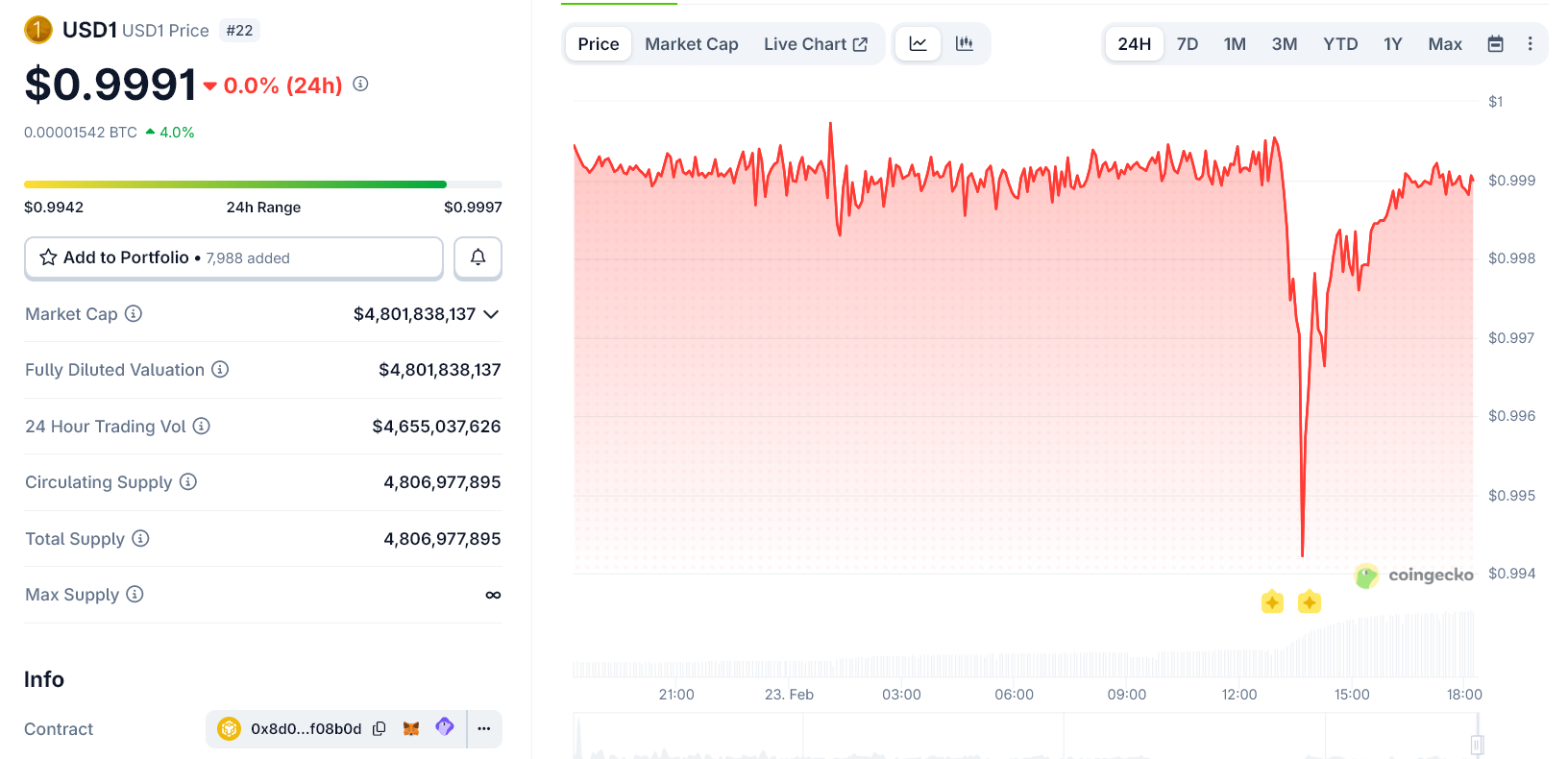
Trump Family-Linked Stablecoin Briefly Depegs, WLFI Blames ‘Coordinated Attack’
