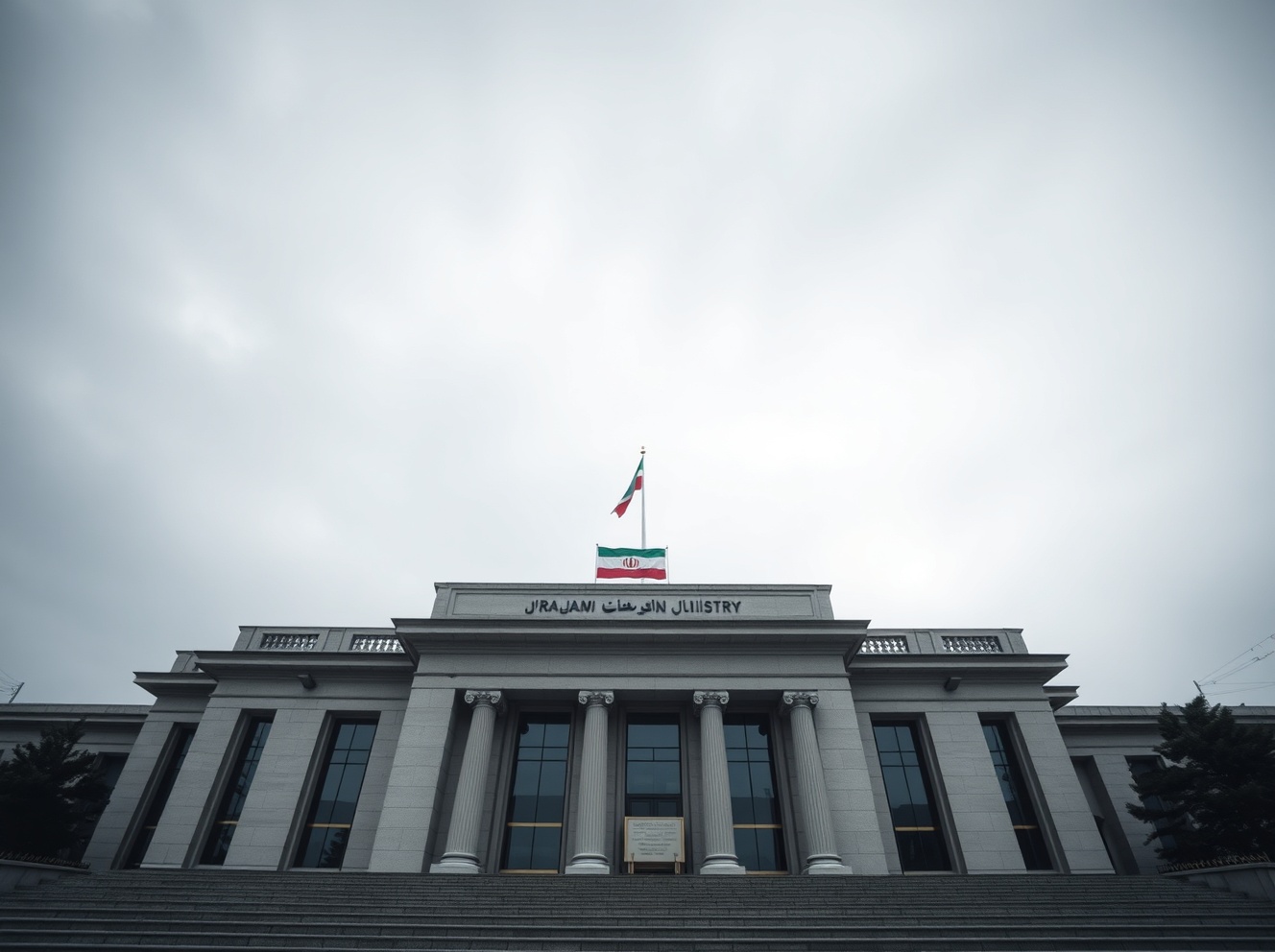
Supreme Court ruling on Trump tariffs, IEEPA major questions doctrine, Kalshi odds — data shows 70–75% odds shape timing; refund exposure & small business costsSupreme Court ruling on Trump tariffs, IEEPA major questions doctrine, Kalshi odds — data shows 70–75% odds shape timing; refund exposure & small business costs

Kalshi odds steady as Supreme Court weighs tariff case

2026/02/18 05:59
5 min read

The Supreme Court could hand down a ruling on President Trump’s tariff authority at any time, and legal and market signals increasingly point to limits on how far those duties can stretch. The case turns on whether broad, emergency-based powers can sustain sweeping tariffs that were not expressly authorized by Congress.

Based on data from Kalshi, traders are pricing roughly a 70–75% chance that the Court will declare the tariffs illegal, while assigning about a 32% probability that a decision arrives this week. Those odds are probabilities, not certainties, and they can move with new information or shifts in market participation.

Why legal signals point to Supreme Court limits on tariffs

The legal fight centers on whether the International Emergency Economic Powers Act (IEEPA) can be read to authorize tariff-making at the scale asserted, or whether doctrines like the “major questions” and nondelegation principles require clearer direction from Congress. The major questions doctrine has recently featured in high-profile administrative law cases, and the same logic, demanding explicit congressional authorization for economically and politically significant actions, could apply if the statute does not speak directly to tariffs.

Observers noted that several justices pressed on whether IEEPA’s text, which does not mention duties, can support broad tariff authority, signaling potential skepticism about expansive readings. As reported by The Washington Post, questioning spanned ideological lines and focused on the mismatch between the statute’s emergency tools and the use of generalized economic conditions to justify permanent trade measures.

Prediction markets often act as real-time aggregators of expectations around complex legal outcomes. Ahead of the anticipated decision, market odds for a government win slid, reflecting how participants interpreted oral arguments and recent administrative law trends, as reported by Yahoo.

Immediate implications for businesses, importers, and trade policy

If the Court pares back or rejects the asserted authority, importers could see changes to duty rates and potential exposure to refund claims, though the scope and mechanics would likely hinge on the exact remedy. Government agencies and Congress might also need to recalibrate trade tools and drafting practices to ensure any future tariff programs rest on unambiguous statutory mandates.

“ If the Supreme Court strikes down the tariffs, the government could owe tens of billions in refunds,” said Treasury Secretary Scott Bessent. That scenario would depend on how the Court structures relief and what portion of prior collections become contestable under the ruling.

Small-business exposure appears meaningful. According to the U.S. Chamber of Commerce, tariff policies are estimated to cost roughly 236,000 small businesses about $200 billion annually. The figures indicate that even a partial rollback could reduce input costs for smaller import-reliant firms, while an across-the-board invalidation would magnify that effect, but outcomes will ultimately depend on the contours of the decision and any subsequent policy response.

Bitcoin holds near holder cost basis as put/call skew rises

New York City Property Taxes mulled to plug $5B gap

Three broad scenarios are commonly discussed. If the Court rules against the tariffs, authorities may need to unwind duties and address refund pathways, while agencies seek narrower, text-anchored tools. In a partial ruling, some tariff lines or rationales could fall while others survive, creating interim complexity as regulators and businesses adapt. If the Court upholds the tariffs, the status quo would prevail, but Congress might still move to clarify statutory guardrails to reduce future litigation risk.

At the time of this writing, and strictly as context for import‑sensitive sectors, the Basic Materials cohort showed a day return of about 1.69% versus roughly 0.10% for the S&P 500, based on data from the S&P 500 Basic Materials sector dashboard. Such snapshots do not imply causation from the case, but they frame where tariff-sensitive inputs and downstream manufacturers sit as legal uncertainty persists.

What’s at issue: which tariffs are being challenged

The dispute targets the most sweeping duties justified under IEEPA, often described as “reciprocal” or broad-based tariffs that were not explicitly authorized by Congress in trade statutes. The question is whether emergency powers can be stretched to impose general tariffs untethered to specific, text-grounded delegations.

Challengers argue that Congress speaks clearly when it intends to hand the Executive tariff-setting authority, and that IEEPA’s silence on duties is dispositive. As argued by Neal Katyal, counsel for the plaintiffs, no prior administration used IEEPA to impose tariffs, underscoring the novelty of this approach. If the Court applies the major questions framework, it may require unmistakable statutory language before permitting tariffs of this breadth, which would, in turn, define the permissible horizon for future trade actions.

Disclaimer: The information provided in this article is for informational purposes only and does not constitute financial, investment, legal, or trading advice. Cryptocurrency markets are highly volatile and involve risk. Readers should conduct their own research and consult with a qualified professional before making any investment decisions. The publisher is not responsible for any losses incurred as a result of reliance on the information contained herein.
Market Opportunity
Major Logo
Major Price(MAJOR)
$0.07877
$0.07877$0.07877
+0.76%
USD
Major (MAJOR) Live Price Chart
Disclaimer: The articles reposted on this site are sourced from public platforms and are provided for informational purposes only. They do not necessarily reflect the views of MEXC. All rights remain with the original authors. If you believe any content infringes on third-party rights, please contact service@support.mexc.com for removal. MEXC makes no guarantees regarding the accuracy, completeness, or timeliness of the content and is not responsible for any actions taken based on the information provided. The content does not constitute financial, legal, or other professional advice, nor should it be considered a recommendation or endorsement by MEXC.
Tags:

You May Also Like

Ethereum unveils roadmap focusing on scaling, interoperability, and security at Japan Dev Conference

Ethereum unveils roadmap focusing on scaling, interoperability, and security at Japan Dev Conference

The post Ethereum unveils roadmap focusing on scaling, interoperability, and security at Japan Dev Conference appeared on BitcoinEthereumNews.com. Key Takeaways Ethereum’s new roadmap was presented by Vitalik Buterin at the Japan Dev Conference. Short-term priorities include Layer 1 scaling and raising gas limits to enhance transaction throughput. Vitalik Buterin presented Ethereum’s development roadmap at the Japan Dev Conference today, outlining the blockchain platform’s priorities across multiple timeframes. The short-term goals focus on scaling solutions and increasing Layer 1 gas limits to improve transaction capacity. Mid-term objectives target enhanced cross-Layer 2 interoperability and faster network responsiveness to create a more seamless user experience across different scaling solutions. The long-term vision emphasizes building a secure, simple, quantum-resistant, and formally verified minimalist Ethereum network. This approach aims to future-proof the platform against emerging technological threats while maintaining its core functionality. The roadmap presentation comes as Ethereum continues to compete with other blockchain platforms for market share in the smart contract and decentralized application space. Source: https://cryptobriefing.com/ethereum-roadmap-scaling-interoperability-security-japan/
Share
BitcoinEthereumNews2025/09/18 00:25
The HackerNoon Newsletter: Cypherpunks Write Code: Zooko Wilcox  Zcash (9/21/2025)

The HackerNoon Newsletter: Cypherpunks Write Code: Zooko Wilcox Zcash (9/21/2025)

How are you, hacker? 🪐 What’s happening in tech today, September 21, 2025? The HackerNoon Newsletter brings the HackerNoon homepage straight to your inbox. On this day, Malta's Independence Day in 1964, U.S.A. Neutrality Acts in 1939, Belize Gained Full Independence in 1981, and we present you with these top quality stories. From Remote Work Reality Check: Malta, Madeira and the Canaries to Terraforming Mars Could Save Earth (or Doom Us All), let’s dive right in. Can You Spend Crypto Without Selling It? Inside The ether.fi Cash Card’s “Never Sell” Revolution By @ishanpandey [ 10 Min read ] In-depth review of the Ether.Fi Cash Card – a DeFi-driven Visa that lets you spend crypto without selling it. Read More. How Evergen Scaled Renewable Monitoring with TigerData (TimescaleDB) and Slashed Infrastructure Cost By @tigerdata [ 9 Min read ] How Evergen scaled renewable monitoring by moving from MongoDB to TigerData (TimescaleDB)—cutting infra use >50%, speeding queries <500 ms, centralizing data. Read More. From Postgres to ScyllaDB: How Coralogix Achieved 349x Faster Queries By @scylladb [ 8 Min read ] Coralogix boosted query speeds 349x by migrating from PostgreSQL to ScyllaDB, cutting latency from 30s to 86ms with smart data modeling. Read More. Remote Work Reality Check: Malta, Madeira and the Canaries By @socialdiscoverygroup [ 4 Min read ] Remote Work in Paradise? 4 Years, 3 Islands, 1 Honest Guide. Discover the real trade-offs of Malta, Madeira Canary Islands for digital nomads. Read More. Cypherpunks Write Code: Zooko Wilcox Zcash By @obyte [ 6 Min read ] Zooko Wilcox grew up coding and questioning systems, and that path led him to create the privacy coin Zcash. Lets see more of this story! Read More. Why a Decentralized Internet is Inevitable (or Not) by 2030 By @awesomemike [ 8 Min read ] Explore the arguments for and against a decentralized internet by 2030, examining technology, regulation, and societal impact shaping its future. Read More. Terraforming Mars Could Save Earth (or Doom Us All) By @kingdavvd [ 6 Min read ] Explore how space technology helps fight climate change, from satellites tracking emissions to innovations driving sustainability. Read More. Bitcoin Highs Bring Familiar Questions, but Discipline Outlasts Hype By @paulquickenden [ 3 Min read ] Bitcoin has hit a new high price - but is it the top? What could push it higher or lower? Heres a steady, hype-free take on reading the signals Read More. 🧑‍💻 What happened in your world this week? It's been said that writing can help consolidate technical knowledge, establish credibility, and contribute to emerging community standards. Feeling stuck? We got you covered ⬇️⬇️⬇️ ANSWER THESE GREATEST INTERVIEW QUESTIONS OF ALL TIME We hope you enjoy this worth of free reading material. Feel free to forward this email to a nerdy friend who'll love you for it.See you on Planet Internet! With love, The HackerNoon Team ✌️
Share
Hackernoon2025/09/22 00:02
Sompo Group and Guidewire Enter Long-Term Agreement to Enhance Global Operations with Guidewire Cloud Platform

Sompo Group and Guidewire Enter Long-Term Agreement to Enhance Global Operations with Guidewire Cloud Platform

Agreement marks the start of a new era in insurance experiences driven by AI TOKYO & SAN MATEO, Calif.–(BUSINESS WIRE)–$GWRE #GuidewireBillingCenter–Sompo Group
Share
AI Journal2026/02/18 08:15