

USD/PKR Exchange Rate Shows Remarkable Stability as Bank of America Cites Balanced Outlook for Pakistan Currency
BitcoinWorld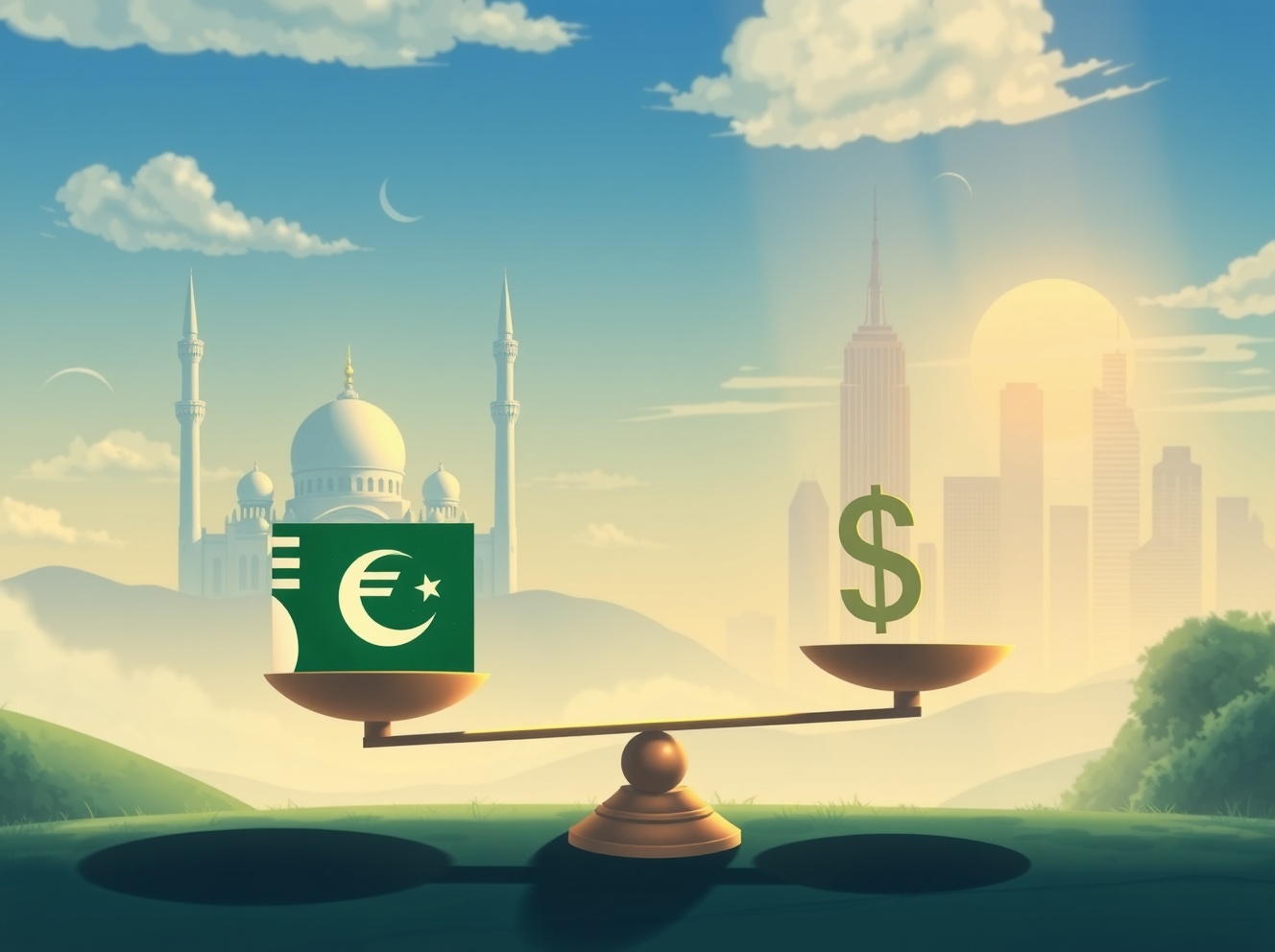
USD/PKR Exchange Rate Shows Remarkable Stability as Bank of America Cites Balanced Outlook for Pakistan Currency
ISLAMABAD, March 2025 – The USD/PKR exchange rate demonstrates unusual stability this week, trading within a narrow 0.5% range as Bank of America’s latest analysis cites a remarkably balanced outlook for Pakistan’s currency. This stability emerges against a backdrop of global currency volatility, positioning the Pakistani rupee as an unexpectedly steady performer in emerging markets. Market observers note the currency pair’s limited movement reflects multiple converging economic factors that warrant detailed examination.
USD/PKR Exchange Rate Analysis and Current Market Position
The USD/PKR currency pair currently trades within the 278-282 range, showing minimal volatility compared to historical patterns. This stability represents a significant departure from the rupee’s traditionally more volatile behavior. Bank of America’s Global Research Division specifically highlights this development in their latest Emerging Markets Currency Report. Their analysis points to several structural factors supporting this equilibrium. Consequently, traders and economists alike monitor this unusual stability with keen interest.
Historical context reveals the rupee’s journey toward this stability. Following the International Monetary Fund’s Extended Fund Facility program approval in 2023, Pakistan implemented substantial economic reforms. These measures included monetary policy tightening, fiscal consolidation, and exchange rate flexibility. As a result, the State Bank of Pakistan accumulated foreign reserves exceeding $9 billion by early 2025. This reserve buildup provides crucial support for currency stability. Meanwhile, remittance inflows remain robust, averaging $2.4 billion monthly through formal channels.
Bank of America’s Balanced Outlook Methodology
Bank of America employs a comprehensive analytical framework for currency assessment. Their methodology combines quantitative models with qualitative analysis of political and economic developments. The bank’s analysts specifically examine several key indicators when evaluating the USD/PKR outlook. These indicators include current account dynamics, foreign reserve levels, inflation trajectories, and external debt servicing capacity. Furthermore, they assess structural reforms and political stability factors. Their balanced conclusion emerges from weighting these multiple variables appropriately.
The table below summarizes Bank of America’s key assessment factors for USD/PKR:
| Assessment Factor | Current Status | Impact on USD/PKR |
|---|---|---|
| Current Account Balance | Surplus for 3 consecutive quarters | Positive for PKR stability |
| Foreign Exchange Reserves | $9.2 billion (SBP holdings) | Moderate support for PKR |
| Inflation Rate (CPI) | 14.2% year-over-year | Moderate pressure on PKR |
| External Debt Servicing | $8.5 billion due in 2025 | Neutral with IMF support |
| Remittance Inflows | $2.4 billion monthly average | Strong support for PKR |
Economic Fundamentals Supporting Pakistan Rupee Stability
Multiple economic fundamentals contribute to the USD/PKR’s current stability. Pakistan’s current account recorded a surplus of $397 million in the last quarter of 2024. This represents the third consecutive quarterly surplus. Export growth continues steadily, particularly in textiles and information technology services. Textile exports reached $1.8 billion in February 2025 alone. Information technology exports similarly show robust growth, exceeding $300 million monthly. These export performances provide fundamental support for the rupee’s valuation.
Foreign direct investment patterns reveal another stabilizing factor. China-Pakistan Economic Corridor projects continue implementation, though at a moderated pace. Saudi Arabian and United Arab Emirates investments in Pakistan’s renewable energy and agriculture sectors show particular strength. These investments provide not only capital inflows but also technological transfer and employment generation. Consequently, they enhance Pakistan’s productive capacity and export potential. The diversified nature of these investments reduces concentration risk significantly.
Several specific factors support the balanced outlook:
- Improved External Position: Current account surplus reduces dependence on hot money flows
- Reserve Accumulation: SBP’s foreign reserves provide import coverage buffer
- Remittance Consistency: Overseas Pakistani workers maintain strong transfer volumes
- Export Diversification: Non-textile exports show promising growth trajectories
- Policy Continuity: Economic team maintains consistent reform implementation
Comparative Analysis with Regional Currency Performances
The Pakistani rupee’s stability appears particularly notable when compared to regional counterparts. The Indian rupee experienced 2.3% volatility against the US dollar during the same period. Bangladesh’s taka similarly showed greater fluctuation, depreciating 1.8% month-over-month. Sri Lanka’s rupee, while stabilizing under its IMF program, remains more volatile than Pakistan’s currency. This comparative stability positions the PKR favorably among South Asian currencies. Regional economic analysts increasingly reference Pakistan’s currency management approach.
Global currency markets provide additional context for this analysis. The US dollar index (DXY) strengthened 1.7% against major currencies in recent weeks. Emerging market currencies generally faced pressure during this dollar strengthening phase. However, the Pakistani rupee demonstrated relative resilience despite this challenging environment. This resilience suggests domestic factors outweigh global dollar strength in determining USD/PKR dynamics. Market participants consequently adjust their Pakistan exposure assessments accordingly.
Monetary Policy and Inflation Management Context
The State Bank of Pakistan maintains a cautious monetary policy stance. The central bank’s policy rate stands at 16% as of March 2025. This elevated rate helps contain inflationary pressures while supporting currency stability. Consumer price inflation moderated to 14.2% year-over-year in February 2025. This represents significant improvement from the 38% peak observed in May 2023. Core inflation similarly shows gradual deceleration trends. These developments provide the monetary authority with increased policy flexibility.
Forward guidance from the State Bank indicates continued vigilance against inflation risks. The central bank specifically monitors food price developments and energy cost pass-through effects. Their commitment to price stability supports currency market confidence. International investors particularly appreciate this transparent and consistent policy approach. Consequently, portfolio investment flows show tentative signs of returning to Pakistan’s debt markets. These flows provide additional support for the rupee’s stability.
Market Implications and Future Trajectory Considerations
The USD/PKR’s limited movement carries significant implications for various market participants. Importers benefit from reduced hedging costs and predictable pricing. Exporters face competitive challenges but gain planning certainty. Foreign investors evaluating Pakistan exposure appreciate reduced currency risk premiums. Domestic businesses making capital allocation decisions benefit from stable input cost projections. These collective benefits support broader economic stability and investment planning.
Future trajectory considerations involve multiple potential scenarios. Bank of America’s balanced outlook assumes continued implementation of economic reforms. It also presumes sustained engagement with international financial institutions. Geopolitical stability and regional trade normalization represent additional important assumptions. Should these conditions persist, the USD/PKR may maintain its current stability through 2025. However, analysts identify several risk factors requiring monitoring. These include potential commodity price shocks, political developments, and external financing requirements.
Several monitoring indicators warrant particular attention:
- IMF Program Reviews: Successful completion supports continued reform momentum
- Oil Price Movements: Pakistan remains sensitive to energy import costs
- Political Stability: Policy continuity depends on consistent governance
- Global Risk Sentiment: Emerging markets face capital flow volatility risks
- Agricultural Output: Food production affects both inflation and exports
Conclusion
The USD/PKR exchange rate demonstrates remarkable stability as Bank of America cites a balanced outlook for Pakistan’s currency. This stability reflects multiple converging factors including improved external accounts, reserve accumulation, and consistent policy implementation. While challenges remain, particularly regarding inflation management and external financing, the current equilibrium represents significant economic progress. Market participants should monitor the identified risk factors while recognizing Pakistan’s currency stability achievements. The USD/PKR’s limited movement thus signifies not stagnation but rather hard-won economic stabilization with important implications for Pakistan’s financial markets and broader economy.
FAQs
Q1: What does Bank of America’s “balanced outlook” mean for the USD/PKR exchange rate?
Bank of America’s balanced outlook suggests the USD/PKR exchange rate will likely trade within a relatively narrow range in the near term, without strong directional bias toward either significant appreciation or depreciation of the Pakistani rupee against the US dollar.
Q2: What are the main factors supporting Pakistan rupee stability according to the analysis?
The main supporting factors include Pakistan’s current account surplus, foreign exchange reserve accumulation at the State Bank, consistent remittance inflows from overseas workers, export growth particularly in textiles and IT services, and continued implementation of economic reforms under international financial institution programs.
Q3: How does Pakistan’s currency stability compare to other regional currencies?
The Pakistani rupee has shown greater stability recently than several regional counterparts, including the Indian rupee, Bangladeshi taka, and Sri Lankan rupee, particularly in terms of reduced volatility against the US dollar during periods of global currency market fluctuations.
Q4: What risks could disrupt the current USD/PKR stability?
Potential disruption risks include significant increases in global oil prices, political instability affecting economic policy continuity, failure to meet International Monetary Fund program requirements, deterioration in external financing conditions, or unexpected declines in remittance inflows.
Q5: How does State Bank of Pakistan monetary policy affect the USD/PKR exchange rate?
The State Bank’s maintenance of a relatively high policy rate (16% as of March 2025) supports currency stability by containing inflationary pressures, maintaining positive real interest rates that attract portfolio investment, and demonstrating commitment to macroeconomic stability through consistent policy implementation.
This post USD/PKR Exchange Rate Shows Remarkable Stability as Bank of America Cites Balanced Outlook for Pakistan Currency first appeared on BitcoinWorld.
You May Also Like

American Bitcoin’s $5B Nasdaq Debut Puts Trump-Backed Miner in Crypto Spotlight

The Italian banking giant held approximately $96 million worth of Bitcoin spot ETFs last December, hedged with Strategy put options.
