Democrats Blast SEC Chair Atkins Over Crypto Enforcement
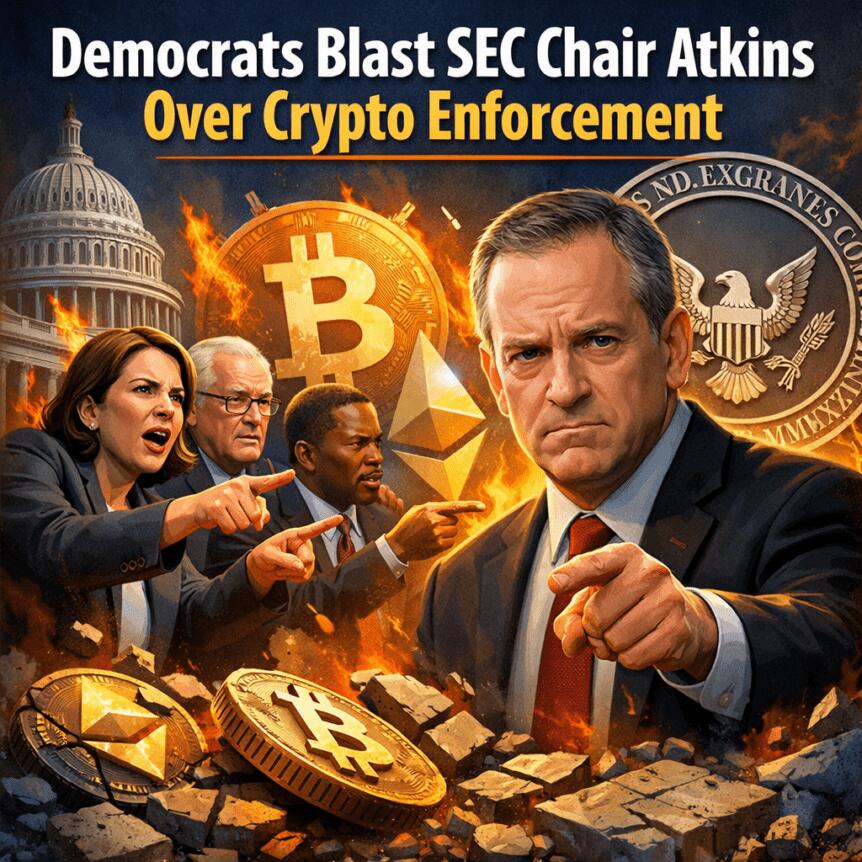
In a House Financial Services Committee hearing on Wednesday, lawmakers grilled Securities and Exchange Commission chair Paul Atkins over the agency’s crypto enforcement record and the fate of several cases that have been dismissed since leadership changes. The session highlighted a growing debate about the SEC’s approach to a fast-evolving sector as enforcement activity appears to have cooled under the current regime. Representative Stephen Lynch, a Democrat from Massachusetts, cited a roughly 60% drop in enforcement actions since Atkins took the helm, pointing to the dismissal of several high-profile lawsuits, including the Binance case in May 2025, as indicators of shifting dynamics in the agency’s crypto strategy.
The hearing also touched on connections between the Trump family and various crypto ventures, with Lynch flagging foreign investments and memecoins tied to the family as areas of concern. A notable development cited during the discussion involved Aryam Investment 1, an Abu Dhabi-based vehicle backed by Sheikh Tahnoon bin Zayed Al Nahyan, which reportedly acquired 49% of the startup behind World Liberty Financial (WLFI) — a decentralized finance platform linked to the Trump family. Lynch argued that such ties could undermine trust in the sector and complicate consumer protection, while Atkins maintained that the SEC remains committed to pursuing enforcement where warranted. World Liberty Financial (WLFI) was referenced in the discussions as a focal point of these concerns, a project that has drawn scrutiny amid international investment links and crypto-market activity.
The SEC chair responded by reiterating the agency’s stance that enforcement actions continue where they are warranted and that the agency’s program remains robust. Atkins stressed ongoing cases and emphasized the normalization of enforcement efforts in the crypto space, even as some lawmakers pressed for a clearer accounting of stalled or dismissed actions. The exchange underscores a broader, bipartisan challenge: how to balance consumer protection with a market that is still evolving in terms of products, custody, and governance structures.
The discussion unfolded as the U.S. political calendar—set against a midterm election backdrop—adds complexity to crypto policy dynamics. Lawmakers suggested that a shift in congressional control could affect the pace and nature of market-structure legislation and other regulatory initiatives that touch the crypto industry. The hearing also touched on bilateral concerns about the influence of foreign actors in U.S. crypto projects, and how such links might shape lawmakers’ willingness to push ahead with comprehensive regulatory frameworks in the near term.
California Democrat Maxine Waters, who has been a persistent critic of both the Trump orbit and parts of the crypto ecosystem, pressed Atkins on the implications of pardons and dropped lawsuits for the credibility of the SEC’s enforcement program. “These cases were dismissed, despite the fact that the SEC was winning in court, proving that the SEC’s crypto enforcement program was well-grounded in the law,” Waters contended, underscoring concerns about the political contours surrounding enforcement decisions. The discussion touched on associations between pardoned executives and crypto ventures that have contributed to political fundraising, a point Waters framed as a broader issue of transparency and accountability in the sector.
The deliberations also highlighted broader questions about how foreign investment and purported national-security considerations intersect with crypto innovation. The conversation around WLFI and related projects was framed as part of a wider debate about whether foreign influence could shape policy at a moment when the sector is seeking mainstream adoption. The hearing did not resolve these questions, but it did illuminate the ongoing rift between calls for stronger enforcement and concerns about how aggressively regulators should pursue actions when cases appear to be in flux or subject to political considerations.
Why it matters
For investors and builders in the crypto space, the hearing underscores the evolving risk landscape around regulatory expectations. The fact that enforcement actions have declined by a substantial margin since Atkins took office raises questions about the SEC’s current priorities and the factors that drive case selection in a sector that is both technologically complex and rapidly changing. The dismissal of prominent cases—such as the Binance lawsuit—suggests that the regulatory environment can shift in meaningful ways, with potential implications for how market participants assess risk, pursue compliance, and engage with U.S. authorities.
At the same time, the linkage of crypto ventures to political figures and foreign investment underlines a broader narrative about governance, transparency, and consumer protection in the industry. The WLFI situation, in particular, places a spotlight on how geopolitical dynamics and high-profile associations might influence perceptions of legitimacy and safety in decentralized finance platforms. While lawmakers are calling for vigilance against scams and opaque schemes, others warn against overreach that could chill innovation or raise the hurdle for legitimate crypto projects seeking to operate within the U.S. regulatory framework.
As the midterm year unfolds, the conversation around crypto enforcement is likely to remain tightly connected to broader regulatory ambitions and the political calculus surrounding the Democratic and Republican coalitions in Congress. The balance between rigorous scrutability and enabling responsible innovation will continue to shape the direction of policy, enforcement priorities, and the market’s readiness to adopt new technologies and products in a compliant, transparent manner.
Beyond the immediate hearing, observers are watching for how the SEC will calibrate its approach to crypto assets, custody, exchanges, and complex DeFi structures in forthcoming rulemakings and guidance. The tension between enforcement actions and industry confidence is a key barometer for overall market sentiment—a factor that could influence liquidity, participation, and the pace of institutional involvement as the sector seeks clearer guardrails and consistent regulatory expectations.
Related coverage has tracked ongoing discussions about WLFI and related topics, including how foreign involvement in crypto ventures may intersect with national security considerations and regulatory oversight. As the ecosystem matures, stakeholders will be looking for signals on whether enforcement focus will intensify in certain sub-sectors or remain steady as policymakers evaluate the efficacy and proportionality of regulatory actions in a rapidly evolving landscape.
What to watch next
- Follow-up statements or actions from the SEC after the hearing, including any new policy guidance or adjustments to enforcement priorities.
- Updates on WLFI-related developments and any regulatory or legal steps involving Aryam Investment 1’s stake and its connections.
- Potential movements on market-structure legislation or other crypto regulatory bills during the current congressional cycle.
- Next round of congressional scrutiny or inquiries into crypto governance and cross-border links to high-profile projects.
Sources & verification
- YouTube video: US House Committee on Financial Services—Lynch questions SEC Chair Paul Atkins. https://www.youtube.com/watch?v=jAq7zM2sTuE
- Court documents: Motion to dismiss the Binance case. https://storage.courtlistener.com/recap/gov.uscourts.dcd.256060/gov.uscourts.dcd.256060.301.0.pdf
- Cointelegraph: SEC dismisses lawsuit against Binance (filings show). https://cointelegraph.com/news/sec-dismisses-lawsuit-against-binance-filings-show
- Cointelegraph: UAE-backed firm buys 49% Trump-linked World Liberty (WLFI). https://cointelegraph.com/news/uae-backed-firm-buys-49-percent-trump-linked-world-liberty-wsj
- Cointelegraph: Trump-linked WLFI probe and UAE investment. https://cointelegraph.com/news/trump-wlfi-probe-500-million-investment-from-uae-official
Congressional hearing highlights a shift in crypto enforcement and governance
The hearing laid bare a tension that will likely continue to define the crypto policy conversation: regulators assert that they will aggressively pursue violations where the law supports it, while lawmakers—and a portion of the industry—argue that the enforcement regime should be predictable, proportionate, and cognizant of the sector’s growth potential. Atkins reiterated the SEC’s commitment to due process and to enforcing rules designed to protect investors, even as several high-profile cases have fallen away or stalled. Lynch’s remarks framed these outcomes within a broader concern about the impact on public trust and the long-term legitimacy of crypto markets. The exchange also underscored how the regulatory narrative around foreign involvement, national security, and consumer protection intersects with ongoing debates about the appropriate pace of rulemaking and the extent of enforcement discretion.
As the discussion moves forward, observers will be watching for concrete signals about how the SEC plans to align its enforcement posture with the evolving technological landscape—including DeFi, stablecoins, and non-custodial products—and how lawmakers on both sides of the aisle intend to shape the regulatory architecture that will govern these innovations in the years to come.
This article was originally published as Democrats Blast SEC Chair Atkins Over Crypto Enforcement on Crypto Breaking News – your trusted source for crypto news, Bitcoin news, and blockchain updates.
You May Also Like

Building resilience, one recycled bottle at a time — Ben Fong Kok Seng
Pi2Day 2026: New Releases Drop as Open Letter Asks ‘Where Is the $100 Million Going?’

Altcoin Sherpa Shares $ANSEM in New Portfolio — And What It Signals