Bitcoin Approaches $90,000 Amid Market Volatility and Futures Gaps Bitcoin has surged toward the $90,000 mark as the first Wall Street trading session of 2026 commencedBitcoin Approaches $90,000 Amid Market Volatility and Futures Gaps Bitcoin has surged toward the $90,000 mark as the first Wall Street trading session of 2026 commenced

Bitcoin Aims for $90K Resistance Break Before 2026 Wall Street Open
Bitcoin Aims For $90k Resistance Break Before 2026 Wall Street Open

Bitcoin Approaches $90,000 Amid Market Volatility and Futures Gaps

Bitcoin has surged toward the $90,000 mark as the first Wall Street trading session of 2026 commenced, accompanied by rising market activity and notable futures market developments. While the cryptocurrency shows momentum, traders remain cautious about potential dips influenced by technical patterns and liquidation activity.

Key Takeaways

  • Bitcoin nears $90,000 amid early 2026 market optimism.
  • A new CME futures gap and aggressive liquidations suggest potential short-term downside risk.
  • Gold rebounds after a brief correction, maintaining its status as one of 2025’s top-performing assets.
  • Significant liquidations across the crypto market underscore ongoing volatility.

Tickers mentioned: BTC

Sentiment: Neutral to cautiously bullish

Price impact: Neutral — While prices are nearing key levels, technical factors suggest possible volatility ahead.

Trading idea (Not Financial Advice): Consider monitoring key support levels around $88,000 before making trades, as liquidations and futures gaps may influence short-term movements.

Market context: Bitcoin remains influenced by futures market dynamics and macroeconomic signals, reflecting broader investor sentiment and market liquidity.

Market Dynamics and Technical Indicators

During the Asian trading session, Bitcoin attempted a rally towards $90,000, supported by bullish momentum observed on TradingView charts. However, as trading resumed on Wall Street, a new downside gap emerged on the CME Group’s futures market, highlighting a potential area for price correction. Trading accounts like Daan Crypto Trades highlighted the importance of the gap, noting that Bitcoin often reverts quickly to fill these voids within hours or days of futures reopening.

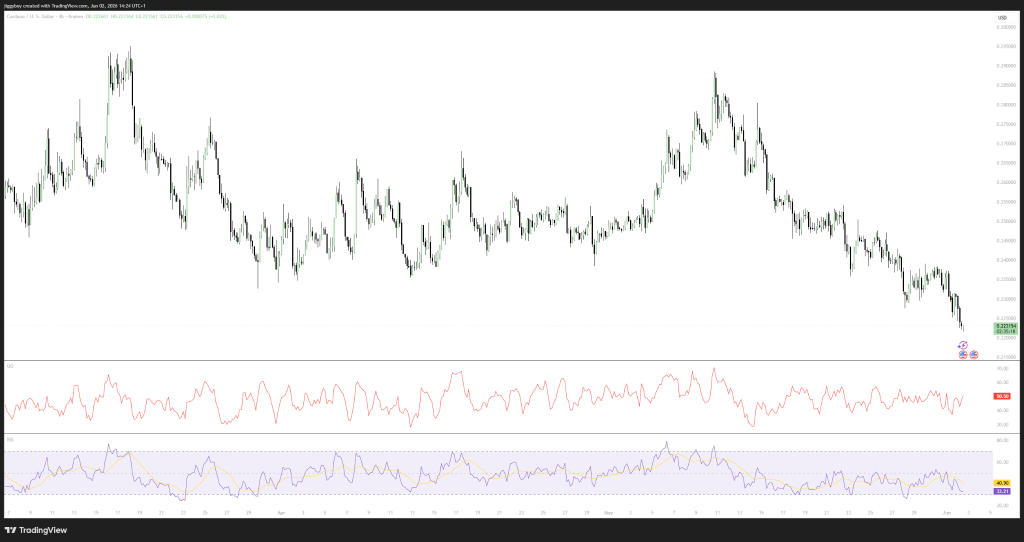
BTC/USD one-hour chart. Source: Cointelegraph/TradingView

Analysts also warn that a cluster of high-leverage longs around $88,000 could trigger a broader decline, especially if liquidation levels are hit. Monitoring resources like CoinGlass show that liquidations on both sides of the market have exceeded $200 million in the past 24 hours, underscoring the market’s volatility and vulnerability to rapid moves.

Meanwhile, gold has rebounded strongly after a brief correction at year’s end, keeping pace with its recent rally that saw it outperform traditional assets in 2025. Gold’s move toward the $4,400 level indicates sustained investor interest amid inflation concerns and macroeconomic uncertainties. According to Charlie Bilello, chief market strategist at Creative Planning, gold’s performance was notably strong, up 64%, contrasting sharply with Bitcoin’s modest decline of 6%, a divergence that has historically signaled brewing market shifts.

As the week progresses, observers continue to analyze Bitcoin’s relationship with gold and silver, with many viewing its current underperformance as the “calm before the storm” rather than a fundamental shift. The confluence of futures gaps, liquidation activity, and macroeconomic factors suggests a potentially volatile start to 2026, with traders remaining vigilant to technical signals and market momentum.

This article was originally published as Bitcoin Aims for $90K Resistance Break Before 2026 Wall Street Open on Crypto Breaking News – your trusted source for crypto news, Bitcoin news, and blockchain updates.


Market Opportunity
OpenLedger Logo
OpenLedger Price(OPEN)
$0.16736
$0.16736$0.16736
+1.03%
USD
OpenLedger (OPEN) Live Price Chart
Disclaimer: The articles reposted on this site are sourced from public platforms and are provided for informational purposes only. They do not necessarily reflect the views of MEXC. All rights remain with the original authors. If you believe any content infringes on third-party rights, please contact service@support.mexc.com for removal. MEXC makes no guarantees regarding the accuracy, completeness, or timeliness of the content and is not responsible for any actions taken based on the information provided. The content does not constitute financial, legal, or other professional advice, nor should it be considered a recommendation or endorsement by MEXC.

You May Also Like

The Channel Factories We’ve Been Waiting For

The Channel Factories We’ve Been Waiting For

The post The Channel Factories We’ve Been Waiting For appeared on BitcoinEthereumNews.com. Visions of future technology are often prescient about the broad strokes while flubbing the details. The tablets in “2001: A Space Odyssey” do indeed look like iPads, but you never see the astronauts paying for subscriptions or wasting hours on Candy Crush.  Channel factories are one vision that arose early in the history of the Lightning Network to address some challenges that Lightning has faced from the beginning. Despite having grown to become Bitcoin’s most successful layer-2 scaling solution, with instant and low-fee payments, Lightning’s scale is limited by its reliance on payment channels. Although Lightning shifts most transactions off-chain, each payment channel still requires an on-chain transaction to open and (usually) another to close. As adoption grows, pressure on the blockchain grows with it. The need for a more scalable approach to managing channels is clear. Channel factories were supposed to meet this need, but where are they? In 2025, subnetworks are emerging that revive the impetus of channel factories with some new details that vastly increase their potential. They are natively interoperable with Lightning and achieve greater scale by allowing a group of participants to open a shared multisig UTXO and create multiple bilateral channels, which reduces the number of on-chain transactions and improves capital efficiency. Achieving greater scale by reducing complexity, Ark and Spark perform the same function as traditional channel factories with new designs and additional capabilities based on shared UTXOs.  Channel Factories 101 Channel factories have been around since the inception of Lightning. A factory is a multiparty contract where multiple users (not just two, as in a Dryja-Poon channel) cooperatively lock funds in a single multisig UTXO. They can open, close and update channels off-chain without updating the blockchain for each operation. Only when participants leave or the factory dissolves is an on-chain transaction…
Share
BitcoinEthereumNews2025/09/18 00:09
Sui Ecosystem Gains Spotlight as Taipei Builders Demo Day Highlights New DeFi Ideas

Sui Ecosystem Gains Spotlight as Taipei Builders Demo Day Highlights New DeFi Ideas

Sui Taipei Builders’ Demo Day brings developers, investors, and enthusiasts together to present blockchain projects. The Sui ecosystem will host the Taipei Builders
Share
LiveBitcoinNews2026/01/03 00:00
Stability World AI Makes AI Accessible and Ownable for People

Stability World AI Makes AI Accessible and Ownable for People

Stability World AI blends AI agents with blockchain incentives to promoting trust, accessibility, shared ownership of AI through user-driven governance.
Share
Blockchainreporter2026/01/03 00:00