

Fed Rate Cuts to Determine 2026 Crypto Market: Analyst Reveals Critical Catalyst for Explosive Growth
BitcoinWorld
Fed Rate Cuts to Determine 2026 Crypto Market: Analyst Reveals Critical Catalyst for Explosive Growth
NEW YORK, January 2025 – The trajectory of the cryptocurrency market in 2026 will hinge decisively on the speed and scale of interest rate reductions by the U.S. Federal Reserve, according to a pivotal analysis from financial experts. Owen Lau, a managing director at the New York-based brokerage firm Clear Street, identifies monetary policy as the primary catalyst that could unlock significant capital flows into digital assets. This assessment arrives as global markets scrutinize the Fed’s latest communications for clues about its long-term strategy.
Fed Rate Cuts Emerge as Primary 2026 Crypto Market Catalyst
Financial analysts consistently monitor central bank policies for their profound impact on all asset classes. Consequently, the cryptocurrency sector remains particularly sensitive to shifts in the macroeconomic environment. In a detailed statement reported by financial news outlet Cointelegraph, analyst Owen Lau provided a clear rationale. He explained that a cycle of lower interest rates typically reduces the yield on traditional safe-haven assets like government bonds.
This environment, therefore, pushes investors to seek higher returns elsewhere. “Lower interest rates would likely drive both retail and institutional investors into the crypto market,” Lau stated. This potential shift represents a fundamental change in investment psychology. For instance, institutional capital often requires a favorable cost-of-capital backdrop before committing to newer, volatile asset classes.
The relationship between interest rates and crypto valuations is not merely theoretical. Historically, periods of accommodative monetary policy have correlated with increased risk appetite and capital inflows into growth-oriented investments. The prospect of Fed rate cuts in 2026 suggests a potential replay of these dynamics on a potentially larger scale, given the market’s increased maturity.
- Liquidity Injection: Lower rates increase system-wide liquidity, some of which inevitably seeks asymmetric returns.
- Portfolio Rebalancing: Investors re-allocate funds from lower-yielding bonds to assets with higher growth potential.
- Reduced Opportunity Cost: Holding non-yielding assets like Bitcoin becomes more attractive when the alternative (cash or bonds) offers minimal return.
Deciphering the Federal Reserve’s Policy Signals
The Federal Reserve provides critical guidance through its published meeting minutes and official statements. Recently, the central bank released the minutes from its December Federal Open Market Committee (FOMC) meeting. These documents offer a window into the deliberations of the world’s most influential monetary authority. Importantly, the Fed noted it “is prepared to adjust monetary policy as appropriate if risks emerge.”
This standard clause underscores the data-dependent nature of modern central banking. However, for market participants, the key interpretation revolves around the conditions that would prompt a shift toward rate cuts. The Fed’s dual mandate focuses on maximum employment and price stability. Therefore, sustained signs of cooling inflation and a softening labor market typically pave the way for a more dovish stance.
Market analysts currently parse economic indicators like the Consumer Price Index (CPI) and unemployment claims to forecast the Fed’s timing. The projected pace of cuts—whether swift and deep or slow and measured—carries different implications. A rapid easing cycle could signal underlying economic concerns, potentially triggering volatility. Conversely, a methodical, data-driven reduction might foster a more stable environment conducive to sustained capital deployment.
| Policy Pace | Likely Economic Signal | Projected Crypto Market Impact |
|---|---|---|
| Fast & Deep Cuts | Responding to significant economic slowdown or crisis. | High initial volatility, followed by potential massive liquidity-driven rally. |
| Slow & Measured Cuts | Confident management of a soft landing; controlled disinflation. | More stable, fundamentals-driven growth; sustained institutional interest. |
| Paused or Delayed Cuts | Persistent inflation or strong economic data. | Continued pressure on risk assets; potential consolidation or downturn. |
Expert Analysis on Institutional Adoption Pathways
Owen Lau’s perspective carries weight due to his role at Clear Street, a firm specializing in modernizing capital markets infrastructure. His analysis bridges traditional finance and the digital asset ecosystem. The entry of institutional investors is not a monolithic event but a gradual process influenced by several factors beyond just interest rates. These include regulatory clarity, the development of robust custody solutions, and the availability of regulated financial products like Bitcoin ETFs.
Nevertheless, monetary policy acts as the overarching tide that lifts or lowers all boats. A lower-rate environment decreases the hedging and carry costs associated with large-scale crypto investments. It also makes the narrative of digital assets as “digital gold” or an inflation hedge more compelling if traditional fiat yields are diminishing. The convergence of a friendly Fed policy with maturing market infrastructure could create a powerful synergy for the 2026 landscape.
Historical precedent offers some insight. The post-2020 period of near-zero rates and quantitative easing coincided with a historic bull run in cryptocurrencies. While the market structure has evolved, the fundamental relationship between cheap money and risk-asset appreciation remains a cornerstone of financial theory. Analysts now model how this relationship will manifest in a market with deeper liquidity and more sophisticated participants.
The Interplay of Macroeconomic Forces and Digital Assets
Cryptocurrencies no longer trade in a vacuum, isolated from global financial currents. Today, they react to U.S. dollar strength, Treasury yield movements, and equity market sentiment. This increased correlation, especially in times of stress, highlights the asset class’s integration into the broader financial system. Therefore, the Fed’s actions in 2025 and 2026 will reverberate through multiple channels.
First, the direct channel involves investment allocation as described by Lau. Second, an indirect channel exists through the impact on technology stocks and growth equities, which often move in tandem with crypto assets. A bullish environment for Nasdaq, frequently fueled by lower rates, tends to create a supportive backdrop for crypto. Third, the psychological channel of “risk-on” versus “risk-off” sentiment is powerfully influenced by central bank messaging.
Other global central banks, including the European Central Bank and the Bank of England, are on similar policy trajectories. Their synchronized or divergent actions will influence global dollar liquidity—a key metric for all internationally traded assets. A globally coordinated easing cycle could unleash a tidal wave of liquidity, while a fragmented approach might lead to more complex, region-specific market dynamics.
Conclusion
The pace of Federal Reserve interest rate cuts stands as the definitive macroeconomic variable for the 2026 cryptocurrency market. Analyst Owen Lau’s assessment underscores a fundamental shift where traditional monetary policy directly steers capital flows into digital assets. While regulatory developments and technological innovation provide the foundation, the Fed’s decisions on the cost of capital will likely determine the scale and timing of the next major market phase. Investors and observers must therefore monitor inflation data, employment reports, and FOMC communications with heightened attention, as these indicators will collectively chart the course for crypto market performance in the coming years.
FAQs
Q1: Why do Federal Reserve rate cuts affect the cryptocurrency market?
Rate cuts lower returns on traditional safe-haven assets like bonds, making higher-risk, higher-potential-return assets like cryptocurrencies more attractive to both retail and institutional investors seeking yield.
Q2: What did the Fed say in its December 2024 FOMC meeting minutes?
The Federal Reserve stated it is prepared to adjust monetary policy as appropriate if risks emerge that could impede achieving its economic goals, indicating a data-dependent but flexible approach to future rate decisions.
Q3: How could institutional investment change if rates fall?
Lower rates reduce the cost of capital and hedging for large institutions, making substantial allocations to volatile assets like cryptocurrency more financially viable and strategically appealing within a diversified portfolio.
Q4: Is the crypto market’s reaction to rate cuts guaranteed?
While historical correlation exists, the reaction is not guaranteed. Market response also depends on concurrent factors like regulatory clarity, global economic health, and asset-specific developments within the crypto ecosystem.
Q5: What other economic indicators should be watched alongside Fed announcements?
Key indicators include Consumer Price Index (CPI) reports for inflation, unemployment data, GDP growth figures, and broader equity market performance, as these all inform the Fed’s policy decisions and overall market sentiment.
This post Fed Rate Cuts to Determine 2026 Crypto Market: Analyst Reveals Critical Catalyst for Explosive Growth first appeared on BitcoinWorld.


You May Also Like

EIGEN up +24.19%, BTC +1.50%, Aerodrome Finance is The Coin of The Day - Daily Market Update for Jun 20, 2026
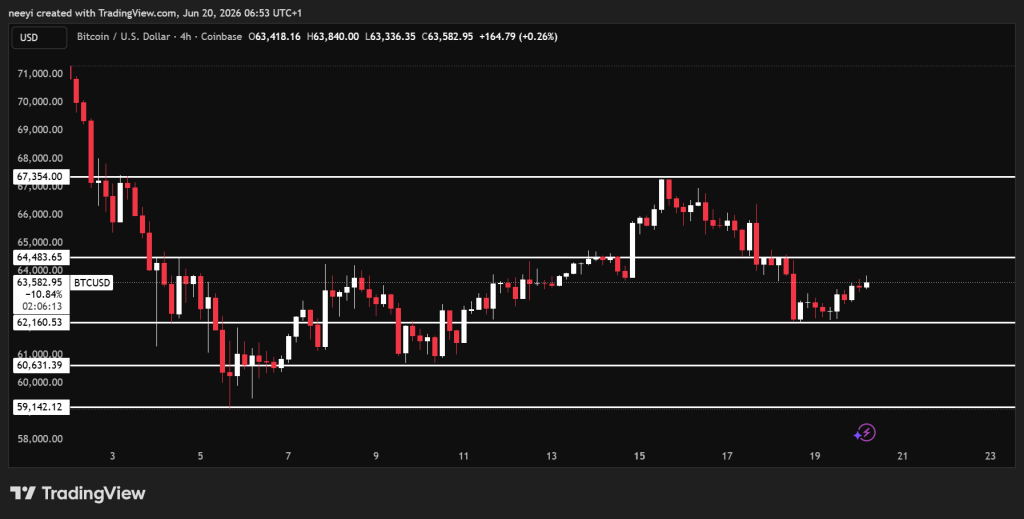
Crypto Price Prediction for Today, June 20: Bitcoin (BTC), XRP, and Solana (SOL)

Ozak AI Presale 99.74% Sold: $OZ Listing Date And Price Prediction



