Highlights: Japan will classify cryptocurrencies as financial products under the Financial Instruments and Exchange Act. The new flat tax rate on approved crypto assets will be 20%, down from 55%. Exchanges must disclose details about 105 crypto tokens, including risks and technology. Japan is gearing up for a significant shift in its crypto asset regulation. The Financial Services Agency (FSA) has proposed reclassifying 105 cryptocurrencies, such as Bitcoin and Ethereum, as financial products. According to a report by Asahi Shinmun, this plan will bring them under the Financial Instruments and Exchange Act. Currently, crypto gains are subject to taxation as miscellaneous income. Traders face tax rates of up to 55%. But once the changes are approved, these 105 approved assets are going to be taxed at a flat 20%, like stocks. The FSA is planning to present the amendment bill to the National Diet by 2026. Moreover, negotiations are already being made to push related tax changes into next year’s budget. Japan’s Financial Services Agency (FSA) plans to reclassify 105 cryptoassets, including BTC and ETH, as “financial products” and push for a tax overhaul in fiscal year 2026—reducing the current progressive crypto tax rate of up to 55% to a flat 20% capital gains tax. The agency… — Wu Blockchain (@WuBlockchain) November 16, 2025 Tighter Regulations and Mandatory Disclosures Japan classifying cryptocurrencies as financial products will also see the regulator implement stricter regulations. Exchanges in Japan are required to disclose information regarding each of the 105 tokens approved. This contains the presence or absence of an issuer, the underlying technology employed, and volatility risks. This is aimed at enhancing transparency in the crypto industry. These conditions are to make investors understand completely what assets they are purchasing. Further, the move will align digital assets to the existing financial products according to current law. The Japan Virtual Currency Exchange Association, which regulates listed coins, already monitors listed assets. They maintain a “green list” with vetted tokens, covering BTC, ETH, MATIC, XRP, and LTC. With the new plan, though, all 105 tokens handled by domestic exchanges will be subject to the same strict standards. This will bring about uniformity in the process and promote investor confidence in the market. Insider Trading Restrictions and Exchange Oversight The FSA also intends to crack down on insider trading in the crypto space. New regulations will not allow individuals with privileged access to purchase or sell tokens on the basis of undisclosed information. This covers future listing, delisting, and bankruptcy announcements. Exchanges will still be run on a registration system. However, a new notification system will be implemented among individuals managing key operational processes. Banks and insurance companies, however, will still be unable to sell cryptocurrencies to retail customers. The government consequently seeks to separate banking services and unstable crypto trading activities. These reforms are aimed at subjecting cryptocurrencies as financial products under the law while providing fairness and transparency in trading. Moreover, the 20% tax is seen as a move towards international standards. Most nations already impose capital gains tax on digital assets. The move will enable Japan to become more competitive in its crypto policy. As Japan moves to classify cryptocurrencies, its leading banks, MUFG, SMBC, and Mizuho, are piloting a stablecoin issuance program. Backed by the FSA, the experiment will determine the ability of the existing frameworks to facilitate regulated bank-issued stablecoins. Japan’s Financial Services Agency has announced support for a pilot project in which MUFG, SMBC, and Mizuho will jointly issue a yen-backed stablecoin. As the first initiative under the Payment Innovation Project (PIP), the experiment aims to test the legal and operational… — Wu Blockchain (@WuBlockchain) November 7, 2025 eToro Platform Best Crypto Exchange Over 90 top cryptos to trade Regulated by top-tier entities User-friendly trading app 30+ million users 9.9 Visit eToro eToro is a multi-asset investment platform. The value of your investments may go up or down. Your capital is at risk. Don’t invest unless you’re prepared to lose all the money you invest. This is a high-risk investment, and you should not expect to be protected if something goes wrong. Highlights: Japan will classify cryptocurrencies as financial products under the Financial Instruments and Exchange Act. The new flat tax rate on approved crypto assets will be 20%, down from 55%. Exchanges must disclose details about 105 crypto tokens, including risks and technology. Japan is gearing up for a significant shift in its crypto asset regulation. The Financial Services Agency (FSA) has proposed reclassifying 105 cryptocurrencies, such as Bitcoin and Ethereum, as financial products. According to a report by Asahi Shinmun, this plan will bring them under the Financial Instruments and Exchange Act. Currently, crypto gains are subject to taxation as miscellaneous income. Traders face tax rates of up to 55%. But once the changes are approved, these 105 approved assets are going to be taxed at a flat 20%, like stocks. The FSA is planning to present the amendment bill to the National Diet by 2026. Moreover, negotiations are already being made to push related tax changes into next year’s budget. Japan’s Financial Services Agency (FSA) plans to reclassify 105 cryptoassets, including BTC and ETH, as “financial products” and push for a tax overhaul in fiscal year 2026—reducing the current progressive crypto tax rate of up to 55% to a flat 20% capital gains tax. The agency… — Wu Blockchain (@WuBlockchain) November 16, 2025 Tighter Regulations and Mandatory Disclosures Japan classifying cryptocurrencies as financial products will also see the regulator implement stricter regulations. Exchanges in Japan are required to disclose information regarding each of the 105 tokens approved. This contains the presence or absence of an issuer, the underlying technology employed, and volatility risks. This is aimed at enhancing transparency in the crypto industry. These conditions are to make investors understand completely what assets they are purchasing. Further, the move will align digital assets to the existing financial products according to current law. The Japan Virtual Currency Exchange Association, which regulates listed coins, already monitors listed assets. They maintain a “green list” with vetted tokens, covering BTC, ETH, MATIC, XRP, and LTC. With the new plan, though, all 105 tokens handled by domestic exchanges will be subject to the same strict standards. This will bring about uniformity in the process and promote investor confidence in the market. Insider Trading Restrictions and Exchange Oversight The FSA also intends to crack down on insider trading in the crypto space. New regulations will not allow individuals with privileged access to purchase or sell tokens on the basis of undisclosed information. This covers future listing, delisting, and bankruptcy announcements. Exchanges will still be run on a registration system. However, a new notification system will be implemented among individuals managing key operational processes. Banks and insurance companies, however, will still be unable to sell cryptocurrencies to retail customers. The government consequently seeks to separate banking services and unstable crypto trading activities. These reforms are aimed at subjecting cryptocurrencies as financial products under the law while providing fairness and transparency in trading. Moreover, the 20% tax is seen as a move towards international standards. Most nations already impose capital gains tax on digital assets. The move will enable Japan to become more competitive in its crypto policy. As Japan moves to classify cryptocurrencies, its leading banks, MUFG, SMBC, and Mizuho, are piloting a stablecoin issuance program. Backed by the FSA, the experiment will determine the ability of the existing frameworks to facilitate regulated bank-issued stablecoins. Japan’s Financial Services Agency has announced support for a pilot project in which MUFG, SMBC, and Mizuho will jointly issue a yen-backed stablecoin. As the first initiative under the Payment Innovation Project (PIP), the experiment aims to test the legal and operational… — Wu Blockchain (@WuBlockchain) November 7, 2025 eToro Platform Best Crypto Exchange Over 90 top cryptos to trade Regulated by top-tier entities User-friendly trading app 30+ million users 9.9 Visit eToro eToro is a multi-asset investment platform. The value of your investments may go up or down. Your capital is at risk. Don’t invest unless you’re prepared to lose all the money you invest. This is a high-risk investment, and you should not expect to be protected if something goes wrong.

Japan to Classify Cryptocurrencies as Financial Products, Slashing Tax Rate to 20%
2025/11/16 23:17

Highlights:

  • Japan will classify cryptocurrencies as financial products under the Financial Instruments and Exchange Act.
  • The new flat tax rate on approved crypto assets will be 20%, down from 55%.
  • Exchanges must disclose details about 105 crypto tokens, including risks and technology.

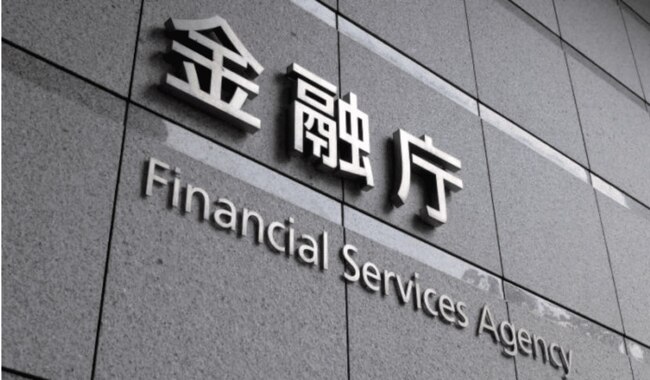
Japan is gearing up for a significant shift in its crypto asset regulation. The Financial Services Agency (FSA) has proposed reclassifying 105 cryptocurrencies, such as Bitcoin and Ethereum, as financial products. According to a report by Asahi Shinmun, this plan will bring them under the Financial Instruments and Exchange Act.

Currently, crypto gains are subject to taxation as miscellaneous income. Traders face tax rates of up to 55%. But once the changes are approved, these 105 approved assets are going to be taxed at a flat 20%, like stocks. The FSA is planning to present the amendment bill to the National Diet by 2026. Moreover, negotiations are already being made to push related tax changes into next year’s budget.

Tighter Regulations and Mandatory Disclosures

Japan classifying cryptocurrencies as financial products will also see the regulator implement stricter regulations. Exchanges in Japan are required to disclose information regarding each of the 105 tokens approved. This contains the presence or absence of an issuer, the underlying technology employed, and volatility risks.

This is aimed at enhancing transparency in the crypto industry. These conditions are to make investors understand completely what assets they are purchasing. Further, the move will align digital assets to the existing financial products according to current law.

The Japan Virtual Currency Exchange Association, which regulates listed coins, already monitors listed assets. They maintain a “green list” with vetted tokens, covering BTC, ETH, MATIC, XRP, and LTC. With the new plan, though, all 105 tokens handled by domestic exchanges will be subject to the same strict standards. This will bring about uniformity in the process and promote investor confidence in the market.

Insider Trading Restrictions and Exchange Oversight

The FSA also intends to crack down on insider trading in the crypto space. New regulations will not allow individuals with privileged access to purchase or sell tokens on the basis of undisclosed information. This covers future listing, delisting, and bankruptcy announcements.

Exchanges will still be run on a registration system. However, a new notification system will be implemented among individuals managing key operational processes. Banks and insurance companies, however, will still be unable to sell cryptocurrencies to retail customers. The government consequently seeks to separate banking services and unstable crypto trading activities.

These reforms are aimed at subjecting cryptocurrencies as financial products under the law while providing fairness and transparency in trading. Moreover, the 20% tax is seen as a move towards international standards. Most nations already impose capital gains tax on digital assets. The move will enable Japan to become more competitive in its crypto policy.

As Japan moves to classify cryptocurrencies, its leading banks, MUFG, SMBC, and Mizuho, are piloting a stablecoin issuance program. Backed by the FSA, the experiment will determine the ability of the existing frameworks to facilitate regulated bank-issued stablecoins.

eToro Platform

Best Crypto Exchange

  • Over 90 top cryptos to trade
  • Regulated by top-tier entities
  • User-friendly trading app
  • 30+ million users
9.9
Visit eToro

eToro is a multi-asset investment platform. The value of your investments may go up or down. Your capital is at risk. Don’t invest unless you’re prepared to lose all the money you invest. This is a high-risk investment, and you should not expect to be protected if something goes wrong.

Disclaimer: The articles reposted on this site are sourced from public platforms and are provided for informational purposes only. They do not necessarily reflect the views of MEXC. All rights remain with the original authors. If you believe any content infringes on third-party rights, please contact service@support.mexc.com for removal. MEXC makes no guarantees regarding the accuracy, completeness, or timeliness of the content and is not responsible for any actions taken based on the information provided. The content does not constitute financial, legal, or other professional advice, nor should it be considered a recommendation or endorsement by MEXC.

You May Also Like

Crypto whale loses $6M to sneaky phishing scheme targeting staked Ethereum

Crypto whale loses $6M to sneaky phishing scheme targeting staked Ethereum

The post Crypto whale loses $6M to sneaky phishing scheme targeting staked Ethereum appeared on BitcoinEthereumNews.com. A crypto whale lost more than $6 million in staked Ethereum (stETH) and Aave-wrapped Bitcoin (aEthWBTC) after approving malicious signatures in a phishing scheme on Sept. 18, according to blockchain security firm Scam Sniffer. According to the firm, the attackers disguised their move as a routine wallet confirmation through “Permit” signatures, which tricked the victim into authorizing fund transfers without triggering obvious red flags. Yu Xian, founder of blockchain security company SlowMist, noted that the victim did not recognize the danger because the transaction required no gas fees. He wrote: “From the victim’s perspective, he just clicked a few times to confirm the wallet’s pop-up signature requests, didn’t spend a single penny of gas, and $6.28 million was gone.” How Permit exploits work Permit approvals were originally designed to simplify token transfers. Instead of submitting an on-chain approval and paying fees, a user can sign an off-chain message authorizing a spender. That efficiency, however, has created a new attack surface for malicious players. Once a user signs such a permit, attackers can combine two functions—Permit and TransferFrom—to drain assets directly. Because the authorization takes place off-chain, wallet dashboards show no unusual activity until the funds move. As a result, the assets are gone when the approval executes on-chain, and tokens are redirected to the attacker’s wallet. This loophole has made permit exploits increasingly attractive for malicious actors, who can siphon millions without needing complex hacks or high-cost gas wars. Phishing losses The latest theft highlights a wider trend of escalating phishing campaigns. Scam Sniffer reported that in August alone, attackers stole $12.17 million from more than 15,200 victims. That figure represented a 72% jump in losses compared with July. According to the firm, the most significant share of August’s damages came from three large accounts that accounted for nearly half…
Share
BitcoinEthereumNews2025/09/19 02:31
Michigan moves ahead with strategic crypto reserve bill

Michigan moves ahead with strategic crypto reserve bill

The post Michigan moves ahead with strategic crypto reserve bill appeared on BitcoinEthereumNews.com. Michigan lawmakers are advancing a proposal that would allow the state to establish a strategic crypto reserve, as the Midwestern state joins other US jurisdictions considering digital assets for public investment.  The proposed legislation, known as House Bill 4087, moved to a second reading on Thursday and was referred to the Committee on Government Operations. It was introduced in February by Republican Representatives Bryan Posthumus and Ron Robinson, who are asking the House to amend the Michigan Management and Budget Act.  “Michigan can and should join Texas in leading on crypto policy by signing into law my bill creating the Michigan Crypto Strategic Reserve,” Posthumus wrote on X at the time of its introduction. If passed, the state treasurer’s authority will be allowed to allocate up to 10% of funds from Michigan’s countercyclical budget and economic stabilization fund into crypto. Michigan government could become crypto holders House Bill 4087 allows the state to maintain its digital assets in three possible ways: through a secure custody solution, through a qualified custodian such as a bank, trust company, or state-regulated firm, or by acquiring exchange-traded products (ETPs) from registered investment companies. House Bill 4086 and 4087. Source: Michigan legislation website. Security procedures for the crypto holdings include exclusive government control over private keys, end-to-end encryption of all data, and the prohibition of access via smartphones.  Michigan-owned digital assets’ information will be stored in secure data centers in different locations within the state. At the same time, transactions would require multiparty authorization, in addition to regular independent security audits. The bill allows the state to loan out crypto to generate additional revenue, provided that such activity does not increase exposure to financial risk.  House Bill 4086, which was also introduced during the same month by Representatives Alabas Farhat, Ron Robinson, and…
Share
BitcoinEthereumNews2025/09/19 17:49