As AI models grow larger and cheaper to run, Earth’s data centers face limits in energy, cooling, and community tolerance. Space offers continuous solar power, zero local externalities, and radiation-based cooling—making it an ideal compute environment. Yet orbital infrastructure comes with its own challenges: launch logistics, maintenance, and governance. The likely path forward starts small—with AI models running alongside satellites—before scaling to full orbital training campuses. It’s a glimpse of a future where most AI computing happens beyond Earth’s atmosphere.As AI models grow larger and cheaper to run, Earth’s data centers face limits in energy, cooling, and community tolerance. Space offers continuous solar power, zero local externalities, and radiation-based cooling—making it an ideal compute environment. Yet orbital infrastructure comes with its own challenges: launch logistics, maintenance, and governance. The likely path forward starts small—with AI models running alongside satellites—before scaling to full orbital training campuses. It’s a glimpse of a future where most AI computing happens beyond Earth’s atmosphere.

We May Need Data Centers in Space to Build Better AI

2025/10/08 01:41
4 min read
For feedback or concerns regarding this content, please contact us at crypto.news@mexc.com

AI continues to improve as we add data, parameters, and, especially, compute resources. GPT-5 may have felt incremental to users, but its cheaper inference quietly reset the economics of deployment. More capability per dollar at run-time has poured fuel on a data center boom already underway. Leopold Aschenbrenner, who sketched the “compute is the binding constraint” thesis in a widely read memo, now runs a hedge fund that has ridden transformers (plus the power, cooling and concrete that feeds them) to outsized profits.

Donald Trump’s U.S. AI Action Plan acknowledges the importance of data centers and is supported by steps to streamline permitting.

New infrastructure may ease capacity, but growing environmental and political challenges such as water usage conflicts, diesel permit hurdles, community resistance, and grid delays are slowing large-campus expansion. If AI scaling laws continue to compound, we may need to look beyond Earth.

Why Space?

  1. Perpetual power: Above clouds, there is no night. Orbital arrays enjoy continuous solar input, which means steady, predictable renewable power. If we combine space-based generation and large radiators, we get a power-and-cooling envelope tailored to computation, not weather. In the ideal situation, we would get sunlight in and heat out, 24/7.

    \

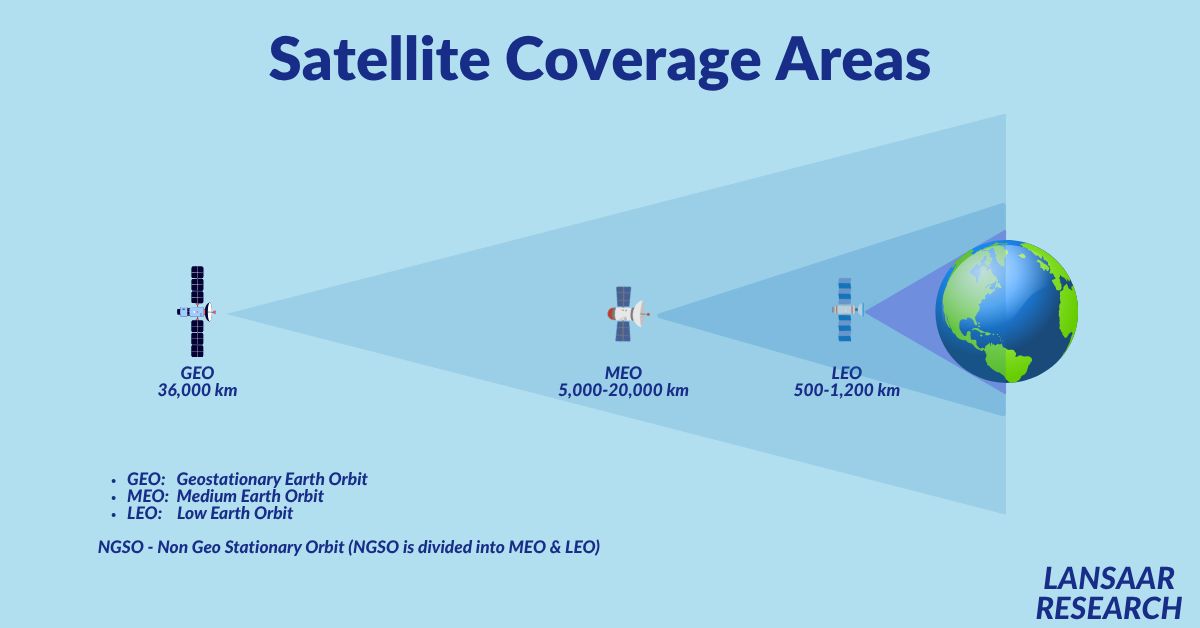
  2. Zero local externalities (and fewer veto points): A one-gigawatt campus on Earth competes with farms, homes, and aquifers. In orbit, there are debris and spectrum rules, but no water rights, diesel-permit hearings, or zoning boards. “Compute freeports” in LEO (Low Earth Orbit), GEO (Geo Stationary Orbit), or cislunar space (the space between Earth and the Moon) can be governed by clear norms (perhaps adopted by treaties).

    \

  3. Thermal management: Data centers fail when cooling fails. On Earth, heat rejection depends on air and water. In space, heat leaves by radiation. That requires surface area (lightweight, deployable radiators) but gives designers a fully specified environment. There is no need to worry about smoke from wildfires, heat domes, or drought orders.

\
Why Not Space?

At the same time, there are three constraints:

  1. Mass and logistics to orbit: Launching (and then assembling) thousands of tons of panels, radiators, racks, and propellant is the first bottleneck. This will push designs toward modular hardware and on-orbit assembly and servicing.

    \

  2. Challenges related to performance and reliability at scale: Space has its own environmental challenges, like radiation and solar storms. Maintenance is much harder, since it needs to be robotic. Hardened electronics, aggressive error correction, and autonomous ops are mandatory, and we must architect around bandwidth and latency.

    \

  3. Traffic, governance, and safety: More big objects in space means stricter rules, such as for debris mitigation, end-of-life planning, spectrum/orbital slot management, space traffic coordination, deorbit bonds/ADR (Active Debris Removal) contribution,s and security (since this will be critical infrastructure).

The Path Forward

A sensible path forward is to begin where the data already lives: satellites for Earth observation, weather, communications, and deep-space probes. We can run models beside the sensors to cut downlink and time-to-insight, then scale to LEO (low earth orbit) based “AI caches” that elastically absorb inference bursts and content delivery in lockstep with ground clouds, avoiding fresh land-and-water fights.

As launch costs fall and on-orbit manufacturing matures, we can graduate to high-orbit training campuses with large solar and radiator farms.

To make this arc viable, we will need to set portability standards, enforce space traffic rules rigorously and bake in high security from day one. These are governance challenges that require government planning, international cooperation and high-quality procurement efforts.

Though space will not replace Earth for data centers any time soon, this incremental path forward can relieve some of the pressure from the data center buildout and pave the way toward a future in which most AI training occurs outside of Earth.

\

Market Opportunity
Spacecoin Logo
Spacecoin Price(SPACE)
$0.008154
$0.008154$0.008154
+1.67%
USD
Spacecoin (SPACE) Live Price Chart
Disclaimer: The articles reposted on this site are sourced from public platforms and are provided for informational purposes only. They do not necessarily reflect the views of MEXC. All rights remain with the original authors. If you believe any content infringes on third-party rights, please contact crypto.news@mexc.com for removal. MEXC makes no guarantees regarding the accuracy, completeness, or timeliness of the content and is not responsible for any actions taken based on the information provided. The content does not constitute financial, legal, or other professional advice, nor should it be considered a recommendation or endorsement by MEXC.
Tags:

You May Also Like

Trump Issues an Ultimatum to Wall Street

Trump Issues an Ultimatum to Wall Street

The post Trump Issues an Ultimatum to Wall Street appeared on BitcoinEthereumNews.com. Published: Mar 07, 2026 at 21:13 The legislative gridlock in Washington took
Share
BitcoinEthereumNews2026/03/08 05:16
Franklin Templeton CEO Dismisses 50bps Rate Cut Ahead FOMC

Franklin Templeton CEO Dismisses 50bps Rate Cut Ahead FOMC

The post Franklin Templeton CEO Dismisses 50bps Rate Cut Ahead FOMC appeared on BitcoinEthereumNews.com. Franklin Templeton CEO Jenny Johnson has weighed in on whether the Federal Reserve should make a 25 basis points (bps) Fed rate cut or 50 bps cut. This comes ahead of the Fed decision today at today’s FOMC meeting, with the market pricing in a 25 bps cut. Bitcoin and the broader crypto market are currently trading flat ahead of the rate cut decision. Franklin Templeton CEO Weighs In On Potential FOMC Decision In a CNBC interview, Jenny Johnson said that she expects the Fed to make a 25 bps cut today instead of a 50 bps cut. She acknowledged the jobs data, which suggested that the labor market is weakening. However, she noted that this data is backward-looking, indicating that it doesn’t show the current state of the economy. She alluded to the wage growth, which she remarked is an indication of a robust labor market. She added that retail sales are up and that consumers are still spending, despite inflation being sticky at 3%, which makes a case for why the FOMC should opt against a 50-basis-point Fed rate cut. In line with this, the Franklin Templeton CEO said that she would go with a 25 bps rate cut if she were Jerome Powell. She remarked that the Fed still has the October and December FOMC meetings to make further cuts if the incoming data warrants it. Johnson also asserted that the data show a robust economy. However, she noted that there can’t be an argument for no Fed rate cut since Powell already signaled at Jackson Hole that they were likely to lower interest rates at this meeting due to concerns over a weakening labor market. Notably, her comment comes as experts argue for both sides on why the Fed should make a 25 bps cut or…
Share
BitcoinEthereumNews2025/09/18 00:36
Best Crypto Presale 2026: Strike’s New York BitLicense Opens Bitcoin to 8.3 Million New Residents as Samson Mow Challenges the Bitcoin Scarcity Narrative and Pepeto Builds Ahead of the Capital Wave

Best Crypto Presale 2026: Strike’s New York BitLicense Opens Bitcoin to 8.3 Million New Residents as Samson Mow Challenges the Bitcoin Scarcity Narrative and Pepeto Builds Ahead of the Capital Wave

Jack Mallers’ Bitcoin payments company Strike secured the New York State Department of Financial Services BitLicense on March 6, 2026, gaining money transmitter
Share
Techbullion2026/03/08 05:25