

VIX Fear Index Slips to Three-Month Low, Settles at 16.67
BitcoinWorld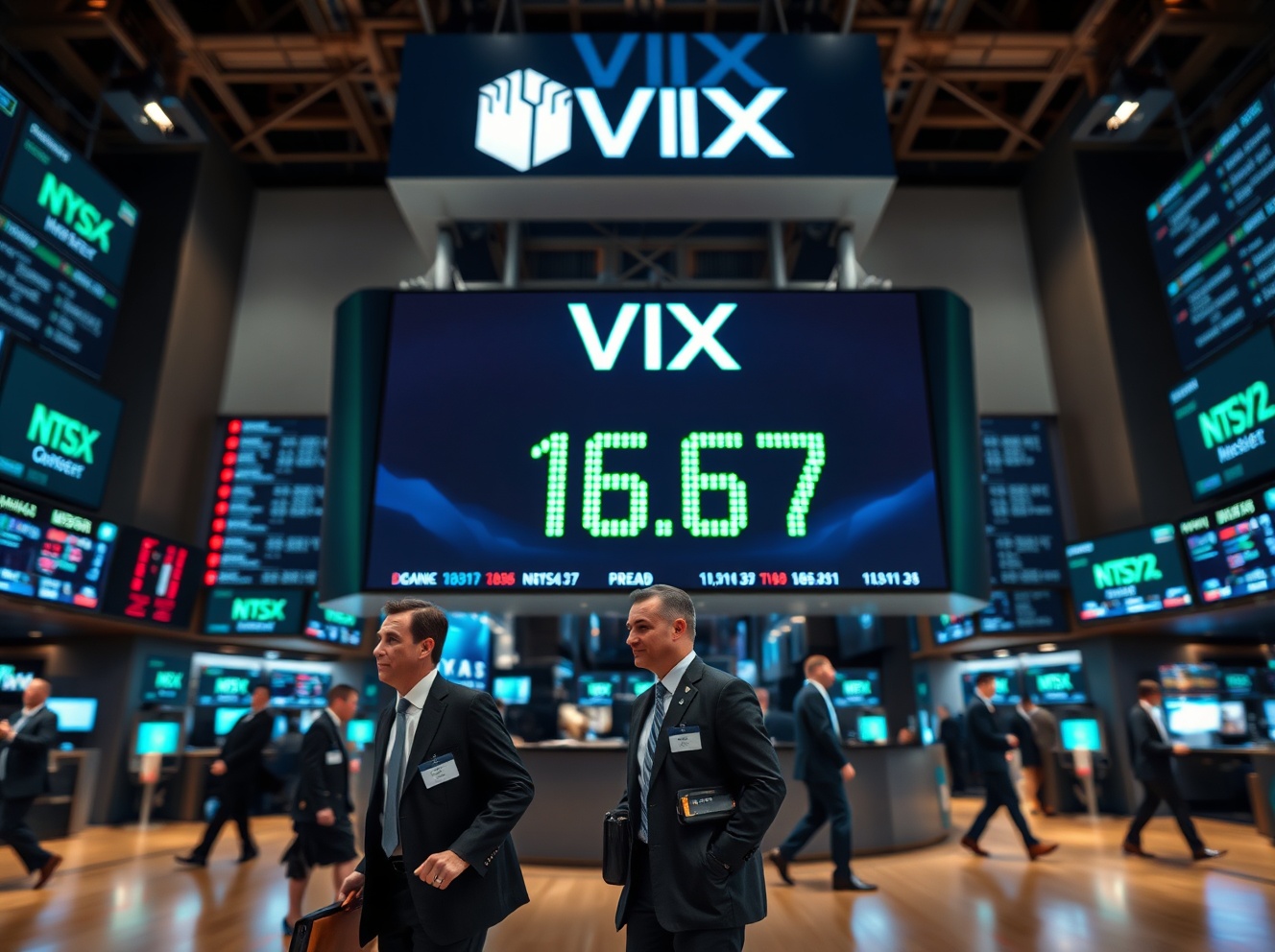
VIX Fear Index Slips to Three-Month Low, Settles at 16.67
The CBOE Volatility Index, widely known as the VIX or the fear index, has fallen to a three-month low, dropping 0.71 points to close at 16.67. The decline signals a notable easing of investor anxiety after weeks of elevated market uncertainty.
What the VIX Decline Signals
The VIX measures implied volatility on the S&P 500 and is often interpreted as a gauge of market fear. A reading near 16.67 is considered moderate, suggesting that traders are pricing in relatively low expectations for sharp market swings in the near term. The index had briefly spiked above 20 in late January amid concerns over interest rate policy and geopolitical tensions.
The recent drop aligns with a period of relative calm in U.S. equity markets. The S&P 500 has posted modest gains over the past several weeks, supported by better-than-expected corporate earnings and signs that inflation is continuing to ease. The Federal Reserve has held interest rates steady at its last two meetings, further soothing market nerves.
Broader Market Context
Historically, VIX levels below 17 have been associated with stable or bullish market conditions. However, analysts caution that low volatility does not guarantee continued gains. The current reading is still above the multi-year lows seen in 2021, when the VIX frequently traded below 15.
The decline in the VIX comes as economic data remains mixed. While the labor market remains resilient, consumer spending has shown signs of softening. Investors are closely watching upcoming inflation reports and the Fed’s next policy meeting for clues on whether the current calm will persist.
What This Means for Investors
For retail and institutional investors alike, a lower VIX typically reduces the cost of portfolio hedging strategies. Options premiums on S&P 500 contracts have become cheaper, which may encourage some traders to increase exposure to equities. However, seasoned market participants often view extended periods of low volatility as a reason to remain cautious, as complacency can precede sudden corrections.
Conclusion
The VIX’s retreat to 16.67 reflects a market that is increasingly comfortable with the current economic and policy landscape. While the fear index is not a predictor of future returns, its decline offers a useful snapshot of shifting sentiment. Investors should remain attentive to macroeconomic signals that could reignite volatility in the weeks ahead.
FAQs
Q1: What does a VIX of 16.67 mean?
A VIX reading of 16.67 indicates moderate market volatility expectations. It is below the long-term average of around 20, suggesting investors are relatively calm about near-term market moves.
Q2: Why is the VIX called the fear index?
The VIX is nicknamed the fear index because it tends to rise when investors are anxious or uncertain about the market outlook, and falls when confidence is higher. It reflects the cost of options as a hedge against market declines.
Q3: Is a low VIX always good for stocks?
Not necessarily. While a low VIX often coincides with rising stock prices, it can also signal complacency. Historically, extremely low VIX readings have sometimes preceded sharp market downturns.
This post VIX Fear Index Slips to Three-Month Low, Settles at 16.67 first appeared on BitcoinWorld.


You May Also Like

Cathie Wood’s ARK Invest Buys $13.7M in Circle Shares While Selling Robinhood Stock

BTC Price Shaky Near $67K While Oil Surges on Middle East Tensions: What's Next? (April 2 Update)

The changing face of elder care in Malaysia — Sayed Mohammad Reza Yamani Sayed Umar



