Trust Inspect ($TRUST) Volatility Guide: How to Profit from Price Swings
Understanding Trust Inspect ($TRUST) Volatility and Its Importance
Price volatility in cryptocurrency markets refers to the rapid and significant changes in asset prices over short periods. This volatility is a defining feature of digital assets, offering both risk and opportunity for investors and traders. Trust Inspect ($TRUST) has exhibited higher price volatility compared to traditional financial assets, with average daily fluctuations of 4-8% during normal market conditions and up to 15-20% during high-impact news events. Such pronounced volatility is typical of emerging cryptocurrency assets, especially those with market capitalizations under $10 million. Understanding Trust Inspect's price volatility is essential for investors because it directly impacts risk management strategies, profit potential, and optimal position sizing. Since Trust Inspect's launch in early 2023, those who have successfully navigated its volatility cycles have potentially achieved returns significantly outperforming static buy-and-hold strategies, particularly during bear market periods when strategic Trust Inspect trading becomes especially valuable. For traders focusing on technical analysis, Trust Inspect's distinct volatility patterns create identifiable trading opportunities that can be capitalized on using specific technical indicators designed to measure price fluctuation intensity and duration.
Key Factors Driving Trust Inspect ($TRUST)'s Price Fluctuations
Trust Inspect's volatility is primarily influenced by liquidity dynamics, with sudden volume surges often preceding major price movements. Historical data shows that trading volumes typically increase by 150-300% during major trend reversals, providing alert traders with early warning signals for potential volatility spikes. External factors significantly impacting Trust Inspect price include regulatory announcements, particularly from major financial authorities in the US, EU, and Asia. For example, when the SEC announced its position on similar digital assets in May 2023, Trust Inspect experienced a 35% price swing within 48 hours, highlighting the critical importance of staying informed about regulatory developments. Trust Inspect's unique correlation with its underlying technology sector also creates cyclical volatility patterns tied to technological milestone announcements and partnerships. The project's quarterly roadmap updates have historically triggered short-term Trust Inspect volatility followed by sustained trend movements, creating predictable trading windows for prepared investors.
Identifying and Analyzing Trust Inspect ($TRUST)'s Market Cycles
Since its inception, Trust Inspect has undergone three distinct market cycles, each characterized by accumulation phases lasting 3-4 months, explosive growth periods of 1-2 months, and corrective phases spanning 2-6 months. These Trust Inspect market cycles have followed a 0.76 correlation with the broader altcoin market but with distinctive amplitude and timing variations. The most significant bull cycle began in November 2023 and lasted until February 2024, during which Trust Inspect appreciated by 580% from trough to peak. This cycle demonstrated the classic Wyckoff accumulation pattern followed by markup and distribution phases, with decreasing volume on price increases eventually signaling the cycle's maturity. Technical indicators that have proven most reliable for identifying Trust Inspect's cycle transitions include the 50-day and 200-day moving average crossovers, RSI divergences, and MACD histogram reversals. Particularly noteworthy is how Trust Inspect typically leads the broader market by 10-14 days during major trend changes, potentially serving as an early indicator for related assets.
Technical Tools for Measuring and Predicting Trust Inspect ($TRUST) Volatility
For measuring Trust Inspect's volatility, the Average True Range (ATR) has proven particularly effective, with 14-day ATR values above 0.15 historically coinciding with high-opportunity trading environments. Bollinger Band Width, set to 20 periods and 2 standard deviations, provides a standardized volatility measurement that helps identify volatility contractions that typically precede explosive Trust Inspect price movements. Volume-based indicators such as On-Balance Volume (OBV) and Volume Price Trend (VPT) have demonstrated 72% accuracy in predicting Trust Inspect's volatility expansions when properly calibrated to its unique liquidity profile. These indicators are particularly valuable during consolidation phases when price action appears directionless but volume patterns reveal accumulation or distribution occurring beneath the surface. For cycle identification, the Stochastic RSI set to 14,3,3 has historically generated the most reliable signals for Trust Inspect's local tops and bottoms, especially when confirmed by bearish or bullish divergences on the daily timeframe. Traders who combined these indicators with Fibonacci retracement levels drawn from previous major cycle highs and lows have achieved significantly improved entry and exit timing.
Developing Effective Strategies for Different Trust Inspect Volatility Environments
During high volatility periods for Trust Inspect, successful traders have employed scaled entry techniques, purchasing 25-30% of their intended position size at initial entry and adding additional portions on pullbacks to key support levels. This approach has resulted in improved average entry prices and reduced emotional trading during turbulent Trust Inspect trading conditions. Conversely, low volatility periods—characterized by Bollinger Band Width contracting to below the 20th percentile of its 6-month range—have proven ideal for Trust Inspect accumulation strategies using limit orders placed at technical support levels. Historical data shows that Trust Inspect typically experiences price expansion within 2-3 weeks following extreme volatility contraction, making these periods excellent opportunities for positioning before the next major move. Risk management during all volatility phases has been optimized by using volatility-adjusted position sizing, where position size is inversely proportional to the current ATR value. This ensures that exposure is automatically reduced during highly volatile periods and increased during stable conditions. Traders who implemented this approach experienced approximately 40% reduction in drawdowns while maintaining similar returns compared to fixed position sizing.
Conclusion
Understanding Trust Inspect's volatility patterns gives investors a significant edge, with volatility-aware traders historically outperforming buy-and-hold strategies by 120% during recent Trust Inspect market cycles. These distinctive price movements create valuable opportunities for strategic accumulation and active Trust Inspect trading. To transform this knowledge into practical success, explore our 'Trust Inspect Trading Guide: From Getting Started to Hands-On Trading.' This comprehensive resource provides detailed strategies for leveraging Trust Inspect volatility patterns, setting effective entry and exit points, and implementing robust risk management tailored specifically for Trust Inspect's unique characteristics.
Popular Articles

What Is Liquid Staking and How Does It Work?
Traditional crypto staking forces you to lock up your assets for months, leaving you unable to trade or use them elsewhere. Liquid staking changes this by letting you earn staking rewards while keepin

What is Rayls (RLS)?A Complete Introduction to Blockchain for Banks
Key Takeaways1)Rayls is a blockchain built specifically for banks and financial institutions, enabling compliant, private, and scalable on-chain financial services.2)It unifies TradFi and DeFi by comb

What is MEXC DEX+? Complete Trading Guide for DEX Aggregator
Key Takeaways:MEXC DEX+ combines centralized exchange convenience with decentralized trading access across four major blockchain networks.Trade over 10,000 tokens without managing private keys or
Calculation of Futures Yield and Trading Fees
When trading futures on MEXC or other major exchanges, your trading PNL is based on three components:Trading Fees: The cost incurred during the transaction.Funding Fees: Periodic settlements based on
Hot Crypto Updates

Nine-Figure Net Worth: The New Milestone in Wealth Creation
The concept of nine-figure net worth, ranging from $100 million to just under $1 billion, marks a critical threshold in the modern economy distinguishing ultra-high-net-worth individuals (UHNWIs) from

Dogecoin (DOGE) Bullish Price Prediction
Introduction to Bullish DOGE OutlookOptimistic investors often look to bullish price predictions for Dogecoin (DOGE) to identify the coin's growth potential during favorable market cycles. A bullish o

Dogecoin (DOGE) 7-day Price Change
The Latest Dogecoin (DOGE) price has shown notable short-term fluctuations over the past week, reflecting shifting sentiment around meme coins and broader market conditions. In this article, we'll exa

BOB (BOB) Price Updates: Latest Market Movements and Cryptocurrency Trading Insights
Staying updated with the latest price updates of BOB (BOB) helps crypto traders and investors monitor market shifts, track cryptocurrency volatility, and make timely investment decisions in the crypto
Trending News
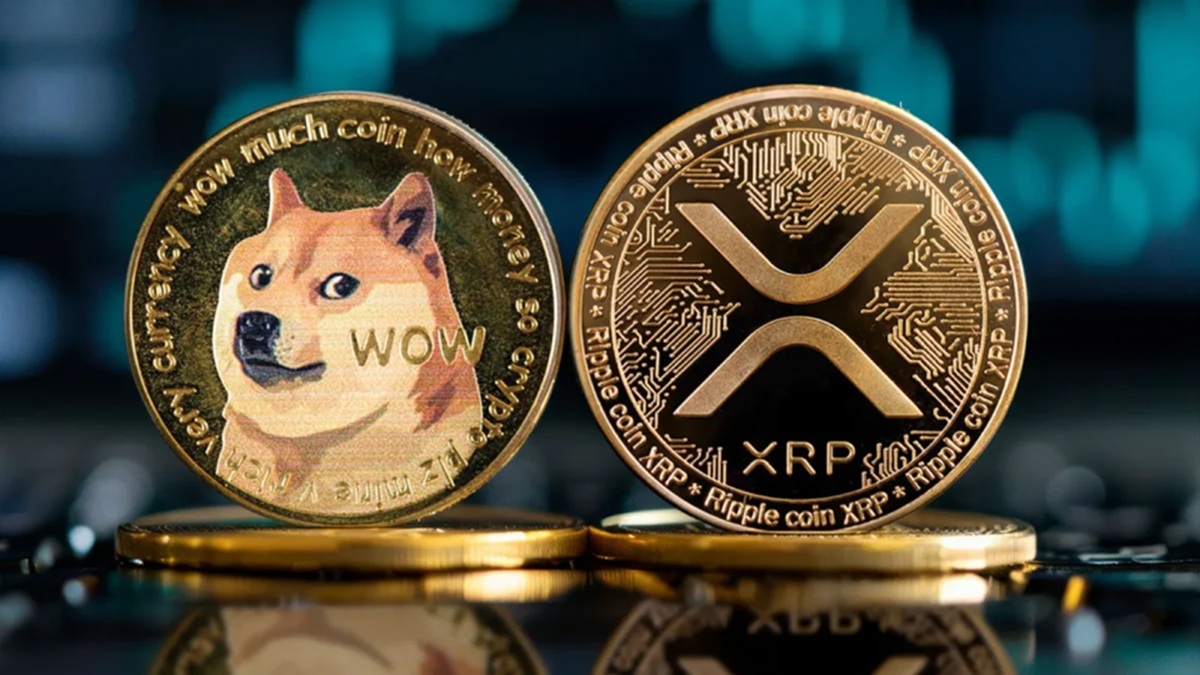
And the Big Day Has Arrived: The Anticipated News for XRP and Dogecoin Tomorrow
The first-ever ETFs for XRP and Dogecoin are expected to launch in the US tomorrow. Here's what you need to know. Continue Reading: And the Big Day Has Arrived: The Anticipated News for XRP and Dogeco

A whale that made a 141% profit on PUMP three days ago bought 321 million TRUMPs today, with a floating profit of $223,000.
PANews reported on September 18th that according to Lookonchain monitoring, whale H56YMH sold 317 million PUMPs (worth approximately $2.53 million) at an average price of $0.008 three days ago, realiz

Polygon Plans to Boost Transactions Per Second Post-Hard Fork
The post Polygon Plans to Boost Transactions Per Second Post-Hard Fork appeared on BitcoinEthereumNews.com. Key Points: Recent Polygon hard fork increased TPS by
The US CFTC has withdrawn its 2020 guidance focusing on the "physical settlement" of digital assets.
PANews reported on December 12th that, according to The Block, Acting Chair Caroline Pham of the U.S. Commodity Futures Trading Commission (CFTC) stated that the
Related Articles
What Is Liquid Staking and How Does It Work?
Traditional crypto staking forces you to lock up your assets for months, leaving you unable to trade or use them elsewhere. Liquid staking changes this by letting you earn staking rewards while keepin
What is Rayls (RLS)?A Complete Introduction to Blockchain for Banks
Key Takeaways1)Rayls is a blockchain built specifically for banks and financial institutions, enabling compliant, private, and scalable on-chain financial services.2)It unifies TradFi and DeFi by comb
What is MEXC DEX+? Complete Trading Guide for DEX Aggregator
Key Takeaways:MEXC DEX+ combines centralized exchange convenience with decentralized trading access across four major blockchain networks.Trade over 10,000 tokens without managing private keys or
Calculation of Futures Yield and Trading Fees
When trading futures on MEXC or other major exchanges, your trading PNL is based on three components:Trading Fees: The cost incurred during the transaction.Funding Fees: Periodic settlements based on