
Blockchain Technology Explained: The Underlying Architecture of Open Meta City (OMZ)
What is Blockchain Technology?
Blockchain technology is a distributed ledger system that enables secure, transparent, and immutable record-keeping across a network of computers. At its core, blockchain consists of blocks of data linked chronologically in a chain, with each block containing transaction records that are verified through cryptographic methods rather than by a central authority. The relationship between blockchain and Open Meta City (OMZ) is fundamental, as OMZ operates on a public blockchain—specifically, the Ethereum network[1]. This underlying technology provides the OMZ token with security features, decentralization advantages, and transparency capabilities that distinguish it from traditional financial systems. Unlike conventional databases managed by a single entity, Open Meta City's blockchain distributes data across thousands of nodes worldwide, making it resistant to censorship, fraud, and single points of failure[1].
Core Components of Open Meta City's Blockchain Architecture
The distributed ledger technology (DLT) that powers Open Meta City functions as a synchronized database replicated across multiple locations. Unlike traditional systems where a central administrator maintains records, OMZ's DLT ensures that every network participant has access to an identical copy of the ledger, creating unprecedented transparency and accountability[1]. Open Meta City utilizes the Ethereum blockchain's consensus mechanism, which is currently Proof of Stake (PoS), to validate transactions and secure the network. This process involves network participants (validators) collaborating to verify transactions, with successful validators receiving transaction fees as incentives. This mechanism ensures network security and integrity while preventing double-spending and fraudulent transactions.
Smart contracts within the OMZ ecosystem are self-executing agreements with the terms directly written in code. These contracts automatically execute when predetermined conditions are met, enabling trustless interactions without intermediaries. In Open Meta City's network, smart contracts facilitate automated transactions, decentralized applications (dApps), and programmable token functionalities that enhance the versatility and utility of the OMZ token ecosystem.
The structure of Open Meta City's blockchain consists of interconnected blocks, each containing a cryptographic hash of the previous block, a timestamp, and transaction data. This design creates an immutable chain where altering any information would require consensus from the majority of the network, making the OMZ blockchain highly resistant to tampering and manipulation.
Common Misconceptions About Open Meta City's Blockchain
One common misconception about Open Meta City's blockchain is that it is completely anonymous. In reality, OMZ offers pseudonymity, where transactions are publicly visible but not directly linked to real-world identities. This distinction is important for OMZ token users concerned about privacy, as transaction patterns can potentially be analyzed to identify users.
Regarding technical limitations, many newcomers believe that Open Meta City's blockchain can process unlimited transactions instantly. The truth is that OMZ, operating on Ethereum, currently handles a limited number of transactions per second, which is less than traditional payment processors. The development team is addressing this through layer-2 scaling solutions and protocol upgrades scheduled for upcoming network updates.
Energy consumption is another widely misunderstood aspect of the OMZ blockchain. Unlike Bitcoin's energy-intensive mining, Open Meta City employs Ethereum's Proof of Stake consensus mechanism, which requires significantly less energy. This results in a carbon footprint much smaller than traditional banking systems or other cryptocurrencies.
Security concerns often stem from misconceptions rather than actual vulnerabilities. While critics claim Open Meta City's blockchain is susceptible to hacking, the network has maintained robust security with no successful attacks on its core protocol. The majority of security incidents involving OMZ tokens have occurred at exchanges or in user wallets, not within the blockchain itself[1][3].
Getting Started with Open Meta City's Blockchain
Interacting with the OMZ blockchain begins with setting up a compatible wallet. Users can choose from official desktop wallets, mobile applications, hardware wallets, or web-based interfaces depending on their security needs and convenience preferences[2]. Once set up, users can send, receive, and store OMZ tokens while directly connecting to the Open Meta City blockchain network.
For those looking to explore Open Meta City's blockchain more deeply, recommended tools include:
- Blockchain explorers for tracking OMZ token transactions
- Development frameworks for building applications
- Testing networks for experimenting without using real OMZ tokens
These resources provide invaluable insights into the inner workings of the blockchain and allow for hands-on learning without financial risk.
New Open Meta City users should follow essential best practices, including:
- Backing up wallet recovery phrases
- Using strong, unique passwords
- Enabling two-factor authentication when available
- Verifying all OMZ token transaction details before confirming
- Starting with small amounts
- Gradually increasing engagement as comfort grows
Conclusion
Open Meta City's blockchain combines distributed ledger technology with advanced cryptography to create a secure and transparent system for digital transactions. This architecture enables the OMZ token to offer unique advantages over traditional financial systems. Ready to apply this knowledge? Check out our "Open Meta City Trading Complete Guide" for practical trading strategies and step-by-step instructions.
Popular Articles
Dogecoin All-Time High: When It Happened and What Drove the Surge
Key TakeawaysDogecoin’s all-time high (ATH) occurred on May 8, 2021, when the price reached approximately $0.74.The surge was primarily driven by a combination of Elon Musk’s repeated tweets and endor

How to Verify My Residential Address on MEXC
Providing proof of address (POA) is part of MEXC's KYC verification process. After registering a MEXC account, you must upload a POA document to complete identity verification and ensure compliance wi

Dogecoin Marketcap Explained: What It Means and How It Shapes DOGE’s Value
Key TakeawaysMarket capitalization (market cap) measures the total dollar value of Dogecoin (DOGE), calculated as current price × circulating supply.As of December 2025, Dogecoin’s market cap stands a
Dogecoin Price History: Major Cycles, Market Drivers, and Key Lessons
Key TakeawaysDogecoin has experienced extreme volatility, moving from near dormancy (2013–2020) to meme-driven surges (2021) and significant post-2021 corrections.The explosive 2021 surge drove DOGE t
Hot Crypto Updates
Magma Finance (MAGMA) 2030 Price Prediction
Introduction to MAGMA 2030 Price ForecastLooking a decade ahead, 2030 price predictions for Magma Finance (MAGMA) provide a long-term view of its potential role in the evolving crypto landscape. While
Magma Finance (MAGMA) Price History: Patterns Every Trader Should Know
What is Historical Price Analysis and Why It Matters for Magma Finance (MAGMA) InvestorsHistorical price analysis is a fundamental research methodology that examines past price movements to identify p

Introduction to KYC in Cryptocurrency Trading
Know Your Customer (KYC) is a mandatory verification process implemented by financial institutions including MEXC to confirm the identity of their users. In the rapidly evolving cryptocurrency market,
Crypto Price Calculator for Magma Finance (MAGMA) - Real-Time Conversion Tool
A crypto price calculator is an essential tool for anyone looking to convert digital currencies into different denominations or fiat money. Whether you're tracking your Magma Finance (MAGMA) investmen
Trending News
Russia Strengthens Trade with Digital Rubles and Stablecoins
TLDR Russia uses digital rubles and stablecoins to bypass Western sanctions. Digital ruble and stablecoins fuel Russia’s trade with Asia, bypassing SWIFT. Russia
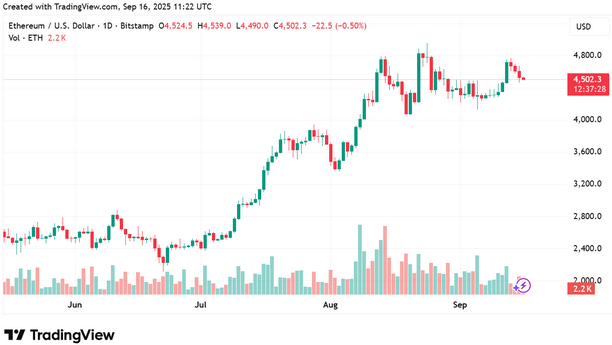
Ethereum Price Prediction: ETH Targets $10,000 In 2026 But Layer Brett Could Reach $1 From $0.0058
Ethereum price predictions are turning heads, with analysts suggesting ETH could climb to $10,000 by 2026 as institutional demand and network upgrades drive growth. While Ethereum remains a blue-chip
The Digital WOW Announces AI Enhancements in Website Design and Development
WEST PALM BEACH, Fla., Dec. 17, 2025 /PRNewswire/ — The Digital WOW, powered by ConsultPR.net, announces findings on how AI is impacting website design and development

Gold continues to hit new highs. How to invest in gold in the crypto market?
As Bitcoin encounters a "value winter", real-world gold is recasting the iron curtain of value on the blockchain.
Related Articles
Dogecoin All-Time High: When It Happened and What Drove the Surge
Key TakeawaysDogecoin’s all-time high (ATH) occurred on May 8, 2021, when the price reached approximately $0.74.The surge was primarily driven by a combination of Elon Musk’s repeated tweets and endor
How to Verify My Residential Address on MEXC
Providing proof of address (POA) is part of MEXC's KYC verification process. After registering a MEXC account, you must upload a POA document to complete identity verification and ensure compliance wi
Dogecoin Marketcap Explained: What It Means and How It Shapes DOGE’s Value
Key TakeawaysMarket capitalization (market cap) measures the total dollar value of Dogecoin (DOGE), calculated as current price × circulating supply.As of December 2025, Dogecoin’s market cap stands a
Dogecoin Price History: Major Cycles, Market Drivers, and Key Lessons
Key TakeawaysDogecoin has experienced extreme volatility, moving from near dormancy (2013–2020) to meme-driven surges (2021) and significant post-2021 corrections.The explosive 2021 surge drove DOGE t
