Bitcoin could become a central bank reserve asset by 2030. Deutsche Bank sees Bitcoin complementing gold in future financial portfolios. Scarcity and inflation protection drive Bitcoin’s rise as reserve asset. Deutsche Bank has made a bold prediction, stating that Bitcoin could be added to central bank balance sheets by 2030. This forecast highlights a major shift in global finance, with Bitcoin positioning itself not as a competitor to gold but as a valuable complement. The bank suggests that Bitcoin could become a key part of central bank reserves, diversifying financial portfolios and acting as a hedge against inflation. The report underscores Bitcoin’s supply scarcity as a major factor driving this trend. With 95% of Bitcoin’s total supply already in circulation, the cryptocurrency’s limited availability makes it a strong contender for reserve diversification. As more countries and institutions seek assets that protect against inflation and economic shocks, Bitcoin’s role as a store of value continues to grow. Deutsche Bank compares Bitcoin’s potential rise to that of gold. Gold, once met with skepticism, is now an integral part of the global financial system. Similarly, the bank expects Bitcoin’s volatility to decrease over time as adoption and liquidity increase, positioning it as a stable and recognized asset. Also Read: Former Fox Business Journalist: Here’s a New Way for XRP Holders to Earn 8% on Their Holding Bitcoin’s Rising Role in Central Bank Reserves Looking toward 2030, Bitcoin’s role in central bank reserves could redefine financial portfolios globally. With its digital nature and inherent scarcity, Bitcoin offers a unique alternative to traditional reserve assets. Its increasing recognition as a hedge against inflation further strengthens its case for adoption by national institutions. As central banks and institutional investors expand their portfolios, the idea of Bitcoin complementing gold in reserves is gaining traction. Deutsche Bank’s report reflects the growing trend of countries diversifying their reserves with digital assets. As Bitcoin matures, it could eventually hold a place alongside gold in global financial systems, signaling a monumental shift in how national wealth is stored and managed. This evolving perspective on Bitcoin’s role in central bank reserves is reshaping the future of global finance. As adoption continues to grow, Bitcoin may become an essential asset in the reserve portfolios of sovereign nations. Also Read: Ripple CEO Announces Marriage, Ignites XRP Community: Details The post Deutsche Bank Predicts Bitcoin Will Join Central Bank Reserves by 2030 appeared first on 36Crypto. Bitcoin could become a central bank reserve asset by 2030. Deutsche Bank sees Bitcoin complementing gold in future financial portfolios. Scarcity and inflation protection drive Bitcoin’s rise as reserve asset. Deutsche Bank has made a bold prediction, stating that Bitcoin could be added to central bank balance sheets by 2030. This forecast highlights a major shift in global finance, with Bitcoin positioning itself not as a competitor to gold but as a valuable complement. The bank suggests that Bitcoin could become a key part of central bank reserves, diversifying financial portfolios and acting as a hedge against inflation. The report underscores Bitcoin’s supply scarcity as a major factor driving this trend. With 95% of Bitcoin’s total supply already in circulation, the cryptocurrency’s limited availability makes it a strong contender for reserve diversification. As more countries and institutions seek assets that protect against inflation and economic shocks, Bitcoin’s role as a store of value continues to grow. Deutsche Bank compares Bitcoin’s potential rise to that of gold. Gold, once met with skepticism, is now an integral part of the global financial system. Similarly, the bank expects Bitcoin’s volatility to decrease over time as adoption and liquidity increase, positioning it as a stable and recognized asset. Also Read: Former Fox Business Journalist: Here’s a New Way for XRP Holders to Earn 8% on Their Holding Bitcoin’s Rising Role in Central Bank Reserves Looking toward 2030, Bitcoin’s role in central bank reserves could redefine financial portfolios globally. With its digital nature and inherent scarcity, Bitcoin offers a unique alternative to traditional reserve assets. Its increasing recognition as a hedge against inflation further strengthens its case for adoption by national institutions. As central banks and institutional investors expand their portfolios, the idea of Bitcoin complementing gold in reserves is gaining traction. Deutsche Bank’s report reflects the growing trend of countries diversifying their reserves with digital assets. As Bitcoin matures, it could eventually hold a place alongside gold in global financial systems, signaling a monumental shift in how national wealth is stored and managed. This evolving perspective on Bitcoin’s role in central bank reserves is reshaping the future of global finance. As adoption continues to grow, Bitcoin may become an essential asset in the reserve portfolios of sovereign nations. Also Read: Ripple CEO Announces Marriage, Ignites XRP Community: Details The post Deutsche Bank Predicts Bitcoin Will Join Central Bank Reserves by 2030 appeared first on 36Crypto.

Deutsche Bank Predicts Bitcoin Will Join Central Bank Reserves by 2030

2025/09/23 16:33
3 min čtení
V případě připomínek nebo obav ohledně tohoto obsahu nás prosím kontaktujte na adrese crypto.news@mexc.com
  • Bitcoin could become a central bank reserve asset by 2030.
  • Deutsche Bank sees Bitcoin complementing gold in future financial portfolios.
  • Scarcity and inflation protection drive Bitcoin’s rise as reserve asset.

Deutsche Bank has made a bold prediction, stating that Bitcoin could be added to central bank balance sheets by 2030. This forecast highlights a major shift in global finance, with Bitcoin positioning itself not as a competitor to gold but as a valuable complement. The bank suggests that Bitcoin could become a key part of central bank reserves, diversifying financial portfolios and acting as a hedge against inflation.


The report underscores Bitcoin’s supply scarcity as a major factor driving this trend. With 95% of Bitcoin’s total supply already in circulation, the cryptocurrency’s limited availability makes it a strong contender for reserve diversification. As more countries and institutions seek assets that protect against inflation and economic shocks, Bitcoin’s role as a store of value continues to grow.


Deutsche Bank compares Bitcoin’s potential rise to that of gold. Gold, once met with skepticism, is now an integral part of the global financial system. Similarly, the bank expects Bitcoin’s volatility to decrease over time as adoption and liquidity increase, positioning it as a stable and recognized asset.


Also Read: Former Fox Business Journalist: Here’s a New Way for XRP Holders to Earn 8% on Their Holding


Bitcoin’s Rising Role in Central Bank Reserves

Looking toward 2030, Bitcoin’s role in central bank reserves could redefine financial portfolios globally. With its digital nature and inherent scarcity, Bitcoin offers a unique alternative to traditional reserve assets. Its increasing recognition as a hedge against inflation further strengthens its case for adoption by national institutions.


As central banks and institutional investors expand their portfolios, the idea of Bitcoin complementing gold in reserves is gaining traction. Deutsche Bank’s report reflects the growing trend of countries diversifying their reserves with digital assets. As Bitcoin matures, it could eventually hold a place alongside gold in global financial systems, signaling a monumental shift in how national wealth is stored and managed.


This evolving perspective on Bitcoin’s role in central bank reserves is reshaping the future of global finance. As adoption continues to grow, Bitcoin may become an essential asset in the reserve portfolios of sovereign nations.


Also Read: Ripple CEO Announces Marriage, Ignites XRP Community: Details


The post Deutsche Bank Predicts Bitcoin Will Join Central Bank Reserves by 2030 appeared first on 36Crypto.

Tržní příležitosti
Logo FOX Token
Kurz FOX Token(FOX)
$0.007804
$0.007804$0.007804
+21.23%
USD
Graf aktuální ceny FOX Token (FOX)
Prohlášení: Články sdílené na této stránce pochází z veřejných platforem a jsou poskytovány pouze pro informační účely. Nemusí nutně reprezentovat názory společnosti MEXC. Všechna práva náleží původním autorům. Pokud se domníváte, že jakýkoli obsah porušuje práva třetích stran, kontaktujte prosím crypto.news@mexc.com a my obsah odstraníme. Společnost MEXC nezaručuje přesnost, úplnost ani aktuálnost obsahu a neodpovídá za kroky podniknuté na základě poskytnutých informací. Obsah nepředstavuje finanční, právní ani jiné odborné poradenství, ani by neměl být považován za doporučení nebo podporu ze strany MEXC.

Mohlo by se vám také líbit

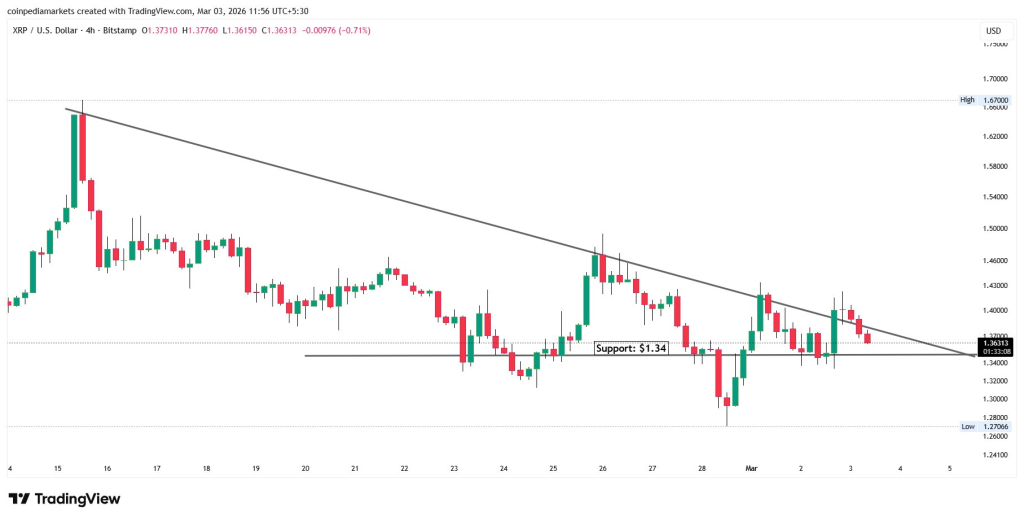
Warning Signs Flash for $XRP as $1.34 Support Gets Tested

Warning Signs Flash for $XRP as $1.34 Support Gets Tested

XRP lagged behind Bitcoin and Ethereum during yesterday’s relief bounce. In fact, BTC and ETH pushed higher over $70K and $2K respectively, but XRP only managed
Sdílet
Captainaltcoin2026/03/03 14:49
PiDex Testnet Launch: What It Means for Pi Network and Picoin Value

PiDex Testnet Launch: What It Means for Pi Network and Picoin Value

Pi Network’s decentralized exchange, PiDex, went live on the testnet, marking a significant technical milestone for the ecosystem. Despite the launch, the m
Sdílet
Hokanews2026/03/03 14:27
UK and US Seal $42 Billion Tech Pact Driving AI and Energy Future

UK and US Seal $42 Billion Tech Pact Driving AI and Energy Future

The post UK and US Seal $42 Billion Tech Pact Driving AI and Energy Future appeared on BitcoinEthereumNews.com. Key Highlights Microsoft and Google pledge billions as part of UK US tech partnership Nvidia to deploy 120,000 GPUs with British firm Nscale in Project Stargate Deal positions UK as an innovation hub rivaling global tech powers UK and US Seal $42 Billion Tech Pact Driving AI and Energy Future The UK and the US have signed a “Technological Prosperity Agreement” that paves the way for joint projects in artificial intelligence, quantum computing, and nuclear energy, according to Reuters. Donald Trump and King Charles review the guard of honour at Windsor Castle, 17 September 2025. Image: Kirsty Wigglesworth/Reuters The agreement was unveiled ahead of U.S. President Donald Trump’s second state visit to the UK, marking a historic moment in transatlantic technology cooperation. Billions Flow Into the UK Tech Sector As part of the deal, major American corporations pledged to invest $42 billion in the UK. Microsoft leads with a $30 billion investment to expand cloud and AI infrastructure, including the construction of a new supercomputer in Loughton. Nvidia will deploy 120,000 GPUs, including up to 60,000 Grace Blackwell Ultra chips—in partnership with the British company Nscale as part of Project Stargate. Google is contributing $6.8 billion to build a data center in Waltham Cross and expand DeepMind research. Other companies are joining as well. CoreWeave announced a $3.4 billion investment in data centers, while Salesforce, Scale AI, BlackRock, Oracle, and AWS confirmed additional investments ranging from hundreds of millions to several billion dollars. UK Positions Itself as a Global Innovation Hub British Prime Minister Keir Starmer said the deal could impact millions of lives across the Atlantic. He stressed that the UK aims to position itself as an investment hub with lighter regulations than the European Union. Nvidia spokesman David Hogan noted the significance of the agreement, saying it would…
Sdílet
BitcoinEthereumNews2025/09/18 02:22