USD1 vs Other Blockchains: Key Differences Explained
Blockchain Basics: Setting the Stage
Blockchain technology represents one of the most significant technological innovations of the 21st century. At its core, blockchain is a distributed digital ledger that records transactions across multiple computers in a way that ensures the record cannot be altered retroactively. First conceptualized by Satoshi Nakamoto in 2008, blockchain has evolved far beyond its initial application as the foundation for cryptocurrencies.
The power of blockchain stems from its essential characteristics. Decentralization eliminates the need for central authorities, as validation is performed across a network of nodes. Immutability ensures that once data is recorded, it cannot be altered without network consensus. Transparency allows all participants to view the transaction history, fostering trust through cryptographic verification.
Today's blockchain landscape includes public blockchains like Ethereum, private blockchains for enterprise use, and consortium blockchains that balance elements of both to serve industry-wide collaborations.
What Makes USD1 Different from Bitcoin/Ethereum?
USD1 emerged as a groundbreaking innovation in the blockchain space in April 2025 with the vision to streamline digital transactions and provide seamless fungibility between fiat currency and digital assets. Founded by World Liberty Financial (WLFI), USD1 leverages a fiat-backed stablecoin model to deliver a secure, transparent, and scalable solution.
What sets USD1 stablecoin apart is its transparent reserve structure and multi-chain deployment. Unlike traditional blockchains that process transactions with volatile assets, USD1 is backed 1:1 by the US dollar, with reserves custodied by BitGo and subject to regular third-party audits for maximum transparency and stability. Additionally, USD1 is deployed on both Ethereum and BNB Chain, with plans for further expansion to enhance interoperability across multiple blockchain platforms.
The USD1 ecosystem has grown to include DeFi applications, lending vaults, and liquidity support, with strong adoption in global payments and decentralized finance sectors.
Speed, Fees, and Features: USD1 Performance Analysis
The fundamental divergence between traditional blockchain and USD1 begins with their consensus mechanisms. While many blockchains rely on Proof of Work or Proof of Stake, USD1 implements a fiat-backed issuance model on top of existing blockchains, which offers faster finality and reduced volatility in the cryptocurrency market.
Scalability represents another critical difference. Traditional blockchains often struggle with throughput constraints, creating bottlenecks during high activity. USD1 addresses this through multi-chain deployment and integration with DeFi protocols, enabling high liquidity and rapid transaction settlement across blockchain platforms.
The network architectures further highlight their differences. Traditional blockchains typically use a single-layer structure. In contrast, USD1 employs a multi-layered approach where reserve management, issuance, and blockchain settlement are handled by distinct entities, influencing its governance through regular audits and transparent reporting for greater stablecoin reliability.
Use Cases: When to Choose USD1 Over Others
Performance disparities become evident in key metrics. While networks like Bitcoin or Ethereum process limited transactions per second, USD1 achieves significantly higher throughput and near-instant confirmation times due to its stablecoin architecture and integration with high-performance blockchains. Energy efficiency also varies dramatically, with USD1 consuming substantially less energy per transaction since it does not require resource-intensive mining.
These advantages translate into distinct applications. Traditional blockchains excel in use cases requiring maximum security and decentralization, while USD1 succeeds in global payments, remittances, and DeFi lending where high throughput and low fees are paramount. For instance, ListaDAO has used USD1 to provide liquidity support for 20 million USD1 on BNB Chain, and DWF Labs has deployed USD1 liquidity across multiple blockchain platforms to enhance market depth.
From a cost perspective, while traditional blockchain transactions can incur high fees during congestion, USD1 maintains consistently lower fees, making it suitable for micropayments and high-frequency trading in the cryptocurrency market.
Future Outlook: USD1's Competitive Edge
The developer experience differs markedly between platforms. Established blockchains offer mature development tools, while USD1 provides specialized SDKs and APIs for seamless integration with payment systems and DeFi protocols on multiple blockchain platforms. Community engagement also reveals important differences. Traditional blockchain communities have established governance processes, while the USD1 stablecoin community demonstrates rapid growth and technical focus, with active development and expanding adoption metrics.
Looking forward, traditional blockchains focus on scalability and interoperability improvements, while USD1 has outlined an ambitious roadmap including expansion to additional blockchains, enhanced audit transparency, and deeper DeFi integration scheduled for late 2025 and beyond.
Trade Multiple Assets Including USD1 on MEXC
The differences between traditional blockchain and USD1 highlight the evolution within the distributed ledger space. While blockchain introduced trustless, decentralized record-keeping, USD1 represents the next generation that prioritizes scalability, transparency, and user experience without sacrificing core security benefits across multiple blockchain platforms. Now that you understand the technological foundation of USD1, ready to put this knowledge into action? Our 'USD1 Trading Complete Guide' provides everything you need to start learning confidently – from basic setup to advanced strategies tailored for USD1's unique cryptocurrency market. Discover how to leverage these technological advantages for potentially profitable opportunities in the stablecoin ecosystem today.
Popular Articles

How to Stake Cardano? ADA Staking Guide for Beginners
Looking to earn passive income with your Cardano holdings? Staking ADA offers a straightforward way to generate rewards while supporting network security. This guide covers everything from basic staki
Lido Staking: Earn ETH Rewards Without Locking Your Assets
Want to earn passive income from your Ethereum holdings without giving up access to your funds?Lido staking solves the biggest problem with traditional ETH staking—locked assets and high entry barrier
How to Store Dogecoin (DOGE) Safely?Practical Wallet Guide & Risk Avoidance Tips
Securing your digital assets is the most critical step after acquiring cryptocurrency. For Dogecoin (DOGE) - a digital currency celebrated for its community-driven approach and ease of use - selecting
USDT Staking: How to Earn Interest on Tether with High APY Rates
Earning passive income from cryptocurrency doesn't always mean riding volatile price swings. USDT staking offers a way to generate returns on your Tether holdings while maintaining the stability of a
Hot Crypto Updates
Nine-Figure Net Worth: The New Milestone in Wealth Creation
The concept of nine-figure net worth, ranging from $100 million to just under $1 billion, marks a critical threshold in the modern economy distinguishing ultra-high-net-worth individuals (UHNWIs) from
Dogecoin (DOGE) Bullish Price Prediction
Introduction to Bullish DOGE OutlookOptimistic investors often look to bullish price predictions for Dogecoin (DOGE) to identify the coin's growth potential during favorable market cycles. A bullish o
Dogecoin (DOGE) 7-day Price Change
The Latest Dogecoin (DOGE) price has shown notable short-term fluctuations over the past week, reflecting shifting sentiment around meme coins and broader market conditions. In this article, we'll exa
BOB (BOB) Price Updates: Latest Market Movements and Cryptocurrency Trading Insights
Staying updated with the latest price updates of BOB (BOB) helps crypto traders and investors monitor market shifts, track cryptocurrency volatility, and make timely investment decisions in the crypto
Trending News
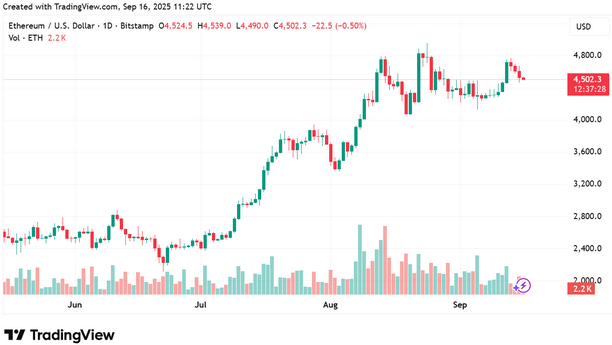
Ethereum Price Prediction: ETH Targets $10,000 In 2026 But Layer Brett Could Reach $1 From $0.0058
Ethereum price predictions are turning heads, with analysts suggesting ETH could climb to $10,000 by 2026 as institutional demand and network upgrades drive growth. While Ethereum remains a blue-chip

Top Crypto Investors Believe This $0.035 New Altcoin Could Beat PEPE and SHIB Ahead of 2027, Here's the Math
Some analysts believe the market is entering a new phase where meme-driven tokens are losing momentum while utility-driven altcoins are gaining strength.
LayerZero (ZRO) Price Outlook Turns Bullish as Chart Sets $4.80 Upside Target
LayerZero (ZRO) continues to follow a positive price trajectory, exhibiting a steady increase in value. Over the past 24 hours, ZRO has gained nearly 9.46%. Weekly

Gold continues to hit new highs. How to invest in gold in the crypto market?
As Bitcoin encounters a "value winter", real-world gold is recasting the iron curtain of value on the blockchain.
Related Articles
How to Stake Cardano? ADA Staking Guide for Beginners
Looking to earn passive income with your Cardano holdings? Staking ADA offers a straightforward way to generate rewards while supporting network security. This guide covers everything from basic staki
Lido Staking: Earn ETH Rewards Without Locking Your Assets
Want to earn passive income from your Ethereum holdings without giving up access to your funds?Lido staking solves the biggest problem with traditional ETH staking—locked assets and high entry barrier
How to Store Dogecoin (DOGE) Safely?Practical Wallet Guide & Risk Avoidance Tips
Securing your digital assets is the most critical step after acquiring cryptocurrency. For Dogecoin (DOGE) - a digital currency celebrated for its community-driven approach and ease of use - selecting
USDT Staking: How to Earn Interest on Tether with High APY Rates
Earning passive income from cryptocurrency doesn't always mean riding volatile price swings. USDT staking offers a way to generate returns on your Tether holdings while maintaining the stability of a