
Nosana (NOS) Indicators That Actually Work
Introduction to Technical Analysis for Nosana (NOS) Trading
Technical indicators are mathematical calculations based on price, volume, or open interest that help traders analyze market trends and make informed decisions. In cryptocurrency trading, these tools are essential for identifying entry and exit points, especially in volatile markets like the NOS Token. Technical analysis is particularly relevant for Nosana (NOS) because its market is active 24/7, with continuous data streams and pronounced price swings. While fundamental analysis focuses on the Nosana Project's decentralized CPU-based Dev(Ops) solutions for the Metaverse and its role on the Solana blockchain, technical analysis provides actionable insights by interpreting historical price and volume data. For NOS Coin, the most relevant indicators include trend-following tools, momentum oscillators, and volume-based metrics, all of which help traders navigate its unique volatility and liquidity patterns.
Example: Technical analysis involves studying Nosana (NOS) price movements and trading volumes to identify predictive patterns. For traders, these indicators provide timing signals for entry and exit points without requiring deep knowledge of the NOS Token's technology. While fundamental analysis examines the Nosana Project's innovations and real-world applications, technical analysis focuses on market sentiment and price direction based on historical data. NOS Coin markets display distinct volatility patterns that make them suitable for technical analysis. With 24/7 trading across global exchanges, Nosana (NOS) creates continuous data streams that technical indicators can effectively analyze. The most relevant tools include trend-following indicators, momentum oscillators, and volume metrics that help navigate the NOS Token's unique market dynamics.
Essential Price-Based Indicators for Nosana (NOS)
Moving Averages (Simple, Exponential): Moving averages smooth out price data to identify trends. For the NOS Token, the 50-day and 200-day Simple Moving Averages (SMA) are commonly used to spot support and resistance. A 'golden cross' (50-day SMA crossing above 200-day) signals bullish momentum, while a 'death cross' suggests bearish sentiment. Exponential Moving Averages (EMA) give more weight to recent prices, making them especially responsive to Nosana (NOS)'s rapid price changes.
Bollinger Bands: These measure volatility by plotting bands two standard deviations above and below a 20-day moving average. For the NOS Coin, price touching the upper band may indicate overbought conditions, while the lower band suggests oversold levels. 'Bollinger Band squeezes' often precede significant price movements.
Support and Resistance Levels: Identifying historical price points where the Nosana Project token has repeatedly reversed direction helps traders anticipate future turning points. These levels are crucial for setting stop-loss and take-profit orders.
Fibonacci Retracement: This tool helps identify potential reversal points by measuring the distance between significant highs and lows in NOS Token's price history, providing likely support and resistance zones.
Example: Moving Averages serve as fundamental tools, with 50-day and 200-day SMAs indicating key support and resistance levels. The 'golden cross' (50-day crossing above 200-day) signals bullish trends for Nosana (NOS), while the 'death cross' indicates bearish shifts. Exponential Moving Averages give more weight to recent prices, making them responsive to the NOS Token's fast-moving conditions. Bollinger Bands (20-day moving average with bands at two standard deviations) help identify potential volatility changes in NOS Coin's price. When price touches the upper band, it may indicate overbought conditions, while the lower band might suggest oversold conditions. Nosana Project traders watch for 'Bollinger Band squeezes' as potential indicators of upcoming large price movements.
Volume and Momentum Indicators for Nosana (NOS)
Volume Analysis: Volume confirms the strength of NOS Token price movements. High volume during a breakout suggests a genuine trend, while low volume may indicate a false move. Volume spikes often align with major Nosana Project updates or new partnerships.
Relative Strength Index (RSI): RSI measures the speed and change of price movements on a scale of 0-100. For NOS Coin, readings above 70 indicate overbought conditions, while below 30 suggest oversold. RSI divergences—where price makes a new high but RSI does not—can signal potential reversals.
MACD (Moving Average Convergence Divergence): MACD tracks momentum by comparing short- and long-term EMAs. Crossovers between the MACD line and the signal line can indicate shifts in Nosana (NOS)'s momentum.
On-Balance Volume (OBV): OBV uses volume flow to detect 'smart money' movements. Rising OBV alongside price increases suggests accumulation, while falling OBV may indicate distribution.
Example: Volume analysis confirms NOS Token price movements, with strong volume supporting genuine breakouts while low volume suggests weak trends. Volume spikes often coincide with major Nosana Project announcements or exchange listings. Traders should note divergences between price and volume, such as new highs on declining volume, which may signal weakening momentum. The RSI measures price movement speed on a 0-100 scale, with readings above 70 indicating overbought conditions and below 30 suggesting oversold conditions. NOS Coin traders watch for RSI divergences where price makes a new high while RSI doesn't, potentially signaling a reversal. During strong bull markets, RSI may remain overbought for extended periods.
Advanced Technical Indicators for Nosana (NOS) Trading
Ichimoku Cloud: This indicator provides a comprehensive view of the NOS Token's trend, support, and resistance. When Nosana (NOS) trades above the cloud, the trend is bullish; below, bearish. The cloud's thickness indicates the strength of support or resistance, and color changes can signal trend shifts.
Stochastic Oscillator: This tool helps time market entries and exits by comparing NOS Coin's closing price to its price range over a set period. Readings above 80 suggest overbought conditions, while below 20 indicate oversold.
Accumulation/Distribution Line: This indicator gauges buying and selling pressure by combining price and volume data, helping to identify whether the Nosana Project token is being accumulated or distributed.
Average Directional Index (ADX): ADX measures the strength of the NOS Token's trend. Readings above 25 indicate a strong trend, while below 20 suggest a sideways market. Combined with Directional Movement Indicators (DMI), ADX can also signal potential trend reversals.
Example: The Ichimoku Cloud provides a comprehensive market view through multiple components. When NOS Coin trades above the cloud, the trend is bullish; when below, bearish. Cloud thickness indicates strength of support/resistance, while color changes signal potential trend shifts. The ADX measures trend strength regardless of direction, helping Nosana Project traders determine whether a market is trending strongly (readings above 25) or moving sideways (below 20). This guides whether to use trend-following or range-trading approaches. Combined with DMI indicators, ADX can also signal potential trend reversals when these lines cross.
Creating a Technical Analysis Strategy for Nosana (NOS)
Combine multiple indicators to confirm NOS Token trading signals, such as pairing moving averages with RSI and volume analysis for a more robust view.
Avoid indicator redundancy by selecting tools that provide unique insights, reducing information overload.
Backtest strategies using historical Nosana (NOS) price data to validate effectiveness before live trading.
Set up custom indicators and alerts for NOS Coin on trading platforms to automate monitoring and response.
Adapt technical analysis approaches to different Nosana Project market conditions, such as trending versus ranging environments.
Example: Effective strategies combine multiple indicators to confirm signals from different perspectives. Pairing trend indicators like Moving Averages with momentum oscillators like RSI and volume indicators provides a more comprehensive view, filtering out false signals during the NOS Token's volatile phases. Backtesting validates strategies before live trading by applying them to historical Nosana (NOS) data. Trading platforms offer tools to adjust parameters like moving average periods to optimize for NOS Coin's specific behavior. Focus on testing across various market conditions rather than cherry-picking favorable periods, ensuring your strategy works across the Nosana Project's cyclical market phases.
Conclusion
Technical indicators provide valuable insights for timing Nosana (NOS) trades, but should be combined with proper risk management for optimal results. Remember that no indicator is infallible—especially in the NOS Token's volatile market—which is why diversifying your analytical approach is crucial. To put these techniques into practice, MEXC offers a comprehensive trading platform with advanced charting tools and real-time NOS Coin data. For the latest price analysis, detailed charts, and up-to-date predictions on the Nosana Project's future movements, visit our MEXC NOS Price Page, where you can monitor market trends and make informed trading decisions.
Popular Articles

What is Solana Mobile (SKR)?A Blockchain-Native Smartphone Platform Bridging Hardware, dApps, and Tokenized Governance
Key Takeaways1)Solana Mobile is a hardware-first Web3 platform, integrating self-custody and blockchain security directly into smartphones.2)Saga and Seeker phones function as on-chain access devices,

What is Immunefi(IMU)? A Complete Guide to Web3's Leading Security Platform
Key Takeaways1) Immunefi focuses on continuous Web3 security coordination, not one-time audits.2) Bug bounties and audit competitions form the core of its security model.3) Magnus serves as an operati

What Is VOOI ($VOOI)? A Non-Custodial Perpetual DEX Aggregator Explained
Key Takeaways1)VOOI is a non-custodial perpetual DEX aggregator that routes trades across multiple DEXs without holding user funds.2)The platform leverages chain abstraction and intent-based execution

Balancing Security and Accuracy: Dynamic Logic of Risk Control Systems
As crypto markets evolve, so do the tactics used by fraudsters and market manipulators. To keep users safe and preserve market integrity, crypto exchanges must constantly enhance their risk control an
Hot Crypto Updates

hadtotakeprofits sir (HTTPS) Spot Trading Platform Comparison: Why MEXC Leads the Market
Choosing the right hadtotakeprofits sir (HTTPS) spot trading platform can significantly impact your trading success. MEXC stands out among cryptocurrency exchanges with superior features, competitive

Hadtotakeprofits sir (HTTPS) MEXC Spot Trading App: Your Gateway to Mobile Trading
The MEXC spot trading app revolutionizes how you trade hadtotakeprofits sir (HTTPS) with industry-leading zero maker fees and access to over 3,000 trading pairs. As one of the world's most trusted cry

hadtotakeprofits sir (HTTPS) Spot Trading Strategies: A Beginner's Guide
Spot trading involves buying and selling cryptocurrencies for immediate delivery at current market prices. For beginners looking to trade hadtotakeprofits sir (HTTPS), understanding effective spot tra

hadtotakeprofits sir (HTTPS) MEXC Spot Trading Fee: Complete Guide for Beginners
Understanding MEXC spot trading fees is crucial when trading hadtotakeprofits sir (HTTPS). MEXC operates on a maker–taker fee structure with 0% fees for makers and 0.05% fees for takers on spot market
Trending News

Yarm Explained: Turning Trust and Tweets into Yield
tl;dr: Yarm is a new platform by Mitosis and Kaito AI that turns social influence into onchain yield. Yappers earn Mindshare by posting…Continue reading on Coinmonks »

Shiba Inu Price Prediction: PEPE Holders Looking For The Next 100x Crypto Set Their Sights On Layer Brett Presale
While SHIB and PEPE continue to dominate headlines, many early holders are now hunting for the next breakout. Layer Brett […] The post Shiba Inu Price Prediction: PEPE Holders Looking For The Next 100

Why Peter Brandt Says The US Crypto Bill Won’t Be A Game-Changer
The post Why Peter Brandt Says The US Crypto Bill Won’t Be A Game-Changer appeared on BitcoinEthereumNews.com. Will a landmark US crypto bill send Bitcoin soaring
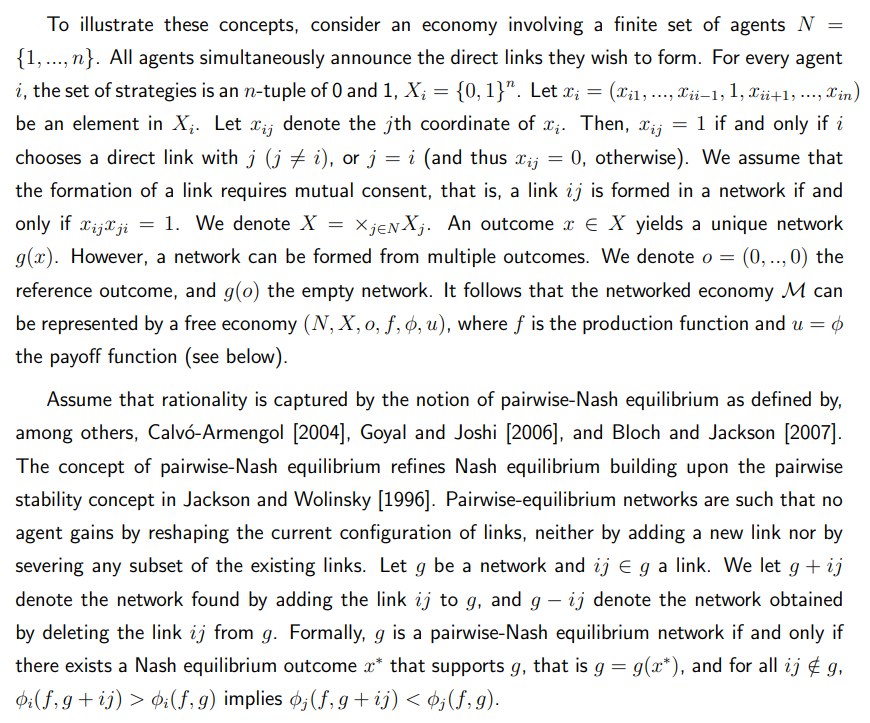
The Economics of Self-Isolation: A Game-Theoretic Analysis of Contagion in a Free Economy
Exploring how the costs of a pandemic can lead to a self-enforcing lockdown in a networked economy, analyzing the resulting changes in network structure and the existence of stable equilibria.
Related Articles
What is Solana Mobile (SKR)?A Blockchain-Native Smartphone Platform Bridging Hardware, dApps, and Tokenized Governance
Key Takeaways1)Solana Mobile is a hardware-first Web3 platform, integrating self-custody and blockchain security directly into smartphones.2)Saga and Seeker phones function as on-chain access devices,
What is Immunefi(IMU)? A Complete Guide to Web3's Leading Security Platform
Key Takeaways1) Immunefi focuses on continuous Web3 security coordination, not one-time audits.2) Bug bounties and audit competitions form the core of its security model.3) Magnus serves as an operati
What Is VOOI ($VOOI)? A Non-Custodial Perpetual DEX Aggregator Explained
Key Takeaways1)VOOI is a non-custodial perpetual DEX aggregator that routes trades across multiple DEXs without holding user funds.2)The platform leverages chain abstraction and intent-based execution
Balancing Security and Accuracy: Dynamic Logic of Risk Control Systems
As crypto markets evolve, so do the tactics used by fraudsters and market manipulators. To keep users safe and preserve market integrity, crypto exchanges must constantly enhance their risk control an
