

South Korean Crypto Exchanges Reveal Startling Consolidation: Only 36 Coins Survive All 5 Major Platforms
BitcoinWorld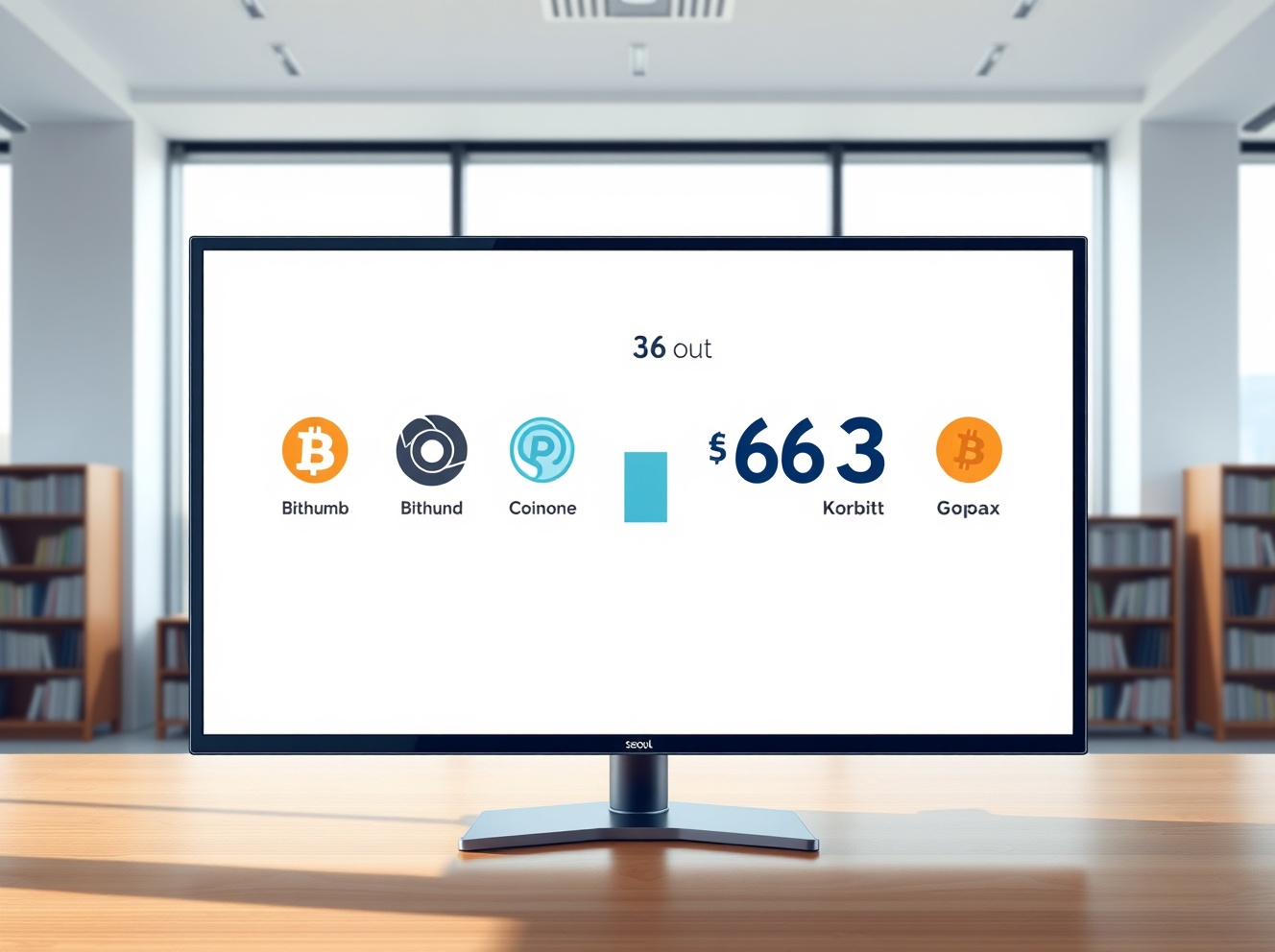
South Korean Crypto Exchanges Reveal Startling Consolidation: Only 36 Coins Survive All 5 Major Platforms
SEOUL, South Korea – A stark picture of market consolidation and rigorous scrutiny emerges from South Korea’s cryptocurrency sector, where a mere 36 digital assets currently secure listings across all five of the nation’s dominant exchanges. This figure represents a startling 5.7% of the total 633 virtual assets available in the market as of January, according to a report by NewsPim. The data underscores the highly selective and fragmented nature of South Korea’s crypto landscape, governed by the major platforms Upbit, Bithumb, Coinone, Korbit, and Gopax.
South Korean Crypto Exchanges Enforce Stringent Listing Criteria
Consequently, the path to a multi-exchange listing in South Korea remains exceptionally narrow. Each platform operates its own proprietary review framework, leading to significant divergence in available assets. The Digital Asset eXchange Alliance (DAXA), an industry body formed by these five exchanges, provides baseline model practices. However, DAXA explicitly notes these serve as a minimum common standard. Subsequently, each member exchange applies additional, often stricter, internal policies and evaluation criteria. This layered approach to due diligence creates a high barrier for entry. Market analysts point to several core factors influencing these decisions:
- Regulatory Compliance: Projects must demonstrate robust adherence to South Korea’s specific financial regulations.
- Technical Security: Exhaustive audits of a project’s blockchain security and smart contract integrity are mandatory.
- Team Transparency: Exchanges demand clear disclosure of founding teams and project development roadmaps.
- Market Liquidity & Volume: Sustained trading activity and healthy liquidity on other global platforms are critical.
Divergent Delisting Standards Create Market Uncertainty
Furthermore, the lack of uniformity extends powerfully to the removal of assets. Over the preceding year, the five exchanges collectively delisted 74 virtual assets. Remarkably, only two tokens—EOS (EOS) and Hippo (HPO)—faced removal from every single platform simultaneously. This discrepancy highlights the autonomous nature of each exchange’s risk management protocols. For instance, one exchange might delist an asset due to concerns over declining developer activity, while another may retain it based on sustained trading volume. This inconsistency can create uncertainty for investors navigating the market. A comparative analysis of delisting triggers reveals common themes, yet their application varies widely.
Expert Analysis on Market Maturation and Investor Protection
Industry observers interpret this data as a sign of the market’s maturation rather than mere restriction. “The low number of universally listed assets reflects a necessary evolution towards quality over quantity,” explains a Seoul-based fintech analyst familiar with DAXA’s operations. “After the turbulence of earlier market cycles, exchanges are prioritizing investor protection and long-term project viability. The varied delisting outcomes, however, indicate that a fully harmonized regulatory response is still a work in progress.” This selective environment stands in contrast to less regulated global markets, where hundreds of assets may list across numerous platforms with minimal oversight. The South Korean model, therefore, presents a compelling case study in applied crypto governance.
The DAXA Framework and Its Role in Standardization
DAXA’s establishment marked a pivotal step towards self-regulation within South Korea’s crypto industry. The alliance aims to foster healthy market development and enhance user protection. Its model practices cover essential areas like listing reviews, abnormal transaction monitoring, and investor warning systems. Importantly, these practices provide a foundational checklist for all member exchanges. Nevertheless, the core finding—that only 36 assets meet the *superset* of all five exchanges’ individual criteria—demonstrates the rigor of the South Korean system. This environment compels projects to maintain exemplary standards across technology, compliance, and community engagement to retain their listing status on these critical gateways to one of the world’s most active retail crypto markets.
Conclusion
The revelation that only 36 cryptocurrencies are listed on all five major South Korean exchanges paints a clear portrait of a stringent, quality-focused market. This consolidation, driven by a combination of DAXA’s baseline standards and each exchange’s stringent proprietary policies, prioritizes investor security and project sustainability. While the divergent delisting standards for tokens like EOS highlight areas for further harmonization, the overall framework signifies a mature approach to digital asset trading. For global projects, securing and maintaining a listing on these key South Korean crypto exchanges remains a significant badge of credibility and resilience.
FAQs
Q1: Which are the five major South Korean cryptocurrency exchanges?
The five largest and most influential exchanges are Upbit, Bithumb, Coinone, Korbit, and Gopax. They form the core of the domestic market and are members of the Digital Asset eXchange Alliance (DAXA).
Q2: What is DAXA and what is its purpose?
DAXA, or the Digital Asset eXchange Alliance, is a self-regulatory body established by the five major exchanges. Its primary purpose is to create and promote model practices for listing, monitoring, and delisting digital assets to protect investors and ensure market stability.
Q3: Why were only EOS and Hippo delisted from all five exchanges?
While specific internal reasons for each delisting are not always fully public, simultaneous delisting across all platforms typically indicates a severe, consensus-reaching issue. This could involve critical security vulnerabilities, a cessation of project development, regulatory non-compliance, or market manipulation concerns deemed unacceptable by all exchange review boards.
Q4: How does this selective listing environment affect South Korean crypto investors?
It creates a more curated and potentially safer investment landscape by filtering out lower-quality or high-risk projects. However, it also limits choice and may delay access to innovative assets that have not yet passed all exchanges’ rigorous review processes.
Q5: Does this mean South Korea has a small cryptocurrency market?
No, quite the opposite. South Korea has one of the world’s largest and most active retail cryptocurrency markets. The low number of universally listed coins reflects the market’s depth of regulation and selectivity, not its size. The high trading volumes on these few platforms are significant globally.
This post South Korean Crypto Exchanges Reveal Startling Consolidation: Only 36 Coins Survive All 5 Major Platforms first appeared on BitcoinWorld.
Du kan måske også lide

American Bitcoin’s $5B Nasdaq Debut Puts Trump-Backed Miner in Crypto Spotlight
XRP Ledger Stablecoin Supply Jumps 100% Since December

